.jpg)
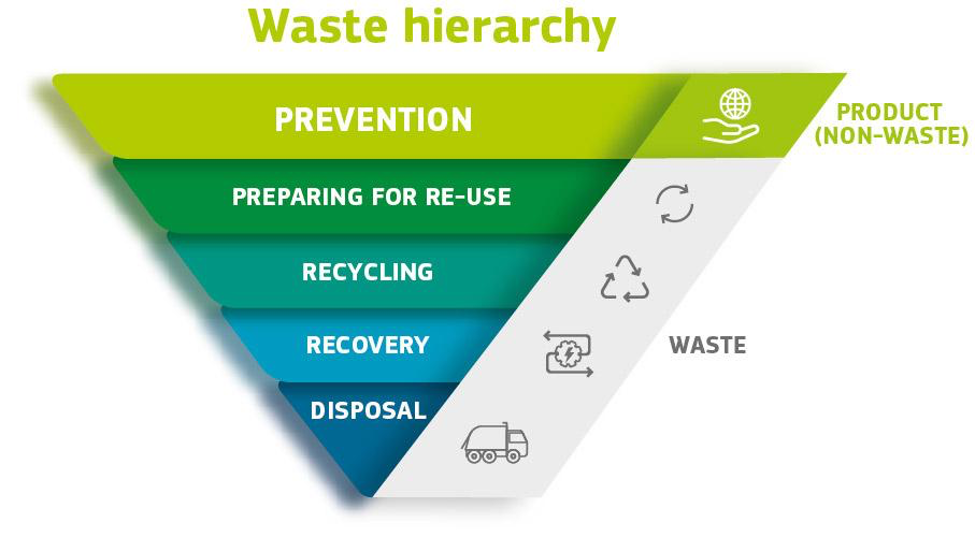
Today, governments, businesses and consumers look for ways to optimise waste management. Among different solutions, the waste hierarchy concept has become an essential tool to determine priorities for action to reduce and manage waste sustainably. Yet, this concept remains unknown to many.
Not only is the waste hierarchy integrated into the policies and regulations across the UK and EU, an understanding of this evaluation tool by all economic actors is key to creating a waste-free environment. At PakTech, we are aligned with the life cycle thinking of the waste hierarchy, making it the most sustainable solution in the premium packaging market for FMCG businesses who wish to enable the transition towards a circular, resource-efficient, and waste-free future.
Here, we explore what the waste hierarchy is, how it is adopted into the UK and EU legal landscapes and how businesses can make the most environmentally responsible choices when it comes to waste.
What is the Waste Hierarchy?
In a nutshell, the waste hierarchy provides a clear framework for all economic actors including businesses and consumers to prioritise the most sustainable waste management practices.
The hierarchy is legally enforced across the UK and EU through a variety of domestic policies that implements the EU Waste Framework Directive that sets the waste hierarchy as the guiding concept for all domestic policies and regulations that concern waste management and resource efficiency. Further, as defined by the directive, national governments are also expected to implement measures to achieve the “preparation for re-use and recycling of municipal waste to a minimum of 55%, 60% and 65% by weight by 2025, 2030 and 2035 respectively,” making reusability and recyclability essential attributes. The recently launched Irish Climate Action Plan 2021 that outlines as one of its key actions to ensure all plastic packaging is reusable and recyclable by 2030 is a clear example of how governments within the EU are choosing to incorporate the waste hierarchy principles.
For both environmental and regulatory reasons, it is crucial that the waste hierarchy is understood by all commercial actors. The model outlines five waste management options for businesses to prioritise (in order of preference): prevention, reuse, recycle, recovery, and disposal.
Why is the Waste Hierarchy Important?
The waste hierarchy provides guidance to all economic actors, whether they are consumers or businesses, to make the most sustainable choices by opting to use less materials in design and manufacturing, elongate a product’s life cycle by allowing for reuse, or turn excess into other valuable products. By providing a hierarchy of available waste management options and giving clear preference to the most sustainable choices, commercial actors can use this evaluation tool to improve the life cycle of their products and alleviate pressure on the environment. Further, the waste hierarchy not only enables our economy to become more resource-efficient and less polluting, but also encourages innovation worth investing in.
PakTech: Optimising Our Products for a Waste-Free and Toxic-Free Future
As consumers become more conscious of the environmental impact of their purchasing decisions, businesses must be up to the task to find better and more sustainable alternatives to optimise waste management. One of the easiest ways to improve a business’s environmental footprint is by using sustainable packaging solutions like PakTech handles.
PakTech packaging solutions wholly embody the priorities of the waste hierarchy through its minimalist but mighty design. They are minimalist in form to prevent the use of unnecessary material, durable and heat- and water-resistant to reduce the creation of waste and 100% recycled, reusable and recyclable to be perfectly aligned with the circular economy and keep waste out of oceans and landfill.
PakTech has a proven record of making design improvements to prevent the creation of waste - we have reduced the weight of our most popular handles, 6Pak and QuadPak, 2,5% and 7,4%, respectively. In addition, the material we use, 100% recycled HDPE, is safe and toxic-free material, containing no phthalates or other harmful chemicals, to enable a toxic-free circular economy.
At PakTech, we understand the importance of the waste hierarchy. We also want to help others to have a better understanding of this concept to allow other businesses to make the most well-informed and most sustainable choices when choosing their packaging solution.
In the aftermath of COVID-19, it’s not just public health that’s on everyone’s mind. In businesses all over the world, supply chain issues are turning once-smoothly running systems into logistical nightmares.
From factory shutdowns to pileups at port, the supply chain of many products has been heavily impacted, threatening economic recovery. Not only that, industry insiders are expecting the supply chain woes to last into 2022 at least, if not 2023 or beyond.
The packaging industry is no different. Raw material shortages and shipping delays are impacting many packaging supplying industries — but PakTech can still deliver.
Thanks to long-term supplier relationships and their top-notch procurement and logistics teams, PakTech is weathering the supply chain storm with minimal impact on product availability or lead times. This means that PakTech is well-situated to alleviate your food and beverage packaging supply chain woes today. Here’s why.
Paperboard Is Struggling
The pandemic has changed the relationship between consumers and the economy. This reordering of the global economy—along with unpredictable COVID-19 outbreaks and ensuing lockdowns—is at the root of many of the supply chain issues we’re seeing today.
In the packaging world, the paper industry is seeing the worst of it. Prices are up for paper and paper-based packaging, in some cases as much as 40%. Lead times, which in 2019 averaged 4-6 weeks, have spiked up to 14-16 weeks. In addition, some customers are receiving only a fraction of their orders.
The huge increase in direct-to-consumer shipping affected supply. Parcel shipping volumes, already growing rapidly in recent years, boomed during the pandemic to 131 billion parcels shipped worldwide in 2020. All those cardboard boxes are eating into packaging that would have gone to businesses.
Compounding the issue are production constraints. Like can manufacturers during the so-called “candemic” in the opening months of the pandemic, paperboard manufacturers are at max capacity. What’s more, it takes 18 months or longer to build a new production facility. While aluminum can producers are beginning to bring these new facilities on line, which is easing the supply constraints on cans considerably, paper manufacturers are still trying to catch up.
Supply will likely remain unstable for the foreseeable future. After all, aluminum can supplies have stabilized partially because of new production capacity, but also because more beverage volume has shifted back to on-premise keg consumption since the lifted restrictions. For paper-based packaging, no such shift is coming. Consumers have bought into e-commerce in a big way, and there’s no going back.
The Supply Chain Is Clear at PakTech
Meanwhile, it’s business as usual at PakTech.
Take lead times. PakTech handles and applicators are back to the standard lead times we’ve offered for the previous 10 years. In fact, our lead times to customers have been remarkably stable compared to the rest of the industry.
“We’re 100% on-time with regards to customer shipments within our standard lead times,” says Lloyd McGriff, Director of Sales at PakTech. “And when it comes to customer requested expedited shipping, we meet those requests over 85% of the time.”
What about PakTech’s international lead times? Good news: In order to ensure our customers in Australia, Europe, and our other international markets receive their orders on time, PakTech has opened forward locations in these markets, and is shipping orders directly from our international warehouses.
When it comes to raw materials, strong long-term relationships with our suppliers of 100% recycled PCR resin have insulated us from the sourcing woes other industries are facing. These are the same suppliers we’ve been working with since 2012. We’re also always looking ahead for new suppliers as our production grows, to further diversify our supplier base and ensure our own supply chain remains robust.
How Can PakTech Help You?
Feeling the effects from the supply chain woes? PakTech is here to ensure you can get your packaging back on-line asap. If you’re having trouble getting your usual supply or if you’re looking to move towards a more sustainable secondary packaging option, PakTech is well-positioned to help. Email us at handlesales@paktech-opi.com, or call us at +1.541.461.5000.
The Business Intelligence Group has recognized PakTech for its Sustainability Product of the Year in the 2021 Sustainability Awards program. The Sustainability Awards honor those people, teams and organizations who have made sustainability an integral part of their business practices or overall mission.
Throughout all aspects of development, PakTech embraces a sustainable and circular approach by embracing the waste hierarchy, embodying the reduce, reuse and recycle principles in their product designs. In addition to being 100 percent recycled and 100 percent recyclable, PakTech’s handles reduce unnecessary plastic with their minimalist design. In addition to the sustainability accolades, PakTech handles excel in form and function. They are durable, water resistant, comfortable to carry and easy to remove. The handles are reusable and recyclable infinitely.
“We are proud to reward and recognize PakTech for their sustainability efforts,” said Maria Jimenez, Chief Nominations Officer of Business Intelligence Group. “It was clear to our judges that their vision and strategy will continue to deliver results toward a cleaner, more sustainable world. Congratulations!”
In all aspects of its business operations, PakTech is committed to creating a more circular and sustainable economy and society, to reducing waste and helping brands achieve their sustainability goals. The company aims to provide circular packaging solutions manufactured from 100 percent recycled resin and its own recycled handles because it believes this practice can help achieve a circular economy, one where no plastic becomes waste and the demand for virgin plastic is greatly reduced.
When PakTech handles are recycled, they are transformed back into recycled resin and used to make new handles, composite lumber, flower pots, pipes, park benches and more, completing the circular loop. Their unique handles have provided leading brands and retailers globally with fully circular and sustainable packaging solutions for 30 years.
About Business Intelligence Group
The Business Intelligence Group was founded with the mission of recognizing true talent and superior performance in the business world. Unlike other industry award programs, business executives—those with experience and knowledge—judge the programs. The organization’s proprietary and unique scoring system selectively measures performance across multiple business domains and then rewards those companies whose achievements stand above those of their peers.
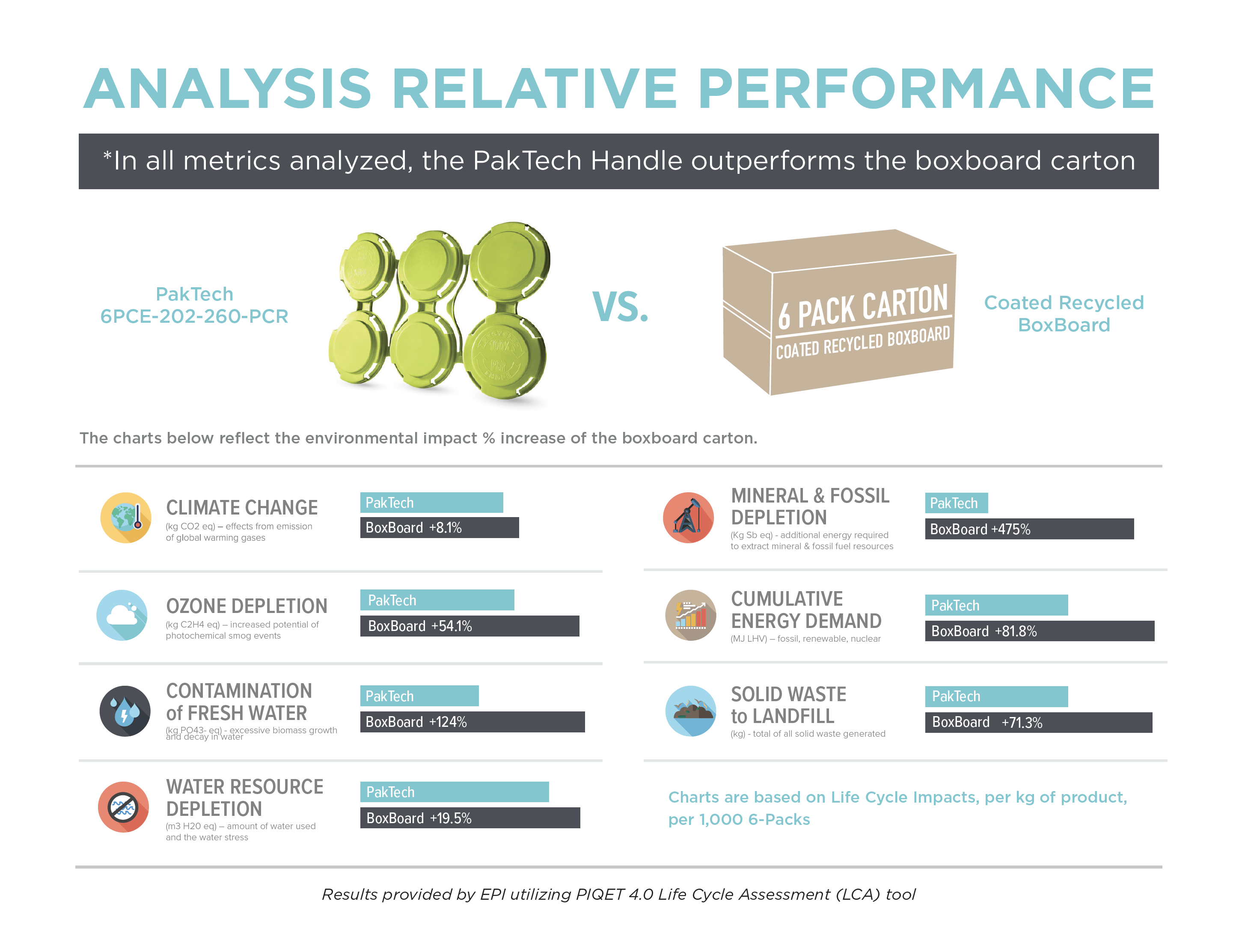
Both paperboard and plastic remain as widely popular packaging materials. Yet, negative perceptions of plastic persist due to the commonly misplaced notion that paper is “natural” whereas plastic is not. This perception has pushed retailers and brands to make the switch away from plastic to paperboard but not without consequential environmental impacts.
The increase in demand for paperboard packaging has surfaced serious environmental concerns, often unspoken such as deforestation, water pollution and increased greenhouse gas emissions, sparking a larger conversation on which material is more sustainable – paperboard or plastic? Here, PakTech unpacks this ongoing debate comparing the two materials from a holistic point of view.
A Full Life Cycle Perspective
A strong presumption exists among consumers that paperboard is somehow “natural.” But upon reflection, neither paperboard nor plastic really exist “in nature”: both are human made through large-scale processes that have environmental costs but provide significant benefits in return – from protecting our food to ensuring hygiene - that necessitate their use in today’s society.
With this in mind, how can consumers make more responsible choices? They can do this by weighing the relative costs and benefits of each material from a life cycle perspective, taking into consideration the production, use and waste stages. When evaluated from this perspective, it becomes clear that plastic, particularly recycled plastic, performs better than paperboard.
Take resource intensiveness for instance, the pulp and paper industry is one of world’s heaviest user of fresh water, requiring billions of tonnes per year while also being heavily energy-intensive to power pulp mills. The increase in demand for paper is putting pressure on supply chains (two billion trees are cut down each year for packaging alone), threatening biodiversity while deforestation reduces nature’s carbon storage capacity during a time when its role is critical to tackle climate change. In addition, while paperboard is perceived as more “natural,” the processing stage relies on chemicals to pulp woodchips – a significant source of water pollution.
PakTech handles are manufactured more efficiently in comparison. While conventional plastic already embodies a smaller carbon footprint compared to paperboard due to less energy required for its production and transportation, PakTech handles perform even better by requiring 90% less energy than virgin plastic. Created from recycled feedstock, they do not deplete natural resources, reduce fossil fuels and avert plastic waste from our environment.
It also shows superior qualities during the use and resuse stage. Thanks to attributes such as amenability for strong and flexible parts, water-resistance, durability, and structural soundness, plastic is the ideal reusable material, a packaging format which shows better environmental performance than their single-use counterparts. A 2020 paper from Reloop showed that reusable HDPE bottles produce 65% less carbon emissions that single-use HDPE bottles. Meanwhile, the weak structural integrity of paperboard makes it unsuitable for reusable packaging and means it becomes easily damaged, creating unnecessary waste.
And when it comes to recyclability? Paperboard is often chosen over plastic as consumers immediately recognise it as recyclable. In reality, recycling paperboard is more tricky than assumed as its recyclability is compromised when contaminated (think greasy pizza box) or coated with resin to create moisture resistance properties.
Further, when paperboard is reprocessed into new products, the quality of the fibres diminishes with each treatment, resulting in only a 17% yield rate for recycled material. When it comes to HDPE, PakTech’s material of choice, the material retains 100% of its full reuse properties when recycled into new products almost indefinitely. Further, plastic recycling uses 65% to 88% less energy than producing virgin plastic, as opposed to 25% less energy for recycled paperboard than from new materials.
Importance of Choosing Circular Material
While the plastic versus paperboard debate rages on, the demand for circular plastic is increasing. Businesses are making strides in both the uptake of mono-material plastic packaging to enhance recyclability and packaging with increased recycled content while regulators across the UK and Europe are setting legislation to incentivise producers and importers to use more recycled plastic content.
At PakTech, our material of choice is 100% recycled HDPE for its circular attributes that reduce unnecessary waste such as water-resistance and durability that further reduce our reliance on finite resources. PakTech handles are always second life products, even third when it comes to our Pak to Pak can carriers that are made out of recycled PakTech handles.
PakTech has been using 100% recycled plastic to produce our handles since 2012, making us a pioneering solutions-provider in sustainable and circular packaging. With our 100% recycled, reusable and recyclable handles, consumers and businesses will be reassured that they’re making a smart and sustainable choice when it comes to packaging.
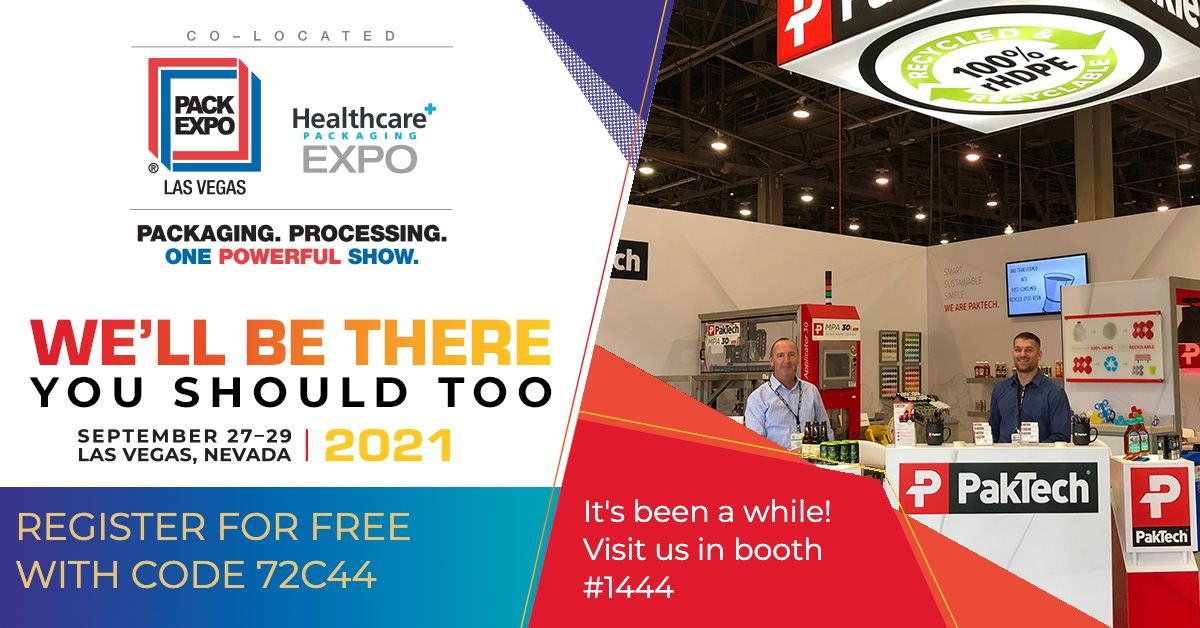
Join PakTech at PACK EXPO Las Vegas // Sept 27-29th. Your Primary Source For Secondary Packaging!
Use code: 72C44 to register for FREE and join PakTech at PACKEXPO 2021 in booth #1444. Click To Register: http://pelv.hcpe.2021.nvytes.co/pelvhcpe21/register/72C44.html
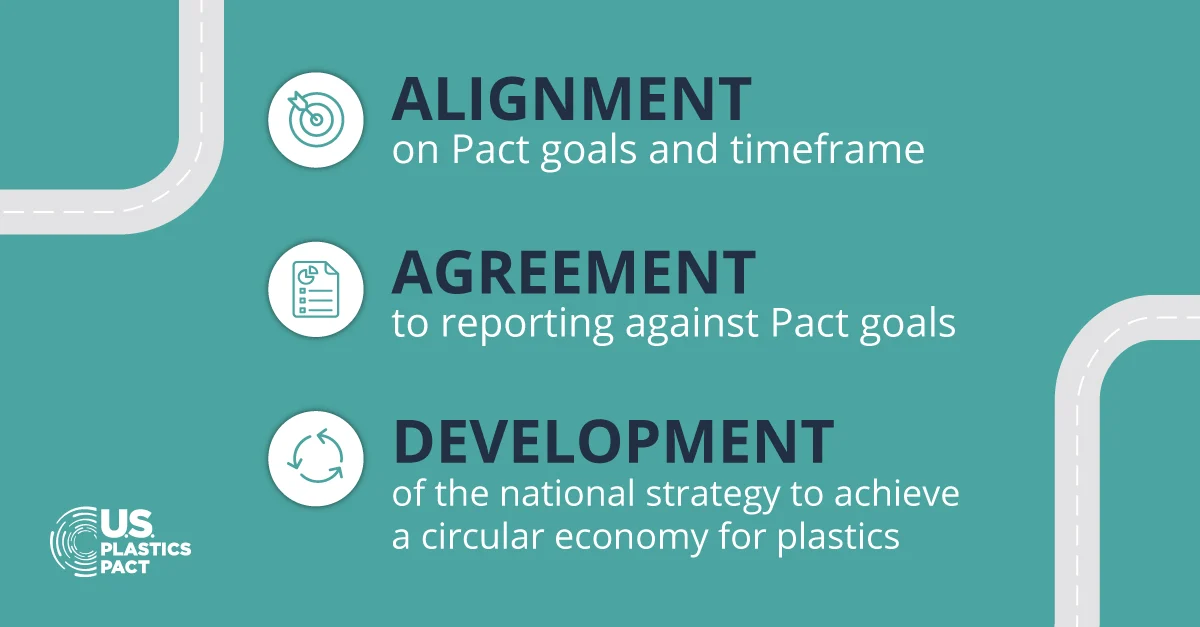
PakTech assists with launching The U.S. Plastics Pact's (“U.S. Pact”) “Roadmap to 2025,” an aggressive national strategy illustrating how the U.S. Pact, PakTech and fellow signatories, known as Activators, will achieve each of the U.S. Pact’s four 2025 targets through specific actions, responsibilities, and interim timeframes to realize a circular economy for plastics in the United States by 2025.
Launched in August 2020, The U.S. Plastics Pact is a consortium led by The Recycling Partnership and World Wildlife Fund (WWF) as part of the Ellen MacArthur Foundation’s global Plastics Pact network, which unites a holistic ecosystem of cross-industry stakeholders behind a common vision and national strategy to address plastic waste at its source by 2025. PakTech joined as a Founding Activator of the U.S. Pact, and participated in the development of the Roadmap to 2025.
“We are not only excited to be a part of U.S. Plastics Pact initiative in support of circular economy efforts, we are also proud to be amongst an elite group of corporations that look to a common goal of preserving our environment and economy,” says Gary Panknin, PakTech’s Sustainability Officer.
As an Activator of the U.S. Pact, PakTech joins other stakeholders across the plastics value chain in achieving systemic change and accelerating progress toward the following 2025 targets by inspiring and supporting upstream innovation through coordinated initiatives such as rethinking products, packaging, and business models in order to transition away from today’s take-make-waste model to a circular economy where plastics never become waste:
- Define a list of packaging to be designated as problematic or unnecessary by 2021 and take measures to eliminate them by 2025.
- 100% of plastic packaging will be reusable, recyclable, or compostable by 2025.
- By 2025, undertake ambitious actions to effectively recycle or compost 50% of plastic packaging.
- By 2025, the average recycled content or responsibly sourced bio-based content in plastic packaging will be 30%.
“PakTech is proud to demonstrate our achievements of already exceeding some of the goals being put into place by providing 100% recycled plastic packaging products that are 100% recyclable and reusable,” says Gary Panknin. “This joint partnership allows PakTech to further demonstrate our abilities and stand out as a prominent and sustainable player in the packaging industry.”
The U.S. Pact’s Roadmap is designed to kick-start action and help U.S. industry leaders and packaging producers develop a national strategy, advance shared goals, and measure the strength of progress through annual reporting. This national strategy will assist Pact Activators in reaching ambitious goals by 2025 that they could not otherwise meet on their own through sharing knowledge, optimizing investments, identifying gaps, overcoming systemic barriers, and implementing policies.
“The current state of U.S. infrastructure, coupled with the lack of incentives to utilize recycled content in plastic packaging, have put immense strain on the value chain,” said Emily Tipaldo, Executive Director, The U.S. Plastics Pact. “The Roadmap is designed to help U.S. industry leaders act on the significant, systemwide change needed to realize a circular economy for plastics by 2025. The timeframe is short, and the workload is immense, but if we choose to do nothing, the visions of a circular economy across the U.S. will give way to the status quo. We look forward to working with all our Activators to drive this critical change.”
The Roadmap holds PakTech and other Activators of the U.S. Pact accountable to sustainability objectives by creating the pathway in which companies, governments, and NGOs can successfully ensure that plastics remain in the U.S. economy and out of the environment for years to come.
To read the U.S. Pact’s full Roadmap, please visit usplasticspact.org.
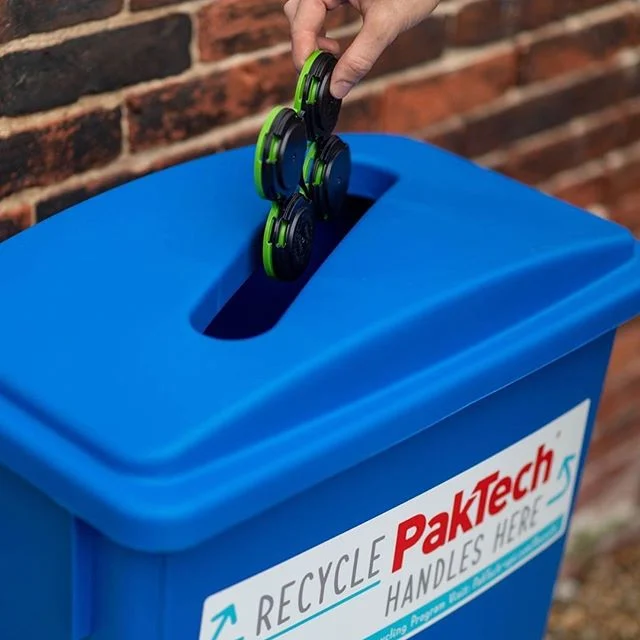
We at PakTech are proud of our recycling program. Alongside with our 100% recycled plastic packaging solutions, the recycling program supports our commitment to sustainability. These initiatives have helped us repurpose the equivalent of over half a billion (644,203,483 to be exact) discarded milk jugs, keeping roughly 83 million pounds of plastic out of the waste stream. This is plastic that wasn’t sent to a landfill (or the ocean), but was instead repurposed, often multiple times!
We couldn’t do any of this though without our partners. From the consumer drop-off partners plus the consumers who recycle, consolidators who collect used handles, and reprocessors who transform them into new products, it’s our partners who help make sure the 100% recycled plastic within each PakTech handle is recycled and repurposed again and again.
Here are some of the ways our partners are helping to make PakTech’s recycling program a success.
Drop-Off Locations & Partners
Breweries, grocery stores, liquor stores, and other retail locations form the backbone of the PakTech recycling program. Search our drop-off locator and you’ll find hundreds of locations available for consumers and businesses alike to drop off their PakTech handles for recycling. This is the easiest way to get involved with our recycling program, and every partner that joins ensures hundreds of additional PakTech handles will be recycled and repurposed into new products each year.
Take Blindman Brewing of Lacombe, Alberta. They joined the PakTech Recycling Program recently, becoming a drop-off location. Being good environmental stewards is important to them, which is why they decided to join the recycling program to help make a difference.
"There's something special about the circular nature of people in Alberta recycling their milk jugs, which are then turned into the PakTech handles that hold their favorite beers, and then they recycle those which are turned into even more PakTech handles," said Kirk Zembal of Blindman Brewing. He went on to say, “People care about recycling, and are disheartened with some of the news around it—but we want to help remind people that high value plastic is very recyclable and here's a way to do it.
That’s why Blindman Brewing decided to take the next step, and become a consolidator. They’ll be collecting PakTech handles far and wide in their home province, with big goals in mind. "We think, with a little will and great partners who are willing to invest their time and effort, that we can recycle PakTech handles from all across Alberta."
Community Consolidators
When it comes to consolidators who are trying to make a difference, the team at Blindman aren’t the only ones. In fact, you don’t even need to be involved with the food and beverage industry directly to get involved. Take the story of Walmart’s Stephanie Garman Hackmann for example.
In partnership with Walmart Sustainability Resources, Stephanie acts as a consolidator liaison to distribute PakTech bins and educate local breweries about the program. Thanks to her efforts, 10 businesses in the Fayetteville, Arkansas area have become involved in the program. This has had a huge effect on recycling of PakTech handles in the area, and it has been enormously rewarding for Stephanie as well.
“To me, it means that the handles my house goes through each year are now being recycled and not landfilled,” said Stephanie. “And not only that, a large portion of our community’s handles are also being recycled. I’ve been able to see others bringing in bags of handles to their local brewery for recycling and it puts the biggest smile on my face. They don’t even realize the person responsible for getting this program set up is having a beer a table away.”
Stephanie went on to share the credit with others. She said, “It has meant so much to me to have the enthusiastic participation by our local breweries and stores, the continued support of local and regional recyclers who are actually doing the work, and the involvement of the local press in helping share the message. They are all the real heroes in making one person’s dream of creating less waste a reality.”
Reprocessing Handles For a Third Life (And Beyond)
When it comes to partners who are helping make a circular economy come to fruition, look no further than The Broomsmen. We always imagined PakTech handles being reused to create new products such as park benches, pots, and even new PakTech handles, and it’s people like the team at The Broomsmen who are making that happen.
They’ve been active in PakTech's recycling program for two years, and regularly collect used handles from all of Central Oregon's major breweries. When we spoke to The Broomsmen co-founder Phil Torchio, he emphasized what being part of the PakTech Recycling Program means to him and his company.
“We are building an organization based on the manufacturing value of recovered PakTech,” said Phil. “We believe together we can revolutionize the plastic manufacturing industry by locally producing high value recycled products that tell a story. Waste is just a misplaced resource. PakTech's program proves that.”
In addition to using recycled plastic to make a product we’ve long envisioned—planter pots—The Broomsmen team is reprocessing PakTech handles and creating high end decorative panels for the furniture and architectural industries. “We use PakTech because of the cleanliness and the vast color selection of the material,” said Phil. He went on to say:
“It should be noted that this is the third product to be made from this plastic (Milk jug, PakTech handle, Panel). There is a common misconception that plastic can only be recycled "once or twice" before it ends up in the landfill. We are proving plastic can be highly sustainable and offers a much lower carbon footprint than other claimed "green" or "biodegradable" products. The key to the story is how you utilize the stored value in plastics. This is a story that needs to be told!”
A Recycling Story Being Told
We agree with Phil, Stephanie, Kirk, and our other partners. We think it’s vitally important to our planet’s future for all of our natural resources, plastic included, to be used and reused thoughtfully. That’s why we launched the PakTech Recycling Program, but without our partners—as well as all the consumers recycling—we wouldn’t be able to make it a reality.
Interested in joining the over 500 organizations involved in the PakTech Recycling Program? Learn how to become a partner and fill out the Recycling Participation Form to join the club. And if you have some PakTech handles in need of recycling, visit our consumer drop-off locator to find drop-off locations near you.
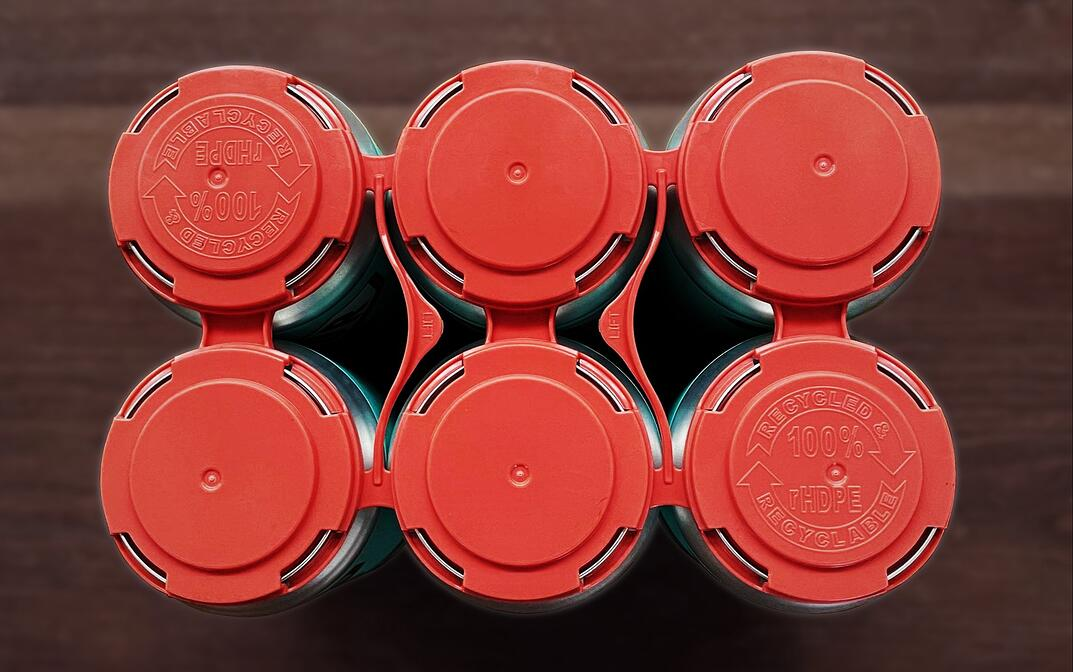
Since its very beginnings, PakTech has constantly evolved and innovated to meet our clients’ ever changing needs. Our origins are humble, having started out in 1983 as a small job shop that designed and produced moulds at request. Now, PakTech handles are found across the globe and are helping more and more businesses to make the most sustainable choice for secondary packaging. Here, we will hear from Tom Lucas from West Berkshire Brewery, on why they choose our PakTech packaging solutions to handle their products.
Why did you choose to switch to PakTech packaging handles?
Responding to our customers’ demand for sustainable packaging, we wanted to build a new packaging line from scratch to fit our range of mixed and multi pack offers. We decided to collaborate with PakTech to come up with a packaging that aligns with our brand aesthetically and with our commitment to sustainability.
Which sustainability and practical attributes stood out to you?
PakTech handles are created from recycled plastic. They don’t introduce any new plastic into the system, and they don’t cost us anything in trees. They can be applied quickly and easily on our packaging line without the need for massive capital investment.
While the shift to all cardboard packaging may prevent the creation of new plastic, it is also important to reflect that cardboard is made from wood. Our forests are the lungs of the earth, recycling carbon dioxide into oxygen, and the vast deforestation in the Amazon and across Europe is a massive and significant factor in climate change. That’s why we also need to focus on developing circular solutions that draw from waste that already exists, so our forests don’t disappear further. That’s why solutions like PakTech is a vital development and was the perfection solution for us
Client Centricity – Key to PakTech’s Success and Longevity
The evolution of PakTech’s products and services have been driven by our client needs, whether for practical or sustainability reasons. PakLock, our newest packaging innovation that was developed in response to client needs, is a prime example. The certified child resistant cap not only keeps cannabis-infused beverages safe from children but it is made with the same 100% recycled and recyclable material that make all our packaging solutions sustainable. The three design principles of PakTech handles – smart, sustainable, and simple – that guide each innovation enables our solutions to meet multiple demands simultaneously.
“Thanks to our drive to constantly innovate, we now produce many hundreds of different PakTech carrier handles for many thousands of different customers in the beverage, food, condiments, oral care, edible oil and multiple other markets for an international customer base,” says Jim Borg, president. “Our design team works tirelessly to come up with new innovations every week to respond to all our clients’ specific needs while helping them to become the most sustainable as they can be.”
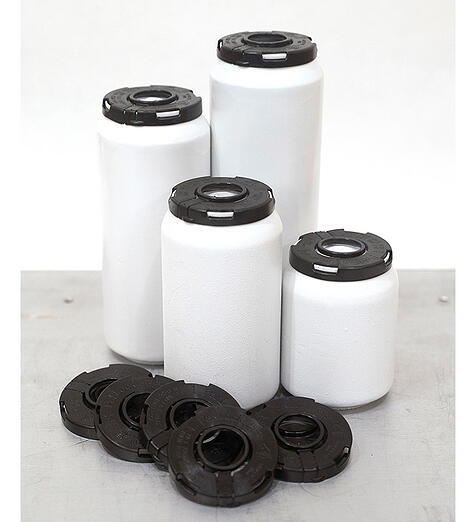
PakTech is announcing the release of a brand new product for the cannabis beverage market. The PakLock is a child resistant cap designed for THC beverages. Made from the same 100% recycled and 100% recyclable plastic as PakTech’s popular multipacks, the PakLock is designed to be a safe, secure, and simple solution to allow responsible adults to enjoy their THC beverages without children being able to access them.
Developed by PakTech’s engineering team and third- party certified meeting the child-resistant criteria set forth by 16 CFR Part 1700.20, the PakLock is an important innovation in the growing cannabis beverage market. PakLock provides a cost effective solution to Child Resistant Packaging needs that is easy to apply, fits snug on all standard 202-260 aluminum can formats, and is removable by adults—while being certified Child Resistant Packaging (CRP).
“As cannabis became more readily available in the recreational market, both in Canada and state by state in the U.S., we started to receive inquiries about whether we had any child-resistant or tamper-evident packaging,” said Lloyd McGriff, Director of Sales for PakTech. “That was when we realized we could leverage our experience from our PakTech can carriers and meet this new market need.”
That’s when PakTech’s engineering team went to work. "Developing the PakLock presented unique challenges," explained Vice President and Director of Engineering Zak Borg. “Designs had to be modified significantly so they would perform uniformly in strict certification testing using a wide specification resin.” But with diligent effort, the PakLock was successfully created and certified.
“My favorite part of the development process were the many aha moments as we studied how to make it work—several of which have given rise to new solutions to other design challenges as well,” said Zak.
And it’s sustainable. Like all of PakTech’s products the PakLock is made from 100% recycled HDPE #2 plastic, which means every PakLock is produced from existing recycled plastic. And when you’re done? They’re 100% recyclable as well.
Designed to be secure and durable with an attractive minimalist design, the PakLock is an affordable solution to securing THC beverages for retail sale. Whether you’re a brand owner, a distributor, a dispensary, or a parent looking to enjoy your THC beverages responsibly, the PakLock is designed with you in mind.
The PakLock is available for purchase today to all of our partners. Contact your PakTech representative, or visit our website for more information.