

While most winemakers understand the importance of potassium fertilization, they don't like applying it late. This is because potassium ions form an insoluble salt with tartrate ions and can leave your wine lacking acidity. High pH wines (pH > 3.7) are not only flabby tasting, they’re also microbially perilous as one of the things that makes wine so darn hardy is its acidic quality.
Potassium can cause a disaster if it’s concentration in must is above 1800 ppm. Regardless, time after time We've seen a vineyard suffering severe potassium deficiency, and winemakers are still against any fertilizer application. This is especially frustrating because if you take tissue samples at bloom and veraison (as you should!), you may not even know you’re deficient until you’re past the “deadline” for potassium fertilization.
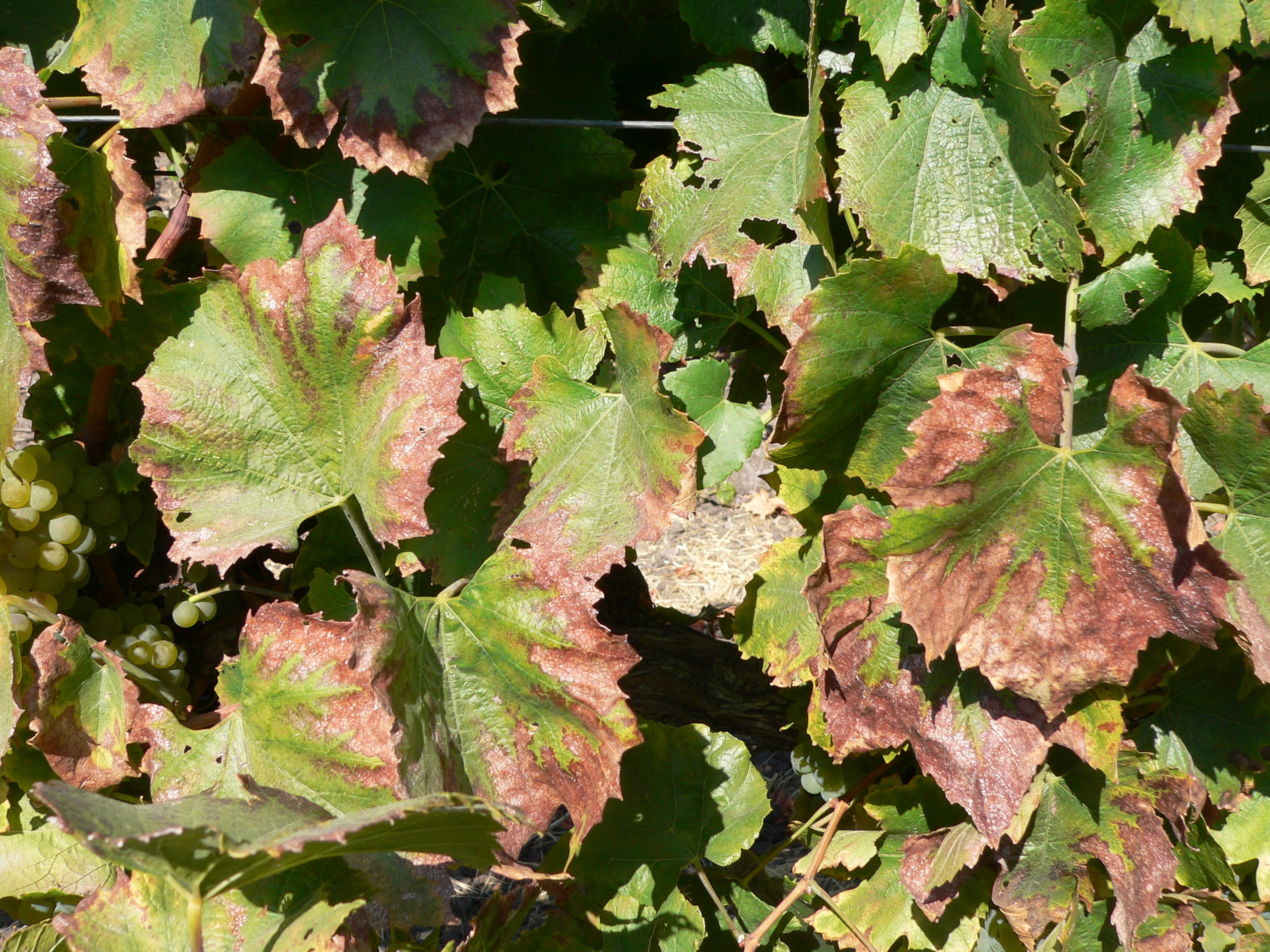
If your vines look like this, you may want to consider applying potassium even late in the season
Ask not what potassium can do for you...
Water relations:
First and foremost, K is responsible for osmotic regulation. As the predominant cation in plants, K provides much of the “pull” needed to draw water into plants. No place is this more evident than in guard cells, the mouth-shaped cells that surround the stomata. When stomata are open (K flows into the cells), the plant transpires, cooling its tissue while at the same time allowing for the gas exchange necessary for photosynthesis. Depending on variety, the leaf may close its stomata (K flows out) to conserve water.
If your vines are severely K deficient, they are going to be more sensitive to water stress and less likely to react to deficient hydration. This year, there’s no need to stress vines more than you have to.
...
Sugar loading aka ripening:
K is essential for maintaining electrical neutrality and for the synthesis and correct functioning of ATP, the powerhouse of the cell. When K is deficient, sugar loading takes a nose-dive so you may end up with fruit that doesn’t ripen.
Sugar accumulation is also theorized to be the trigger for anthocyanin synthesis. Therefore, you may be sacrificing color in addition to plain old physiological ripeness (i.e. sugar). (Do and Cormier, 1991).
This is particularly important if your vines have Red Blotch, a virus that limits the vine’s capacity to ripen fruit. We’ve found keeping on top of potassium fertilization can prolong the life of a virused vineyard at least for a few seasons…you will eventually want to rip that puppy…rip it right out.
You may even lower your acidity!
When your leaves senesce early, either due to excessive water stress or severe nutrient deficiency, that K in the leaves gets exported, preferentially to fruit and permanent structures. So if you’re holding off on K at all costs to maintain acidity, this may backfire. It’s like rain on your wedding day.
So in other words…
A lack of Potassium may mean your acidity is safe (or not), but at the expense of yield, ripeness, and overall quality.
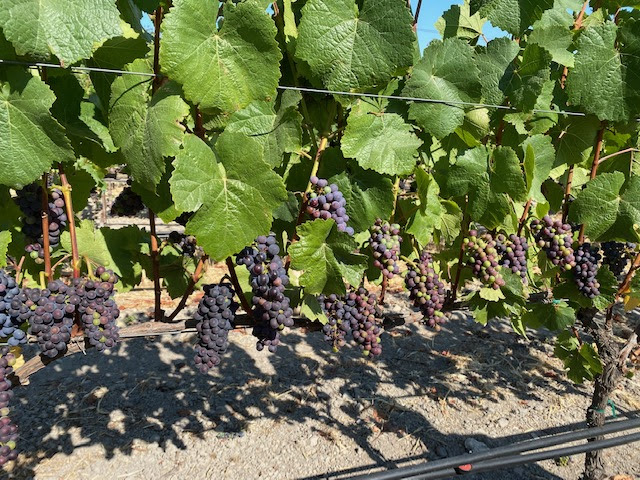
You may have trouble adequately ripening your fruit if your vines are severely deficient in potassium
Want to read more?
Click here to check out the full blog article. Don't forget to subscribe!