

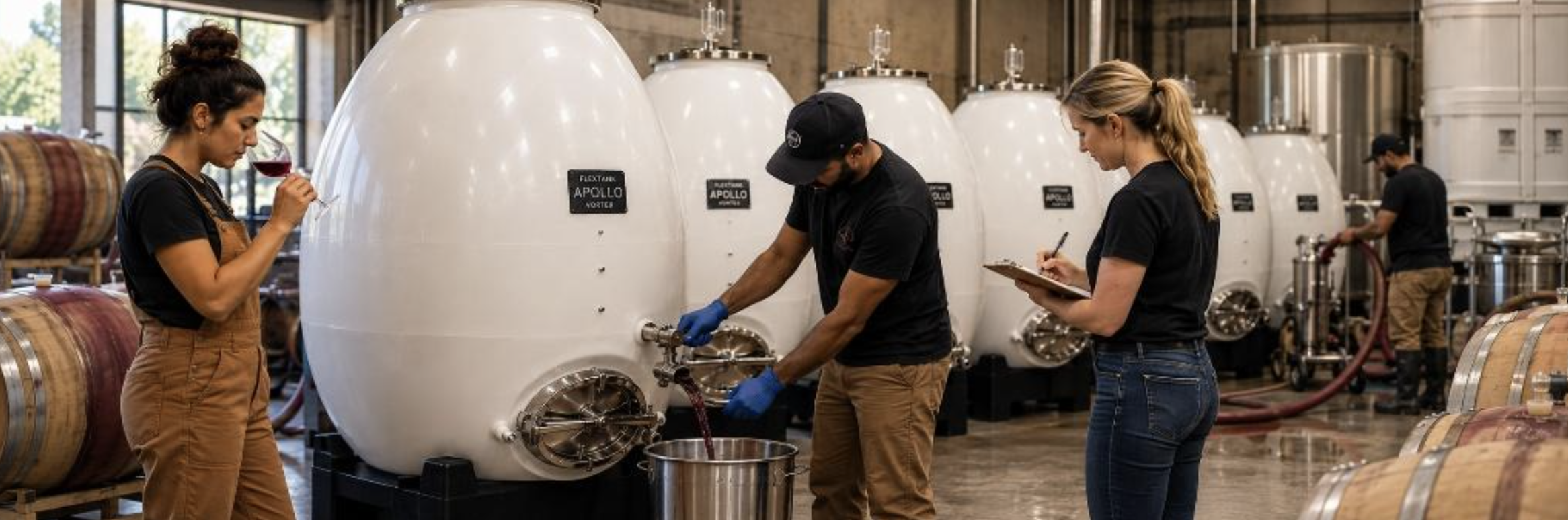
Vortex vessels use natural movement, oxygen permeability and egg-shaped geometry to support active fermentation and aroma development.
Fermentation is a dynamic process. Juice or wine constantly changes as yeast consumes sugar, releases carbon dioxide and creates heat. Inside a conventional vessel, movement can slow and yeast can settle.
Egg-shaped vessels create a different fermentation environment.
Curved geometry promotes natural convection. Fermenting liquid circulates continuously. Yeast remains in suspension longer.
Yeast stays in greater contact with the fermenting wine or cider throughout the vessel.
Greater circulation and yeast contact keep fermentation active, strengthen aroma development and influence the character of the finished wine or cider.
1. The Egg Shape Keeps Fermentation Moving
Egg-shaped vessels promote natural convection during fermentation. Heat and rising CO2 help move liquid through the vessel. Curved walls encourage continuous circulation and help keep yeast moving. The result is a more active fermentation environment from top to bottom.
Natural convection keeps fermenting wine or cider in motion.
Circulation helps keep yeast suspended and active.
Continuous movement reduces the need for manual agitation or mixing.
2. Fermentation Builds Aroma
Most fermentation-derived esters develop as yeast converts sugars into alcohol. Esters contribute fresh fruit and floral aromas to wine and cider. Vortex circulation keeps yeast suspended and promotes consistent fermentation activity throughout the vessel.
Ester production: Active yeast metabolism produces fruity and floral esters during fermentation.
Yeast circulation: Natural convection keeps yeast distributed throughout the fermenting liquid and helps maintain contact with available nutrients.
Aroma development: Fermentation conditions also influence the release of aromatic thiols and the expression of terpenes. Pyrazines contribute distinctive varietal characteristics.
3. Oxygen Supports the Fermentation Environment
Yeast needs oxygen during early fermentation to develop healthy cell membranes and reproduce. Vortex vessels combine oxygen-permeable construction with natural circulation to influence oxygen exposure and yeast activity throughout fermentation.
Oxygen helps yeast produce sterols and fatty acids essential for healthy cell membranes.
Natural circulation distributes yeast throughout the fermenting liquid and promotes a more consistent fermentation environment.
Oxygen management influences yeast metabolism, fermentation performance and the development of desirable aroma compounds.
4. Yeast Stays in the Fermentation Process
Yeast does the work of fermentation. As fermentation progresses, yeast cells can settle toward the bottom of the vessel. Natural convection in egg-shaped vessels helps keep yeast suspended and distributed throughout the fermenting liquid. More consistent yeast contact maintains access to sugars and nutrients, supports fermentation activity and reduces the need for mechanical stirring.
Suspended yeast maintains greater contact with fermentable sugars and available nutrients.
Continued circulation helps distribute yeast throughout the vessel instead of allowing cells to accumulate at the bottom.
Sustained yeast activity influences fermentation performance and the development of aroma and flavor compounds.
5. Fermentation Character Can Carry to the Bottle
This advantage can be especially important for cider. Many ciders move from fermentation to packaging relatively quickly. Vortex Apollo vessels give cideries a practical way to support active fermentation while increasing production capacity.
Fermentation develops important fruit and aromatic compounds.
Shorter production cycles can help preserve fresh fermentation character.
Strong aroma development during fermentation can carry into the finished package.
Use Vessel Shape to Your Advantage
Market pressure, reduced consumption, changing consumer tastes and greater demand for quality are reshaping wine and cider production. Producers need more flexibility, faster turnarounds and greater control over aroma and flavor development.
Vortex vessels help meet those demands. Egg-shaped geometry promotes natural circulation and active yeast contact. Oxygen-permeable construction supports fermentation without routine stirring or separate oxygen introduction. Producers can create high-quality wines and ciders, turn production lots faster and adapt more easily to changing production needs.
Smooth vessel walls also simplify cleaning and sampling while reducing water and chemical use. Long service life and easy handling add production efficiency and sustainability beyond fermentation.
Put Vortex Fermentation to Work
Flextank Apollo Vortex vessels combine egg-shaped geometry with oxygen-permeable polymer construction. The engineered Flextank Vortex vessels provide controlled oxygen permeability through the vessel wall. Wineries and cideries gain another way to manage fermentation, increase production flexibility and develop distinctive finished products.
Flextank vessels help producers reduce cleaning, water and chemical use, improve cellar space, lower replacement costs and turn batches faster. Stackable, long-life designs support production from fermentation through maturation, storage and finishing. Multiple sizes give wineries and cideries more flexibility for seasonal releases, smaller batches and changing production needs.
Increase efficiency and create a more adaptable cellar strategy. Let’s talk.
📞 Call: +1-360-450-2694
📧 Email: flexsales@flextank.com
🌐 Visit: www.Flextank.com
Or simply fill out the form HERE for Free Consulting, and let’s get started.
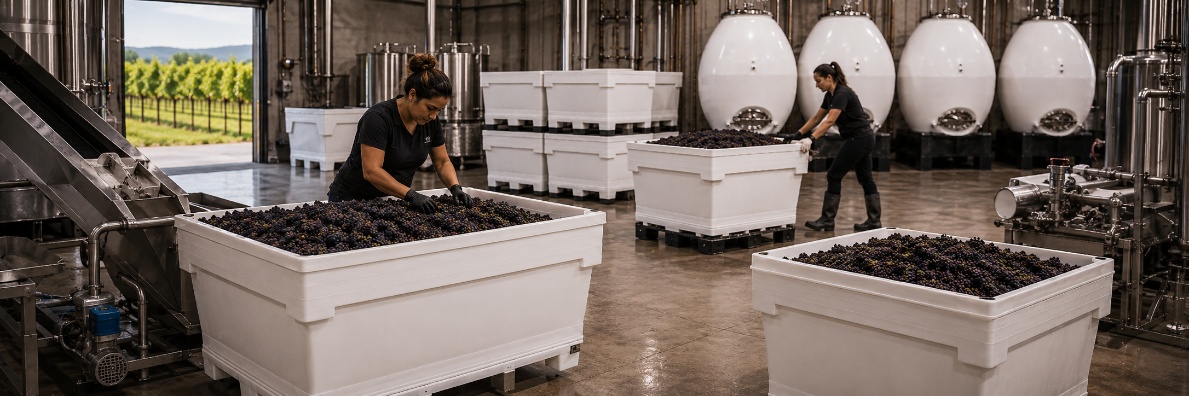
From Harvest Handling to Fermentation
Add flexible working capacity for smaller lots, trials, blending, and changing production volumes.
More ways to work with every lot.
Wine demand is becoming less predictable. Varietals, styles, price points, packaging formats, and production volumes can shift faster than permanent tank capacity.
Flexible capacity gives wineries more options for smaller lots, trials, changing production volumes, and other temporary cellar needs.
Smaller lots may need to stay separate. A trial may call for its own fermentation vessel. Harvest volumes can change quickly. Blending decisions can create temporary capacity needs that weren’t part of the original production plan. The opportunity is the same: use vessels that can take on different roles as production moves from harvest through fermentation, blending, and storage.
Here are four ways that added flexibility can support the work.
1. Preserve the Character of Individual Lots
Open-top bins let wineries keep fruit separated by block, clone, variety, picking date, ripeness, quality, or intended wine program.
Keeping fruit separated gives winemakers time to evaluate each lot and decide how it fits into the wine program. Individual lots can retain their identity longer before becoming part of a larger fermentation or blend.
Separate lots also give winemakers a clearer view of how different fruit responds through fermentation. This creates more information for later blending and wine-program decisions.
2. Create Accessible Fermentation and Punch-Down Capacity
Open-top bins give winemakers direct access to the cap and must throughout fermentation. The open design supports punch-down, sampling, additions, temperature checks, and close observation of fermentation progress. Direct access also gives winemakers more control over skin contact, extraction, color, tannin development, and aroma retention as each lot develops.
Each fermentation can behave differently. Easy access makes it simpler to assess the lot and adjust the approach as conditions change:
Temperature, nutrients, oxygen exposure, sanitation
The fermentation progress still requires careful monitoring throughout the process.
3. Explore New Wines Without Committing Permanent Tank Capacity
Open-top bins give wineries practical capacity for smaller fermentation lots.
Smaller lots create options to test new varietals, blend components & styles.
Dedicated trial capacity also keeps larger tanks available for established production. Winemakers can assess quality, style, and fit before they decide whether an idea deserves more volume. Move the successful trial forward.
4. Put One Bin to Work Across Production
Open-top bins can serve more than one role as fruit and wine move through production. A bin may start with fruit handling or lot separation, move into fermentation, support punch-down and sampling, then carry the lot to the press.
Fewer vessel changes can reduce water and chemical use during cleaning. They can also cut handling time and improve cellar productivity.
Using one bin across multiple stages gives wineries more flexibility during harvest and helps crews move work through the cellar more efficiently.
Build More Options into Your Fermentation
Open-top bins give winemakers more room to separate lots, manage fermentation closely, test new ideas, and keep production moving. Flexible fermentation capacity also creates more options during harvest. Smaller lots can stay independent longer. Trial wines can develop at a manageable scale.
Flextank Versa Bins combine flexible fermentation capacity with durable construction designed for repeated use across the winery. Versa Bins support fruit handling, lot separation, open-top fermentation, punch-down, movement to the press, cleaning, storage, and reuse. Smooth interiors simplify sanitation. Nestable construction reduces storage space between uses.
Flextank Is Ready to Help You Grow. Email: flexsales@flextank.com Visit: www.Flextank.com Or simply fill out the form HERE for Free Consulting, and let’s get started.

Four ways to build more flexibility into production, respond to changing demand, and manage cellar costs.
Wine demand is becoming harder to predict.
Production volumes, wine styles, and price points are changing with it. The right vessel mix can help wineries match capacity to planned production, use cellar space more effectively, and respond as demand changes.
A well-planned vessel mix also creates room to test new styles, manage costs, and match each wine with the right capacity, aging environment, and market position.
1. Match Vessel Volume to Realistic Lot Demand
Shifting demand can leave wineries producing too much of one wine and too little of another. Matching vessel volume to expected sales gives wineries greater control over production, inventory, and cellar space.
Wineries can reduce one lot, expand another, or introduce new varietals, blends, packaging formats, and lower-alcohol wines. A broader range of vessel sizes supports those decisions and avoids dividing wine among numerous small vessels.
The right vessel capacity helps winemakers maintain quality, and focus cellar resources on the wines with the strongest demand.
2. Build Flexibility Into the Vessel Mix
Production needs can change from one wine to the next. Some lots benefit from smaller vessels, separate aging treatments, or targeted oak influence. Others can move into larger vessels that reduce handling and simplify cellar management.
A broader vessel mix gives wineries more options as volumes change. Winemakers can separate lots when the wine calls for a different treatment or combine compatible wine when multiple small vessels add unnecessary work.
The right capacities can also improve the use of cellar space and align each lot with its wine style, production volume, and market opportunity.
3. Reduce the Cost of Managing Smaller Vessels
Smaller vessels give winemakers control over individual lots, aging treatments, and oak programs. Every additional vessel also requires topping, sampling, cleaning, sanitation, and handling.
More vessels consume more water, chemicals, labor, and cellar space. They also increase evaporation and wine loss.
Combining compatible wine in larger vessels reduces the number of units crews must fill, top, sample, clean, sanitize, and move. Fewer vessels can lower water, chemical, labor, and handling costs across the production program.
4. Prepare for Changing Wine Styles and Price Points
Wine buyers are moving toward lower-alcohol options, fresher flavor profiles, smaller releases, alternative beverages, and more accessible prices. Wineries may need smaller lots for new concepts, larger volumes for value-driven wines, shorter aging programs, and production costs that support lower retail prices.
An adaptable vessel plan gives wineries room to introduce new concepts in focused lots, measure buyer response, and expand production as demand grows. Larger vessels improve efficiency for established wines that need to reach a competitive price point.
Flextank vessels let winemakers match vessel capacity and oxygen permeation to each wine without adding oak flavor. Barrels remain available for wines that benefit from targeted oak influence. Stackable Flextank vessels free cellar space and keep production volumes easier to adjust. Wineries can introduce new wines, scale successful lots, and align production costs with the price buyers will pay.
Anticipate Change. Adapt Production Faster.
Explore Flextank vessel options built to help wineries adapt to changing wine styles, production volumes, and buyer demand while improving cellar efficiency, sustainability, and production economics.
Call: +1-360-450-2694
Email: flexsales@flextank.com
Visit: www.Flextank.com
Or simply fill out the form HERE for Free Consulting, and let’s get started.

Changing tastes, softer demand, and higher costs are reshaping how producers make and sell every gallon.
Wine and cider producers face a different market than they did a few years ago. Consumer tastes are changing. Alcohol demand has softened. Labor remains difficult to find. Production costs continue to rise. Customers expect more variety while resisting higher prices.
The pressure reaches every part of the operation: what to produce, how much to make, how quickly to turn it, and how much it costs. Producers need more flexibility across production, labor, product development and operating costs. Here are five ways to build it.
1. Produce More Styles with Less Fixed Investment
Consumers want more choices. Make what customers want next: lower-alcohol products, new blends, seasonal releases, smaller production runs and club-exclusive wines and ciders.
Adding variety doesn’t have to mean adding major capital expense. Flexible production lets wineries and cideries test new products, adjust batch sizes and dedicate capacity to smaller programs without rebuilding the cellar around every new idea.
Test new styles in smaller batches.
Use flexible vessel sizes for seasonal and limited releases.
Separate oak treatment from vessel choice.
Add new products before committing to larger production runs.
2. Give Customers More Reasons to Buy
Lower overall alcohol demand puts more pressure on every customer relationship. Producers can respond with greater variety instead of relying on the same products and occasions.
Smaller releases and more product choices give customers more reasons to return. Create more reasons for customers to choose your brand:
Develop seasonal or limited releases around specific occasions.
Create club-exclusive wines or ciders with a clear point of difference.
Test new styles that reflect changing tastes and lower-alcohol demand.
Use smaller production runs to introduce new products with less inventory risk.
3. Get More Production from Available Labor
Labor affects nearly every part of cellar economics: Cleaning. Moving vessels. Topping. Monitoring. Filling. Emptying. Sanitizing. Product transfers.
Reducing unnecessary handling gives cellar teams more time for production. Look for equipment and processes that shorten cleaning, reduce water and chemical use, simplify movement and cut repetitive work.
Take work out of the process instead of asking workers to do more.
Reduce cleaning and sanitizing steps.
Use vessels and equipment that require less topping and handling.
Shorten product transfers and movement between production stages.
Standardize routine cellar tasks to save time and training.
4. Turn Smaller Batches Faster
Large production runs aren’t always the answer. Wine clubs, tasting rooms and direct-to-consumer programs create demand for smaller releases and more frequent product changes.
Production flexibility makes it easier to run limited batches, test new styles and bring successful products back into production quickly. Smaller batches in easy-to-clean, stackable, long-life vessels can also speed turnaround, simplify handling and use cellar space more efficiently.
Produce closer to demand. Turn successful products faster.
Use smaller batch sizes for club, tasting room and seasonal releases.
Choose vessels that clean quickly and return to production faster.
Use stackable vessels to increase capacity within existing cellar space.
Test new products before committing to larger production runs.
Reduce finished inventory tied up in slower-moving products.
5. Lower the Cost Behind Every Gallon
Customers are pushing back on higher prices while labor, materials, water, energy and equipment costs keep rising. Producers need to protect margin by lowering the cost to make, store and move every gallon.
Small improvements across several expense lines can have a significant effect on the cost behind every gallon sold. Review your:
Labor required per batch
Water and chemical use
Vessel & equipment replacement
Product loss
Cleaning and maintenance
Cellar space
Long term inventory
Protect margin by reducing the resources behind production.
Reduce labor required for cleaning, topping and handling.
Lower water, chemical and energy use.
Use long-life vessels and equipment to reduce replacement costs.
Cut product loss during storage and production.
Use cellar space more efficiently.
Turn inventory faster and reduce capital tied up in slow-moving products.
Make Your Cellar More Adaptable for Today’s Economy
Today’s market rewards wineries and cideries that can adjust faster. Match production to demand. Give the cellar more room to respond to what customers want next.
Produce closer to demand.
Turn smaller batches faster.
Reduce cleaning, topping and handling.
Protect margin across every gallon.
Match vessel to the product.
Vessel Choice Makes a Difference
Flextank vessels help producers reduce cleaning, water and chemical use, improve cellar space, lower replacement costs and turn batches faster. Stackable, long-life designs support production from fermentation through maturation, storage and finishing. Multiple sizes give wineries and cideries more flexibility for seasonal releases, smaller batches and changing production needs.
Increase efficiency and create a more adaptable cellar strategy. Let’s talk.
📞 Call: +1-360-450-2694
📧 Email: flexsales@flextank.com
🌐 Visit: www.Flextank.com
Or simply fill out the form HERE for Free Consulting, and let’s get started.

Four practical ways California wineries can modernize cellar practices, reduce water use, and build more efficient operations.
Water prices are soaring. California has less water to share: Farms, cities, businesses, and residents all depend on the same limited supply. Municipal water systems also need major investment to protect that supply and replace aging infrastructure.
Those costs are reaching wineries through higher rates, fees, and wastewater expenses. Water is no longer a fixed utility expense. It’s a production cost that wineries must actively manage. The cost goes beyond each gallon: pumping, heating, chemicals, labor, treatment, and disposal all add expense.
Wineries can use the water they have more efficiently: it starts with measuring where water goes, improving cleaning processes, reconsidering water-intensive equipment, and finding practical ways to recover and reuse appropriate water streams. These four strategies can help wineries reduce water use, lower related expenses, and build more efficient cellar operations.
1. Measure Where the Water Goes
Water is NOT a single monthly expense. Many winemakers know the total amount on the water bill. Fewer know how much water each process uses. Or what that use costs once labor, energy, chemicals, and treatment are included. Measure water by process, not only at the meter.
Treat water as a production input. Connect consumption to specific vessels, cleaning cycles, production areas, and operating activities. This level of detail helps wineries identify the processes that consume the most water, create the highest related costs, and offer the greatest opportunity for improvement.
Once wineries know where the water goes, they can set realistic reduction targets, compare processes, and measure whether changes are actually working. Track water used for:
Barrel and vessel cleaning
Floors and production equipment
Bottling operations
Cooling and temperature control
Landscaping and irrigation
Employee and hospitality facilities
2. Modernize Cleaning and Sanitation
Cleaning is essential. Using more water, chemicals, heat, and labor than the job requires is not.
Winery cleaning often includes a pre-rinse, cleaning agent, and final rinse. When teams repeat steps, use too much water, or rely on habit instead of a clear standard, costs rise quickly. The goal is not to clean less. It is to clean more precisely. To use less water, wineries can:
Standardize rinse and cleaning procedures
Match water pressure and volume to each task
Clean equipment before residue dries
Remove solids and debris before rinsing
Review chemical concentration and contact time
Train cellar teams to shut off hoses between tasks
3. Build Water Recovery and Reuse into the Winery
Reducing water use is only part of the opportunity. Wineries can also recover suitable water and put it to another productive use. Use less fresh water. Get more value from the water already purchased.
Start with the water that is easiest to recover, test, and reuse safely. Then build the collection, storage, treatment, and monitoring systems each use requires.
Start by separating water streams. Lightly used rinse water may have reuse potential. Water containing heavy solids, chemicals, or high organic loads may require treatment before it can be reused or discharged. Wineries can:
Capture final-rinse water for an appropriate earlier cleaning step
Reuse suitable water for initial floor or equipment rinsing
Separate cleaner water streams from heavily contaminated wastewater
Install collection tanks for approved non-potable uses
Treat process wastewater for vineyard or landscape irrigation
Screen solids before water enters drains or treatment systems
Recover heat from warm wastewater where practical
Monitor pH, salinity, organic load, and chemical content
Track how much water is recovered, treated, reused, and discharged
Review local regulations before directing recovered water to soil, irrigation, or another process
4. Reconsider the Cellar’s Vessel Mix
A modern winery’s vessel mix can have a major impact on water use, cleaning, and cellar efficiency.
Oak barrels can provide traditional aging and oak integration, but they also require substantial water, chemicals, labor, and maintenance. Wineries can also create oak character with staves, chips, and other adjuncts in more efficient Oxygen-permeable vessels.
The goal is to use every vessel more intentionally. Larger-format vessels can reduce the number of individual containers teams must clean, inspect, and maintain. Oxygen-permeable vessels, including Flextank, can provide controlled oxygen exposure for wines. Their smooth interiors and larger capacities can also reduce water, chemical, and labor demands. Wineries can:
Match each lot with the vessel it actually needs
Reserve barrels for wines that clearly benefit from barrel aging
Use larger-format vessels for fruit-forward and faster-release wines
Reduce the number of individual vessels that require cleaning
Compare vessel options by water, chemical, labor, space, and maintenance demands
Build a vessel mix that supports wine quality and operating efficiency
Bottom Line: Make Every Gallon Work Harder
Water efficiency is now part of running a more competitive winery.
Measure where water goes. Improve cleaning and sanitation. Recover and reuse suitable water. Match each wine with the vessel it actually needs.
These changes can reduce water, chemical, energy, and labor demands across the cellar. They can also help wineries lower production costs, improve operating efficiency, and make better use of a resource that will only become more valuable.
California wineries cannot control the price or availability of water. They can build operations that use it more wisely.
Flextank Is Ready to Help You Grow
Looking to reduce water consumption, improve production and revenue?
Let’s talk. We’re ready to help you scale with ease.
Call: +1-360-450-2694
Email: flexsales@flextank.com
Visit: www.Flextank.com
Or simply fill out the form HERE for Free Consulting, and let’s get started.
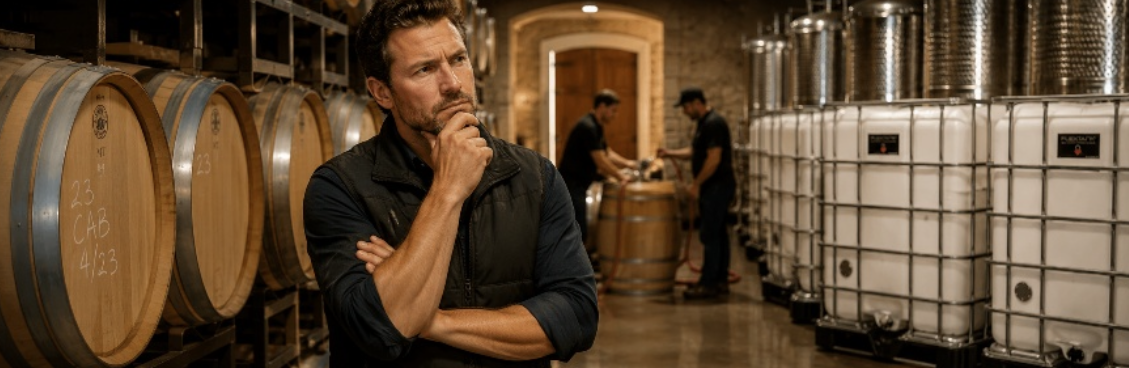
Lower Water, and Resource Use with a Smarter Cellar Strategy
The new Napa Green Winery Certification standards put greater emphasis on how wineries use water, energy and other resources across the entire operation.
Napa Green also requires wineries to establish operating baselines, track improvements and take measurable steps to reduce waste and greenhouse gas emissions over time. The challenge for winemakers is turning those goals into practical decisions throughout the cellar.
Water Efficiency: Where is the most water being used?
Energy Efficiency: Which processes require the most energy?
Supply Chain and Waste Prevention: How often is equipment replaced?
Climate Action: How much material is being purchased, transported and discarded?
Continuous Improvement: Where can production improve while protecting wine quality?
A more sustainable cellar does not depend on one major change. Instead, improve the processes, equipment and production decisions that use the most resources. Here are four ways to do it:
1. Measure Water Use at the Process Level
Napa Green specifically emphasizes water measurement, benchmarking and efficiency as part of winery certification. Reducing winery water consumption starts with knowing where the water goes. Cleaning tanks, barrels, hoses, processing equipment and production creates substantial water use.
The goal isn't simply to use less water. It is to use only the water required to achieve the necessary sanitation standard.
Depending on the winery's procedures, cleaning can involve hot water, steam, ozone or cleaning and neutralizing solutions. Modern wineries can reduce water consumption by:
Measuring water used during individual cleaning processes.
Standardizing rinse and sanitation procedures.
Using high-efficiency spray systems and cleaning equipment.
Replace water-intensive processes and modernize vessel use.
2. Reduce the Materials Used to Produce Every Gallon
Sustainability also means looking at how many containers, vessels and handling steps are required from the field through fermentation.
Long-life, reusable vessels can help reduce material use while giving winemakers more flexibility across several stages of production. O2-permeable bins, for example, can be used for grape picking, crush handling and initial fermentation. The same vessel can move with the wine instead of requiring a different container for each step.
Wineries can reduce resource use by choosing durable vessels that serve multiple stages of production:
Use the same vessel for picking, transport, crush handling and fermentation.
Reduce transfers between containers and the cleaning required between production steps.
Lower the number of single-purpose vessels that must be purchased, stored and replaced.
Extend production equipment lifespan by choosing durable vessels designed for repeated use.
3. Measure Sustainability Across the Life of the Vessel
A vessel’s sustainability profile is shaped by more than the material it is made from. Service life, cleaning requirements, water use, maintenance, transportation and replacement all contribute to its total impact over time.
Winemakers can compare vessels by the resources each one uses across years of production, not just by the material it’s made from.
A vessel that lasts for decades reduces the need for repeated manufacturing, purchasing, transportation and replacement. A longer service life can reduce material use and spread the environmental impact of manufacturing across many more years of production.
The same lifecycle thinking applies throughout the winery:
Expected service life
Water and energy use over time
Ongoing maintenance requirements
Replacement frequency
End-of-life reuse or recycling options
4. Build a Modern Hybrid Cellar Around the Wine
A modern hybrid cellar gives winemakers more flexibility to match vessel choice with wine style, production needs and sustainability goals while protecting wine quality and reducing resource use.
Winemakers can manage oxygen exposure, oak contribution and vessel selection as separate production decisions. Traditional cooperage can remain part of the program where barrel aging is important to the wine. Other lots can move into long-life, O2-permeable vessels for maturation and storage. Oak chips and staves can help develop specific flavor profiles and finishing characteristics without requiring every lot to age in a traditional barrel.
A modern hybrid cellar can support several Napa Green priorities at once:
Less cleaning water
Less chemical use
Fewer replacement vessels
More targeted use of oak
Less wine lost to evaporation
Longer equipment life
Turn Modern Winery Sustainability Goals into Measurable Progress
Napa Green gives wineries a clear direction: measure resource use, identify the biggest opportunities for improvement and make steady, documented progress over time. Sustainability requirements will continue to shape how wineries operate, invest and plan.
The wineries that begin adapting now can build more efficient operations, use fewer resources and help strengthen the long-term sustainability of the industry. The most effective changes will come from practical decisions across the entire operation. Use less water. Reduce chemical use. Extend equipment life. Cut unnecessary handling and replacement. Match each vessel to the job it performs best. And look for ways to improve production without compromising wine quality. A modern hybrid approach gives winemakers more options. Traditional methods can remain where they add the most value, while newer processes and longer-life equipment can help reduce resource use elsewhere.
Flextank Is Ready to Help You Grow
Looking to reduce water use and build a more sustainable cellar strategy? Let’s talk.
📞 Call: +1-360-450-2694
📧 Email: flexsales@flextank.com
🌐 Visit: www.Flextank.com
Or simply fill out the form HERE for Free Consulting, and let’s get started.

How today’s Pinot Noir winemakers can protect quality, improve flexibility, and adapt to a changing wine market.
Pinot Noir has never been an easy wine to make at scale. Now, the market is also changing.
Wine demand has softened.
Buyers are more selective.
Younger consumers are drinking differently, want value, sustainability, distinctive flavor.
That puts more pressure on every cellar decision. This thin-skinned, delicate variety demands careful control over extraction, oxygen exposure, maturation, oak influence, temperature, movement, and sanitation. Small cellar decisions can change aroma, texture, color, freshness, and balance.
The challenge is clear: protect the elegance and character of Pinot Noir while improving cellar flexibility, production efficiency, and margin. More control in the cellar helps winemakers do both. These four practices help winemakers make better Pinot Noir with more control and less waste:
1. Build More Precision into Extraction
Pinot Noir rewards restraint. The grape has less tannin and color than many red varieties. Careful extraction helps build structure without overpowering the wine. Winemakers need enough extraction to build structure, mouthfeel, and color. Push too far, and the wine can turn bitter, heavy, or lose aromatic lift. That makes extraction a control point, not a routine.
Modern best practice means adjusting cap management, pumpovers, punch-downs, cold soak, whole-cluster use, and fermentation temperature by lot, fruit condition, and wine goal. This is especially important as buyers look for Pinot Noir that delivers character, freshness, balance, and a premium experience at an accessible price.
Modern cellar practice means setting an extraction plan for each lot before fermentation begins, then adjusting it as the wine develops.
Track fruit condition, Brix, pH, color pickup, tannin feel, temperature, and aroma daily.
Use that information to guide punch-downs, pumpovers, maceration time, fermentation temperature, and pressing decisions.
2. Manage Oxygen with More Intention
Oxygen management is one of the most important control points in Pinot Noir production. Too little oxygen can leave wines tight, reductive, or slow to develop. Too much oxygen can flatten aromatics, reduce freshness, and shorten the wine’s life in-bottle.
For Pinot Noir, oxygen exposure should match the wine’s intended style, price point, and release window. A fresh, fruit-forward Pinot Noir may need a different oxygen plan than a structured reserve wine. A faster-release program may need a different maturation approach than a wine built for longer aging.
The goal is to give each lot the oxygen exposure it needs to develop texture, integration, and stability without losing lift, freshness, or varietal character.
Recommended actions:
Define the oxygen goal by lot, style, price point, and release window.
Track dissolved oxygen, free SO₂, pH, temperature, ullage, aroma development, tannin integration, and reduction risk.
Use that information to guide topping schedules, transfers, SO₂ additions, maturation time, movement, and blending decisions.
3. Give Each Pinot Noir Lot a Clearer Cellar Path
A single Pinot Noir program may include estate, reserve, vineyard-designate, appellation, wholesale, wine club, regional, custom, and faster-release lots. Each lot carries its own quality target, price point, maturation needs, and buyer expectations.
The goal is to keep every lot moving with purpose. Better cellar flow helps winemakers protect aroma, texture, balance, and identity while managing labor, space, cleaning, transfers, and blending with more control.
Recommended actions:
Map each Pinot Noir lot by tier, style, release window, and production goal.
Assign a clear maturation, monitoring, and movement plan for each lot.
Align topping, sanitation, transfer, and blending schedules by lot priority.
Use the most labor-intensive cellar practices where they add the most value.
4. Use Modern O₂-Permeable Vessels for Select Pinot Noir Lots
Once each Pinot Noir lot has a clear cellar path, the vessel choice should support the wine. Modern O₂-permeable vessels give winemakers another way to manage maturation with control. Flextank vessels provide consistent oxygen permeation in a neutral format. That helps protect fruit, support texture, and manage oxygen exposure without pushing the wine toward heavier oak influence. Winemakers can guide oxygen exposure, then use oak where it fits.
Flextank vessels also make the cellar easier to work. They stack, move, sample, clean, rack, and stage efficiently. That matters in tight cellars, growing programs, and earthquake-sensitive spaces.
Recommended actions:
Identify Pinot Noir lots that need controlled oxygen exposure.
Match Flextank vessels to fruit-forward lots, faster-release wines, private label, wholesale, regional, or select tier programs.
Add oak adjuncts only where they serve the wine.
Improve cellar flow with better access, easier movement, and faster sanitation.
Final Thoughts: Modernize the Method. Protect the Wine.
Great Pinot Noir depends on careful winemaking. But today’s market asks more from every lot, every cellar decision, and every production system. Winemakers have to protect elegance, texture, freshness, and identity while managing changing demand, tighter margins, labor pressure, sustainability expectations, and more diverse price points.
Modern cellar practices can help. They give winemakers better ways to make decisions by lot, style, release window, and market need. Strong Pinot Noir programs are not defined by a single method, vessel, or tradition. They are defined by how well each production choice supports the wine. That’s the opportunity: protect what makes Pinot Noir distinctive while building a more practical, flexible, and controlled path to quality.
Flextank Is Ready to Help
Are you looking to increase production, cellar efficiency, sustainability, and revenue? Let’s talk. We’re ready to help you grow and modernize your operation.
Call: +1-360-450-2694
Email: flexsales@flextank.com
Visit: www.Flextank.com
Or simply fill out the form HERE for Free Consulting, and let’s get started.
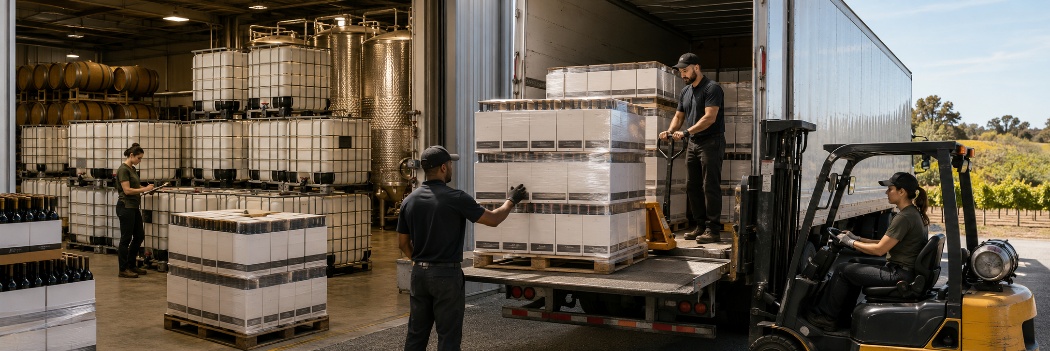
Private label wine demand is growing nationwide.
Private label wine is becoming one of the most important growth opportunities for wineries. Buyers want wines built for their customers, programs, and margins. They’re looking for winery partners who can deliver quality wines at the right price and move fast when demand changes.
Retailers want wines that stand out on the shelf.
Hospitality groups want better house wine programs.
Grocery and club store buyers want quality, consistency, and value.
A modern, flexible cellar strategy helps wineries capture that opportunity.
Private label growth can help wineries create new revenue, strengthen buyer relationships, and use cellar capacity more efficiently. But the opportunity comes with new production demands: Buyers may want different wine styles, smaller runs, and faster timelines.
Successful wineries will compete with more than available tank space. They will use modern, flexible production strategies to protect quality, control costs, and deliver the wine profiles private label buyers want. Here are four ways wineries can build a stronger private label program.
Start With the Right Private Label Partner
The strongest private label programs start before the first vessel is filled. Wineries should choose partners carefully before they commit cellar space, labor, fruit, and production time.
A grocery chain, restaurant group, resort, wine club, corporate brand, or specialty retailer may each want something different. Price point, flavor profile, varietal, packaging, timeline, quality standards, and reorder potential all matter.
The right partner helps a winery build revenue, protect production focus, and create a private label program that can grow over time. Before taking on a program, wineries should ask a practical question:
Will this opportunity create profitable, repeatable growth?
Build Flexibility Into Production Planning
Flexible production planning can be one of your biggest competitive advantages. Private label programs can change the normal rhythm of winery production:
One partner may need a smaller run.
Another may want a different style.
A retailer may ask for more volume after a label performs well.
A hospitality group may need wine ready for a specific launch date.
Before expanding private label production, review your cellar space, vessel availability, labor capacity, bottling windows, and storage plan. The goal is to produce the right wine for the right partner at the right time, without disrupting core winery operations.
Create Wines That Match Specific Market Needs
Private label buyers want more than a different label. They want wines built for a specific customer, occasion, price point, and brand promise. Private label is not just relabeling. The strongest programs start with the buyer’s market need and still reflect winery-level quality.
Private label programs let wineries apply their winemaking expertise with more precision. Build the wine around the target customer, sales channel, and occasion.
Retail buyers may want a fresh white with strong shelf appeal.
Restaurant groups may want a versatile red that works by the glass.
Resorts may want seasonal releases tied to the guest experience.
Wine clubs may want something exclusive that feels different from the core portfolio.
Each program may call for a different balance of flavor, freshness, oak influence, aroma, texture, and consistency. The label may belong to the buyer, but the quality still reflects the cellar.
Add Flexibility to Your Vessel Strategy
Private label growth can fill cellar space fast. One buyer may want a smaller run. Another may want a different style. A successful private label program may need more volume sooner than expected. Prepare your cellar in advance so you can use space efficiently and grow with private label demand.
Flextank O₂-permeable vessels help modern wineries add flexible capacity for fermentation, maturation, storage, and blending. Winemakers can create specific wine profiles, preserve fresh fruit character, and produce limited runs.
Flextank vessels help wineries:
Increase usable cellar capacity.
Support faster production planning.
Lower water and cleaning demands.
Control oak influence with alternatives such as FlexStaves.
Adapt vessel use as programs change.
Final Thoughts: Turn Private Label Growth Into Winery Growth
Private label wine demand gives wineries a practical path to new revenue in a changing market. Buyers want wines that feel specific, differentiated, and built for their audience.
Wineries that can respond quickly with quality, consistency, and flexibility will be in a better position to capture that demand. It begins by selecting the right partners for your winery. Build in flexible production planning. Create wines around specific market needs. Choose modern vessel strategies that make better use of cellar space, protect quality, and adapt as programs grow.
Flextank O₂-permeable vessels help modern wineries add flexible capacity for fermentation, maturation, storage, and blending. For wineries building private label programs, Flextank vessels can help turn demand into profitable, repeatable growth.
Flextank Is Ready to Help You Grow
Looking to improve production efficiency and revenue?
Let’s talk. We’re ready to help you grow with ease.
Call: +1-360-450-2694
Email: flexsales@flextank.com
Visit: www.Flextank.com
Or simply fill out the form HERE for Free Consulting.
And create those beverages faster, with more efficient production.

What happens when your best customers decide to drink half as much wine — but spend twice as much per bottle?
For decades, the wine industry ran on volume. More cases, more labels, more shelf space. But that playbook is being rewritten. Across every major demographic, consumers are steadily pulling back on how much wine they drink. Though research shows they are spending significantly more on every bottle they choose.
This sweeping shift toward premiumization has completely transformed what the market rewards. Today's wine buyer prioritizes chemical transparency, environmental ethics, authentic flavor, and pristine quality. Mass-produced, heavily manipulated table wine is losing ground fast.
Competing on volume alone is no longer a winning strategy. Today's most profitable growth opportunities come from consumers who drink less wine but spend more on quality. The following four strategies will help wineries capture that market.
1. Shift Production Toward Lower-ABV and Fresh Varietals
Demand for heavily extracted, high-alcohol reds is softening as consumers increasingly view what they eat and drink through a wellness lens. The modern premium wine drinker now demands wines that taste bright, fresh, approachable and alive.
Wineries that adapt are expanding their portfolios to include naturally lower-ABV options, crisp whites, and aromatic sparkling wines. One of the fastest-growing segments is the "chilled red" lighter-bodied, fruit-forward styles. Crafting these styles demands technical precision: shorter maceration times, temperature-controlled fermentations, and a winemaking philosophy that prizes lively fruit and crisp acidity over heavy wood tannins.
2. Transition to Conscious, Sustainable Agricultural Practices
Premium consumers don't just buy wine — they buy the story behind it. And increasingly, that story needs to include how the land is being treated. Transparency is the new luxury. Wineries willing to pull back the curtain on their vineyard practices are building the kind of brand loyalty that volume-focused producers simply cannot buy.
Environmental ethics are no longer a niche selling point. They are a prerequisite for serious placement on premium retail shelves and top wine bar lists.
Pursuing organic, biodynamic, or certified sustainable certifications signals to buyers that your winery shares their values.
Eliminating synthetic pesticides, reducing your carbon footprint, and showcasing genuine biodiversity in the vineyard are powerful differentiators that resonate deeply with the "drink better" consumer.
3. Implement Single-Serve and Waste-Reducing Formats
Drinking "less" creates a practical problem for consumers: a standard 750ml bottle is often more wine than one or two people want to open on a weeknight. Once uncorked, the clock is ticking. And oxidation doesn't care how premium the liquid is.
Forward-thinking wineries are solving this by putting premium-tier wine into right-sized formats. High-quality half-bottles (375ml) and premium canned singles allow consumers to enjoy a single luxury-tier glass without committing to an entire bottle. Without any sacrifice in quality perception.
For producers, the economics are compelling. Smaller formats often command a higher profit margin per ounce while dramatically reducing consumer waste and hesitation at the point of purchase.
4. Focus on Fruit Expression and Winemaking Precision
Today's premium wine drinker has made one thing clear: they want to taste the vineyard, not the winemaker's toolbox. Varietal character. Terroir. Freshness. Authenticity wins. Manipulation loses.
That verdict forces a hard look at traditional maturation.
Oak barrels carry real costs including: flavor variability, evaporation loss, sanitation headaches, and significant capital overhead. For wineries chasing precision and consistency, those variables compound quickly.
Leading wineries are responding. Many are now complementing or replacing barrel programs with Flextank oxygen-permeable vessels. Flextank mimics the exact oxygen transmission rate of a second-year oak barrel, and delivers micro-oxygenation benefits while remaining completely flavor neutral. Winemakers control oxygen exposure on their terms. Oak influence only enters when the wine calls for it. Precision. Consistency. Fruit expression. Profitability. Flextank delivers all four.
The Bottom Line
The "drink less, but better" movement isn't a trend. It's the new reality of the wine market.
Today's premium buyers consume less wine, but they demand more from every bottle. Consumers want quality, authenticity, sustainability, and a clear connection to how their wine is made. Wineries that adapt to these expectations will capture market share. Those that don't will struggle to remain relevant.
The path forward is clear: develop fresher, more expressive wines, embrace sustainable production practices, offer packaging formats that match modern lifestyles, and use precision winemaking tools that improve quality while controlling costs.
Flextank helps wineries make that transition. By combining production efficiency with winemaking precision, wineries can reduce overhead, strengthen sustainability efforts, and consistently produce the premium wines today's consumers are willing to pay for.
Flextank Is Ready to Help You Grow
Looking to improve production efficiency and revenue?
Let’s talk. We’re ready to help you scale with ease.
Call: +1-360-450-2694
Email: flexsales@flextank.com
Visit: www.Flextank.com
Or simply fill out the form HERE for Free Consulting.
And create those beverages faster, with more efficient production.
50% Off Domestic Shipping, 20% Off Flextanks Helps Cideries and Wineries Modernize, Scale Production, Increase Revenue, and Improve Margins.
Vancouver, Wash. – May 18, 2026 – Flextank, the leader in advanced Oxygen-permeable vessels for wine, cider, spirits and craft beverage fermentation and storage, today announced the company will provide 50-percent off all domestic USA shipping, 20-percent off all one-time orders of selected large Apollo, Stacker, Dexter, and Eco Flextank vessels, and 90-Day No Payment / No Interest Financing for a limited time through June 30, 2026.
The Flextank SpringFORWARD Program is designed to support smaller-mid-sized cideries and wineries that are working to compete better, develop more creative beverages that meet shifting consumer demand, and increase production and revenue in today’s evolving beverage market.
During the Flextank SpringFORWARD Program, the company will provide half-off domestic shipping, and a 20-percent discount for all one-time orders of new vessels over $5,000 within the Domestic USA. The SpringFORWARD Program also provides easy 90-Day No Payment / No Interest Financing to eligible Wineries and Cideries on all orders over $2,500 through June 30, 2026.
“Wineries and cideries are stretched thin by competition, changing market conditions, labor availability, and rising tariffs on fermentation, production and storage vessels. This new Flextank SpringFORWARD Program helps craft beverage operations reduce costs and gear up production, create faster batch turnaround, and improve margins,” said Jonathan Smalley, Flextank CEO. “Our award-winning Flextanks give growing wineries and cideries a modern way to reduce barrel costs, expand beverage lines, and drive new revenue.”Flextanks Also Help
Reduce Water Use 30-70 Percent
Flextanks are becoming the go-to alternative vessels for cideries and wineries that are also looking to reduce water usage. Flextanks drastically reduce water use via:
Reduced chemical and rinse water use: little to no chemical cleaning is required.
Faster turnaround: Vessels can be turned over faster, meaning fewer re-cleaning cycles.
Reduced prolonged cleaning operations: eliminates deep groove scrubbing and rinsing.
Simplified processes for smaller operations: reduced, unnecessary over-cleaning and water waste.
Flextanks Increase Craft Beverage Efficiency, Production and Revenue
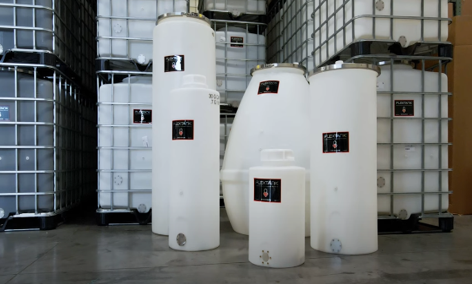
Flextanks are specifically engineered to provide higher production capability in less space, with efficient, controllable, sustainable production. This production efficiency helps craft beverage makers reduce bottle costs, boost the capacity of their barrel rooms, turnaround batches faster, and increase revenue.
The revolutionary Flextank Apollo Vortex vessels also help wineries and cideries reduce fermentation time. and increase beverage production turnaround. The Flextank Vortex (egg-shaped) Apollo vessels use the naturally occurring CO2 and heat evolution to simulate upward movement. This creates a vortex of healthy, performing yeast – and produces producing complex craft beverages more quickly and efficiently.
“Flextank is dedicated to closely support cidery and winery modern operation, sustainability and growth in today’s market. We developed the Flextank SpringFORWARD Program and provided these one-time discounts to help operators increase capacity, and become more efficient, productive and revenue generating now,” added Mr. Smalley. “Our Flextank vessels are produced in the USA and shipped directly from the factory to beverage makers all over the country. This eliminates tariffs and gives cideries and wineries the best modern production vessels available on the market at the best price.”
Flextank 50 Percent Off Shipping Program 20 Percent Off Large Vessels
The Flextank SpringFORWARD Program is available now, and includes all Flextank Stacker 120, 240 and 300-gallon vessels, the Apollo 230-gallon “egg” vessels, Dexter 80, 120, 200, 300, and 500-gallon vessels, and the Eco 70, 200, and 300-gallon vessels.
Flextank will pay up to 50 percent of total domestic shipping costs in the Continental United States and 20 percent off the list price for one-time orders of these new vessels on orders over $5,000, through June 30, 2026. Flextank will also provide easy 90-Day No Payment / No Interest Financing to eligible Wineries and Cideries on all orders over $2,500. For more information, contact: flexsales@flextank.com or call +1-360-450-2694.
About Flextank
Flextank advanced Oxygen-permeable polyethylene tanks and hoppers are the leading wine, cider, spirits and craft beverage fermentation and storage solutions available worldwide. Flextanks deliver efficient, sustainable production. Flextanks are: cost effective, controllable (breathe like a barrel), award-winning, and proven (for more than 25 years). Over 5,000 craft beverage operations around the world trust Flextank to deliver modern craft beverage production. Flextanks are made in the USA and have a lifetime guarantee. To learn more about Flextank and its products, visit: www.flextank.com. Phone +1-360-450-2694.