

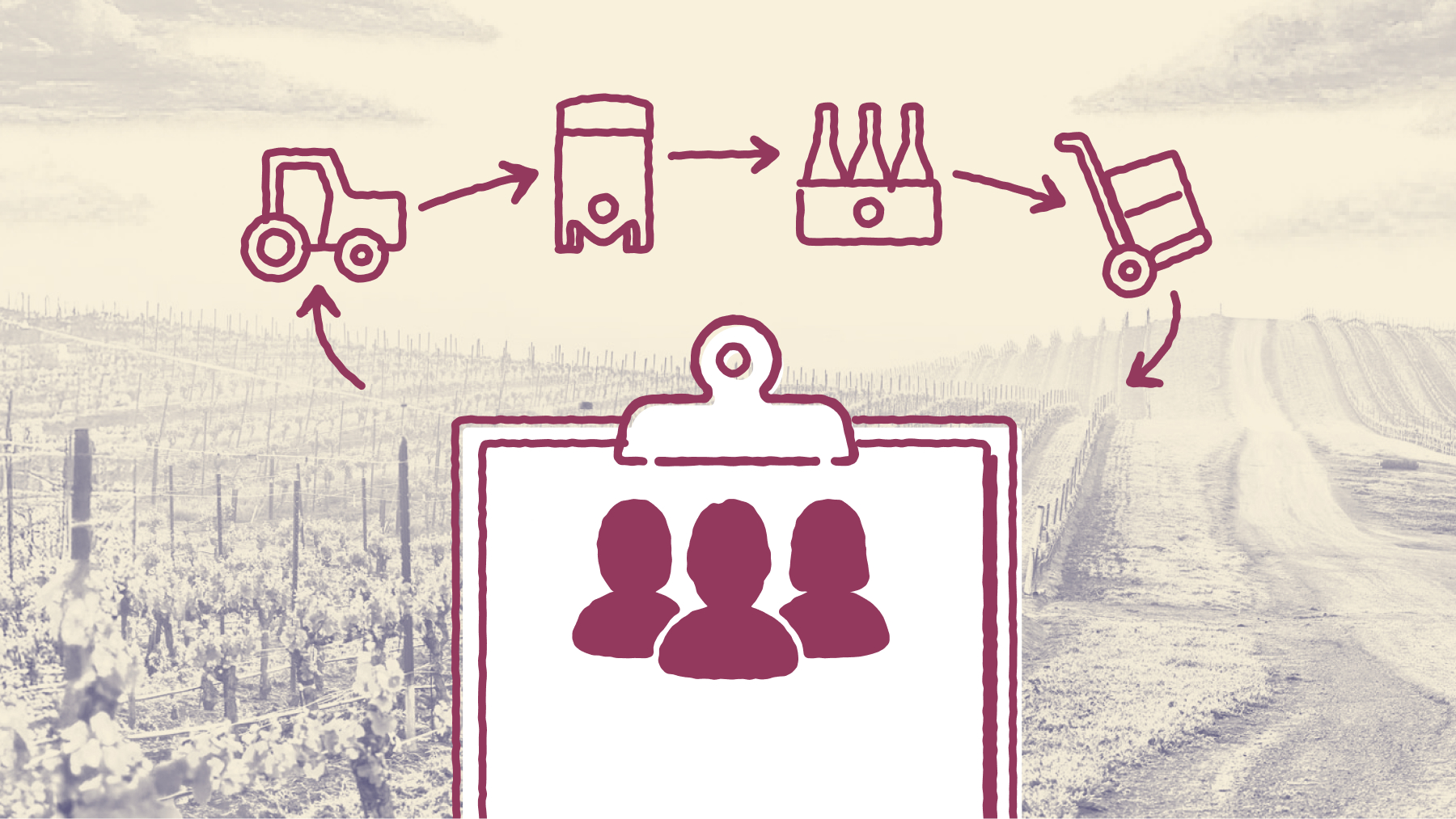
The complete guide to beverage alcohol planning
Over the years, we've written about forecasting, inventory planning, production planning, crop supply planning, and Sales & Operations Planning (S&OP).
But we kept coming back to the same observation.
There are plenty of resources that explain individual parts of the planning process, yet very few that show how they fit together. We wanted something that combined a bird's-eye view of the entire planning process with practical examples that reflected the way beverage alcohol companies actually operate.
So we wrote it.
The Complete Guide to Beverage Alcohol Planning brings together the major planning disciplines into a single resource, showing how information flows across the supply chain, from forecasting demand through to long-term supply planning.
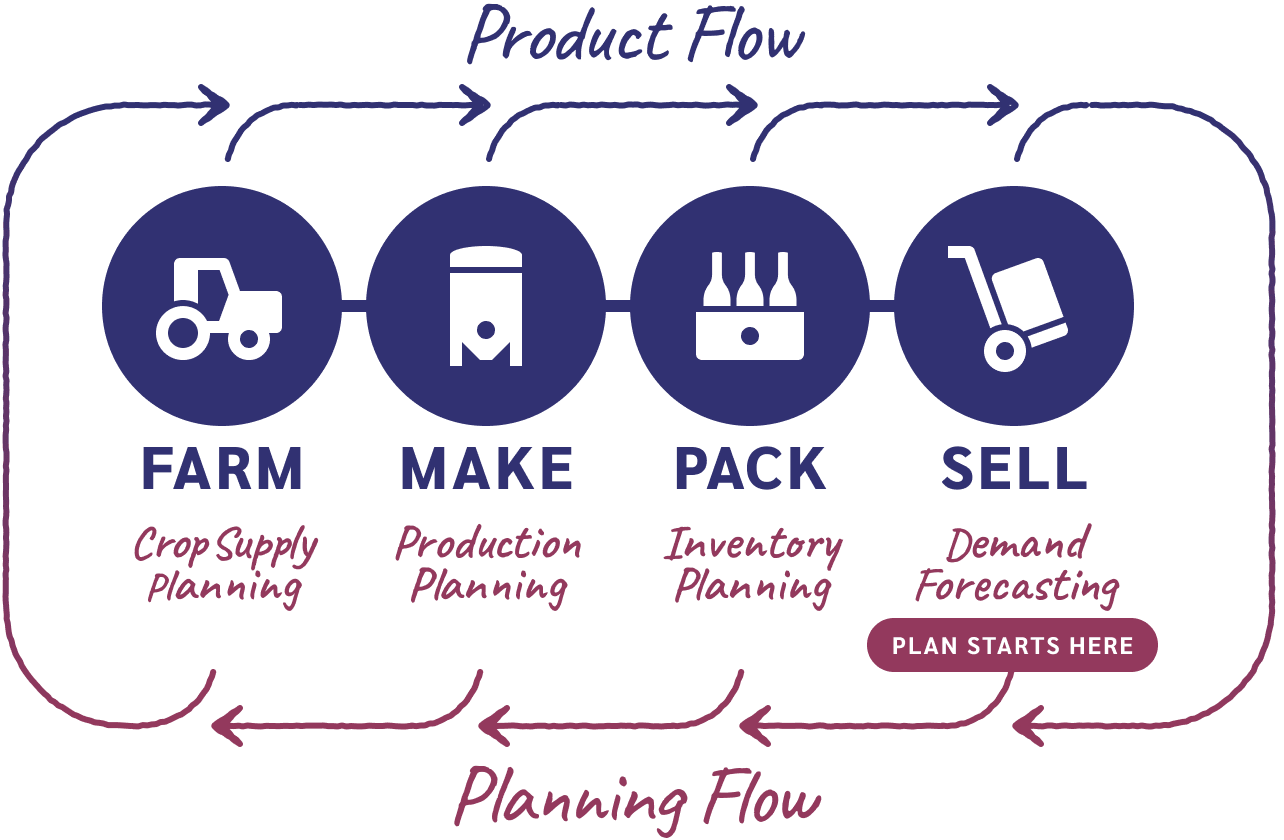
*From the guide: a visualization of the two flows every beverage alcohol company must manage
...
One of the most important concepts in the guide is that beverage alcohol planning consists of two connected flows.
The first is the physical flow of product. Grapes become bulk wine, bulk wine is bottled and packaged, finished goods are stored as inventory, and products are ultimately distributed and sold to customers.
Running in the opposite direction is the flow of planning information. Customer demand shapes the sales forecast, which determines inventory requirements. Inventory requirements drive production plans, and production plans define long-term supply needs for grapes, bulk wine, packaging materials, and other inputs.
At a high level, beverage alcohol planning answers four fundamental questions:
What do we expect to sell? Demand planning creates the sales forecast that becomes the foundation for every other planning decision.
Do we have enough inventory? Inventory planning highlights future shortages and excess stock, helping teams maintain service levels while avoiding unnecessary inventory.
What do we need to produce? Production planning translates demand into bottling plans, packaging schedules, and, for wineries, decisions about how much of each vintage should be made.
Will we have enough future supply? Long-term supply planning determines future requirements for grapes, bulk wine, packaging materials, and other critical inputs that often need to be secured months or even years in advance.
These planning disciplines don't operate independently. A change to the sales forecast can ripple through inventory targets, production schedules, vintage release dates, and future supply requirements. Rather than optimizing each planning function in isolation, connected planning helps businesses understand these relationships so they can make better decisions across the entire supply chain.
The guide explores each of these planning disciplines in more detail, explains how they connect, and provides practical examples from the beverage alcohol industry to help bring the concepts to life.
Claret is a planning platform built specifically for beverage alcohol producers. Throughout the guide, we've included examples and illustrations based on Claret's planning tools to show how these concepts can be applied in practice. The principles themselves aren't tied to any particular software. They're relevant to any producer looking to build a more connected planning process.
If you're new to beverage alcohol planning, the guide provides a structured introduction to the core concepts. If you've been planning for years, it's a useful reference for understanding how the different planning disciplines fit together. Either way, our goal is simple: to make connected planning easier to understand and easier to put into practice.
Read the full guide at: