
 In a tighter wine market, preventable vineyard loss is no longer just an operational headache. It is a margin issue.
For many vineyard owners and managers, 2026 is not a year for loose ends.
Grape contracts are harder to count on. Buyers are more selective. Some blocks are being farmed with tighter budgets, while others are being looked at with a hard question: does this acreage still make sense?
That changes how growers think about loss. Deer browsing along a wooded edge, a low spot under a gate, or recurring animal pressure in one corner of the vineyard may not feel dramatic at first. But when the fruit in that block has a real path to market, even small losses matter more than they used to.
“Growers are looking hard at every input right now,” said George Horetsky, senior sales representative at Trident Fence. “If a vineyard block has fruit that is contracted, estate-designated, or otherwise marketable, you can’t afford to lose part of it to a problem you could have prevented.”
The broader market data reinforces the point. WineBusiness Monthly’s 2026 Vineyard Survey reported that between 15% and 23% of California crop was left on the vine unharvested, and a related WineBusiness report noted that 18% of survey respondents permanently removed vineyard acreage in the past year. Data from the California Department of Food and Agriculture and USDA’s National Agricultural Statistics Service showed California’s 2025 grape crush totaled 2,759,202 tons, down 6.2% from 2024, while the average price of all grape varieties fell to $978.60 per ton, down 3.8% year over year.
In other words, this is not a “make it up in volume” moment. For many growers, the focus has shifted from producing as much fruit as possible to protecting the fruit that has the best chance of being sold.
Marketable Tons Are the Tons That Matter Most
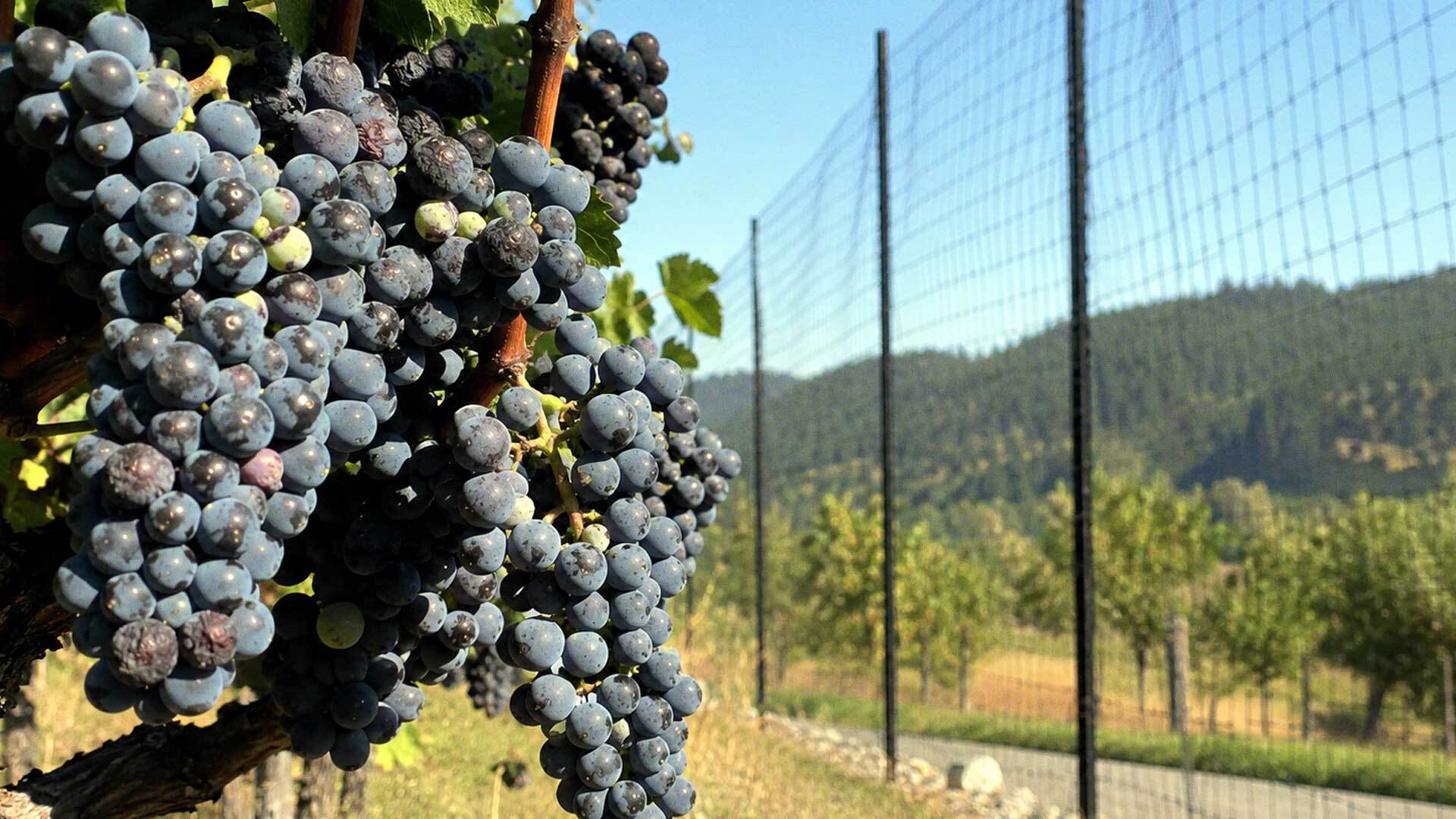
In a stronger market, a grower may be able to absorb some edge damage or a little browsing pressure without it changing the economics of the season. A few vines here, a few rows there, and the problem may get pushed down the list behind irrigation, labor, mildew pressure, equipment, or harvest logistics.
But in a tighter market, the math changes.
AgWest Farm Credit’s 2026 wine grape update described the wine grape market as being in a prolonged downturn heading into the 2026 season, with structural oversupply, elevated inventories, soft demand, and pressure on grape prices and winery cash flow continuing to weigh on the sector.
When demand is tight, the most valuable ton is not simply the ton hanging in the vineyard. It is the ton that can be harvested cleanly, delivered to specification, and turned into revenue.
That is where wildlife pressure becomes more than a nuisance. Deer and other animals can reduce yield directly by feeding on shoots, leaves, and fruit. They can also create indirect costs through canopy damage, uneven ripening, broken training systems, added scouting, fence repairs, and extra labor at the worst possible time of the season.
“Wildlife damage is easy to underestimate because it usually starts at the edges,” Horetsky said. “A grower may see a little pressure near a tree line or a back corner and think it’s isolated. But animals are creatures of habit. Once they find a weak spot, they keep using it.”
For vineyards with wooded borders, nearby water sources, open neighboring land, or known deer trails, those weak spots can become part of an established route. The damage may look scattered from the road, but the pattern is often very clear once crews start walking the perimeter.
In 2026, “Good Enough” Protection May Not Be Good Enough
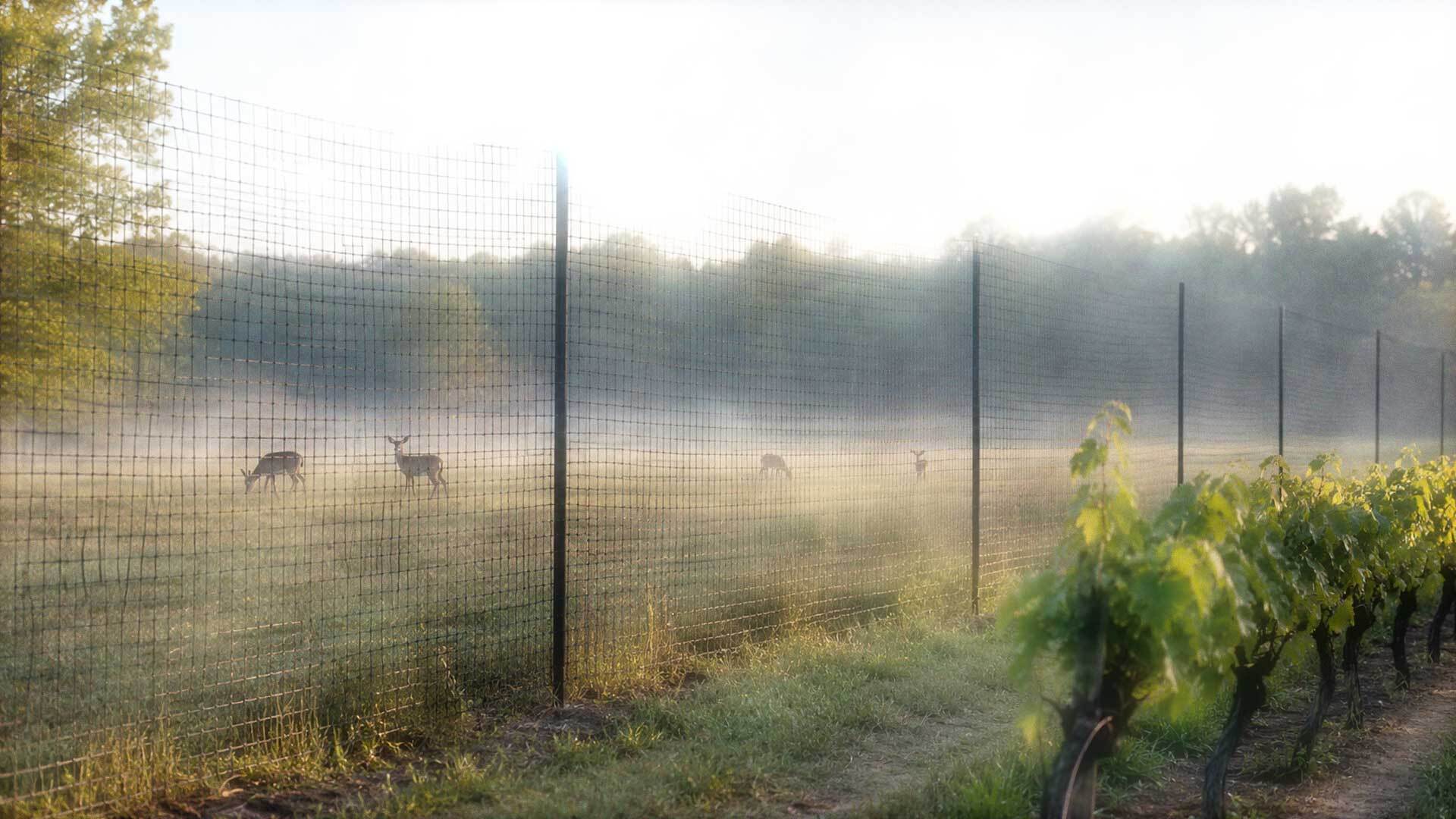
For many vineyards, perimeter fencing has traditionally been viewed as a capital expense. Something to budget for, postpone, repair, or revisit when the pressure becomes obvious.
In today’s market, it is more useful to think of fencing as a crop protection strategy.
A fence is not just a boundary. It is a risk-control system. Its job is to protect fruit, reduce uncertainty, and help vineyard teams focus labor where it matters most.
Rutgers Cooperative Extension’s 2025 vineyard guidance describes permanent exclusion as the best strategy for deer-affected vineyards and recommends a minimum 8-foot-high woven-wire fence that creates a complete enclosure. The guidance also cites a study in which 6-foot fencing excluded 14% of deer, 7-foot fencing excluded 85%, and 8-foot fencing excluded 100%.
That height guidance matters because partial protection can give a vineyard a false sense of security. A fence may look fine from the center of the block. It may even look fine from the road. But if it is too low, loose at the bottom, poorly braced, or vulnerable at gates and drainage dips, wildlife will keep testing it.
“The mistake is thinking about a vineyard fence only in terms of height or material,” Horetsky said. “Those things matter, but they’re not the whole story. A good fence has to match the pressure, the terrain, and the way people and equipment move through the property.”
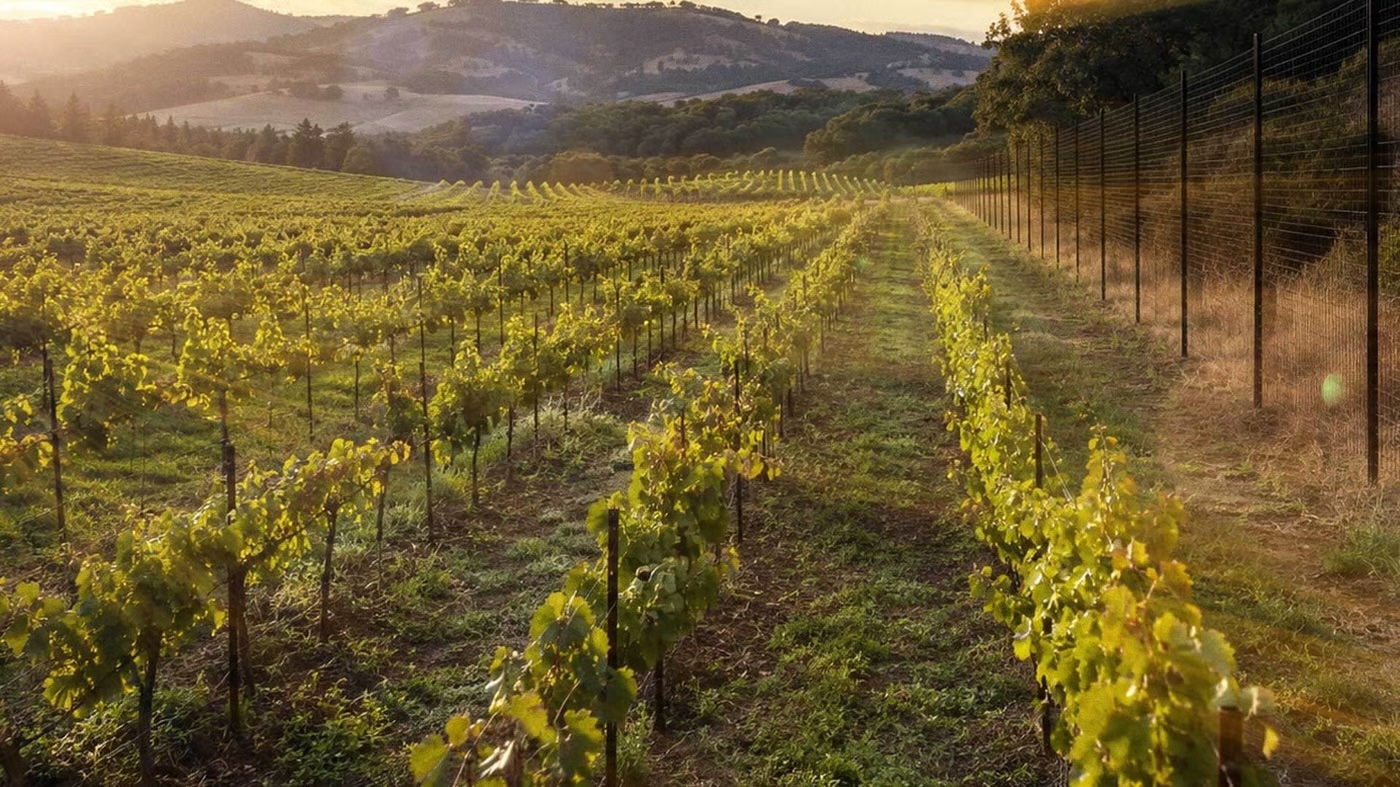
That is especially true in vineyards where the perimeter is not simple. Slopes, creek beds, uneven ground, old gates, shared roads, wooded edges, and equipment access points can all affect how well a fence performs over time.
The Weakest Point Determines the Outcome
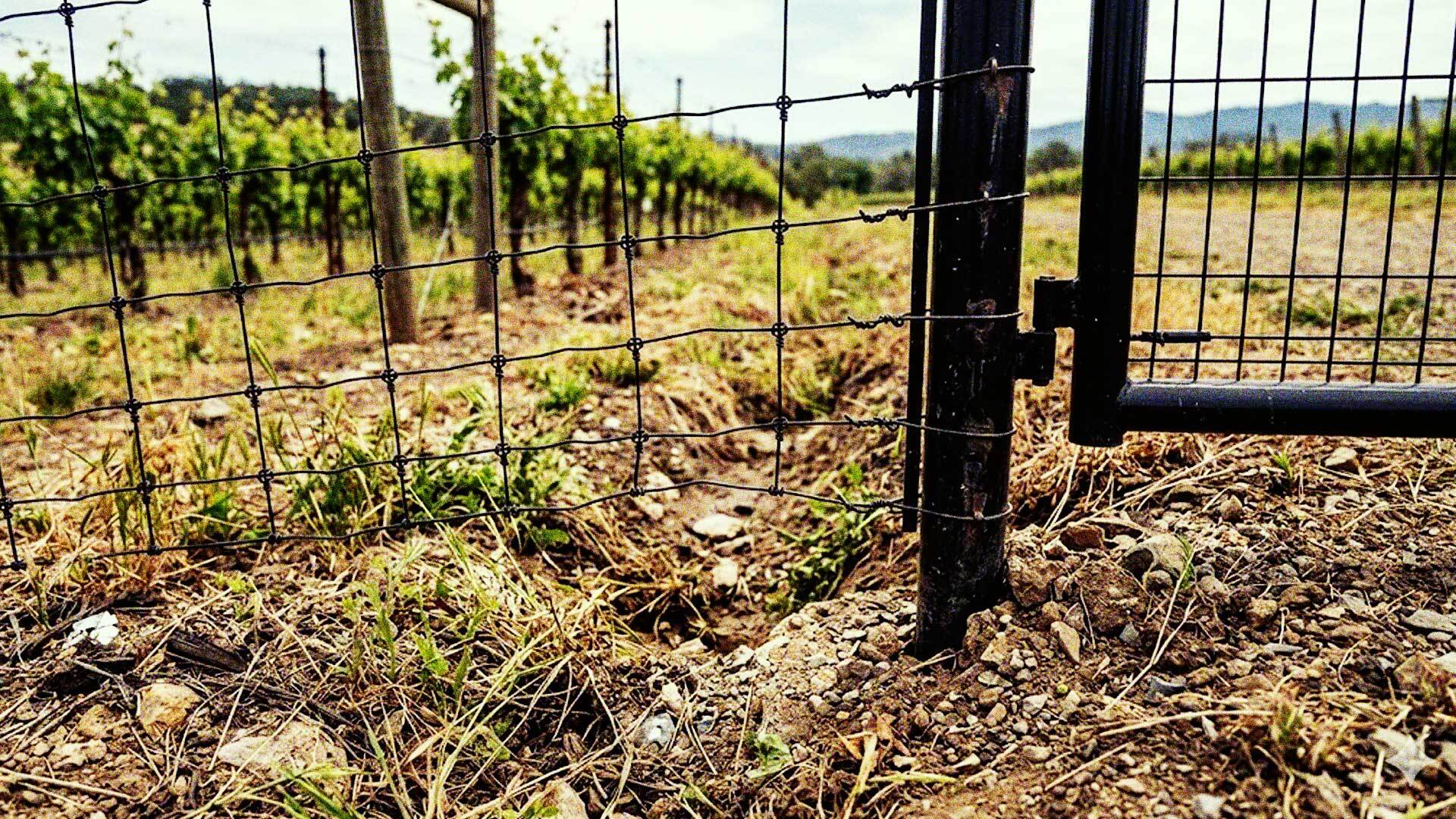
In vineyard fencing, the most common failure points are rarely the long, straight runs of fence. They are the transitions.
Corners carry tension. Gates create access. Drainage areas shift soil. Slopes can reduce the effective height of a fence. Low spots can create crawl-under points. Brush lines and wooded edges can hide repeated animal movement until damage is already showing up in the rows.
University of Maryland Extension’s 2024 deer-damage guidance notes that long-term wire fencing can effectively exclude deer from high-value crop areas, but maintenance is critical, especially where trees, limbs, water crossings, or other weak points can damage the fence.
That is why vineyard protection should start with an honest perimeter assessment. Before choosing a fence style or repairing an existing line, growers should look closely at where animals are entering now, whether gates are built to the same standard as the fence, whether the bottom edge is secure, and whether slopes, dips, or washouts are creating low points.
For vineyards with existing fencing, that review can be just as important as a new installation. An older fence may still look serviceable from a distance while failing at the details that matter most.
“Animals don’t need the whole fence to fail,” Horetsky said. “They need one reliable opening. Once they know where that is, they’ll keep coming back to it.”
Protecting Fruit Also Protects Labor
Crop loss is only part of the cost.
Every wildlife intrusion creates follow-up work. Crews may need to repair trellis damage, re-secure fence sections, identify damaged rows, retrain young vines, adjust harvest estimates, or separate compromised fruit. In a year when labor, materials, and cash flow are already under pressure, those extra tasks matter.
Wildlife damage can also make vineyard decisions harder. If a block underperforms, was it weather, vine health, irrigation, nutrition, market-driven farming changes, or animal browsing? A reliable perimeter removes one major variable from the equation.
That matters as growers reassess acreage, change varieties, reduce inputs, or prioritize certain blocks over others. Cleaner data and fewer surprises help vineyard managers make better decisions about where to invest.
It also helps crews spend less time reacting. A vineyard team has enough to manage during the growing season without repeatedly chasing the same perimeter problem.
Protect the Blocks With the Best Future
Not every vineyard block will receive the same level of investment in 2026. That is the reality of the current market.
But for blocks that are contracted, strategically important, newly planted, high-value, or positioned for future recovery, protection should be part of the plan.
Young vines are especially vulnerable because repeated browsing can slow establishment and affect future productivity. Mature producing blocks also need protection, particularly when the fruit has a clear buyer, premium potential, or a role in an estate program.
In other words, vineyard protection should follow vineyard priorities. The goal is not necessarily to fence everything everywhere. The goal is to protect the fruit and vine assets that matter most.
“In this market, growers are not spending just to spend,” Horetsky said. “They’re investing where there’sa clear reason. If a block has value — because of the fruit, the buyer, the location, or the future of the vineyard — then protecting it is part of preserving that value.”
The Bottom Line
The wine industry may be working through oversupply, shifting demand, and difficult acreage decisions, but that does not make crop protection less important. It makes it more targeted.
When fewer tons have a clear path to market, the tons that do must be protected. Wildlife damage, open gates, weak corners, washouts, and underbuilt perimeters are controllable risks. In a tight year, controllable risks deserve attention.
For vineyard owners and managers, the question is not only, “How much crop can we grow?” It is also, “How much of our best crop can we actually bring in?”
The best time to protect a marketable crop is before wildlife pressure turns into harvest loss. For many vineyards, that work starts at the perimeter.