
Across agriculture, regenerative practices continue gaining momentum as growers, land managers, researchers, and policymakers look for ways to improve soil stewardship, reduce operational pressures, and build long-term resilience. But as adoption increases, many conversations are beginning to focus less on theory and more on implementation, especially when it comes to weed management.
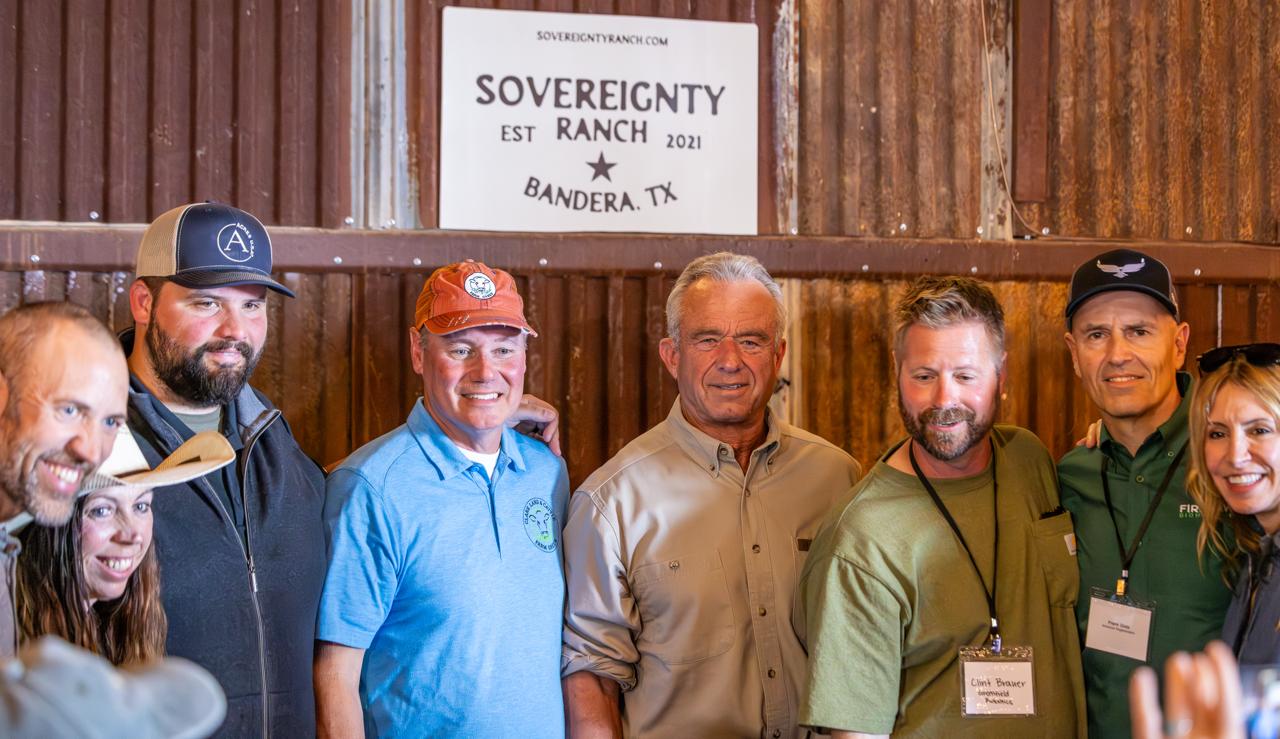
That topic emerged repeatedly during the recent American Regeneration Conference held at Sovereignty Ranch in Bandera, Texas. The two-day event brought together leaders across agriculture, science, policy, and land management to discuss the future of regenerative systems and the practical realities surrounding adoption at scale.
Representing Contact BioSolutions, maker of FireHawk® Bioherbicide, Managing Director Dr. Frank Glatz participated in roundtable discussions centered on regenerative agriculture, operational challenges, and the growing interest in additional weed management tools.
While regenerative agriculture continues to gain support across multiple sectors, weed management remains one of the most persistent operational hurdles for growers transitioning toward lower-input systems. Discussions throughout the conference repeatedly circled back to the same issue: maintaining effective weed control while aligning with broader land stewardship goals.
“The conference wasn’t just about the regenerative future that we want to see, but the practical steps we need to take to get there,” said Dr. Glatz. “Weed control at scale remains a key hurdle to the widespread adoption of regenerative practices, so we found ourselves continually circling back to it throughout the discussions.”
For many growers and land managers, this balancing act is becoming increasingly important. Conventional weed management programs can create operational efficiencies, but there is also growing interest in tools that may integrate into regenerative land management programs focused on long-term planning and diversified approaches to vegetation management.
As a result, interest continues growing around tools that can integrate into broader land management programs and that do not provide residual soil activity when used as directed. Bioherbicides, particularly contact-based solutions, are increasingly being explored as part of integrated weed management strategies across vineyards, specialty agriculture, landscaping, and municipal landcare.
FireHawk Bioherbicide is one example of this shift. Designed as a fast-acting contact herbicide, FireHawk works on contact with sprayed vegetation and is being adopted across a growing range of commercial, professional, and agricultural applications. Earlier this year, FireHawk Super Concentrate achieved EPA registration in 47 states, reflecting continued expansion into new markets and use cases.
The broader regenerative movement also appears to be accelerating globally. Throughout the conference, participants discussed not only agricultural practices, but also larger conversations surrounding food systems, land restoration, and operational sustainability.
“The regenerative movement is gaining momentum globally,” said Dr. Glatz. “As adoption increases, solutions that balance operational performance with evolving land management priorities will continue to play an important role as innovation develops across different markets.”
By bringing together growers, researchers, entrepreneurs, and policymakers, the conference created space for collaborative discussions around the future of regenerative land management and the practical tools needed to support it.
To view a clip from Dr. Frank Glatz’s panel discussion at the American Regeneration Conference, visit: https://vimeo.com/1189902890/a3bbd6664b?share=copy&fl=cl&fe=ci
Learn more about FireHawk Bioherbicide and ongoing innovations in contact weed management at www.firehawkbioherbicide.com.