
As growers explore regenerative agriculture, the conversation often centers on soil management, cover crops, reduced disturbance and more diversified production systems. But there is another practical challenge that remains constant: weeds still need to be managed.
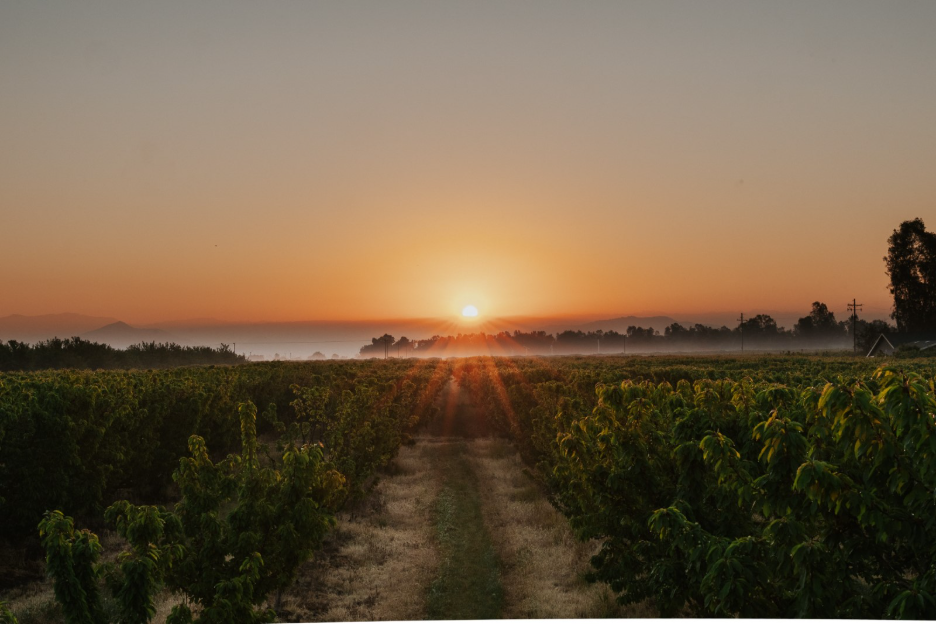 (photo by Foreverlasting Films LLC)
That reality is prompting an important shift in thinking. Rather than searching for a single product to replace a conventional herbicide in every situation, growers can look at weed management as a system, using different tools where they make the most agronomic sense.
Recent research illustrates why this integrated approach matters.
A study published in Weed Science evaluated alternative weed-control methods over two growing seasons in citrus, olive and vineyard systems. Researchers examined several approaches, including contact herbicides, selective herbicides, mowing and cover-crop residues, and found that performance varied by crop, weed species and management practice.
The research reinforces a practical lesson: there may not be one solution for every weed-management challenge.
Matching the Tool to the Job
Integrated weed management brings multiple strategies together rather than depending repeatedly on a single method. Depending on the operation, this may include cultural practices, mechanical control and herbicides selected for specific situations.
That philosophy is also reflected in guidance from agricultural extension programs. The University of California Statewide Integrated Pest Management Program, for example, encourages the use of multiple weed-management methods and resistance-management practices when developing weed-control programs.
This changes the question growers can ask when evaluating a new weed-management product.
Instead of simply asking:
“What does this replace?”
Consider asking:
“How does this complement my program?”
That distinction is particularly relevant for contact herbicides.
Where FireHawk Fits
FireHawk® Bioherbicide Super Concentrate provides growers with another option within an integrated weed-management program.
FireHawk Super Concentrate is a non-selective, broad-spectrum, foliar-applied contact herbicide containing 85.26% nonanoic acid. It is designed to control actively growing emerged green vegetation when used according to the registered label.
As a contact herbicide, FireHawk affects the green plant tissue coated with the spray solution. It is not translocated throughout the plant, making thorough and uniform spray coverage important.
Those characteristics help define where the product may fit within a broader agricultural weed-management program.
The registered label provides for several agricultural use methods, including vegetative burndown for seedbed or site preparation, directed and shielded sprays around desirable plants, applications before new crop growth emerges, and spot treatments in certain crop and pasture situations.
Registered crop use sites include grapes and other small fruits, citrus, pome fruit, stone fruit, nuts, field crops, vegetables and other agricultural crops identified on the product label.
FireHawk can also be used as part of certain tank-mix programs. Where residual control is desired, the label provides directions for tank mixing FireHawk with recommended soil-active herbicides, subject to the rates, restrictions, precautions and directions of all products used in the mixture.
This flexibility allows growers to evaluate where a contact herbicide fits alongside other tools already being used within the operation.
Understanding Contact Weed Control
An integrated approach also means understanding what each tool can and cannot do.
The Weed Science research provides a useful example. Pelargonic acid, a contact herbicide evaluated in the study, performed differently depending on the weeds and cropping system. The study illustrates a broader weed-management principle: weed species, growth stage, application practices and the type of management tool can influence weed-control outcomes.
Importantly, the study did not evaluate FireHawk, and its findings should not be interpreted as performance data for FireHawk.
Instead, FireHawk performance claims should be evaluated according to its registered product label.
The FireHawk Super Concentrate label states that best results are obtained when applications are made to young, succulent weeds and when spray solutions cover all leaf surfaces. Mature and woody weeds are less susceptible, and repeat applications may be needed to achieve the desired level of weed control.
The label also provides different application-rate ranges depending on the type and maturity of the vegetation being treated, including annual weeds, perennial herbaceous plants, established weeds and woody weeds.
Weather and plant condition also matter. The label notes that cool weather following treatment may slow product activity and delay or reduce visible effects.
These distinctions reinforce an important part of integrated weed management: successful programs depend on understanding the characteristics and limitations of each tool and using it according to its labeled directions.
No Residual Weed Control
Another characteristic of FireHawk is that it provides no residual weed control.
That means the product controls vegetation present at the time of application but does not prevent new plants from emerging from seed or regrowth after treatment.
For that reason, repeat treatments may be necessary when new plants emerge or treated vegetation regrows.
Where residual control is needed, growers can evaluate other labeled products or tank mix options appropriate to the use situation.
Rather than treating this characteristic as either an advantage or disadvantage, it is more useful to view it as another factor growers can consider when determining where FireHawk fits within a broader management program.
Building a Weed-Management System
Regenerative agriculture does not necessarily require replacing every existing weed-management practice with a single new solution.
Instead, growers can evaluate how different practices and products fit together based on the needs of their individual operations.
Cultural practices may have a role.
Mechanical management may have a role.
Herbicides may have a role. Contact herbicides provide another option for appropriate applications.
The objective is to match the right tool to the right job while building a weedmanagement program that works for the task at hand.
That is where products such as FireHawk Bioherbicide Super Concentrate can play a role: not as a single answer to every weed-management challenge, but as another weed-control tool growers can incorporate into an integrated program.
As biological technologies and weed-management practices continue to evolve, thinking in terms of complementary tools rather than one-for-one replacements may give growers greater flexibility when designing programs for their operations.
Always read and follow label directions. FireHawk Bioherbicide Super Concentrate should be used only according to its registered product label.