
The highest-performing winery teams don’t wait for problems to coach.
They coach so problems happen less often.
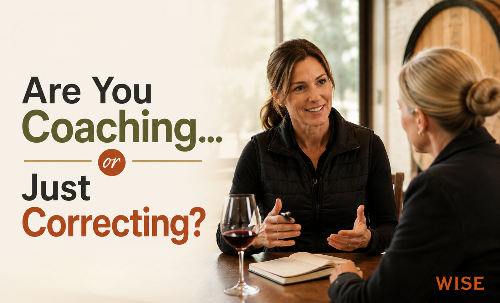
For many leaders, coaching has become synonymous with difficult conversations.
An employee misses a goal.
A guest leaves unhappy.
A policy isn’t followed.
Sales decline.
Only then does the coaching begin.
That’s not coaching. That’s consequence management. The best leaders understand that coaching is not an event. It’s a rhythm.
It’s a regular, consistent conversation that helps people improve their skills, remove obstacles, and grow their confidence before performance ever becomes a problem.
At WISE, we believe great coaching builds stronger leaders, healthier teams, and more profitable customer relationships. That doesn’t happen through annual reviews or corrective action alone. It happens through intentional conversations that create clarity, accountability, and continuous improvement.
Coaching Is About Development, Not Discipline
Every winery leader has moments that require direct feedback. Compliance matters. Safety matters. Hospitality standards matter.
There are times when leaders must be clear, decisive, and directive. Those conversations will always be part of leadership. They simply shouldn’t be the only coaching your team experiences.
When coaching only appears after something goes wrong, employees begin to associate feedback with failure. They become defensive instead of curious.
Developmental coaching creates the opposite effect. It normalizes feedback. It creates trust. It encourages experimentation. Most importantly, it shifts the conversation from, “Here’s what you did wrong,” to, “Let’s talk about how you can continue growing.”
Meet People Where They Are
One of the frameworks we teach throughout WISE Leadership programs is that effective leaders adapt their coaching to the individual, not the other way around.
A brand-new tasting room associate needs clear direction, structure, and frequent check-ins. As experience and confidence grow, that same employee benefits from more collaboration, greater autonomy, and coaching that asks thoughtful questions instead of simply providing answers. Leadership isn’t about having one coaching style. It’s about recognizing what each team member needs today and helping them prepare for tomorrow.
Great coaches are constantly asking:
What skills does this person need to build?
What obstacles are standing in their way?
How can I help them become more successful without solving every problem for them?
Make the Business Visible
One of the most powerful coaching tools is transparency. People make better decisions when they understand how the business works.
Share the metrics.
Celebrate progress.
Discuss challenges openly.
Help your team understand how today’s guest experience influences tomorrow’s wine club growth, customer retention, online reviews, and long-term profitability.
This philosophy, often referred to as Open Book Management, creates ownership instead of compliance. When employees understand the “why” behind the numbers, they begin thinking like business partners instead of task managers. That perspective changes everything.
Coaching Across Generations
Today’s workforce expects something different from leadership than previous generations.
Millennials challenged organizations to answer an important question: Why does my work matter?
Gen Z has continued that conversation by asking leaders to create opportunities for learning, collaboration, and meaningful contribution. Both generations respond well when leaders invite them into the problem-solving process instead of simply handing them the solution.
Rather than saying: “Here’s what we’re going to do.”
Try asking:
“What do you think is getting in the way?”
“If this were your business, what would you change?”
“What support would help you be more successful?”
Those questions develop critical thinking, ownership, and confidence.
The goal isn’t to create employees who wait for instructions. The goal is to develop leaders who think independently and contribute ideas that strengthen the business.
Coaching Should Be Scheduled, Not Accidental
The healthiest coaching cultures don’t rely on good intentions. They build systems.
Weekly one-on-ones.
Monthly development conversations.
Quarterly career discussions.
Daily observations followed by immediate feedback.
Regular coaching removes the anxiety surrounding feedback because it becomes part of everyday leadership. Instead of wondering whether they’re in trouble, employees begin expecting conversations that help them improve. That’s where real growth happens.
The Future Belongs to Coaching Cultures
The wineries that will thrive over the next decade won’t simply hire great people.
They’ll develop them.
They’ll build coaching into the rhythm of leadership.
They’ll create environments where feedback is expected, learning is continuous, and every employee understands how their individual contribution strengthens the entire organization.
Because coaching isn’t about correcting yesterday. It’s about preparing people for what’s next.
Join Us
If you’re ready to build a stronger coaching culture, we’d love to have you join us for WISE #301: Mastering Leadership Coaching.
Together, we’ll explore practical coaching frameworks, adaptive leadership techniques, developmental conversations, accountability strategies, and real-world tools you can implement immediately with your team.
Whether you lead a tasting room, oversee a department, or guide an entire organization, coaching is one of the highest-return investments you can make in your people.
Your team deserves more than a manager. They deserve a coach.