

 Develop distinctive flavors, improve production efficiency and give customers more reasons to buy.
2026 U.S. apple production is forecast to decline 7%.
Harvest reports point to encouraging fruit quality, although results vary by region and variety. • Fruit with pronounced aroma, bright acidity or firm tannins gives cidermakers options for distinctive blends, varietal ciders and limited releases.
Local and regional cideries can build on those characteristics to give customers fresh reasons to buy.
Adaptable batch sizes and efficient vessel use help cideries test new blends and repeat successful releases. Fruit selection, production adaptability and sales planning need to work together. Here are five ways to turn this year’s harvest into distinctive ciders and more sales.
1. Develop New Cider Flavors from This Year’s Harvest
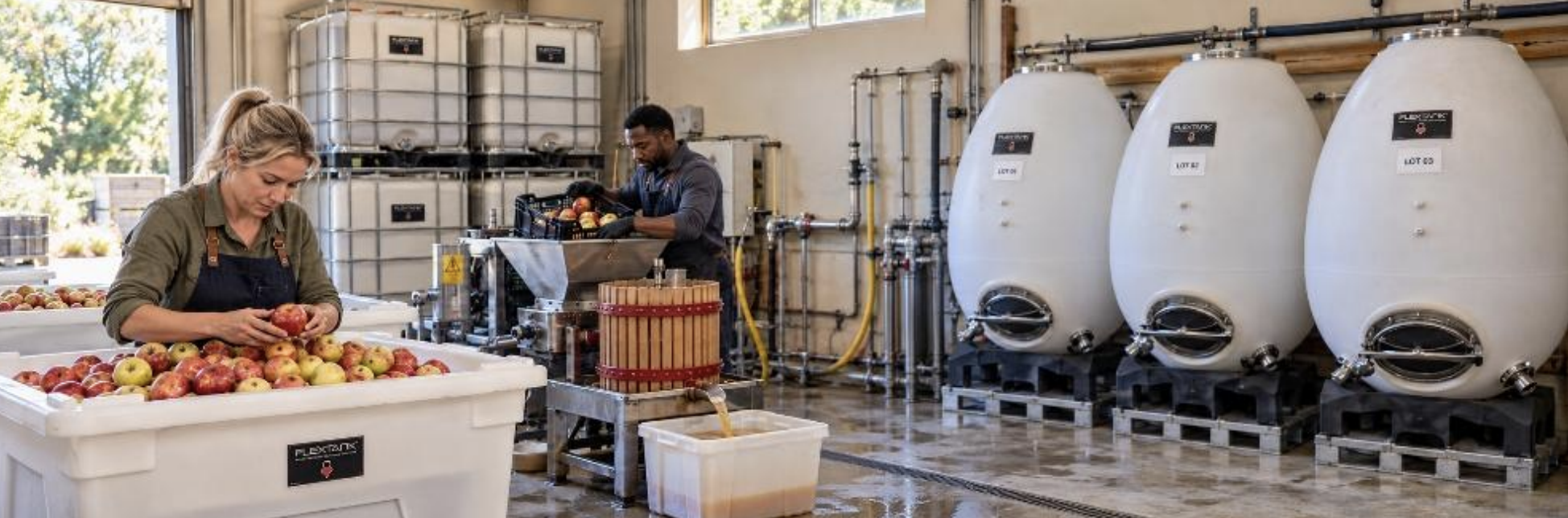
Reserve a portion of this year’s distinctive fruit for a new release or a seasonal variation of an established seller. Match the initial batch to the available supply. Use that first release to determine whether the new profile generates enough demand to justify more fruit and cellar time.
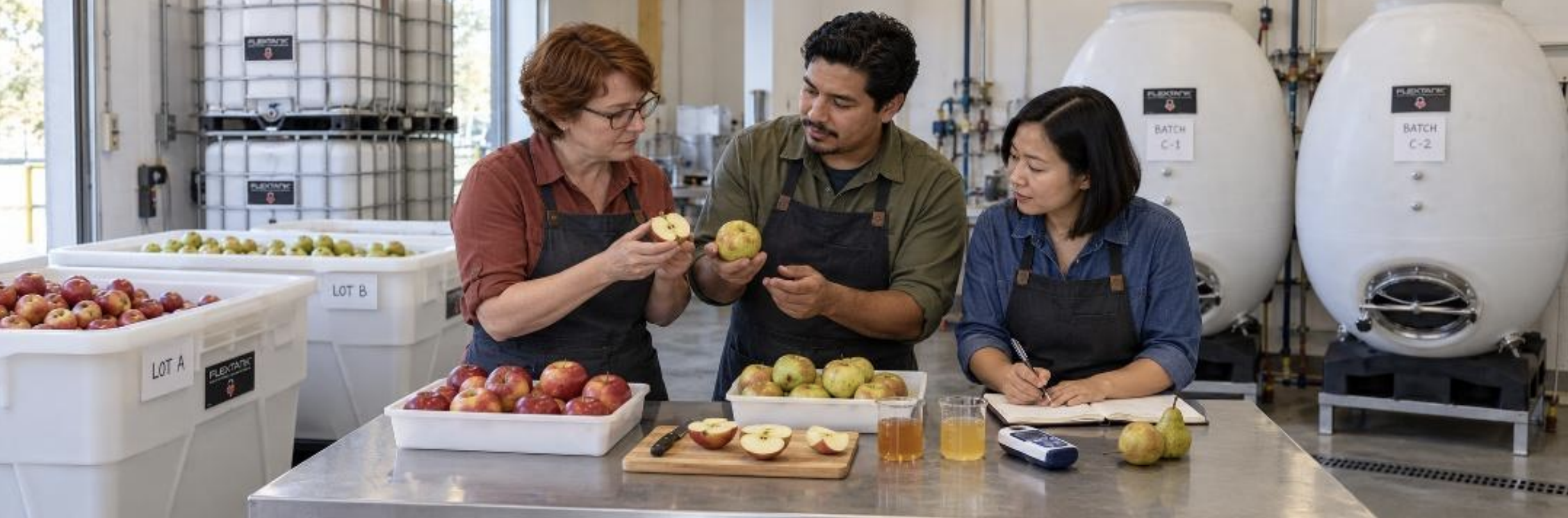
Test individual apple varieties. Ferment a selected variety separately. Evaluate the finished cider as a varietal release and as a component in a new blend. Record the fruit source, fermentation conditions and tasting results.
Run measured blending trials. Try an apple-pear blend, a blackberry cider or a light ginger accent. Use a consistent base cider and change one ingredient or proportion at a time. Record quantities and compare the results before committing to a production batch.
Use tasting flights to test customer response. Present trial ciders alongside an established favorite. Ask customers to compare the flavors and identify their preferences. Track purchases alongside feedback to decide which blends warrant a larger batch.
2. Create More Reasons for Customers to Buy
Give each release a clear occasion. Plan a harvest tasting, a club preview or a pairing dinner at a local restaurant. Create a seasonal mixed pack that introduces a new cider alongside established favorites.
Use local connections to build the story. Feature the orchard behind a release. Invite the grower to a tasting. Help customers understand what gives the cider its individual character.
Give retail and restaurant partners a reason to feature it. Provide specific flavor descriptions, pairing suggestions and a simple promotional plan. Follow initial orders with a conversation about customer response and reorders.
Use sales response to guide the next production run. Track tasting-room purchases, club orders, restaurant placements and retail reorders. Put more production behind the releases customers come back for.
3. Get More Value Out of Every Ton of Apples
A tighter crop increases the value of every gallon produced. Reduce avoidable losses, understand the true cost of each batch and scale production around the releases that earn their keep.
Reduce product loss during transfers. Track the juice you press or receive, the cider moved between vessels and the finished volume you package. Review racking, hose runs and transfer practices for avoidable losses.
Know the true cost of each batch. Include fruit, added ingredients, labor, cleaning and packaging. Compare total production cost with selling price, expected volume and margin.
Match the next batch to proven demand. Use tasting-room sales, club orders, restaurant placements and retail reorders to determine production volume. Commit more fruit and cellar capacity to releases that justify another run.
4. Keep Quality Consistent Through Fermentation to Packaging
A successful release only matters if you can reproduce the qualities customers liked. Build consistency into the process from fermentation through packaging.
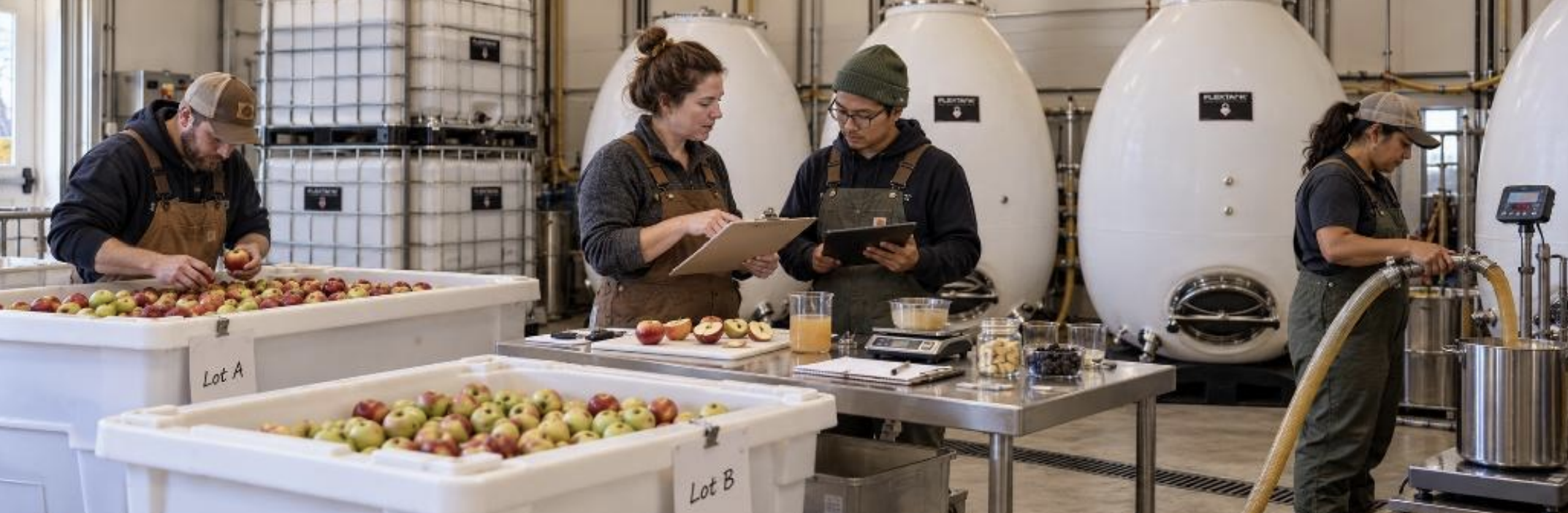
Document the production variables that shaped the batch. Record the fruit blend, starting sugar, acidity, yeast, fermentation conditions and any adjustments made along the way.
Set targets for the finished cider. Use those records to guide the next batch while accounting for differences in incoming fruit. Compare aroma, flavor, acidity and finish against the intended profile.
Standardize handling through packaging. Use consistent transfer, cleaning and packaging procedures. Check the finished cider before release to confirm it still matches the style customers expect.
5. Add Production Flexibility. Turn Vessels Around Faster
Build on the cellar you already have. Use a mix of vessel sizes and faster turnaround to handle new blends, seasonal releases and repeat production without tying up unnecessary capacity.
Match vessel size to the batch. Use smaller vessels for trials, distinctive orchard lots and limited releases. Preserve larger capacity for established sellers and repeat runs.
Plan capacity across production stages. Account for fermentation, maturation, blending and packaging before assigning vessels. Avoid tying up capacity needed for incoming fruit or another successful release.
Shorten the time between batches. Review draining, cleaning, inspection and setup. Choose vessels and procedures that help crews return capacity to service faster.
Put Your Next Cider Idea into Production.
Use this year’s fruit to develop distinctive profiles, test customer response and put more production behind the releases that earn repeat sales.
Match vessel size to the batch. Keep capacity available for established sellers and new releases. Shorten the time between one batch and the next.
Greater production flexibility helps cideries move faster from new idea to repeatable, profitable production.
Put a Hybrid, Efficient Cellar to Work for You.
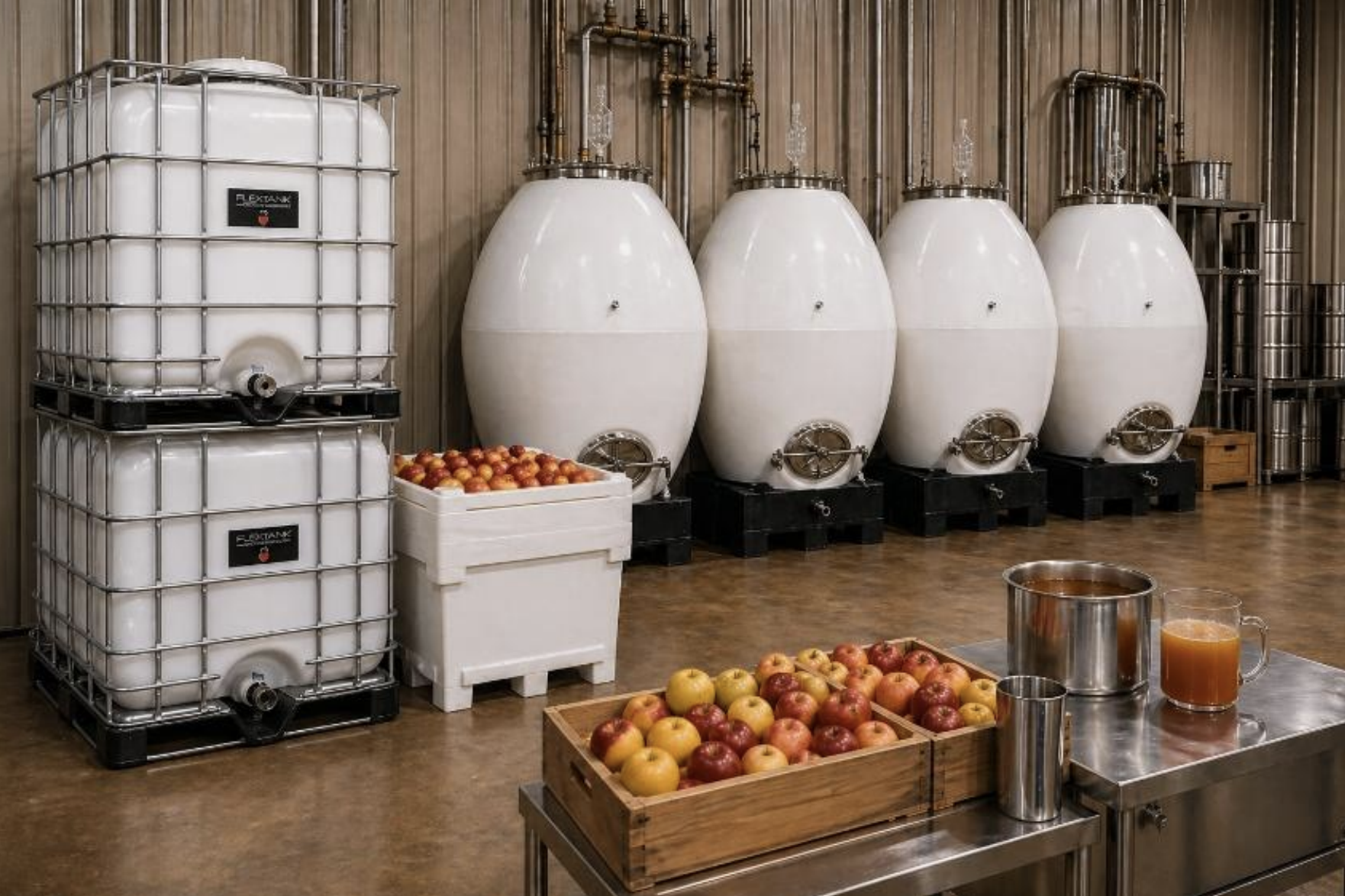
Flextank vessels help cideries reduce cleaning, water and chemical use while supporting fermentation, maturation and storage. Multiple sizes and stackable designs make it easier to handle smaller batches, seasonal releases and changing production needs.
Turn vessels faster. Simplify draining, cleaning and preparation for the next fill.
Use cellar space more efficiently. Add capacity without rebuilding the entire production area.
Match capacity to production. Choose vessels for trials, seasonal releases and repeat runs.
Increase efficiency. Create a more adaptable strategy.
Let’s talk.
Call: +1-360-450-2694
Email: flexsales@flextank.com
Visit: www.Flextank.com
Or simply fill out the form HERE for Free Consulting, and let’s get started.