

From Harvest Handling to Fermentation
Add flexible working capacity for smaller lots, trials, blending, and changing production volumes.
More ways to work with every lot.
Wine demand is becoming less predictable. Varietals, styles, price points, packaging formats, and production volumes can shift faster than permanent tank capacity.
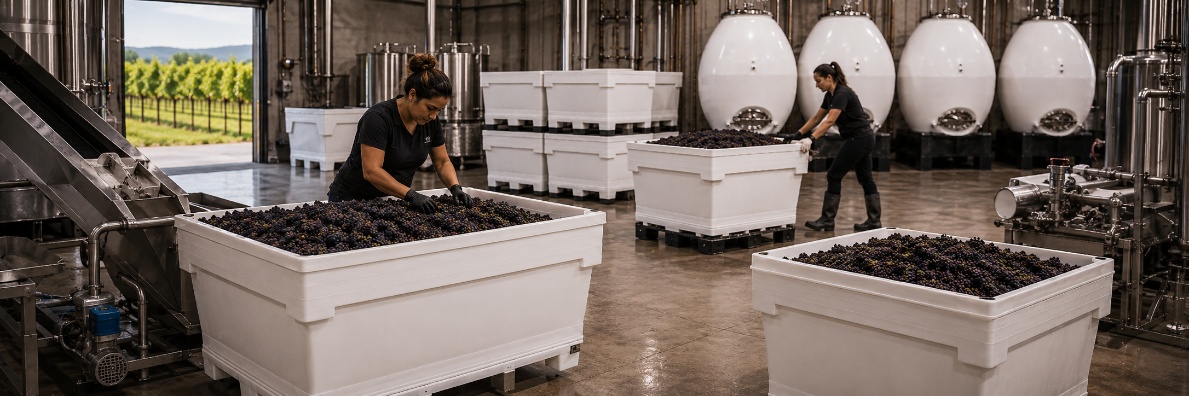
Flexible capacity gives wineries more options for smaller lots, trials, changing production volumes, and other temporary cellar needs.
Smaller lots may need to stay separate. A trial may call for its own fermentation vessel. Harvest volumes can change quickly. Blending decisions can create temporary capacity needs that weren’t part of the original production plan. The opportunity is the same: use vessels that can take on different roles as production moves from harvest through fermentation, blending, and storage.
Here are four ways that added flexibility can support the work.
1. Preserve the Character of Individual Lots
Open-top bins let wineries keep fruit separated by block, clone, variety, picking date, ripeness, quality, or intended wine program.
Keeping fruit separated gives winemakers time to evaluate each lot and decide how it fits into the wine program. Individual lots can retain their identity longer before becoming part of a larger fermentation or blend.

Separate lots also give winemakers a clearer view of how different fruit responds through fermentation. This creates more information for later blending and wine-program decisions.
2. Create Accessible Fermentation and Punch-Down Capacity
Open-top bins give winemakers direct access to the cap and must throughout fermentation. The open design supports punch-down, sampling, additions, temperature checks, and close observation of fermentation progress. Direct access also gives winemakers more control over skin contact, extraction, color, tannin development, and aroma retention as each lot develops.

Each fermentation can behave differently. Easy access makes it simpler to assess the lot and adjust the approach as conditions change:
Temperature, nutrients, oxygen exposure, sanitation
The fermentation progress still requires careful monitoring throughout the process.
3. Explore New Wines Without Committing Permanent Tank Capacity
Open-top bins give wineries practical capacity for smaller fermentation lots.
Smaller lots create options to test new varietals, blend components & styles.
Dedicated trial capacity also keeps larger tanks available for established production. Winemakers can assess quality, style, and fit before they decide whether an idea deserves more volume. Move the successful trial forward.
4. Put One Bin to Work Across Production
Open-top bins can serve more than one role as fruit and wine move through production. A bin may start with fruit handling or lot separation, move into fermentation, support punch-down and sampling, then carry the lot to the press.
Fewer vessel changes can reduce water and chemical use during cleaning. They can also cut handling time and improve cellar productivity.
Using one bin across multiple stages gives wineries more flexibility during harvest and helps crews move work through the cellar more efficiently.

Build More Options into Your Fermentation
Open-top bins give winemakers more room to separate lots, manage fermentation closely, test new ideas, and keep production moving. Flexible fermentation capacity also creates more options during harvest. Smaller lots can stay independent longer. Trial wines can develop at a manageable scale.
Flextank Versa Bins combine flexible fermentation capacity with durable construction designed for repeated use across the winery. Versa Bins support fruit handling, lot separation, open-top fermentation, punch-down, movement to the press, cleaning, storage, and reuse. Smooth interiors simplify sanitation. Nestable construction reduces storage space between uses.
Flextank Is Ready to Help You Grow. Email: flexsales@flextank.com Visit: www.Flextank.com Or simply fill out the form HERE for Free Consulting, and let’s get started.