

How Bioherbicides Fit Into Modern Vineyard Weed Management Programs
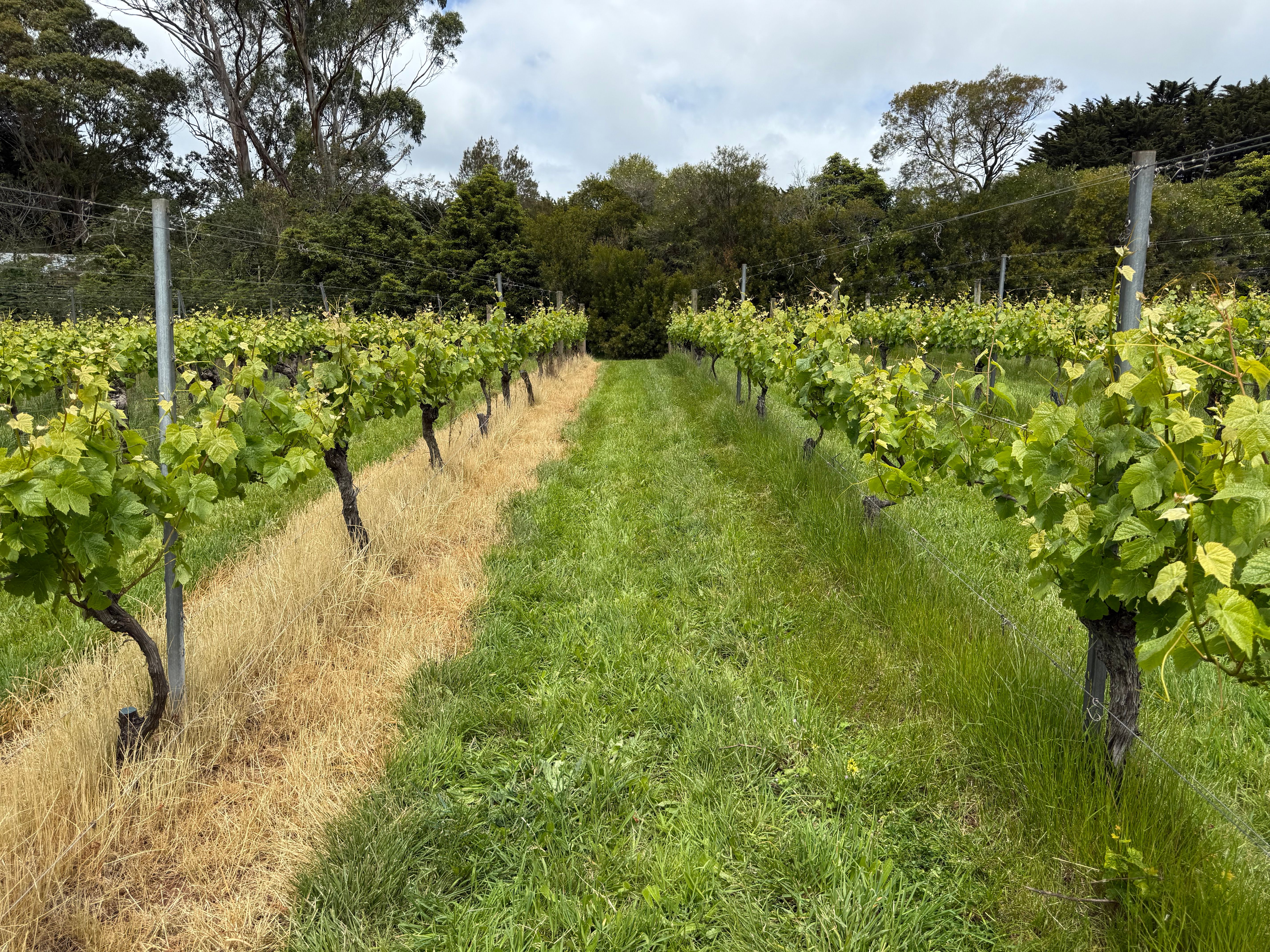 For decades, California's wine grape industry has been recognized as a global leader in sustainable agriculture. Programs such as the California Sustainable Winegrowing Program, Napa Green, SIP Certified, and numerous regional stewardship initiatives have encouraged vineyard managers to continually improve environmental performance while producing some of the world's highest-quality wines.
Long before regenerative agriculture became a widely recognized movement, California winegrowers were investing in practices that conserved water, protected watersheds, and increased biodiversity. As consumer expectations evolved and wineries placed greater emphasis on sustainability, growers continued searching for practices that could reduce inputs while improving the long-term health of their vineyards. One of the greatest areas of innovation has been vineyard floor management.
From Bare Ground to Living Soil
For many years, the accepted standard throughout California vineyards was to maintain a clean, vegetation-free strip beneath the vine row. Systemic and pre-emergent herbicides provided an efficient and economical way to eliminate weed competition while maximizing available soil moisture for the vines.
This approach successfully reduced weed pressure, but over time many growers began observing unintended consequences.
Repeated herbicide use beneath the vine row often coincided with declining soil function. The once-living soil beneath the vines gradually became biologically inactive. Organic matter cycling slowed, earthworm populations declined, microbial diversity decreased, and soil aggregation weakened. Water infiltration became increasingly poor, nutrient cycling diminished, and many vineyards developed compacted soils that growers often describe today as a biological "dead zone."
Perhaps nowhere has this been more noticeable than in young vineyard developments. Over the past decade, many California growers have reduced or eliminated traditional herbicides during vineyard establishment and observed healthier root development, improved vine vigor, and stronger early growth. These experiences have helped shift industry thinking from simply eliminating weeds to managing the vineyard floor as a living ecosystem.
Today, many vineyard managers recognize that the soil beneath the vines is not simply a place where vines are anchored. It is an active biological system responsible for water infiltration, nutrient cycling, carbon sequestration, root health, and long-term vineyard productivity.
The Rise of Regenerative Viticulture
As soil health research has advanced, regenerative vineyard management has continued gaining momentum throughout California.
Many growers now intentionally maintain greater vegetation diversity within vineyards to encourage beneficial insects, stimulate microbial activity, improve soil aggregation, increase organic carbon, and enhance overall ecosystem resilience.
Rather than viewing every weed as an enemy, many vineyard managers now recognize that living roots provide valuable ecological services. Carefully managed vegetation contributes organic matter, supports soil biology, improves infiltration, reduces erosion, and increases the soil's ability to withstand both prolonged drought and increasingly intense winter rainfall events.
This shift represents one of the most significant changes in California viticulture over the past decade.
The objective is no longer creating perfectly bare vineyard floors.
The objective is creating biologically functional vineyard soils that maximize vine performance while minimizing unnecessary competition.
The Challenge of Mediterranean Climates
While this new philosophy offers tremendous agronomic benefits, it also presents a practical challenge.
California's Mediterranean climate creates long, dry summers where soil moisture becomes increasingly limited. During this period, unmanaged vegetation beneath the vines can aggressively compete with grapevines for both water and nutrients. This competition is especially problematic in young vineyards, deficit-irrigated blocks, and shallow or rocky soils.
Completely abandoning weed management is rarely a practical solution.
Instead, growers need management tools that suppress excessive vegetation while preserving the biological integrity of the soil.
The Organic Dilemma
Organic vineyards face an even greater challenge.
Without conventional herbicides, most organic growers rely heavily on mechanical cultivation using weed knives, rotary hoes, finger weeders, undervine cultivators, or repeated mowing systems.
While effective at controlling weeds, these practices introduce their own compromises.
Repeated cultivation continually exposes buried weed seed to light and oxygen, often triggering additional weed germination and increasing the number of passes required throughout the season.
In heavier clay soils, repeated operation of weed knives and similar implements can create shallow compaction layers where the steel tool polishes or smears the soil profile. This reduces infiltration, restricts root exploration, and limits many of the biological processes growers are attempting to restore.
From a regenerative soil health perspective, repeated tillage also disrupts fungal networks, accelerates organic matter oxidation, reduces aggregate stability, and interrupts nutrient cycling.
Mechanical in-row mowing systems reduce soil disturbance but create another challenge.
These machines often require significant capital investment, highly trained operators, slower field speeds, specialized maintenance, and replacement parts that are frequently sourced from Europe. The result is substantially higher labor and equipment costs compared to traditional spray operations.
For many vineyards, under-vine weed management has become one of the largest annual operating expenses. Depending on vineyard design, weed pressure, and management intensity, growers may spend several hundred dollars per acre annually, with some intensive organic programs approaching or exceeding $1,000 per acre.
The industry increasingly recognizes that neither repeated tillage nor perfectly bare ground represents the long-term answer.
Bioherbicides: A New Tool for Integrated Vineyard Floor Management
This is where bioherbicides are beginning to reshape vineyard floor management.
Rather than replacing every existing practice, bioherbicides offer growers another tool within an Integrated Weed Management (IWM) program.
FireHawk® Bioherbicide is a nonanoic acid-based, contact herbicide designed to control actively growing emerged vegetation through contact when used according to the label.
One of the greatest advantages is that most vineyards can utilize the same spray equipment already used for conventional herbicide applications. This dramatically lowers the financial barrier to adoption compared with purchasing specialized cultivation or mowing equipment.
Rather than investing in expensive machinery, growers can continue using familiar spray equipment as part of their weed management program.
Bioherbicides also provide growers with another weed management option that can be incorporated into integrated vineyard management programs.
The goal is no longer maintaining sterile, vegetation-free soil beneath every vine.
Instead, growers can selectively suppress vegetation when competition becomes excessive while allowing periods of living ground cover.
Looking Ahead
California winegrowers have always demonstrated a willingness to innovate.
Whether adopting deficit irrigation, cover cropping, sustainability certification, precision viticulture, or regenerative agriculture, the industry has consistently evolved to meet new environmental, economic, and consumer expectations.
Vineyard floor management is now undergoing a similar transformation.
The future is unlikely to consist of completely bare vineyard floors or unmanaged vegetation. Instead, successful growers will continue developing integrated systems that combine cover crops, biological diversity, grazing where appropriate, mechanical management, cultivation when necessary, and biologically based weed control technologies.
Bioherbicides such as FireHawk® represent an important addition to the toolbox, providing growers with another practical option for integrated weed management.
Ultimately, the evolution of vineyard floor management is about balancing effective weed management with the operational needs of modern vineyards. As California viticulture continues to evolve, growers will continue evaluating a range of cultural, mechanical, and chemical tools to develop programs that best fit their production goals.
As California viticulture continues to evolve, the most successful vineyards will likely be those that recognize the vineyard floor not as something to eliminate, but as one of the most valuable biological assets in the entire production system.