

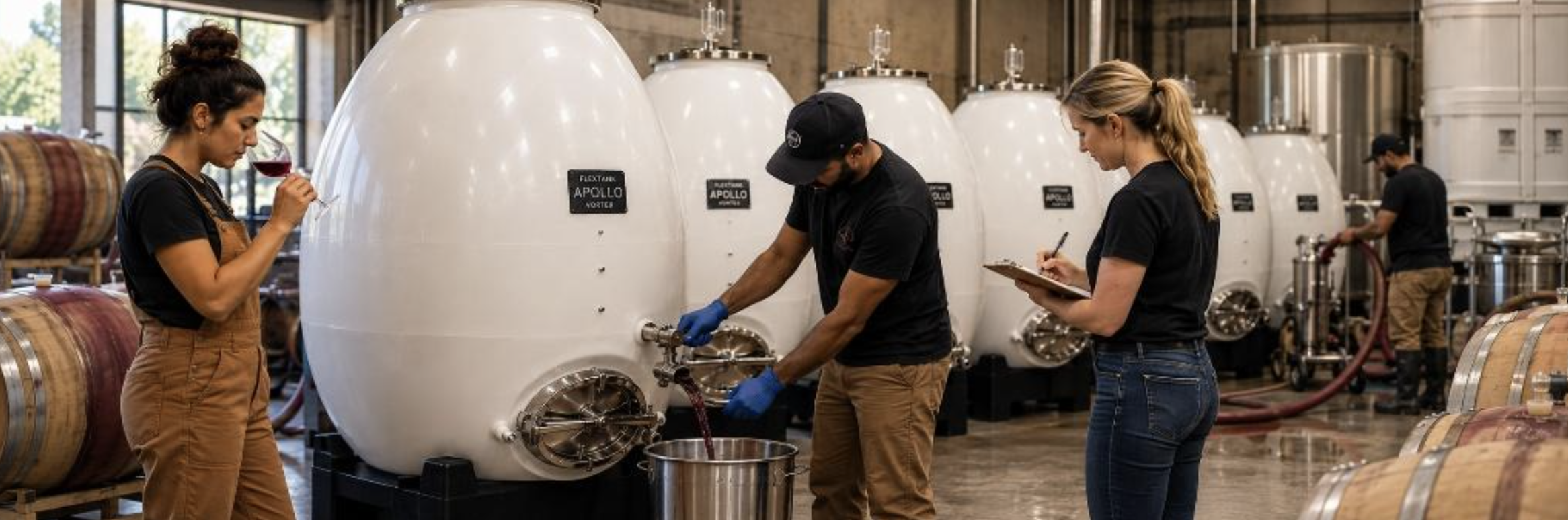
 Vortex vessels use natural movement, oxygen permeability and egg-shaped geometry to support active fermentation and aroma development.
Fermentation is a dynamic process. Juice or wine constantly changes as yeast consumes sugar, releases carbon dioxide and creates heat. Inside a conventional vessel, movement can slow and yeast can settle.
Egg-shaped vessels create a different fermentation environment.
Curved geometry promotes natural convection. Fermenting liquid circulates continuously. Yeast remains in suspension longer.
Yeast stays in greater contact with the fermenting wine or cider throughout the vessel.
Greater circulation and yeast contact keep fermentation active, strengthen aroma development and influence the character of the finished wine or cider.
1. The Egg Shape Keeps Fermentation Moving
Egg-shaped vessels promote natural convection during fermentation. Heat and rising CO2 help move liquid through the vessel. Curved walls encourage continuous circulation and help keep yeast moving. The result is a more active fermentation environment from top to bottom.
Natural convection keeps fermenting wine or cider in motion.
Circulation helps keep yeast suspended and active.
Continuous movement reduces the need for manual agitation or mixing.
2. Fermentation Builds Aroma
Most fermentation-derived esters develop as yeast converts sugars into alcohol. Esters contribute fresh fruit and floral aromas to wine and cider. Vortex circulation keeps yeast suspended and promotes consistent fermentation activity throughout the vessel.
Ester production: Active yeast metabolism produces fruity and floral esters during fermentation.
Yeast circulation: Natural convection keeps yeast distributed throughout the fermenting liquid and helps maintain contact with available nutrients.
Aroma development: Fermentation conditions also influence the release of aromatic thiols and the expression of terpenes. Pyrazines contribute distinctive varietal characteristics.
3. Oxygen Supports the Fermentation Environment
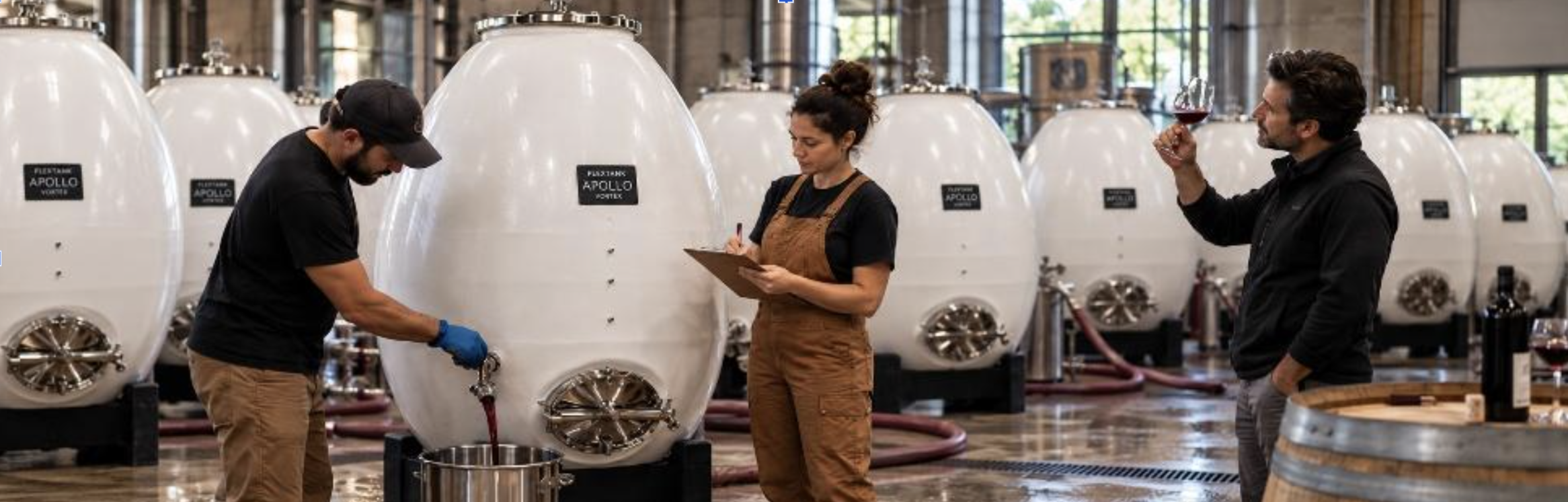
Yeast needs oxygen during early fermentation to develop healthy cell membranes and reproduce. Vortex vessels combine oxygen-permeable construction with natural circulation to influence oxygen exposure and yeast activity throughout fermentation.
Oxygen helps yeast produce sterols and fatty acids essential for healthy cell membranes.
Natural circulation distributes yeast throughout the fermenting liquid and promotes a more consistent fermentation environment.
Oxygen management influences yeast metabolism, fermentation performance and the development of desirable aroma compounds.
4. Yeast Stays in the Fermentation Process
Yeast does the work of fermentation. As fermentation progresses, yeast cells can settle toward the bottom of the vessel. Natural convection in egg-shaped vessels helps keep yeast suspended and distributed throughout the fermenting liquid. More consistent yeast contact maintains access to sugars and nutrients, supports fermentation activity and reduces the need for mechanical stirring.
Suspended yeast maintains greater contact with fermentable sugars and available nutrients.
Continued circulation helps distribute yeast throughout the vessel instead of allowing cells to accumulate at the bottom.
Sustained yeast activity influences fermentation performance and the development of aroma and flavor compounds.
5. Fermentation Character Can Carry to the Bottle
This advantage can be especially important for cider. Many ciders move from fermentation to packaging relatively quickly. Vortex Apollo vessels give cideries a practical way to support active fermentation while increasing production capacity.
Fermentation develops important fruit and aromatic compounds.
Shorter production cycles can help preserve fresh fermentation character.
Strong aroma development during fermentation can carry into the finished package.
Use Vessel Shape to Your Advantage
Market pressure, reduced consumption, changing consumer tastes and greater demand for quality are reshaping wine and cider production. Producers need more flexibility, faster turnarounds and greater control over aroma and flavor development.
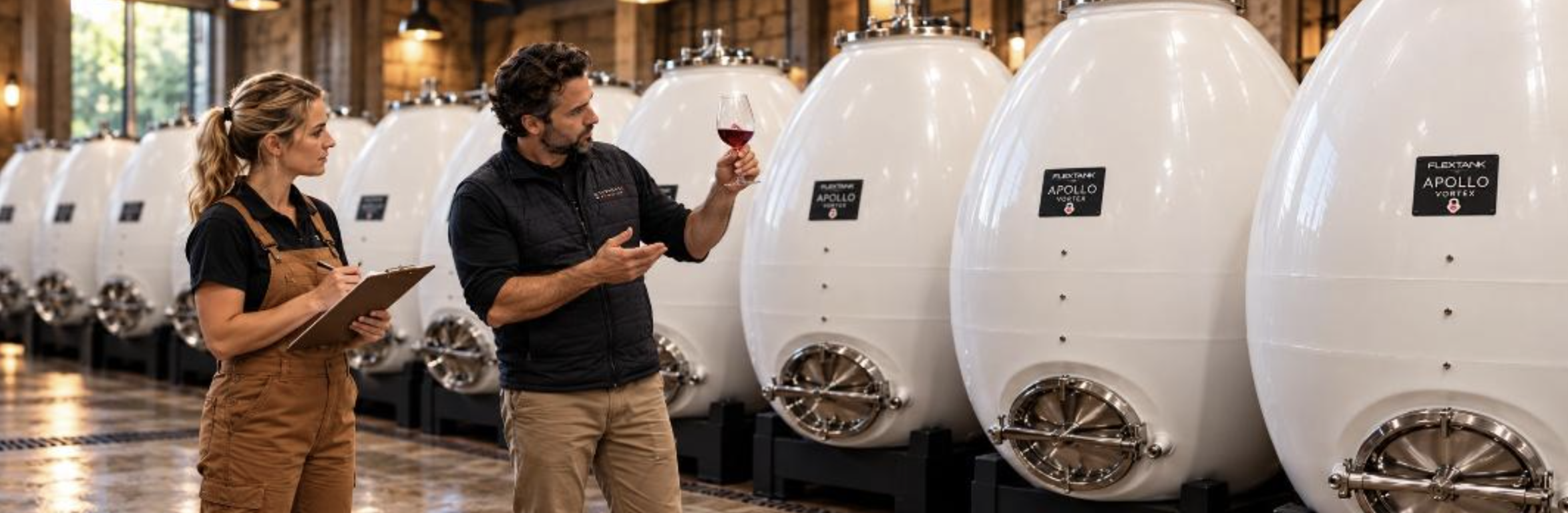
Vortex vessels help meet those demands. Egg-shaped geometry promotes natural circulation and active yeast contact. Oxygen-permeable construction supports fermentation without routine stirring or separate oxygen introduction. Producers can create high-quality wines and ciders, turn production lots faster and adapt more easily to changing production needs.
Smooth vessel walls also simplify cleaning and sampling while reducing water and chemical use. Long service life and easy handling add production efficiency and sustainability beyond fermentation.
Put Vortex Fermentation to Work
Flextank Apollo Vortex vessels combine egg-shaped geometry with oxygen-permeable polymer construction. The engineered Flextank Vortex vessels provide controlled oxygen permeability through the vessel wall. Wineries and cideries gain another way to manage fermentation, increase production flexibility and develop distinctive finished products.
Flextank vessels help producers reduce cleaning, water and chemical use, improve cellar space, lower replacement costs and turn batches faster. Stackable, long-life designs support production from fermentation through maturation, storage and finishing. Multiple sizes give wineries and cideries more flexibility for seasonal releases, smaller batches and changing production needs.
Increase efficiency and create a more adaptable cellar strategy. Let’s talk.
📞 Call: +1-360-450-2694
📧 Email: flexsales@flextank.com
🌐 Visit: www.Flextank.com
Or simply fill out the form HERE for Free Consulting, and let’s get started.