

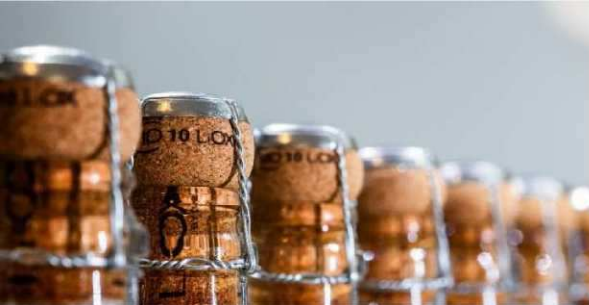
 The LiOX by Diam closure has been awarded the Innovation Prize at the VITeff 2025 trade fair in the “Technological Innovation – Process, Products and Consumables” category. This award recognizes a high-precision enological solution designed to meet the contemporary challenges of ageing sparkling wines.
An innovation emerging from consultation with the Champagne industry
LiOX by Diam embodies a collaborative and scientific approach to innovation that has been developed following extensive consultation, not only with cellar masters and independent winegrowers, but also with the Champagne Committee on the enological requirements for closures. This dialogue with industry stakeholders has resulted in the design of a closure that meets the specific enological requirements of sparkling wines, while incorporating the latest advances in oxygen management.
“Oxygen control has become a key parameter in modern winemaking management in order to create consistent wines with a precise aromatic profile. The LiOX by Diam solution has been designed to meet these requirements, particularly in the case of sparkling wines, where excess oxygen can compromise the aromatic stability and freshness of wines."
Alain Schmitt, Regional Director for Eastern France and Champagne, Diam Bouchage
An unprecedented performance: 50% OIR reduction
Thanks to an optimized desorption process, the LiOX closure releases half as much oxygen during the critical Oxygen Initial Release (OIR) phase as conventional Mytik Diam stoppers. This upstream control limits the initial oxidative shock associated with the closure and counteracts the risk of premature oxidation, while maintaining the recognized mechanical performance of the range. LiOX by Diam is the ideal solution for anyone who wants to prioritize the aromatic freshness of their wines.
In a context of global warming and reduced inputs, controlling oxygen has become essential to guarantee the natural stability wines. This new closure solution is also perfectly suited to wines that are sensitive to oxidation: sparkling rosés, half bottles, and wines with low sulfite content.
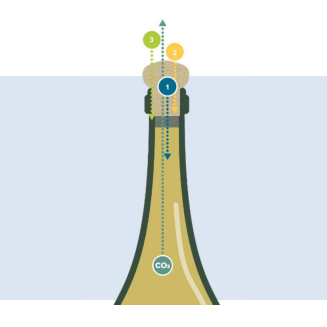 What is closure permeability?
-
Release of the oxygen contained in cork cells into the bottle.
OIR = Oxygen Initial Release -
Transfer of oxygen through the closure.
OTR = Oxygen Transfer Rate -
Interface – Oxygen passing between the closure and the glass. This phenomenon intensifies as the closure weakens.
OTI = Oxygen Transfer Interface
An enological tool of precision
Mytik Diam LiOX closures offer the same guarantees of security, consistency, and adaptability that have built Diam Bouchage's reputation. They enrich the range of enological tools offered by the closures manufacturer, providing winemakers with a new level of permeability to refine the aromatic profile of the ir wines.
"The first organoleptic tests, carried out after six months of aging, reveal a distinct sensory evolution with LiOX, confirming its potential as a tool for differentiation."
Nicolas Galy, R&D Project Manager, Diam Bouchage
Recognition that is part of the company’s history of innovation
This award echoes the initial 2005 seal of approval when Diam Bouchage received the same prize for its DIAMANT® process involving revolutionary technology for treating cork with supercritical CO2 at differentiated pressures, guaranteeing closures free of any cork taint.
For more than twenty years, Diam Bouchage has been supporting wine professionals by developing closure solutions that guarantee controlled aging and optimal preservation of aromas. Following the launch of Mytik Diam 10 in 2021 and Mytik Diam Tirage in 2024, with LiOX the company is taking a new step forward in its commitment to precision winemaking that is sustainable and adapted to climate challenges.
About Diam Bouchage
Diam Bouchage, a French company located in the Pyrénées Orientales region (Roussillon), produces and sells nearly 2 billion closures every year to more than 80 countries. It offers a range of closures that are capable of meeting the market’s various needs in terms of oxygen input for optimal aging of still wines, sparkling wines, and spirits. In Champagne, the company has long been based in Cumières in order to offer a local service to the Champagne market and today protects nearly one in three bottles of Champagne with its Mytik Diam range.