 At many wineries, compliance knowledge is concentrated in one person.
That person knows when reports are due, where the supporting records are stored, how inventory discrepancies are handled and which production details need to be collected from the cellar. They may have developed the process over several years, often through experience rather than formal training.
The system can appear to be working well—until that employee goes on leave, changes roles or leaves the company.
Suddenly, another team member inherits a collection of reports, spreadsheets, passwords and deadlines without understanding how the pieces fit together. Even when previous filings are available, they may not explain why certain numbers were reported, where the information originated or which adjustments were made.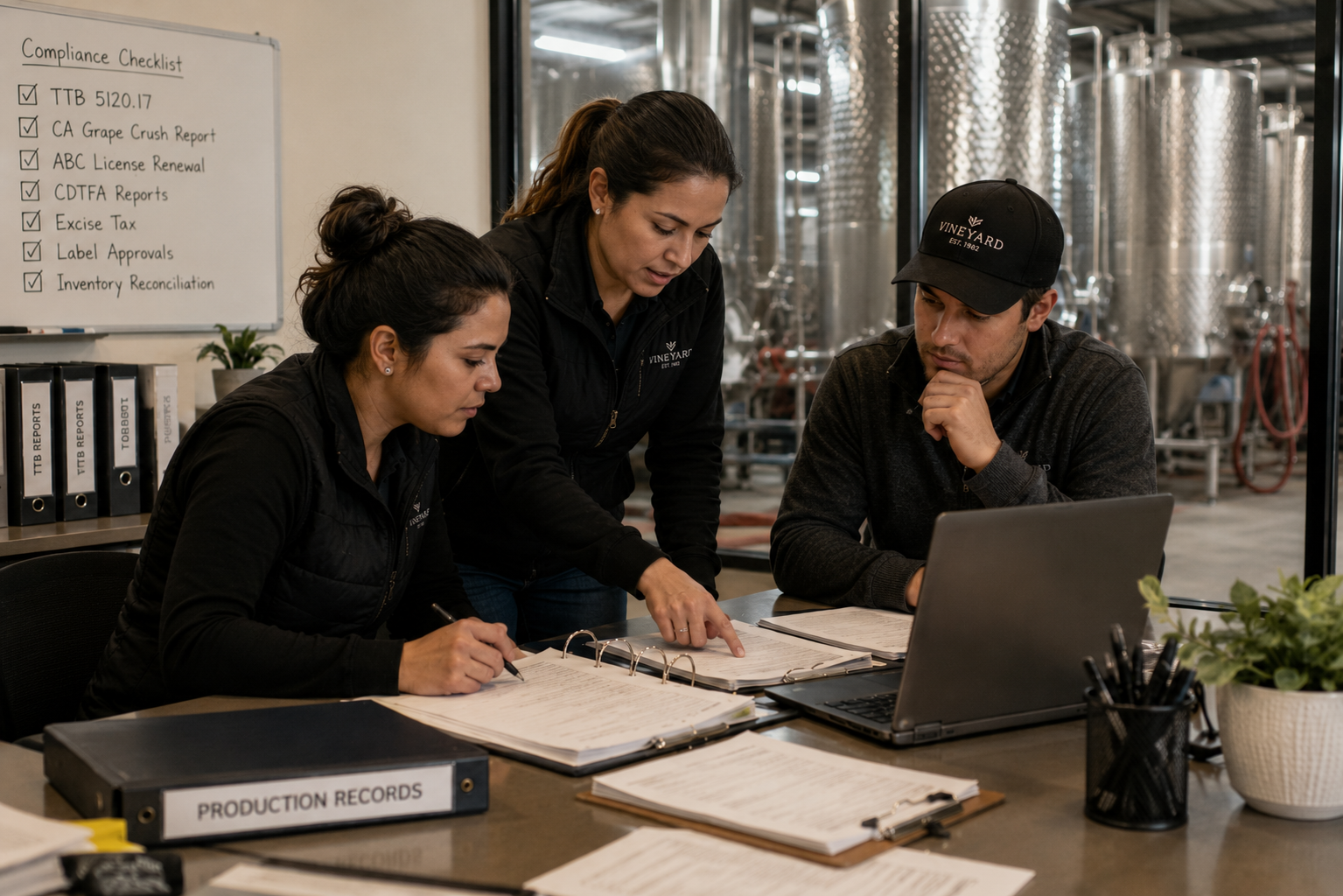
This is not necessarily an employee problem. It is a process problem.
A strong compliance program should be understandable, documented and transferable. The winery should know:
Which reports and renewals apply to the business
When each filing is due
Who is responsible for preparing and approving it
Where the underlying numbers are generated
Which records support each entry
How one filing connects to other reports and tax returns
What steps should be followed when something does not reconcile
Documenting these procedures protects more than the winery’s compliance status. It reduces interruptions, makes employee transitions easier and gives managers greater confidence in the information being submitted.
Cross-training is equally valuable. Compliance often depends on information from several departments, including production, accounting, administration and management. When each department understands how its work affects the winery’s records, errors are easier to prevent and questions can be resolved before a deadline is approaching.
This does not mean every employee needs to become a compliance expert. It means the winery should have a repeatable process that does not depend entirely on one person’s memory.
A useful place to begin is by reviewing the winery’s recurring reports and identifying where each number comes from. From there, teams can create written procedures, assign responsibilities, organize supporting records and establish a regular reconciliation schedule.
Wine Compliance Alliance provides customized winery compliance training based on a company’s specific operations, staff responsibilities and reporting needs. Whether a winery is training a new employee, preparing for a transition or strengthening an existing process, the goal is to help the team understand not only what must be filed, but how and why the information connects.
Learn more at winecompliancealliance.com.