
At Berlin Packaging, we pride ourselves on providing the most reliable, efficient, sustainable, and cost-effective packaging solutions available to our customers. As your packaging partner, we closely monitor industry conditions that may impact your business. Our Industry Update, published quarterly, features news and analysis on Plastic Resins and other Packaging Raw Materials, Economic Activity (CPG retail sales, consumer spending, inflation, interest rates), Global Freight, and Domestic Transportation.
 RESINS AND RAW MATERIALS
Supply chain disruptions, energy costs, freight expenses, inflation, trade policies, and tariffs are elevating the cost of packaging raw materials and finished products. While packaging raw material prices may fluctuate from month to month, the overall direction is clear: higher prices.
The July Producer Price Index (PPI) illustrates this market trend. Over the past 12 months (July 2025 to July 2026), the PPI for plastic resins rose by 10.7%, aluminum mill shapes (including sheet products used to make cans) climbed by 40.5%, steel mill products increased by 22.5%, and paper rose by 10.4%.
Berlin Packaging maintains a best-in-class approach to sourcing packaging materials and manufacturing platforms. We are not bound to a specific material, technology, tool, or country of origin, affording us tremendous flexibility to find the most cost-effective packaging solutions for our customers.
PLASTIC RESINS
The following summarizes current market conditions for various resins:
PET (Polyethylene Terephthalate): Ample resin supplies and inventories, stable production, softening demand, and lower feedstock costs are putting downward pressure on PET prices.
HDPE/MDPE/LDPE (Polyethylene): Following a hefty increase in the spring from the crude oil price shock, PE pricing has retreated due to plentiful supplies and elevated inventories.
PVC (Polyvinyl Chloride): High operating rates, growing inventories, lower feedstock costs, flat domestic demand, and slowing export demand are keeping a lid on PVC prices.
PP (Polypropylene): Strong demand, reduced operating rates, rising exports, and higher feedstock costs suggest upward movement in PP prices in the near term.
PS (Polystyrene): The biggest driver of PS pricing is benzene feedstock costs, which rose in June, fell in July, and are likely to increase in August.
Post-Consumer Recycled (PCR): Recycled HDPE (rHDPE) pellet prices rode the coattails of rising virgin prices this past spring but have fallen over the summer due to slowing demand and slumping virgin prices. For the balance of the year, buyers should expect stable pellet pricing due to lower virgin PE prices and competitively priced imports. The recycled PET (rPET) market features ample supplies, below-average demand, and stable pricing. The outlook for the remainder of 2026 includes steady demand, sufficient supply, and pricing support from imports and elevated freight costs.
GLASS
 In July, the Oregon Department of Environmental Quality (DEQ) took a significant step to address concerns about glass packaging fees under the state’s Extended Producer Responsibility (EPR) program. Following months of collaboration among DEQ, Circular Action Alliance Oregon (the state’s PRO), the Glass Packaging Institute (GPI), and other stakeholders, Oregon will reclassify glass and return it to the state’s uniform recyclables collection list beginning July 1, 2027.
For CPG brands that rely on glass packaging, the rules update could bring meaningful cost relief from reduced fees levied by the state and its PRO. Oregon’s current EPR framework charges producers (i.e., brand owners who sell filled glass products in the state) 10 cents per pound for glass bottles, jars, and containers, creating some of the highest glass-related producer fees among state EPR programs. According to DEQ estimates and GPI analysis, the revised classification should reduce costs for glass producers while more closely aligning fees with the law’s original intent: requiring producers to contribute to recycling system improvements rather than cover the full cost of an established recycling infrastructure
METAL
Metal packaging manufacturers and fillers understand the challenges ahead, but many have not yet invested in the technologies needed to address them, according to a recent survey of 200 metal packaging professionals across the U.S., UK, Germany, and India. The study found that structural integrity (33%), cost control (31%), and sustainability and recyclability (30%) rank among the industry’s top priorities through 2028. As brands push for higher recycled content to meet sustainability goals, manufacturers face increasing pressure to maintain can strength, dent resistance, and product performance while also controlling raw material costs.
The research highlights a significant quality management challenge. Eighty-six percent of respondents identified quality issues that production teams detect too late in the process as the industry’s biggest technical risk, while 81% said their testing approach relies too heavily on manual, operator-led measurements. Respondents identified investment in flexible testing equipment, quality measurement solutions, and resource efficiency as top priorities for the next two to three years.
 PULP & PAPER
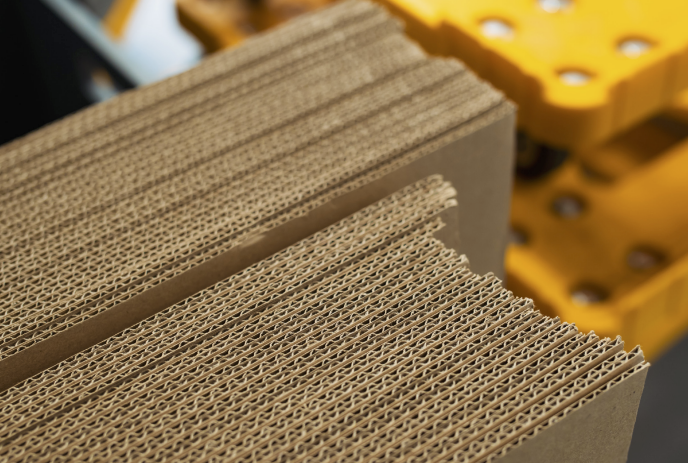
Containerboard and boxboard markets continue to tighten as producers push through a third round of price increases in 2026, citing higher costs for recovered fiber, freight, energy, and other inputs, along with reduced industry capacity after producers idled significant mill capacity in 2025. Major producers report higher operating rates, lower inventories, improved shipment volumes, and tighter supply conditions across key grades. For CPG brands that rely on corrugated packaging, containerboard, paperboard, and folding cartons, these trends signal continued upward pressure on packaging costs through the second half of 2026 and into 2027.
Although Berlin Packaging cannot control the price of raw materials, we do offer multiple value-added services and income-boosting solutions to help our customers Package More Profit. Over the past few years, Berlin Packaging has added more than $200 million in profit to our customers as a unique benefit of doing business with us.
ECONOMIC INDICATORS
As summer vacations wind down and children head back to school, the U.S. economy may be shifting from a K shape, where affluent and comfortable consumers thrive while lower-income consumers struggle, to an E shape, with three consumer groups instead of two. Recent consumer spending and wage trends reflect this shift.
According to Bank of America, spending growth and after-tax wage growth among high-, middle-, and low-income earners are converging. The top 5% of earners remain the exception, as they continue to outspend the other groups. In the past, middle-income consumers spent at levels similar to their higher-income counterparts. That pattern diverged in the second half of 2025, when middle-income consumers reduced their discretionary spending while higher-income consumers maintained their spending levels.
Here's a snapshot of recent economic activity, data, and news influencing the consumer packaged goods (CPG) market and the packaging industry in North America.
U.S. retail sales contracted by 0.6% in July.
Consumer sentiment slid by about 8% in August.
U.S. annual inflation remains above 3%.
In Q2, U.S. GDP rose 1.5%, Canada forecasts GDP growth of 3.4%.
Berlin Packaging's mission is to improve our customers' net income through our packaging products and services. We help increase their sales, reduce costs, and improve productivity. We also provide accurate, timely information and ...
READ THE FULL REPORT HERE