

How much work can one vessel do in your cellar?
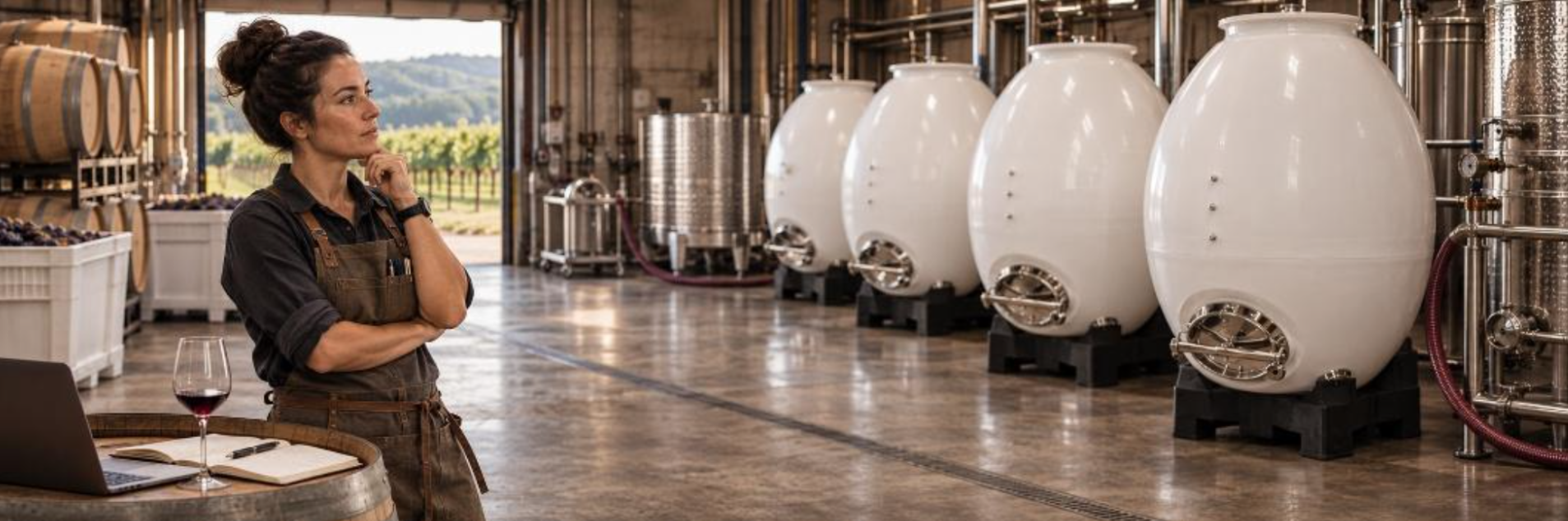
A production vessel represents a major investment in cellar space, labor and capacity. How easily can it be cleaned? Can it be moved when production changes? What happens after fermentation? Can the same vessel support maturation, storage or another production need? Here are four questions to consider when evaluating an egg-shaped fermentation vessel.
1. Start with the Fermentation You Want
The right vessel should support the fermentation style first. Material choice comes after the process requirements are clear.
Egg-shaped vessels attract attention because their curved interiors can influence movement during fermentation. The shape can help keep wine and lees in motion and can affect how the cap develops and how extraction is managed. In the attached article, winemakers specifically point to natural movement, lees interaction and cap behavior as reasons they use tulip-shaped vessels.
The more useful question is not what material the vessel is made from. It is what fermentation behavior the winemaker wants from the vessel.
Consider:
Natural movement. How much convection or internal circulation does the vessel encourage during fermentation?
Cap and lees management. How does the shape affect cap formation, extraction and contact with lees?
Fermentation access. How easily can the winemaker sample, monitor temperature, manage the cap and make adjustments during fermentation?
Temperature behavior. How evenly does the vessel support temperature control throughout the batch?
Batch style and volume. Does the vessel fit the lot size, fruit type and fermentation approach being used?
 2. Decide How You Want to Manage Oxygen
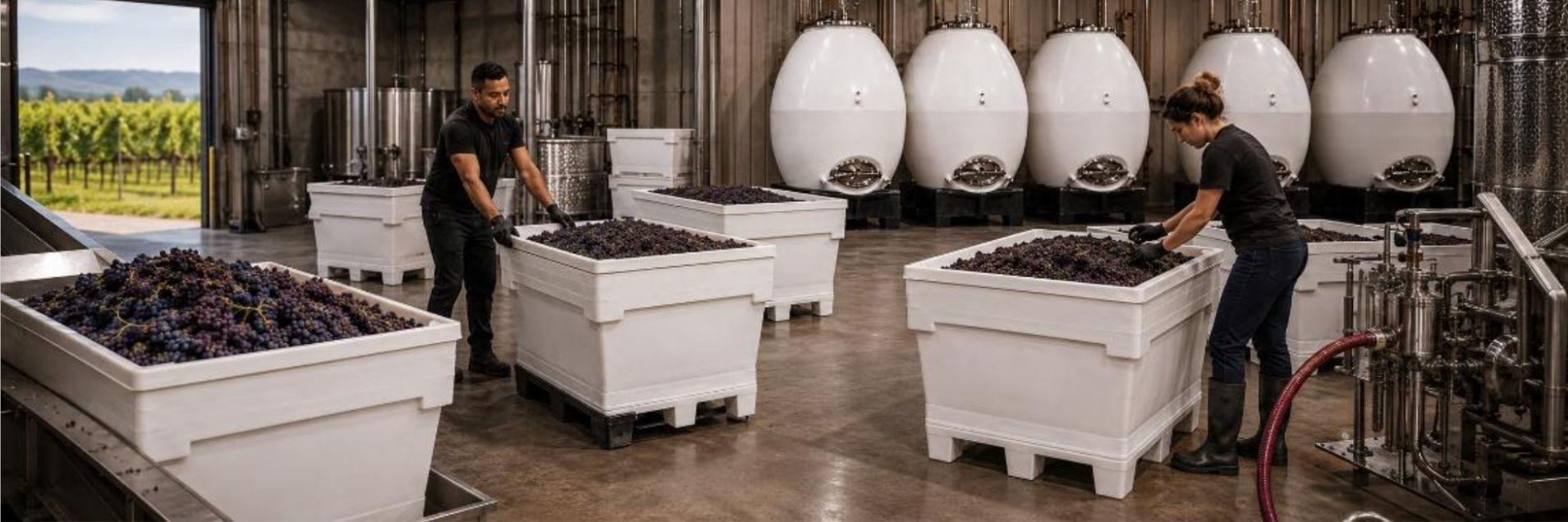
Oxygen should support the production goal. The vessel should make that exposure intentional and repeatable. Some vessel materials allow oxygen to enter naturally. Others provide a more controlled barrier.
The key consideration is not simply whether oxygen reaches the wine. It’s how much exposure occurs, how consistently it occurs and whether that level supports the desired style.
Consider:
Freshness and fruit expression. How much oxygen exposure helps preserve freshness and fruit character without pushing the wine too far toward oxidation?
Tannin development. How should oxygen influence tannin structure, texture and mouthfeel during fermentation and maturation?
Reduction management. Does the wine need enough oxygen exposure to reduce the risk of reductive aromas while maintaining the desired style?
Aromatic development. How much oxygen contact supports the aromatic profile the winemaker wants to build and retain?
Oak independence. Can oxygen exposure be managed separately from oak flavor, aroma and tannin contribution?
 3. Look Beyond Fermentation.
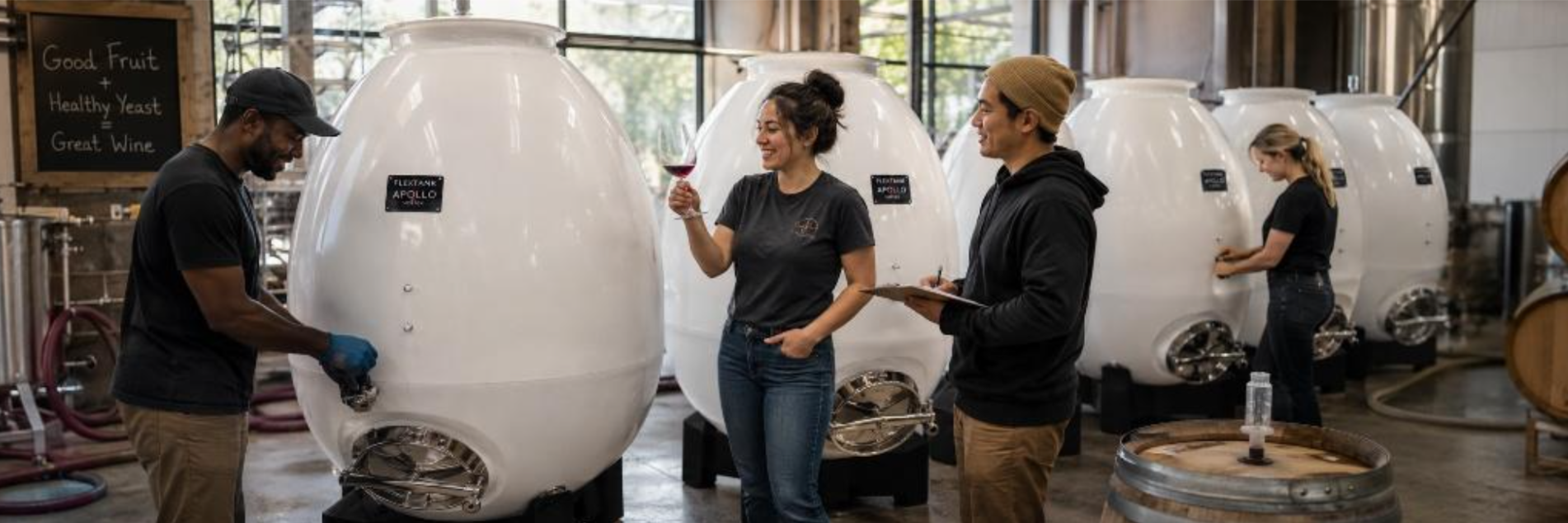
A vessel that stays productive beyond fermentation can provide more flexibility from the same cellar space and production investment.
Primary fermentation may last days or weeks. The vessel remains part of the cellar year-round.
How the vessel performs after fermentation can affect capacity, workflow and the return on cellar space. A vessel that supports multiple production stages gives the winemaker more options as batches, styles and seasonal needs change.
Consider:
Maturation and storage. Can the same vessel move from fermentation into maturation or storage without transferring the wine to another vessel?
Batch flexibility. Can it support small lots, trials, blending components or limited-production wines and ciders?
Oak programs. Can oak influence be added when desired rather than dictated by the vessel?
Seasonal capacity. Can the vessel shift between fermentation, maturation and storage as production demands change?
Cellar utilization. How many different production roles can the vessel perform during the year?
4. Calculate the Cellar Work Around the Vessel
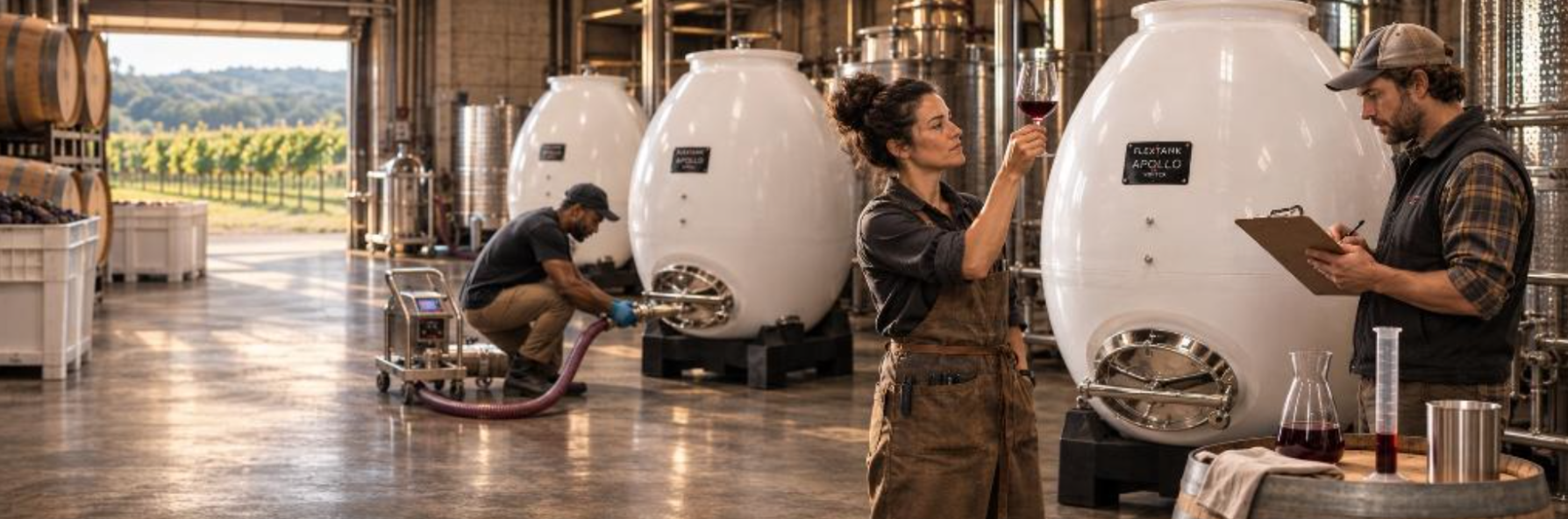
A production vessel does more than hold capacity. Its size, weight and mobility affect how the entire cellar works around it. Fermentation vessels affect more than the beverage inside it. They also affect: cleaning, labor, floor space and how easily the cellar can respond when production changes.
A vessel should support the production system, not become a permanent obstacle inside it.
Consider:
Cleaning and sanitation. How much labor, water and chemistry are required to clean and prepare the vessel for the next batch?
Movement and access. Can the vessel be moved by forklift or repositioned as production needs change?
Cellar space. How much floor space does the vessel require, and can that space be used efficiently throughout the year?
Production changes. Can the vessel be redeployed for another batch, style or production stage when priorities shift?
Expansion and seasonal needs. Can additional capacity be added, moved or reconfigured without redesigning the cellar around the vessel?
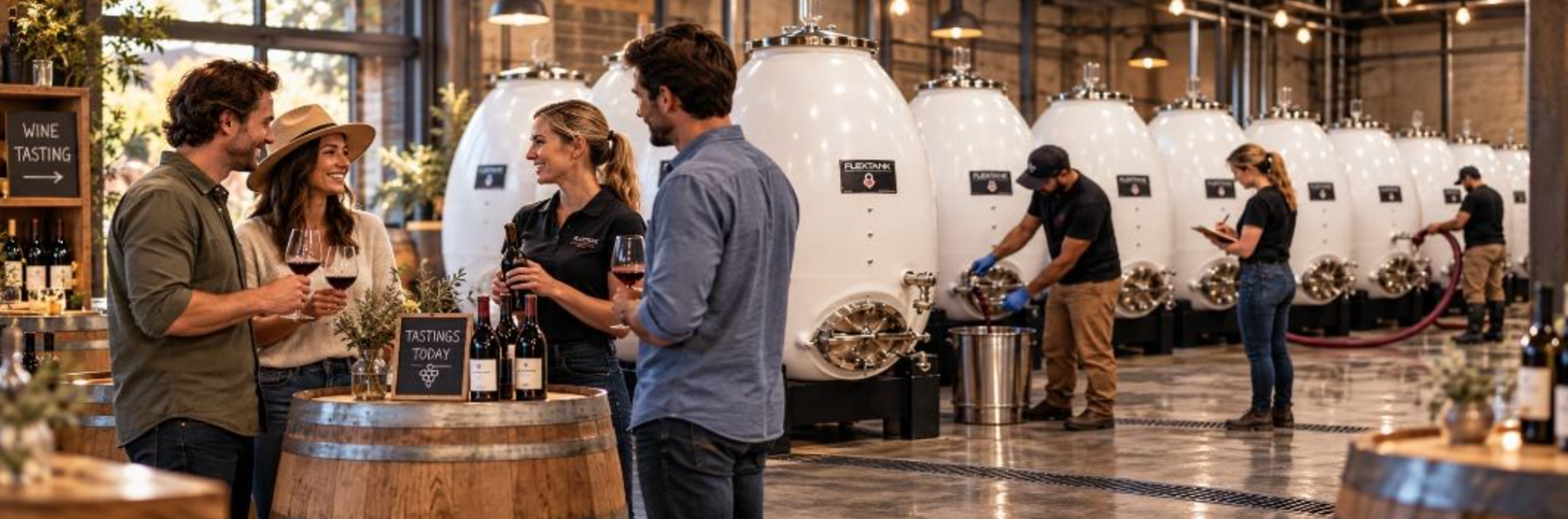
Final Thoughts: Egg-Shaped - Think Beyond Fermentation
Egg-shaped vessels can influence fermentation, extraction and natural movement. But shape is only one part of the decision. Oxygen management, cleaning, mobility, cellar space and year-round production use all affect the value of the vessel. The best fit is the vessel that supports the beverage being produced and the way the cellar needs to operate.
The broader question is simple: What can the vessel contribute during fermentation. And what can Flextank do after fermentation is complete? Flextank vessels help wineries reduce cleaning, water and chemical use, and support O2-permeable fermentation, maturation and storage.
Multiple sizes and stackable designs make it easier to handle smaller batches, seasonal releases and changing production needs.
Turn vessels faster. Simplify draining, cleaning and preparation for the next fill.
Use cellar space more efficiently. Add capacity easily to your production.
Match capacity to production. Choose vessels for trials, seasonal releases and repeat runs.
Increase efficiency. Create a more adaptable strategy.
Let’s Talk
📞 Call: +1-360-450-2694
📧 Email: flexsales@flextank.com
🌐 Visit: www.Flextank.com
Or simply fill out the form HERE for Free Consulting, and let’s get started.