

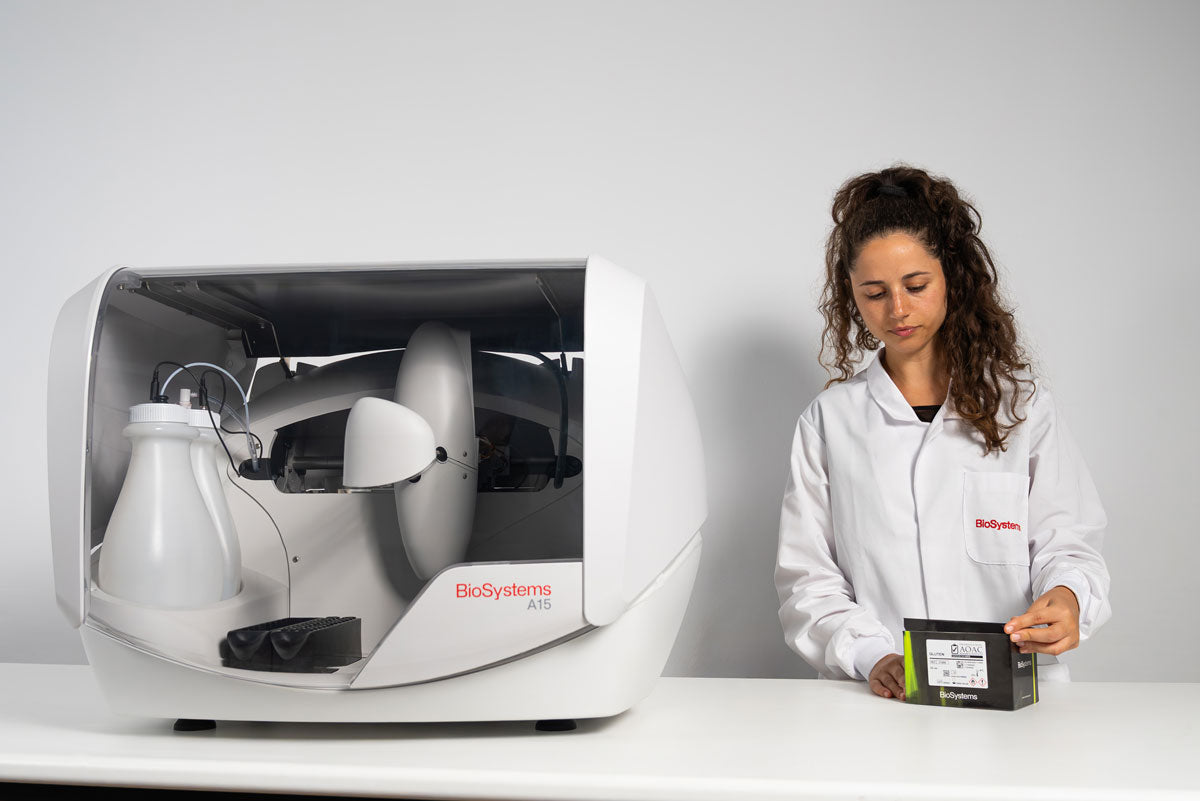
 Automated wine analysis replaces manual, step-by-step bench chemistry with instruments that draw the sample, run the method, and return a result with little to no operator handling in between. For a winery laboratory, that shift changes how much testing a lab manager can run in a day and how much of that work depends on one person being available and steady-handed.
What Is Automated Wine Analysis?
Automated wine analysis is laboratory testing in which an instrument, not a technician, performs the mechanical steps of a method: measuring the sample, adding reagent, mixing, incubating, reading the result, and recording the data. The technician's role shifts from performing each step by hand to loading samples, reviewing results, and managing exceptions.
Manual bench testing for wine chemistry typically involves pipetting reagents, timing reactions, and reading a result on a separate instrument or by visual comparison, one sample at a time. An automated system such as the BioSystems SPICA runs the same enzymatic and colorimetric methods, but the instrument controls timing and volume precisely for every sample in the batch, and the operator's attention is freed for other cellar or lab work while it runs.
The distinction that matters operationally is not "instrument versus no instrument." Most winery labs already use instruments for individual tests. The distinction is whether the workflow around those instruments still depends on a person executing each step manually, sample by sample, or whether a system carries a batch through the method with the operator supervising rather than executing.
How Does the Automated Wine Analysis Workflow Work?
A typical automated wine analysis workflow follows five stages, whether the lab is running enzymatic panels, colorimetric tests, or automated... READ MORE