

Visitation is down across nearly every US wine region. Wine club retention is softening. Margins are getting squeezed by rising costs on top of it, according to SVB's 2026 State of the U.S. Wine Industry report. Overall DTC revenue is down. If you run a DTC-focused winery, none of this is news. You are living it.
This is not a problem you are helpless against.
It is not the same as a shrinking pool of visitors that no amount of skill can fix. It is a problem with conversion, and conversion problems are addressable. In fact, wineries have an advantage here that almost no other sales environment on earth has. Most of them just are not using it.
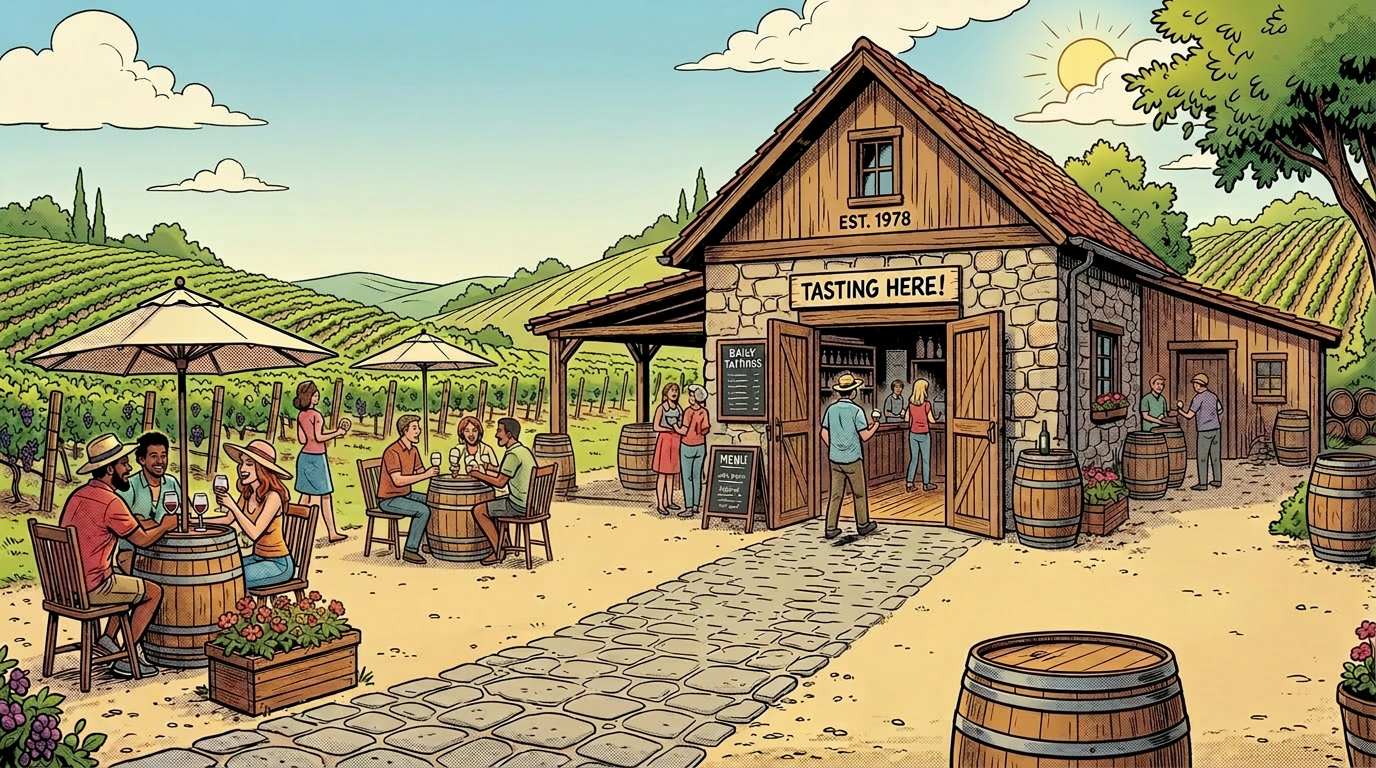
Tasting Rooms are the best sales room in the world!
This is not a new argument for me. I have made the case before. What you call a tasting room is actually a sales room, whether or not it is run like one. The argument is worth making again here, because the stakes are high.
Think about what a salesperson in any other industry has to do before they can even start selling. First, they have to find a prospect. Then they have to figure out whether that prospect can afford the product. Building enough trust so that the prospect will listen comes next. Finally, they have to explain the product, often to someone who has never seen, touched, or tried it. The explanation alone has to close the gap between curiosity and purchase.
None of that is your problem in the tasting room. The person standing in front of your staff picked you. Before they ever got in the car, they researched your winery, looked at your website, and saw your prices. Many of them already know what wines you make. They are not being interrupted by a sales pitch; they chose to be here. Relaxed and often on vacation, they are in a good mood. They brought people they like, because nobody plans a wine country trip with people they cannot stand. Here is the part other industries don't get: they are already trying the product in real time, and they already know they like it. Every pour is a free trial the customer chose to take.
That is an extraordinary sales setup. A pre-qualified, self-selected, relaxed, happy guest, in good company, already enjoying the product firsthand. Salespeople in almost any other industry would trade a great deal to stand in that room. The only thing missing, in far too many tasting rooms, is someone actually asking for the sale.
Asking for the sale is not the whole job. But it is the piece that is easiest to fix, and it is the piece too many wineries are leaving on the table.
And the sale in front of your staff right now is not the only sale the tasting room produces. A guest who has this experience becomes the same guest who joins the wine club and books next year's event. Months later, she spots your bottle on a retail shelf, remembers exactly how she felt in your tasting room, and buys a case. Wine clubs have grown into the largest single piece of the average winery's DTC revenue over the last two decades, bigger even than tasting room direct sales, per SVB's 2025 Direct-to-Consumer Report. That first sale in the tasting room is not the finish line. It is the opening move in a much larger relationship, the one that turns into club shipments, event tickets, and case orders for years afterward. Profitable wineries are not living off today's transaction. They are living off everything that transaction sets in motion.
Why this matters more now than it used to
Here is where the current headwinds come back in. When visitation was climbing and tasting rooms were full every weekend, a winery could get away with converting a smaller share of guests. There were always more coming through the door. That cushion is gone. With fewer people walking in, every one of those guests, already primed, already relaxed, already drinking your wine, is more valuable than ever.
This is the lean-in moment. Wineries cannot afford to waste the visitors they still have. The good news is that closing that gap does not start with more visitors, more marketing spend, or a better vintage. It starts with structure. In Napa, the average tasting room purchase has nearly tripled since 2012. This tracks the industry's broader shift toward more structured, seated tastings. That is real evidence that a deliberate sales structure, not the wine itself, is what moves the number. The opportunity in front of most wineries right now is not out in the market somewhere. It is already walking through the door. What happens once it does is the real question.
The tasting room sales gap nobody wants to name
Guest satisfaction across the industry is strong, and it has been climbing for years. A decade of tasting room mystery shopping research, published by WISE, backs this up: wineries have gotten good, industry-wide, at making people feel welcome. That's not the weak link.
What the same research shows, year after year, is a consistent gap. Wineries are inconsistent at turning a warm, already-primed visit into a sale. They're just as inconsistent at turning that sale into a club membership, even at properties known for excellent hospitality. A staff member can pour a wonderful, knowledgeable tasting for a guest who has already decided they love the wine. Still, nobody asks them to take any of it home. That is not a hospitality failure. It is a structure failure, sitting right on top of the best sales setup in the business.
The fix starts with a script, but it does not end there
Some tasting rooms do not have a sales problem because their approach is wrong. They have a sales problem because they do not have an approach at all. No script, no standard, nothing. Staff are left to wing it with guests who are, by every measure, ready to buy. Winging it produces exactly what you would expect: some guests get asked. Most do not, and almost nobody hears about the club as anything more than a passing mention of a discount.
If that is where your tasting room is today, a script is not a bad place to start. It gets every staff member doing the same baseline things: greeting guests warmly and asking about their interests. Before they leave, staff actually ask for the sale and actually describe what the club includes. That is a floor. It is not a ceiling.
The wineries seeing real results in DTC revenue move past the script into something more specific. They build a structure around the guest actually sitting in the room, using everything already working in that winery's favor. That beats a set of lines every guest hears regardless of who they are.
Know your guest, because you already know more than you think
Remember, this guest did the research. They looked at your site, your prices, maybe your story, before they ever arrived. Your staff should be picking up that thread the moment the guest walks in, not starting from zero. If it is a returning guest, your team should recognize them, pulled from whatever system tracks your customers. For someone new, a few natural questions work just as well: what brought them in, what they usually drink, what they are celebrating. Those answers tailor the rest of the visit from the first five minutes instead of the last five.
This is one of the specific strategies SVB found among wineries posting above-average club growth: investing in the systems and habits that let staff build a personalized visit instead of a generic one. Guests can tell the difference between being sold to and being understood. Understood is what turns a guest who already likes your wine into one who wants a case of it.
Redefine what a DTC revenue win looks like
A guest leaving with a bag, one or two bottles grabbed on the way out, feels like a win. It is not. A win is a guest leaving with a box: a case purchase, a club sign-up, a standing order that keeps shipping long after they have driven home.
That box is not a one-time transaction, either. The average lifetime value of a wine club member is over $2,000 in the US. That is the real prize sitting on the other side of the ask. It is why the club invitation matters more than any single bottle sold today.
Club conversion rates typically run eight to ten percent of tasting room visitors, and wineries in less-trafficked, rural markets are converting closer to one in four. The gap, between the occasional sign up and one in ten or one in four, is not luck and it is not location alone. It is structure, applied consistently, to guests who were already leaning toward yes before they walked in the door.
If your team is measuring success by how many bottles left the building today, that is the wrong number. Measure what you can actually act on this week: wine club signups, your visitor-to-customer conversion rate, and average order value. If you use a POS system, that last one is a number you already track. Put those three together and you have a real scorecard, one you can read today instead of waiting a year to find out how you did. That is exactly the kind of benchmark I can build with you: one score pulling together your AOV, your club conversion, and your visitor-to-customer rate. It tells you exactly where the next gain is sitting.
What this means for your tasting room
You already have the best sales venue in the world. The guest walks in pre-qualified, relaxed, in good company, and already tasting a product they like. That part is done before your staff says a word. What is missing at most wineries is not more hospitality, and it is not a better product. It is the structure sitting quietly underneath a genuine advantage. Know who is in front of you. Have something specific and true to say about why the club is worth joining. Build the sales throughout the tasting. Then ask, every time, for the sale that matches the size of the relationship you are already halfway to having.
Get that right, and the tasting room stops being a room where people happen to taste wine. It becomes the place where the rest of your DTC revenue, this year's and next year's, actually gets built. That's what making it count looks like.