
Filter Post Type
NewsVideoProductEventLink
Sort:
Most Recent
1–10 of 40
August 31, 2026
With wine consumption declining nationwide and California’s winemakers feeling the squeeze, Sacramento has delivered a meaningful win for the state’s wine producers. Senate Bill 917 opens the doors of California’s certified farmers’ markets to winemakers, including many small winemakers who have long been shut out – giving them a new avenue to reach consumers directly. In January 2026, State Senator John Laird introduced Senate Bill 917 to modernize California’s farmers’ market wine regulations. The California Legislature passed the bill in August 2026, and it was approved by Governor Newsom on August 27, 2026. Codified at Section 23399.4 of the California Business and Professions Code (the “ABC Act”), the prior law permitted Type 02 winegrower licensees to obtain a Type 79 farmer’s market license to sell at certified farmers’ markets only those wines produced from grapes grown by the winegrower itself. In practice, this requirement closed the door on small, boutique wineries that purc
00
July 26, 2026
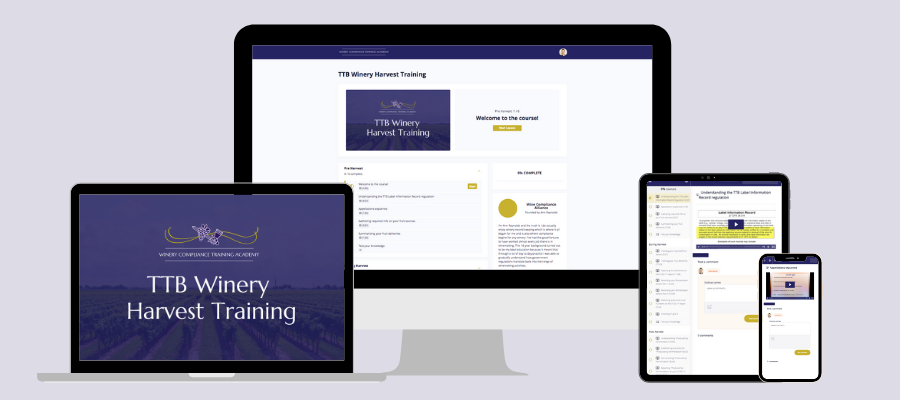
Are you sure that you’re tracking and reporting your harvest activities correctly? If you’ve lost sleep over thinking that you’re not, this course is for you. Our course creators are thrilled to bring you an immersive and comprehensive plunge into the TTB required recording and activity for Harvest specific compliance. While the information may be dry, like a Riesling, you can be assured that the content is full bodied like a tall bottle of single vineyard Cab Franc after a long day in the cellar. Here's a sneak peak to whet the palette: Does this sound like you? Winery compliance is just one part of your job and you have no idea if you’re doing it right You lose sleep wondering if you’re vulnerable to a TTB audit because your records are a mess Harvest is already chaotic enough without adding not knowing how to fill out records and reports You’d like to get everything more organized and make things simpler You’re brand new to winery compliance and want to learn how to do things t
00

Louisiana will shift state requirements for wine container sizes and case configurations to match the federal standards as of August 1, 2026. Wine will be permitted to be sold in via wholesaler or shipped into Louisiana via direct-to-consumer sales in any container size approved by the Alcohol and Tobacco Tax and Trade Bureau. The law also updates the allowable number of wine containers per case for several container sizes. These changes may create new merchandising and sales opportunities for products that were previously unavailable in the state. See below for the specific case configuration changes. Wine Container sizes Containers per case: Wine Container Size Containers per Case 5 through 20 liters 1 4 liters 4 3 liters Not more than 6 1.5 liters Not more than 6 1 liter Not more than 12 750 ml Not more than 12 500 ml 12 375 ml 24 355 ml&nb
00
June 16, 2026
In our blog post on the issue of
enforceability of the producer’s lien in bankruptcy
, we noted the current difficult and uncertain wine market environment. Since that post, the market has not changed much. Given the risk that a lawsuit against a winery on the brink of insolvency may push it into bankruptcy, and the uncertain treatment of the producer’s lien in a winery bankruptcy, we’ve been asked by grape growers about alternative methods of attempting to collect payment from a delinquent winery. This post discusses the use of the California Department of Food and Agriculture (“CDFA”) complaint process as one such potential alternative. As explained below, although this process is an administrative procedure in the nature of alternative dispute resolution, rather than a lawsuit, it is likely to be taken seriously by respondent winery.
Basic Background
Processors of agricultural products, including processors that handle and process wine
00

Why Wineries Need Influencer Marketing Now Here's a number that should reshape how you think about marketing: 69% of consumers trust influencer recommendations more than information coming directly from a brand That's not a slight edge. That's a fundamental shift in how people decide what to buy. For wineries, this matters more than it does for most industries. Wine is a considered purchase wrapped in uncertainty. Your potential customer is standing in a tasting room or scrolling through an online store, wondering: Will I like this? Is it worth the price? Am I making the right choice? Influencer content answers those questions in ways traditional marketing cannot. When a trusted voice says "I tried this Pinot and it's incredible with grilled salmon," that carries weight. It's a peer recommendation disguised as content. Instagram and TikTok now drive wine discovery among younger audiences, and 87% of Gen Z consumers say they're willing to buy products
00

April 18, 2025
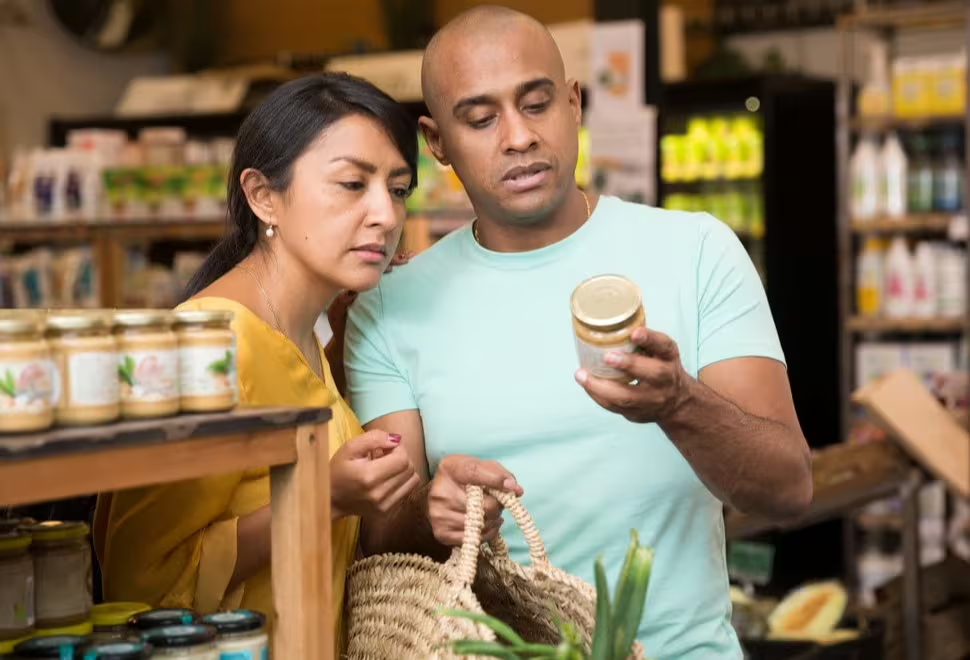
In an era where consumers are increasingly focused on diet to maintain a healthy lifestyle, the U.S. Food and Drug Administration (FDA) and other groups are taking steps to help Americans better understand food and beverage labels. The agency's recalibration of the "healthy" labeling criteria and introduction of a front-of-pack nutrition label offer the potential to reshape food product development while empowering consumers to make more informed dietary choices. Redefining 'Healthy' The FDA's definition of "healthy" has remained mostly unchanged since the 1990s, leading to a disconnect between scientific advancements in nutrition and food marketing. Under the new labeling rule, foods labeled as "healthy" must align more closely with the 2020–2025 Dietary Guidelines for Americans. The voluntary regulation goes into effect on April 28, 2025. Brand owners have three years to comply. There is no maximum or minimum type s
00
April 4, 2025
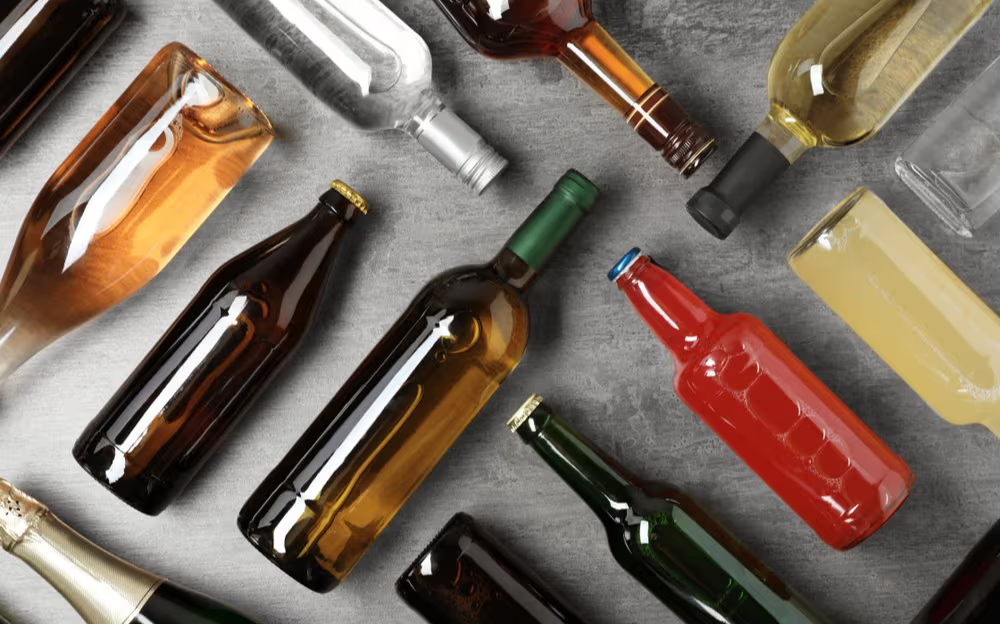
In January 2025, the U.S. Treasury's Alcohol and Tobacco Tax and Trade Bureau (TTB) issued a final rule to add 13 additional standards of fill (i.e., the amount of liquid in a container) for wine and 15 additional standards of fill for distilled spirits, allowing new packaging sizes and formats (e.g., glass for single-serve spirits-based drinks). This rule may reshape market dynamics, foster innovation, and enhance consumer choice. Expanding the range of allowable container sizes enables the U.S. to align with global packaging standards, making it easier for domestic producers to compete internationally and for imported products to enter the market without costly repackaging. This regulatory shift also allows brands more agility to innovate with new product formats, particularly in response to trends such as premiumization and sustainability. From a consumer standpoint, the expanded standards of fill offer an enhanced purchasing experience. Smaller formats cater to health-conscio
00


Afternoon Brief: Wine Labeling Up in the Air
The federal Alcohol and Tobacco Tax and Trade Bureau (TTB) is currently taking public comments on a proposed rule about nutritional labeling on alcohol. Sadly, information that a wine lover might actually want to know - residual sugar, and any additives - is not under consideration...
Press Democrat North Coast Wine ChallengeClarksburg Winegrape Growers AssociationCabFranc-A-PaloozaNashville Wine AuctionEastwood Farm and WineryGérard Basset FoundationChampagne Laurent-PerrierVeenow VineyardChateau RayakCrafted ERPTerlato WinesDP&F LawPage Springs CellarsWine Compliance AllianceAgCodeThe Personnel PerspectiveMercedes Benz of Santa RosaDonum EstateRavenswood WineryDomaine CarnerosCellar 33
00
Afternoon Brief: US Government Proposes Alcohol Labeling Rules to Advance Transparency, Health, and Safety
Today, the Treasury Department's Alcohol and Tobacco Tax and Trade Bureau published two proposed rules to provide consumers with better information about the contents of alcoholic beverages...
00
October 30, 2024
Afternoon Brief: Washington Welcomes It's 21st American Viticultural Area
On October 29, 2024, the Alcohol and Tobacco Tax and Trade Bureau (TTB) published the final rule for the Beverly, Washington appellation to officially define it as a designated wine grape-growing region...
Washington State Wine CommissionWine Trade AllianceLake County Winegrape CommissionSommelier Challenge International Wine & Spirits CompetitionRealm CellarsThe Vineyard TeamSustainable Ag ExpoNapa Valley Wine TrainMichigan Wine CollaborativeTaste MichiganGarden State Wine Growers AssociationIWSRThe Sommeliers Association of IndiaHoopes VineyardAmerican Cider AssociationClos SolèneHipMapsTM Process & ControlsGuillaume Grapevine Nursery Inc.Think B2B MarketingBota BoxAce of Spades ChampagneQuilceda CreekDos' BarCastle Rock Winery
00