Filter Post Type
NewsVideoProductEventLink
Sort:
Most Recent
1–10 of 83
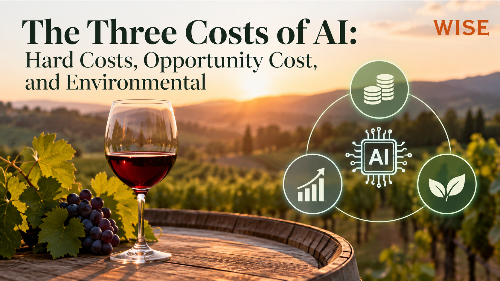
AI is becoming part of the everyday DTC toolkit. How can wineries – and those that support the wine industry – use it thoughtfully while understanding its full cost? Recently, Wineshipping, RedChirp, Commerce7, and WISE hosted a three-stop roadshow on the West Coast. We heard plenty of thoughtful questions from winery leaders along the way, but one question stumped us all. A leader from a winery with a strong commitment to environmental sustainability asked: “How should a winery that has built our brand on being green reconcile the environmental impact of artificial intelligence (and data centers usage) that is embedded in winery technology?” Another winery leader added an important counterpoint: “AI is quickly becoming a competitive advantage, and waiting too long to use it carries a cost, too. If we don’t adopt AI, does the winery run the risk of being less competitive, and the vineyard getting ripped out to be a data center?” The conversation stayed with us long after the ses
00
September 22, 2026
For years, the wine industry’s technology conversation has centered on one question: Should wineries choose an all-in-one platform or build an ecosystem of specialized tools? It is an understandable way to frame the decision. Winery teams want fewer systems to manage, cleaner customer data and a more consistent experience across ecommerce, wine clubs, the tasting room and every other DTC channel. But “all-in-one versus ecosystem” no longer tells the whole story. Two platforms may both describe themselves as all-in-one while operating very differently behind the scenes. One may have been designed as a connected platform from the beginning. Another may include decades of features that technically live under one brand but do not always share the same architecture, customer record or user experience. Likewise, the presence of an integration does not automatically mean a winery has assembled a fragmented collection of applications. A thoughtfully designed integration can extend a unified pl
00
August 10, 2026
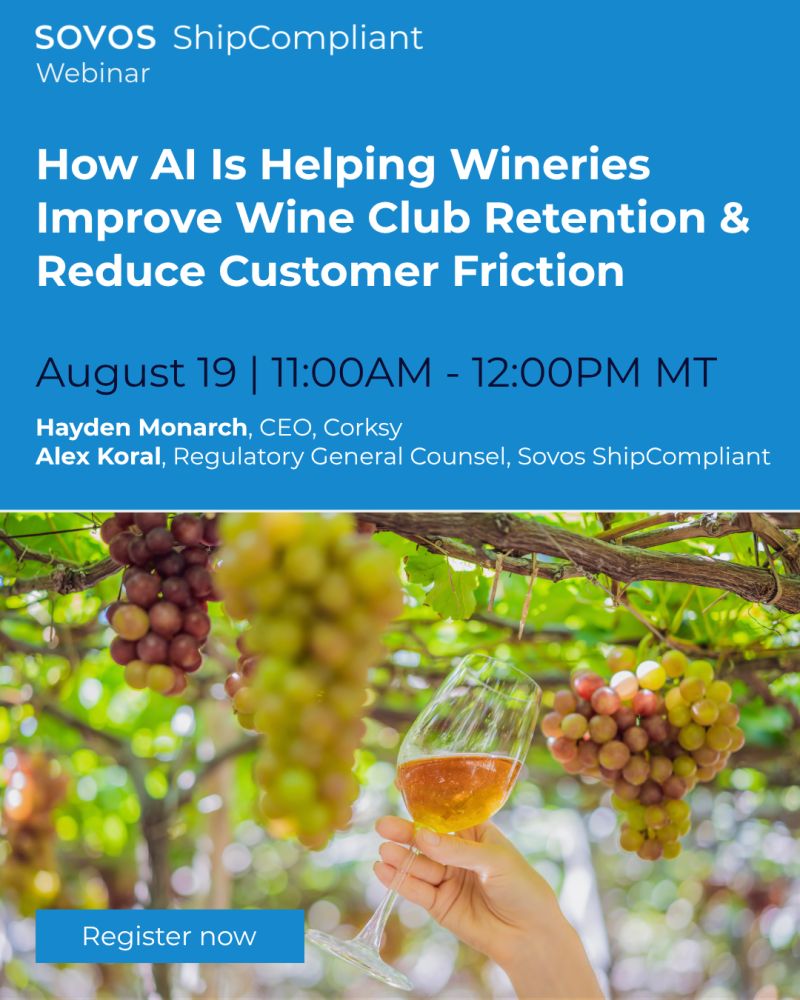
Event Type: Webinar
Location: Irvine, CA
Date: 8/19/2026 — 10:00 AM to 11:00 AM
Artificial intelligence is changing the way wineries understand and engage with their customers. While content generation is in the spotlight, the biggest opportunity isn't using AI to write content—instead, it's using AI to uncover insights from the customer, club, and shipping data wineries already have. Join Corksy and Sovos ShipCompliant for a practical discussion on how wineries are using AI to identify future club members, improve retention, reduce customer friction, and make smarter DtC decisions. You'll see real-world examples of how AI can turn everyday winery data into actionable insights. In this webinar, you'll learn how to: Identify customers most likely to join your wine club Spot early warning signs of churn and declined payments Analyze shipment deliverability and customer trends Build smarter customer segments and personalized outreach Turn existing winery data into actionable business decisions with AI Whether you're just getting started with AI or looking for
00
July 30, 2026

For influencers, digital creators, and creative marketing agencies, generative artificial intelligence (AI) has become an essential brainstorming partner. Whether you are using ChatGPT to structure video scripts, Claude to refine marketing strategies, or Gemini to map out a multi-platform social media campaign, these tools provide an extraordinary boost to daily productivity. However, the way you interact with these platforms matters enormously when it comes to protecting your intellectual property (IP). Every time a creator inputs a detailed prompt into an AI model, they are sending data across an external network. If a prompt includes a unique, unreleased brand concept, proprietary campaign taglines, or copyrighted visual references, that creative asset could be exposed depending on the platform's terms of service. Without realizing it, creative professionals may be compromising the exclusivity, confidentiality, and legal protectability of some of their most valuable ideas. The Real-
00
July 28, 2026
Artificial intelligence (AI) is no longer just a future-facing issue for California employers. Many businesses already use some form of automated tool to sort résumés, rank applicants, target recruiting, score assessments, flag productivity concerns, or assist with promotion and compensation decisions. What is different now is that California’s employment regulations addressing automated-decision systems are in effect, which makes this a present compliance issue rather than a speculative one. These regulations went into effect on October 1, 2025 . The key point for employers is simple: using AI does not insulate an employment decision from scrutiny under California law. The regulations are designed to clarify how existing anti-discrimination rules apply when an employer uses artificial intelligence, algorithms, or other automated-decision systems in employment decisions. The regulations also define the issue broadly. They are not limited to a futuristic chatbot or a fully autonomous h
00

July 22, 2026

Futuristic machine learning and Iberian cork forests may seem poles apart, but M.A.Silva is using AI to offer ever more precision and reliability to winemakers. Cork and wine have been intertwined for a long time. There is evidence of it sealing amphorae in the ancient world and, while it fell out of fashion until the early modern period, it has been the most popular closure for more than 300 years. AI is much newer on the scene. Its story can be measured only in decades. In the form we most interact with, it has been years. Yet the two fields are now working in tandem. Cork producer M.A.Silva is using high-tech AI models to assist in the production of its Nobeltech corks. The top-of-the line closures employ Bionic Eye, an integrated AI system, as one of three core technologies assuring their quality. The fundamentals of the company, at a glance, look the same. M.A.Silva still prides itself on quality rather than scale, and still operates a vertical production to ensure sustainability
00
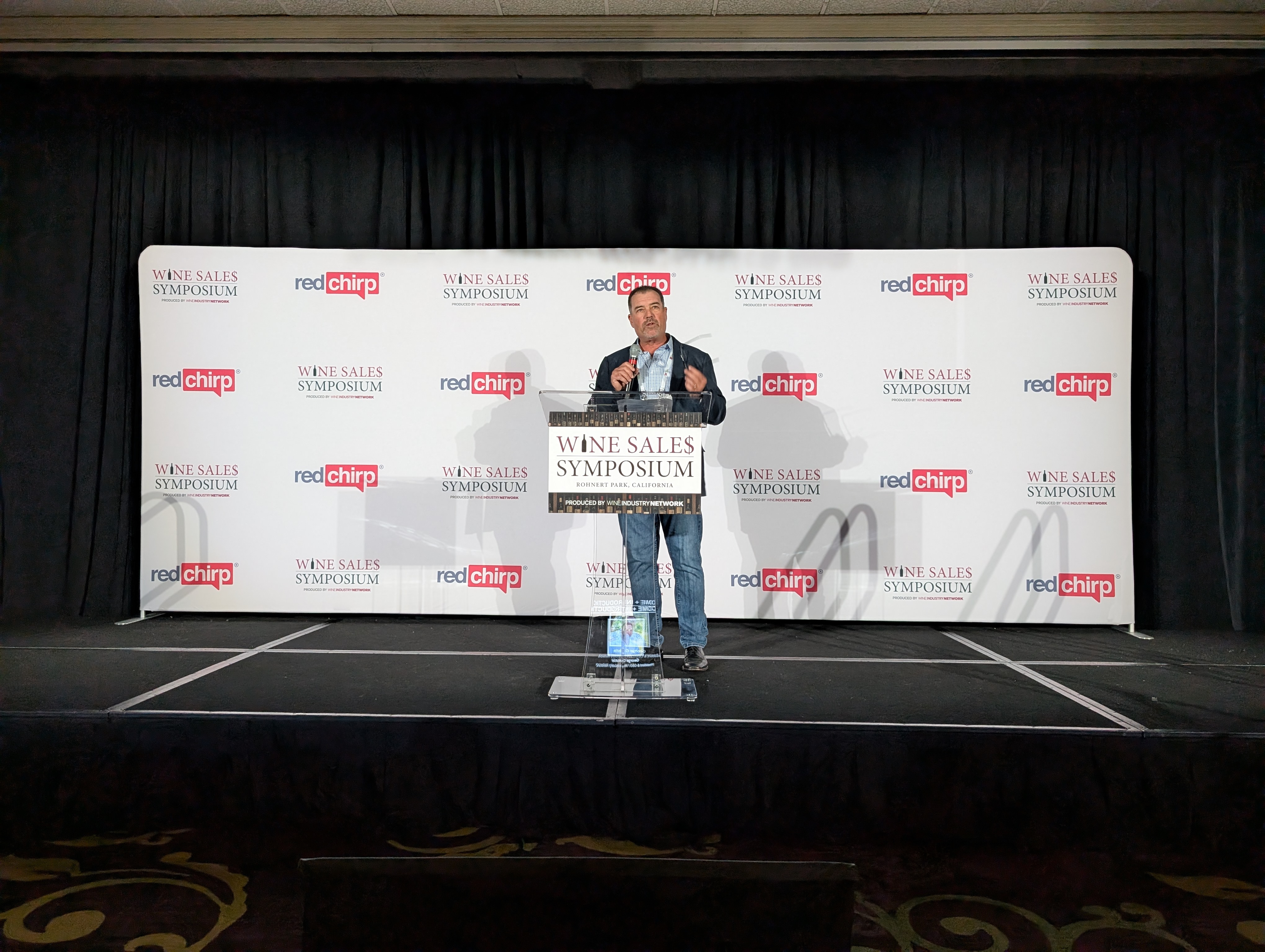
The wine industry isn’t standing still—and neither were the conversations at this year’s Wine Sales Symposium The mood surrounding the wine industry has shifted noticeably over the past year. Headlines still focus on contraction, slowing sales, declining consumption, and pressure across direct-to-consumer and wholesale channels. But underneath those realities, another story is emerging: wineries are adapting. That theme carried through nearly every session at Wine Industry Network’s 2026 Wine Sales Symposium, where winery owners, marketers, strategists, hospitality leaders, and technology providers gathered to discuss what’s actually changing in wine sales—and where opportunity still exists. The conversations were grounded in realism but notably absent of panic. Speakers focused on the operational, marketing, and consumer shifts wineries are making in response to a rapidly evolving market. And perhaps most importantly, many of the sessions pointed toward the same conclusion: growth ha
00
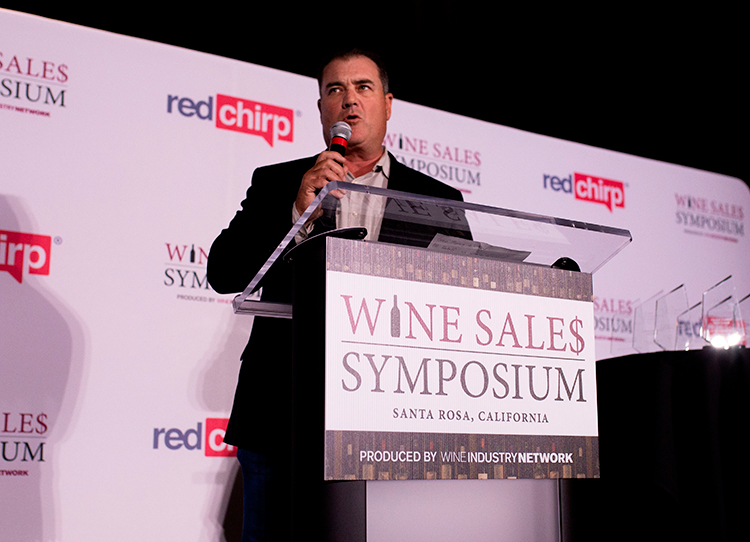
Winery leaders and industry experts explore the strategies shaping the future of wine sales. The wine industry narrative over the past two years has been dominated by decline: falling consumption, shrinking distributor portfolios, and weakening consumer loyalty. The headlines suggest an industry in freefall. But the reality is more nuanced - and more useful. Yes, overall wine consumption continues to face pressure. Consumer behavior is fragmenting in ways that challenge traditional approaches. But the full story isn’t simply decline. It’s divergence. Some wineries are still growing. Some categories are holding steady while others contract. Some sales channels are thriving while others struggle. The difference often comes down to whether wineries have adapted their strategies to match the market that exists today, not the one that existed three years ago. At Wine Industry Network’s Annual Wine Sales Symposium on May 13, Dr. Chris Bitter will present research on what’s actually happening
00
As the newly crowned NCAA basketball national champions make their media rounds, you might think that NIL is just about athletes getting paid to play. But NIL is a legal concept that encompasses an individual's right of publicity and allows all individuals, not just student-athletes, to control and profit from the commercial use of their identity NIL, short for Name, Image, and Likeness, has grown far beyond endorsement deals for athletes. It’s about the core pieces of your identity: your name, your face, your voice, and the ways you present yourself to the world. In a digital world where anyone can build an audience (or be impersonated by AI), those things have real value for everyone. On March 26, 2026, the U.S. Patent and Trademark Office (USPTO) launched a new resource page that centralizes guidance on navigating name, image, and likeness in connection with trademarks and related intellectual property issues. This is a helpful first stop for understanding how branding an
00

Join winery leaders and industry experts to explore the strategies shaping the future of wine sales. The wine industry is entering a period of significant change. Consumer behavior is shifting, visitation patterns are evolving, and the traditional paths to market are being redefined. To succeed in this environment, wineries must rethink how they attract customers, build lasting relationships, and grow their brands. The Wine Sales Symposium, taking place on Wednesday, May 13, brings together winery leaders and industry experts for a full day focused on the strategies shaping wine sales today and in the years ahead. This year’s program explores critical topics that will cover: • Hospitality Innovation: Reimagining tasting room experiences to attract Millennials and Gen Z through values-driven programming, experiential design, and strategic partnerships • Wine Club and Customer Retention: Data-driven approaches to reducing churn, building membership value,
00