
Filter Post Type
NewsVideoProductEventLink
Sort:
Most Recent
1–10 of 28

Bringing the tasting room and the back office back together. At a client meeting a few weeks back, I sat between two teams: DTC on one side of the table, and Ops on the other. When I asked about their current work flows and system frustrations, it was as if the two teams worked at totally different companies. Ops were frustrated with tax discrepancies from their e-comm platform to their compliance and reporting software, creating a growing liability in their ledger. They were still using Excel to manage their multiple complex inventories because their DTC and Wholesale inventory platforms were not connected. DTC wished their aging software had better reporting, and a smoother POS checkout. Both teams are working hard to run the same business. Does this scene sound familiar? I hear it every day from wineries across the country. The people welcoming guests and selling wine are focused on one set of priorities. The people managing inventory, accounting, and compliance are focused on anoth
00

October 13, 2026
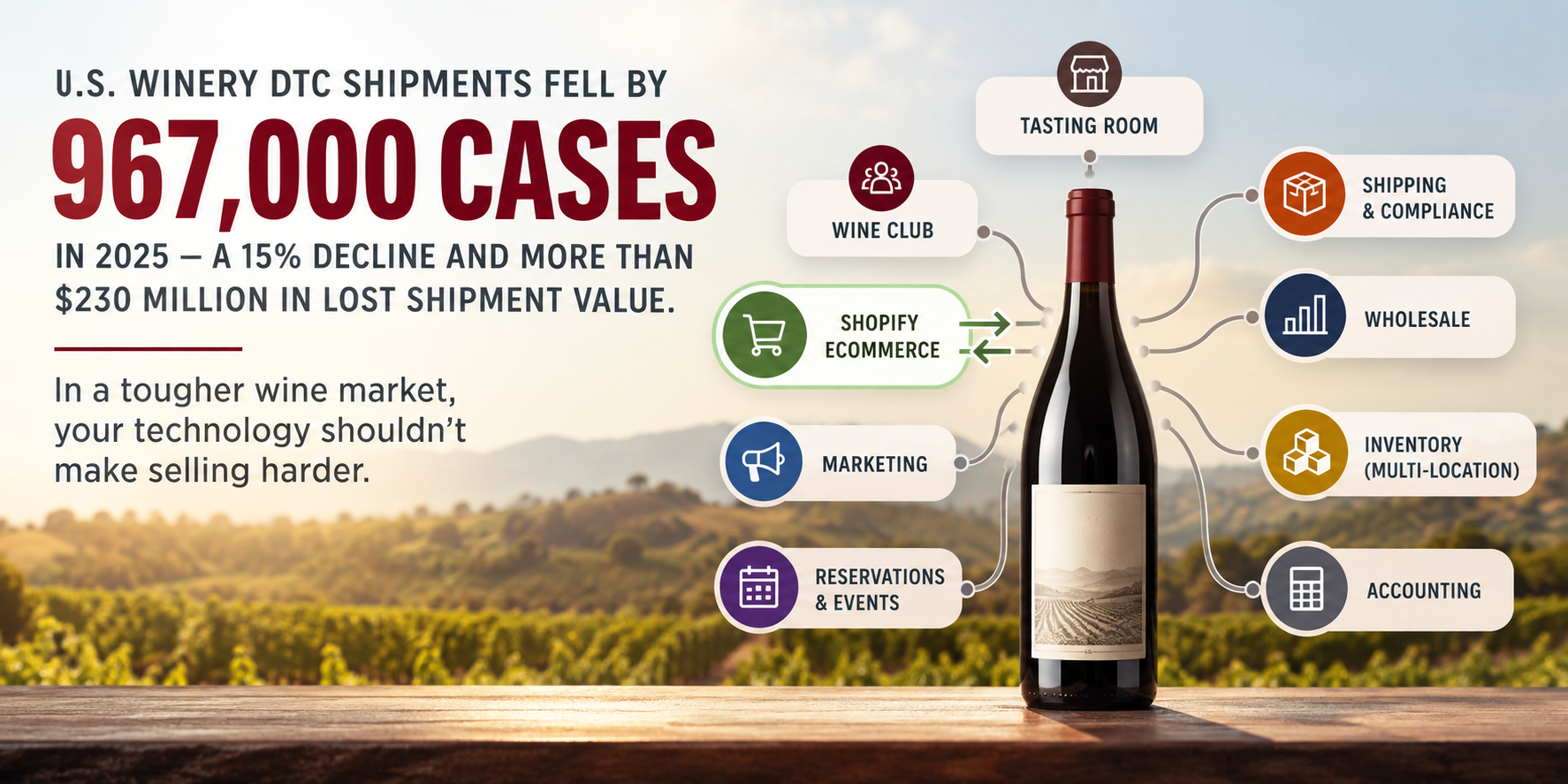
U.S. wineries shipped 967,000 fewer cases directly to consumers in 2025, according to the latest Sovos ShipCompliant/WineBusiness Analytics report. That's a 15% decline in volume and more than $230 million in lost shipment value. Those are difficult numbers. But they also raise a practical question: When selling gets harder, how much friction is your own technology adding? Think about everything that can touch a single bottle: 🍷 Tasting room 👥 Wine club 🛒 Ecommerce 📣 Marketing 📦 Shipping ⚖️ Compliance 📊 Accounting 🚚 Wholesale 📍 Multi-location inventory 📅 Reservations Having multiple systems isn't necessarily the problem. Wineries are complicated businesses, and specialized tools can be extremely valuable. The better questions are: Does information move between them? Does inventory stay accurate across channels? Does customer history stay connected? Can marketing actually use what you know about the customer? How much information does your staff still have to m
00
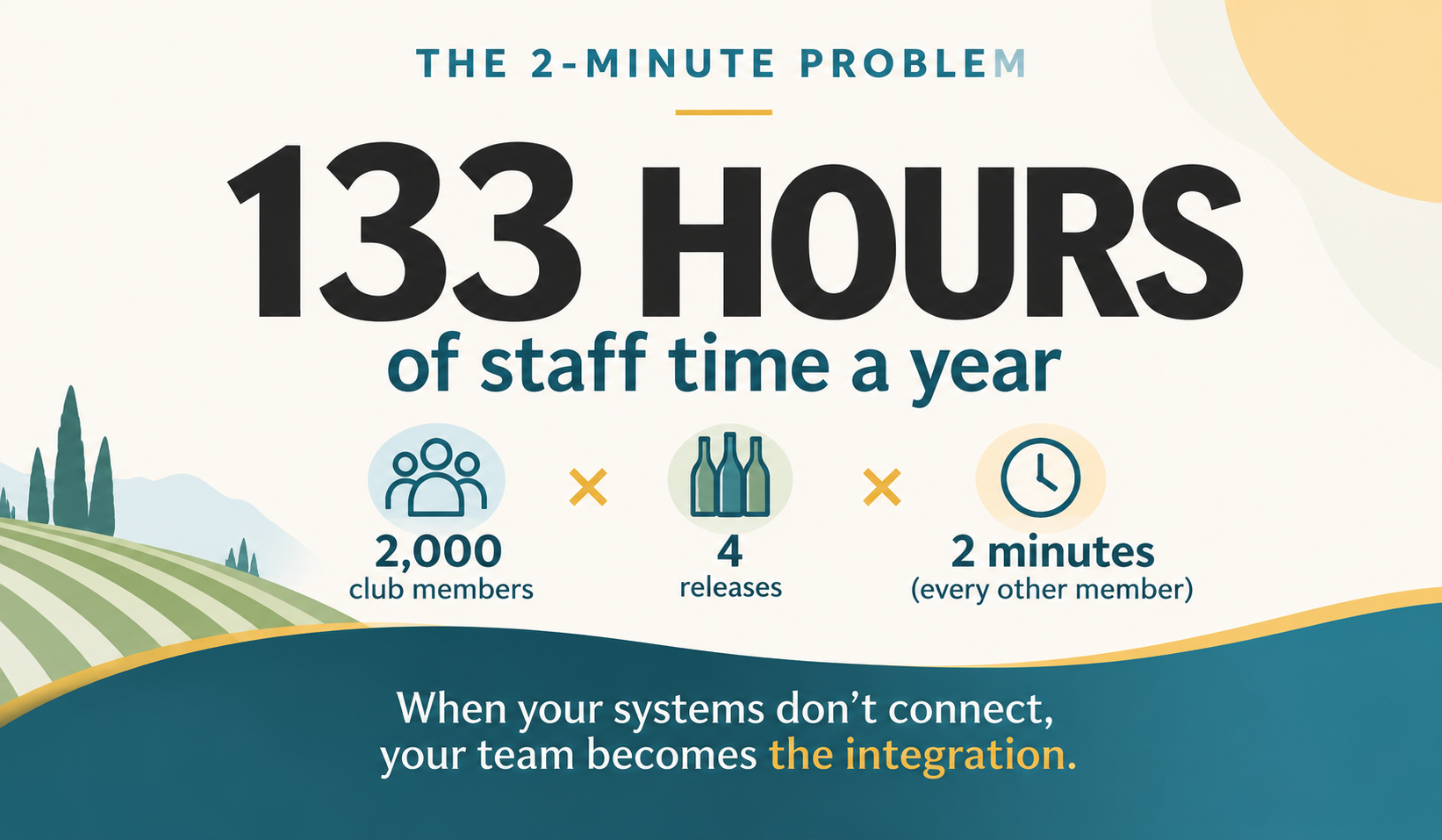
Where are the extra minutes hiding in your winery? Two minutes of manual work doesn't sound like a software problem. But try multiplying it. A winery with 2,000 club members and 4 releases a year that spends just 2 unnecessary minutes on every other member checking information, updating records or resolving discrepancies could spend: 133 staff hours a year on that one workflow. The bigger question is: where else are those minutes hiding? Here are a few places worth checking: 🍷 Club releases — Are staff manually checking or correcting member, payment or shipping information? 📦 Ecommerce orders — Does anyone re-enter or verify customer, order, shipping or inventory information in another system? 💳 End-of-day reconciliation — Does someone compare sales, payments or inventory between systems to make sure everything matches? 👤 Customer records — If a customer shops online, visits the tasting room and belongs to the club, does your team see one customer—or have to piece together information
00
September 22, 2026
For years, the wine industry’s technology conversation has centered on one question: Should wineries choose an all-in-one platform or build an ecosystem of specialized tools? It is an understandable way to frame the decision. Winery teams want fewer systems to manage, cleaner customer data and a more consistent experience across ecommerce, wine clubs, the tasting room and every other DTC channel. But “all-in-one versus ecosystem” no longer tells the whole story. Two platforms may both describe themselves as all-in-one while operating very differently behind the scenes. One may have been designed as a connected platform from the beginning. Another may include decades of features that technically live under one brand but do not always share the same architecture, customer record or user experience. Likewise, the presence of an integration does not automatically mean a winery has assembled a fragmented collection of applications. A thoughtfully designed integration can extend a unified pl
00

September 17, 2026
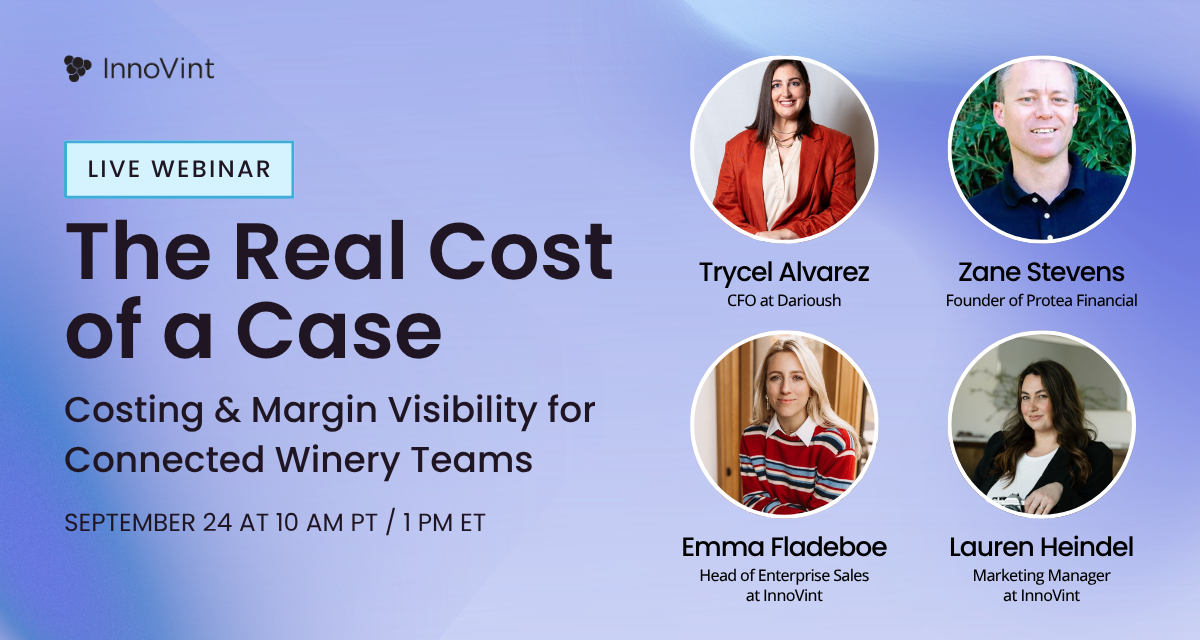
Event Type: Webinar
Date: 9/24/2026 — 10:00 AM to 11:00 AM
You know what a case sold for, but do you know what it actually cost to make it? Join us on Thursday, September 24, 2026 at 10 am PT to see how leading wineries are moving beyond spreadsheets and guesswork to get a clear, real-time view of COGS, margins, and cost allocation with InnoVint's winery operating system. What you'll learn: How costing actually breaks down: fruit cost distribution, overhead allocation, and cost category tracking from grape to bottle. How Darioush uses InnoVint for COGS today, plus Protea Financial's view across multiple winery accounting trends. Margin visibility in practice: blend cost estimation before bottling and SKU-level profitability. Cost allocation that flows straight into multi-client billing. Three to 5 action items to put to work right away. Register here -> https://start.innovint.us/the-real-cost-of-a-case?utm_source=wine_industry_network&utm_medium=community&utm_campaign=q3fy26_webinar_costing
00

Key Takeaways A winery is legally two businesses at once: an agricultural employer and a licensed wine producer, and most HR platforms are only built to handle one. Job title doesn’t determine treatment. Duties do. The same employee can move between agricultural and non-agricultural work within a single week. Crush season exposes problems built months earlier, from rushed seasonal hiring to unverified worker classifications. A structured self-audit beats reconstructing records during a DOL, TTB, or state inquiry. Würk’s tools help wineries stay prepared year-round. A winery’s obligations touch more regulatory categories than almost any other small business: agricultural labor law, guest-facing wage rules, wine-production rules, multi-state payroll withholding, and immigration regulations, often within a single organizational chart. This guide walks through a practical internal-review framework for wineries and vineyards with 10 to 500 employees. It’s operational guidance, not advic
00
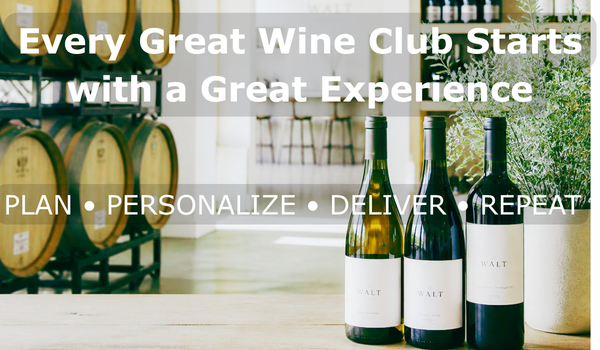
The strongest wine clubs aren't built on shipment day. They're built on every experience that comes before it. A great tasting room visit becomes a wine club signup. A smooth club release builds confidence. Personalized communication keeps members engaged. And every interaction makes the next one even better. With Activ8 Commerce, wineries can plan releases with Club Wizard, allocate inventory, manage fulfillment, and keep customer information connected. Combined with Shopify's modern ecommerce experience and Klaviyo's personalized marketing, your club members enjoy a seamless journey from tasting room to delivery—and beyond. In our latest article, you'll learn how to: 🍷 Plan club releases with confidence using Activ8 Club Wizard 📦 Simplify allocations, fulfillment, and accounting 📧 Create personalized member experiences with Activ8 Commerce and Klaviyo 🤖 Build on connected data as Shopify and Klaviyo continue to invest in AI-powered commerce and marketing Read the article and see how
00

Following up on our Innovint integration announcement we have published an article detailing how the integration works and save you hours each and every month. 🍷 Production in one system. Purchasing, inventory, and accounting in another. That separation can create plenty of manual work for winery teams: 🔁 Duplicate data entry 📦 Inventory discrepancies 💰 Cost reconciliation challenges ⚠️ Unclear exception handling We’re excited to share a closer look at Azmera’s InnoVint integration to odoo for Wine. InnoVint supports production activity, lots, vessels, batches, and physical inventory. Odoo provides the ERP foundation for purchasing, receiving, inventory control, costing, accounting, and reporting. Our integration connects the handoffs so wineries can: ✅ Keep each system focused on what it does best ✅ Reduce manual work between systems ✅ Improve inventory and cost visibility ✅ Maintain traceable references&nb
00
🍇 Excited to announce the Azmera Odoo for Wine ↔ InnoVint integration! 🚀 We connect winery production, inventory and financial operations in one workflow: 🍷 Production, lots, vessels, and inventory 📦 Dry goods, packaging, and landed costs 💰 Custom Crush billing by action, volume, owner, and rate 📊 Overhead allocation by volume, cost, wine type, or custom rules 🧾 Cost tracking, adjustments, and accounting visibility Less duplicate entry. Better traceability. More accurate billing and costing from cellar to ledger. One connected view of what is happening in the cellar and beyond. We’re excited about the possibilities this creates for wineries, custom crush facilities, and their owners - and we look forward to continuing to build tools that make winery operations more connected, accurate, and efficient. Check out more about odoo for Wine here.
00
The wine industry is facing no shortage of pressure. Demand is softer, costs remain high, tasting-room traffic is less predictable, and excess inventory continues to consume cash. InnoVint’s 2026 State of Winery Health Report looks beyond those challenges and asks a practical question: Why are some wineries performing well while others facing similar conditions are struggling? Based on responses from 541 winery professionals, the report evaluates financial, operational, and cultural health. Its central finding is that winery health depends less on location, size, or sales channel than many might expect. What matters most is how the business is managed. Financial Health Is the Weakest Link Only 42% of wineries rate their overall business health as good or excellent. In comparison, just 40% say the same about their financial health. Operations and culture remain stronger. Sixty-two percent describe their operations as good or excellent, and 69% rate their culture as great or exceptional.
00