
Filter Post Type
NewsVideoProductEventLink
Sort:
Most Recent
1–10 of 57
September 17, 2026

DP&F Alcohol Beverage Law & Compliance attorney Theresa Barton Cray, will speak next month for the San Diego County Bar Association’s 11th Annual Beer, Wine, and Spirits Law MCLE occurring on October 1st, 2026, in San Diego. FROM THE EVENT ORGANIZERS: The 11th Annual Beer, Wine, and Spirits Law MCLE is a premier legal education event dedicated to the evolving landscape of alcohol beverage law. This conference brings together industry leaders, attorneys, regulators, and business professionals to discuss key legal and regulatory issues affecting breweries, wineries, and distilleries. Attendees will gain valuable insights into licensing, compliance, distribution, intellectual property, and emerging trends in the industry. Designed for both seasoned practitioners and newcomers, the event offers expert panels, networking opportunities, and CLE credits to keep legal professionals at the forefront of alcohol beverage law. An optional networking mixer will be held at Ballast Point Litt
00
August 31, 2026
With wine consumption declining nationwide and California’s winemakers feeling the squeeze, Sacramento has delivered a meaningful win for the state’s wine producers. Senate Bill 917 opens the doors of California’s certified farmers’ markets to winemakers, including many small winemakers who have long been shut out – giving them a new avenue to reach consumers directly. In January 2026, State Senator John Laird introduced Senate Bill 917 to modernize California’s farmers’ market wine regulations. The California Legislature passed the bill in August 2026, and it was approved by Governor Newsom on August 27, 2026. Codified at Section 23399.4 of the California Business and Professions Code (the “ABC Act”), the prior law permitted Type 02 winegrower licensees to obtain a Type 79 farmer’s market license to sell at certified farmers’ markets only those wines produced from grapes grown by the winegrower itself. In practice, this requirement closed the door on small, boutique wineries that purc
00
August 27, 2026
On August 11, 2026, the U.S. Department of the Treasury’s Financial Crimes Enforcement Network (“FinCEN”) announced a final rule that permanently ends beneficial ownership reporting for U.S. companies and U.S. persons under the Corporate Transparency Act. The rule took effect on August 14, 2026. If your company was formed in the United States, you no longer have to file a beneficial ownership report with FinCEN, and you do not have to update or correct one you already filed. For further detail, FinCEN has posted a set of frequently asked questions. Background Congress enacted the Corporate Transparency Act on January 1, 2021, as part of the Anti-Money Laundering Act of 2020. FinCEN, a Treasury bureau, then wrote the rules. It issued the original Reporting Rule on September 30, 2022, effective January 1, 2024. However, litigation disrupted the rollout; the Corporate Transparency Act’s reporting requirement was challenged in several federal courts, including the Eastern District of Texas
00
July 30, 2026
For influencers, digital creators, and creative marketing agencies, generative artificial intelligence (AI) has become an essential brainstorming partner. Whether you are using ChatGPT to structure video scripts, Claude to refine marketing strategies, or Gemini to map out a multi-platform social media campaign, these tools provide an extraordinary boost to daily productivity. However, the way you interact with these platforms matters enormously when it comes to protecting your intellectual property (IP). Every time a creator inputs a detailed prompt into an AI model, they are sending data across an external network. If a prompt includes a unique, unreleased brand concept, proprietary campaign taglines, or copyrighted visual references, that creative asset could be exposed depending on the platform's terms of service. Without realizing it, creative professionals may be compromising the exclusivity, confidentiality, and legal protectability of some of their most valuable ideas. The Real-
00
June 26, 2026
The California Department of Alcoholic Beverage Control issued an Industry Advisory (Tied House Advertising Exceptions Remain Subject to Specific Statutory Conditions) reminding licensees of tied-house laws that generally prohibit suppliers from giving things of value to retailers. The advisory reminds industry members that activities such as joint advertising between a supplier and a retailer where it is not expressly permitted by an exception in the ABC Act, or “pay to play” (whether directly or indirectly), have always been and continue to constitute violations of the tied-house laws. While it is unclear whether a specific event prompted the Department to issue the new advisory, the following passage suggests that partnerships or sponsorships related to the World Cup (and other future big events such as the 2028 LA Olympics) may have something to do with it: Business and Professions Code sections 25500 and 25502 … prohibit suppliers from furnishing, giving, or lending money to a ret
00
June 16, 2026
In our blog post on the issue of
enforceability of the producer’s lien in bankruptcy
, we noted the current difficult and uncertain wine market environment. Since that post, the market has not changed much. Given the risk that a lawsuit against a winery on the brink of insolvency may push it into bankruptcy, and the uncertain treatment of the producer’s lien in a winery bankruptcy, we’ve been asked by grape growers about alternative methods of attempting to collect payment from a delinquent winery. This post discusses the use of the California Department of Food and Agriculture (“CDFA”) complaint process as one such potential alternative. As explained below, although this process is an administrative procedure in the nature of alternative dispute resolution, rather than a lawsuit, it is likely to be taken seriously by respondent winery.
Basic Background
Processors of agricultural products, including processors that handle and process wine
00
June 10, 2026

If you have any connection to the Northern California wine industry, you know that glassy-winged sharpshooters (GWSS) were found on grapevines sold at Costco locations in Northern California between April 21 and May 21 of this year. The most recent press release from the California Department of Food and Agriculture (CDFA) is available here. This is a serious development. These tiny leafhoppers efficiently spread the bacterium Xylella fastidiosa, which is deadly to grapevines, as well as citrus, landscape plants, and many other plant species. The bacterium invades the plant’s xylem (water transport system), is fatal to the plant, and has no known cure. When it infects grapevines, it is called Pierce’s Disease. If you or someone you know purchased a grapevine, citrus tree, or other fruit tree from a Costco in one of the 24 affected counties (consult the CDFA’s alert page for the county list), follow the instructions from the CDFA, available here, and contact your local County Agricult
00
May 19, 2026
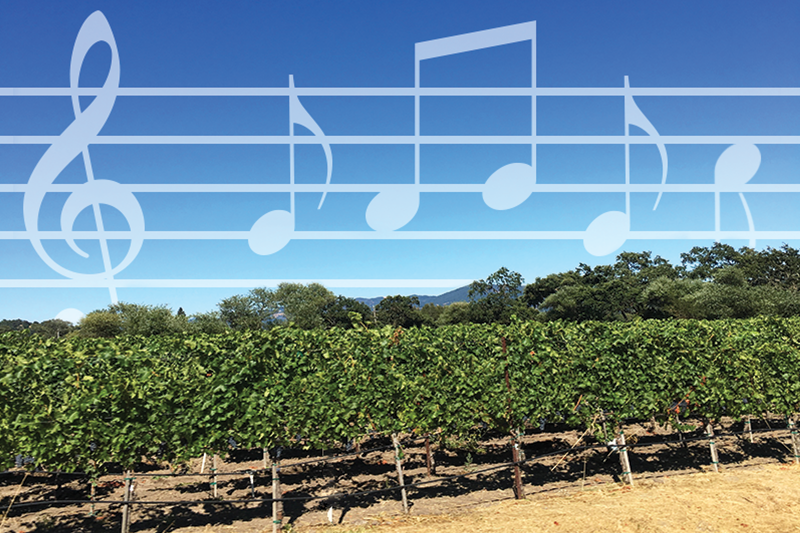
What should you do when copyright owners come a-knockin’? Wineries throughout Sonoma and Napa Valley have recently received legal notices from copyright owner groups, threatening legal action for unauthorized live and recorded musical performances in their tasting rooms, etc. which feature songs subject to copyright protection. The American Society of Composers, Authors and Publishers (ASCAP) and Broadcast Music, Inc. (BMI) are two of the most prominent performance rights organizations which collect license royalties for the public performance of musical works in their catalogs. Public performance is defined broadly under the Copyright Act to include both live performances (aka “covers”) and recorded music played on the radio, on television, or online (e.g., via streaming services without a business account). Performance rights organizations are well-known for bringing suit when their on-the-ground surveillance reveals that a commercial establishment is allowing public performance to t
00
As the newly crowned NCAA basketball national champions make their media rounds, you might think that NIL is just about athletes getting paid to play. But NIL is a legal concept that encompasses an individual's right of publicity and allows all individuals, not just student-athletes, to control and profit from the commercial use of their identity NIL, short for Name, Image, and Likeness, has grown far beyond endorsement deals for athletes. It’s about the core pieces of your identity: your name, your face, your voice, and the ways you present yourself to the world. In a digital world where anyone can build an audience (or be impersonated by AI), those things have real value for everyone. On March 26, 2026, the U.S. Patent and Trademark Office (USPTO) launched a new resource page that centralizes guidance on navigating name, image, and likeness in connection with trademarks and related intellectual property issues. This is a helpful first stop for understanding how branding an
00
February 24, 2026
On February 20, 2026, in a victory for American beer, wine, and spirits importers, the Supreme Court in Learning Resources, Inc. v. Trump, 607 US ____, Slip Op., February 20, 2026 (“Learning Resources”) struck down President Trump’s imposition of tariffs under the International Emergency Economic Powers Act (“IEEPA”). The Trump administration had used IEEPA to justify certain tariffs imposed on imported goods from various countries in 2025, including beer, wine and spirits. Despite the decision in the importers’ favor, no one is popping the Champagne quite yet. First, while the Court’s opinion invalidated the Trump administration’s IEEPA tariffs, it has no effect on the administrations’ ability to rely on other statutes to impose tariffs. Second, on the same day that the Supreme Court issued its decision, the President issued a proclamation imposing a 10% worldwide tariff under a different federal law (discussed in more detail belo
00