
Filter Post Type
NewsVideoProductEventLink
Sort:
Most Recent
1–10 of 121

October 15, 2026

4,800 Gallons of Coombsville Cabernet Sauvignon Flying A Vineyard has 4,800 gallons of 2025 Cabernet Sauvignon available from its Coombsville vineyard in Napa Valley. The wine comes from Clone 169 vines on 110R rootstock and is currently stored at Razzi Winery. For wineries evaluating larger bulk Cabernet purchases, the available volume offers a meaningful starting point. Buyers have a defined vineyard source, vintage, and storage location to work with as they consider whether the wine belongs in their upcoming programs. Pricing is $25 per gallon, with room for negotiation. View the full listing and connect with the seller through the WIN Marketplace: View Listing Bulk-wine buyers have different needs, and the size of a lot can make a significant difference in who it appeals to. From smaller barrel-scale offerings to larger volumes of Cabernet Sauvignon, WIN Marketplace gives sellers a place to present their available wine and reach buyers looking for particular varieties, appellations
00
October 13, 2026
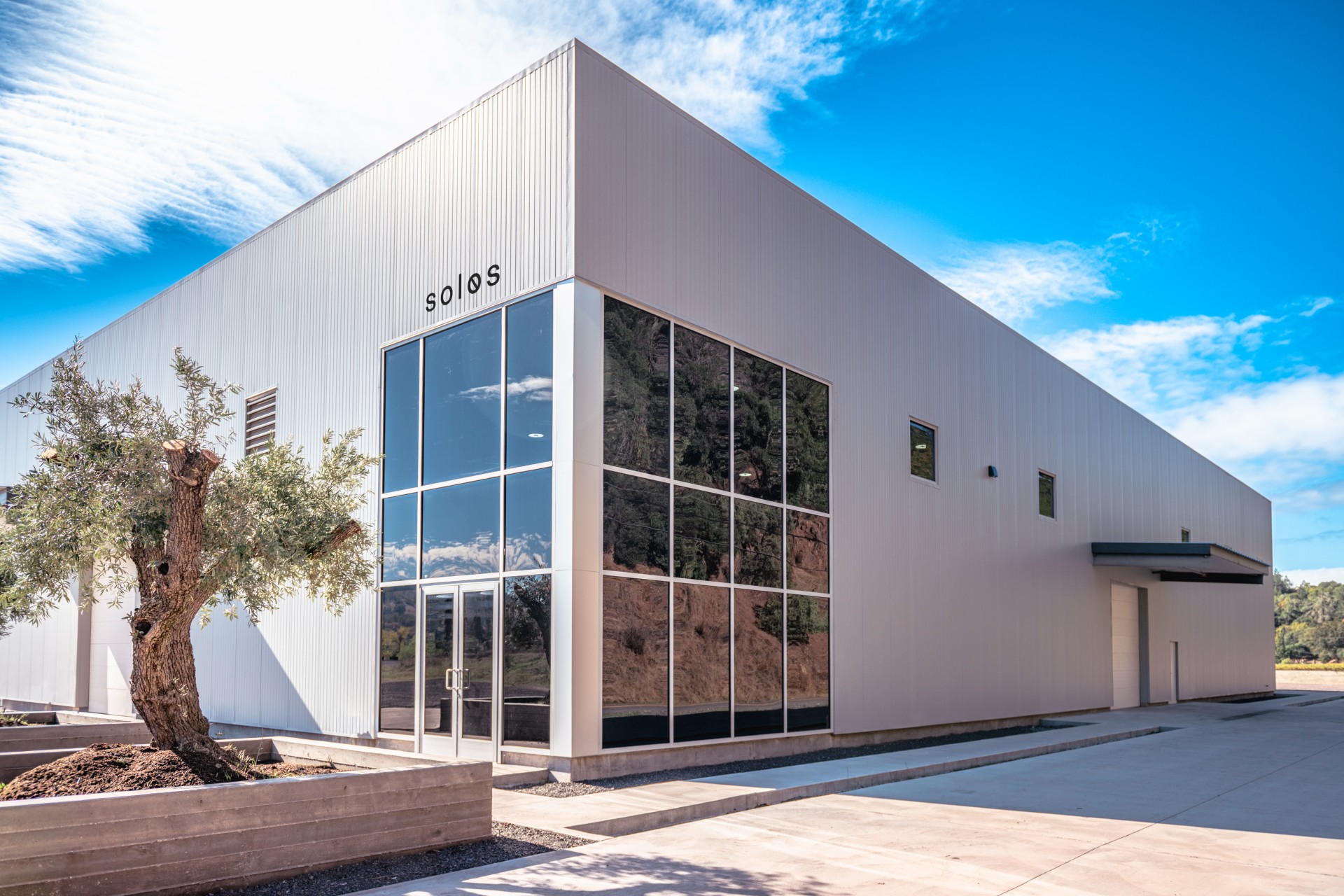
If consumers are drinking less alcohol, how can wineries make sure they’re still choosing wine? Matt Hughes, General Manager of Solos Technology USA, a company that specializes in patented natural aroma recovery and dealcoholization technology, says, “If you look across the non-alcoholic beverage space, consumers have so many options, from flavored waters to iced tea to functional beverages; the list of choices is endless.” “That’s why we believe the Solos technology is the answer,” he adds. “It lets wineries preserve the terroir and the signature of their winemakers, which are the stories that make wine so magical.” In addition to preserving the identity and quality of the original wines, the Solos technology also gives wineries a strategic opportunity to reach new consumers and expand their portfolios. Solos’ founder and President, Claudia Geyer, and co-founder Dr. Alexander Hässelbarth developed their innovative Solos Aroma Recovery System (ARS) technology after years of research i
00

VA Filtration’s DARC-Pro process reduces the free smoke aromatics that cause taint, potentially eliminating smoke taint from wine completely. In use since 2020, DARC-Pro has successfully treated millions of gallons of tainted wine. In a recent USDA trial, DARC-Pro was twice as successful in reducing smoke compounds from wine compared with other current technologies. Our process uses proprietary membrane and combination adsorption technology. The permeate, generated through the membrane, carries both free and bound smoke compounds and passes through an adsorption column and a secondary phenolic treatment column, where those compounds are drastically reduced or removed. Each pass treats about 40% of the volume as permeate through the column trains. You contract only for the passes each lot needs — fewer for light taint, up to four or more for heavy taint. See the DARC process. Example of reduction — two passes, heavily tainted 2017 Mendocino Syrah (AWRI) Guaiacol 21 → 6 µg/L · Syringol
00

October 6, 2026

Industry veteran brings more than two decades of marketing, strategy and innovation leadership to drive continued growth in sparkling wine. Laura Webb, Chief Marketing OfficerRack & Riddle, the nation’s leading custom sparkling wine producer, has announced that Laura Webb has joined the company as Chief Marketing Officer. Webb will be based out of Rack & Riddle’s Bacchus Landing location in Healdsburg. Webb brings more than 20 years of experience leading marketing, sales, and strategic growth initiatives for premium consumer brands and business-to-business enterprises. She joins Rack & Riddle most recently from Cakebread Cellars, where she served as Vice President of Sales, Marketing and DTC, overseeing revenue channels including wholesale, direct to consumer e-commerce and wine club, hospitality, events and culinary. Earlier in her career, Webb held leadership roles across corporate strategy, global innovation and brand portfolio management at Brown-Forman and worked in sa
00
October 5, 2026

An Alexander Valley Winery With Serious Storage Behind It This Alexander Valley winery comes with infrastructure that is already doing real work. The roughly 2-acre property includes more than 264,000 gallons of stainless steel wine storage across tanks of various sizes, supported by a 60-ton glycol system. The site previously operated as a custom-crush facility and is currently being used for bulk wine storage. The property also comes with zoning for up to 50,000-case production and includes an on-site living unit with a shaded backyard and view deck. For a buyer looking at winery ownership through an operational lens, this is more than a building and a location. It is an existing wine-production and storage asset with substantial capacity already in place. View the full listing and connect with the seller through the WIN Marketplace: View Listing Wine-industry real estate is often defined as much by infrastructure as acreage. Tank capacity, cooling systems, production permissions,
00
September 15, 2026
Cabernet Sauvignon from Flying A Vineyard Flying A Vineyard has Cabernet Sauvignon bulk wine available from its Coombsville site, sourced from Clone 169 vines on 110R rootstock. The wine is currently stored at Razzi Winery, giving interested buyers a clear starting point for evaluating the lot and opening a conversation about availability and terms. Pricing is $25 per gallon, negotiable. View the full listing and connect with the seller through the WIN Marketplace: View Listing Bulk wine is easier to evaluate when buyers can see more than varietal and price. Vineyard source, clone, rootstock, storage location, quantity and purchase terms can all shape whether a lot belongs in the conversation. WIN Marketplace gives sellers room to put that context in front of the wine trade. 💡 List risk-free: Use promo code MARKETPLACE for a FREE 90-day listing on WIN Marketplace. Explore by Category Grapes Bulk Wine Shiners Production Vineyard Real Estate Professional Services
00

LAFFORT® USA is inviting commercial wineries and research institutions across its U.S. territories to rethink traditional red wine with the launch of the 2026 LAFFORT® USA Chillable Red Wine Challenge. The competition challenges winemakers to create vibrant, expressive red wines designed to be enjoyed slightly chilled—approximately 45–50°F—while showcasing the creativity, innovation and technical precision of modern winemaking. As consumer interest continues to expand toward fresh, approachable and food-friendly red wine styles, the Chillable Red Wine Challenge gives winemakers an opportunity to explore a category that combines the character of red wine with the refreshing drinkability traditionally associated with lighter styles. “We want to challenge winemakers to think differently about what a red wine can be,” said Shaun Richardson, General Manager of LAFFORT® USA. “A great chillable red needs to be refreshing and delight the palate. This competition is about creativity, balance an
00

September 8, 2026
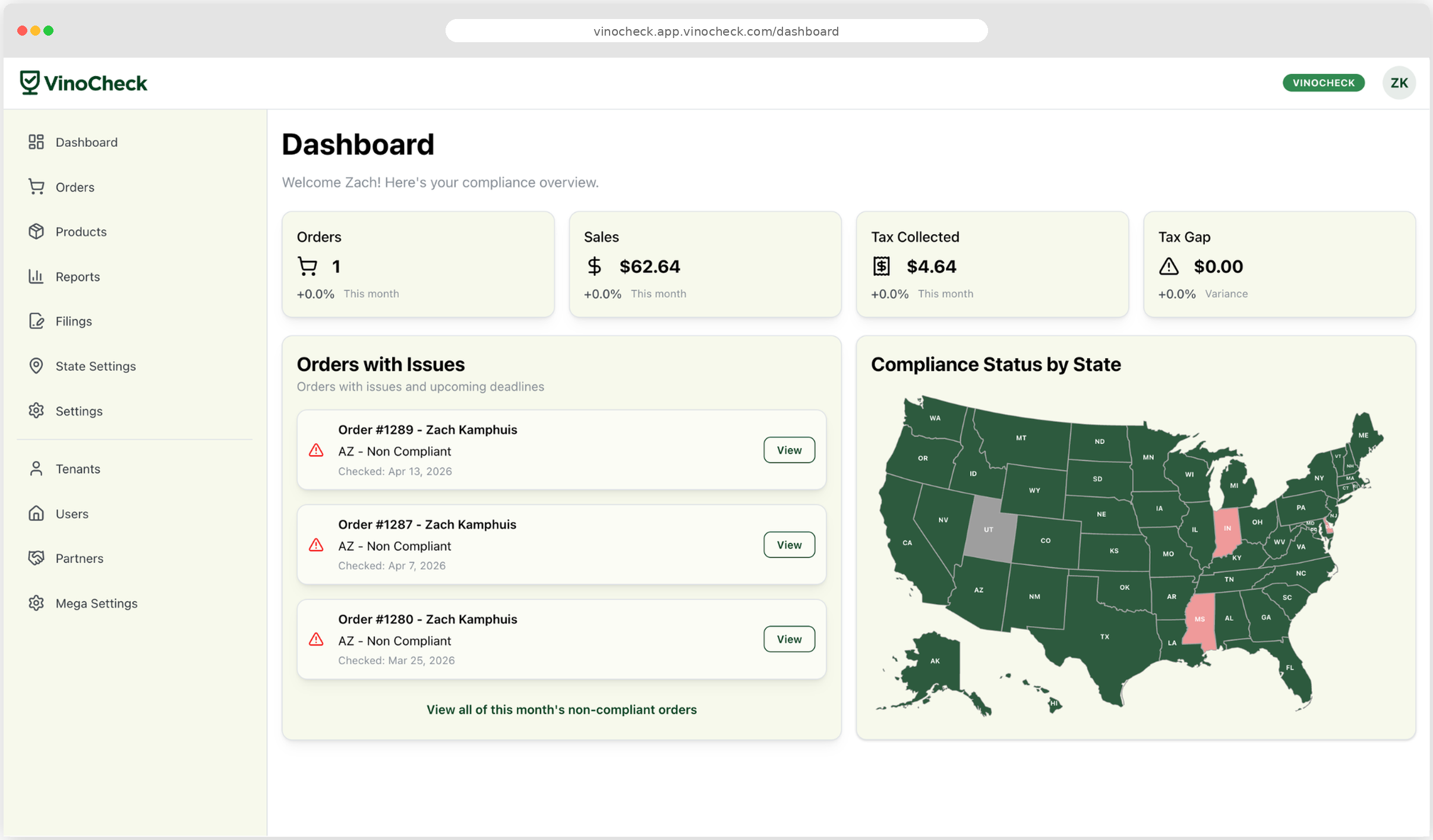
DtC compliance for wineries just got a whole lot better, thanks to
VinoCheck,
a wine compliance software company that, according to its founder Zach Kamphuis, has created a solution for an everyday headache that has dominated direct to consumer sales for wineries across the board.
“Everybody needs compliance,” Kamphuis points out. “We’ve come up with a way to make it easier, more accessible and affordable for wineries to manage.”
Three Key Areas of DtC Compliance
VinoCheck uses a single platform to manage three key areas of DtC compliance:
✓
Calculates destination-based taxes and fees on DtC orders
✓
Conducts real-time compliance checks on DtC orders
✓
Generates sales tax, excise tax and direct shipping reports and documents with one click of a button
00


Four practical ways California wineries can modernize cellar practices, reduce water use, and build more efficient operations. Water prices are soaring. California has less water to share: Farms, cities, businesses, and residents all depend on the same limited supply. Municipal water systems also need major investment to protect that supply and replace aging infrastructure. Those costs are reaching wineries through higher rates, fees, and wastewater expenses. Water is no longer a fixed utility expense. It’s a production cost that wineries must actively manage. The cost goes beyond each gallon: pumping, heating, chemicals, labor, treatment, and disposal all add expense. Wineries can use the water they have more efficiently: it starts with measuring where water goes, improving cleaning processes, reconsidering water-intensive equipment, and finding practical ways to recover and reuse appropriate water streams. These four strategies can help wineries reduce water use, lower related expe
00
September 1, 2026
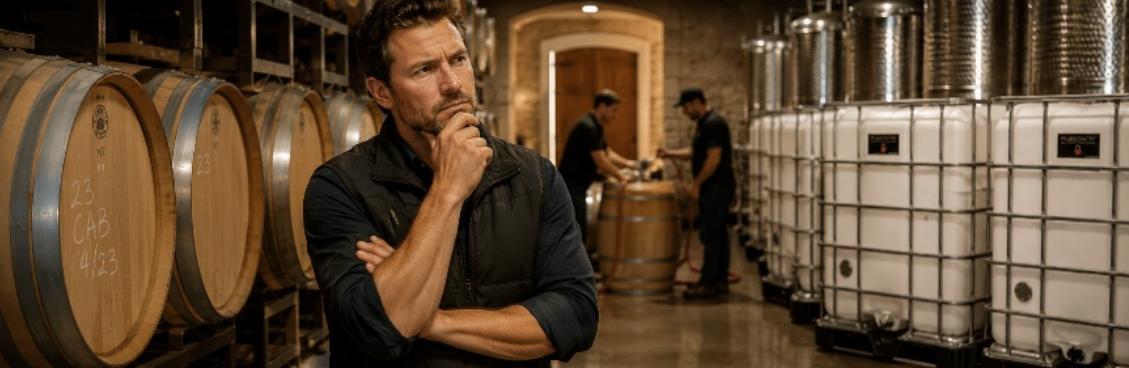
Lower Water, and Resource Use with a Smarter Cellar Strategy The new Napa Green Winery Certification standards put greater emphasis on how wineries use water, energy and other resources across the entire operation. Napa Green also requires wineries to establish operating baselines, track improvements and take measurable steps to reduce waste and greenhouse gas emissions over time. The challenge for winemakers is turning those goals into practical decisions throughout the cellar. Water Efficiency: Where is the most water being used? Energy Efficiency: Which processes require the most energy? Supply Chain and Waste Prevention: How often is equipment replaced? Climate Action: How much material is being purchased, transported and discarded? Continuous Improvement: Where can production improve while protecting wine quality? A more sustainable cellar does not depend on one major change. Instead, improve the processes, equipment and production decision
00