
Filter Post Type
NewsVideoProductEventLink
Sort:
Most Recent
1–10 of 124

October 22, 2026

The wine industry is undergoing rapid change across all aspects of its business. From vineyard to shelf, achieving success against the headwinds of lower alcohol consumption requires adaptation. As industry awareness of consumers’ changing preferences grows, wineries are increasingly offering alternative formats, including single-serve bottles and cans that appeal to active young consumers with on-the-go lifestyles. They are also exploring other alternatives, including cartons, Tetra Paks and ready-to-drink formats. Automation Must Evolve as Fast as the Wine Industry Changing from 750 ml bottles to these new formats requires revisions to existing bottling lines. Different equipment is needed to handle new packaging requirements and enable the higher throughput to meet market demand and ensure a profitable margin. But each new material, every upgrade or any increase in line speed means changes in operator routines and fresh demands on existing automation. John Feeley, Servic
00


This harvest we’re lowering prices on the BioSelect granular pectinase line. For a limited time through September 30, 2026 or while supplies last, all BioSelect enzymes including Aroma Plus will be on sale. HARVEST ONLINE ORDER REQUEST FORM BioSelect® Noir Increase color extraction and improve color stability in premium red wines. Aids in early release of anthocyanins, tannins, and polysaccharides during maceration. “We did notice an increase in color. Stability of the color is done really well considering that’s kind of a fight here in Texas since we are dealing with higher pH wines. We’ve noticed even with those higher pHs, the color stability is better with the BioSelect (Noir).” Christopher McIntosh, Winemaker Edge of the Lake Vineyard - Valley View, TX BioSelect® Blanc Purified to control cinnamoyl esterase activity and preserve delicate aromas in white wines. Varietal intensity is increased through the selective release of flavor and aroma compounds from th
00


Four practical ways California wineries can modernize cellar practices, reduce water use, and build more efficient operations. Water prices are soaring. California has less water to share: Farms, cities, businesses, and residents all depend on the same limited supply. Municipal water systems also need major investment to protect that supply and replace aging infrastructure. Those costs are reaching wineries through higher rates, fees, and wastewater expenses. Water is no longer a fixed utility expense. It’s a production cost that wineries must actively manage. The cost goes beyond each gallon: pumping, heating, chemicals, labor, treatment, and disposal all add expense. Wineries can use the water they have more efficiently: it starts with measuring where water goes, improving cleaning processes, reconsidering water-intensive equipment, and finding practical ways to recover and reuse appropriate water streams. These four strategies can help wineries reduce water use, lower related expe
00


The Vision Behind CALSECCO® Co-authored by Manveer Sandhu, Executive Director of Winemaking and Kim Kulchycki, Sr. Director Marketing, Rack & Riddleecutive Director of Winemaking and Kim Kulchycki, Sr. Director Marketing, Rack & Riddle Why California Needs Something Fresh & New Sparkling wine is increasing in popularity, filling more need states for consumers than almost any other type of wine. Once regarded as the primary celebratory beverage for holidays and special occasions, its market position has shifted dramatically in the last 10 years. Sparkling wine has now evolved into an everyday beverage enjoyed throughout the year. The popularity of Prosecco has made sparkling wine accessible and popular with a new and younger group of wine drinkers — the elusive Gen Z and Millennials. The ones who grew up drinking sparkling water, seltzers and other refreshing beverages from other categories but haven’t quite “gotten” wine. Well, they understand Prosecco! Given California’s
00

How today’s Pinot Noir winemakers can protect quality, improve flexibility, and adapt to a changing wine market. Pinot Noir has never been an easy wine to make at scale. Now, the market is also changing. Wine demand has softened. Buyers are more selective. Younger consumers are drinking differently, want value, sustainability, distinctive flavor. That puts more pressure on every cellar decision. This thin-skinned, delicate variety demands careful control over extraction, oxygen exposure, maturation, oak influence, temperature, movement, and sanitation. Small cellar decisions can change aroma, texture, color, freshness, and balance. The challenge is clear: protect the elegance and character of Pinot Noir while improving cellar flexibility, production efficiency, and margin. More control in the cellar helps winemakers do both. These four practices help winemakers make better Pinot Noir with more control and less waste: 1. Build More Precision into Extraction Pinot Noir rewards restra
00
August 3, 2026

Winemakers are facing a harvest problem that has nothing to do with the vines. As summer temperatures climb across California and other major wine regions, wine tanks heat up right along with the vineyards, forcing wineries to run refrigeration harder and longer just to hold onto the quality they worked all year to grow. BevZero, the Santa Rosa-based global leader in alcohol and flavor management, is helping producers take that control back with equipment built for temperature management and technology built for a changing market. “One of the biggest challenges [winemakers] have is dealing with ambient temperature, which is out of their control,” said Todd Dicello, BevZero’s sales manager for the PolarClad tank insulation division. “Any way that they can improve temperature variation and stratification in the tank is important.” That variation, heat pooling at the top of a tank while the bottom stays cool, is what BevZero’s equipment line is designed to close. PolarClad, an R-12 therma
00
July 22, 2026
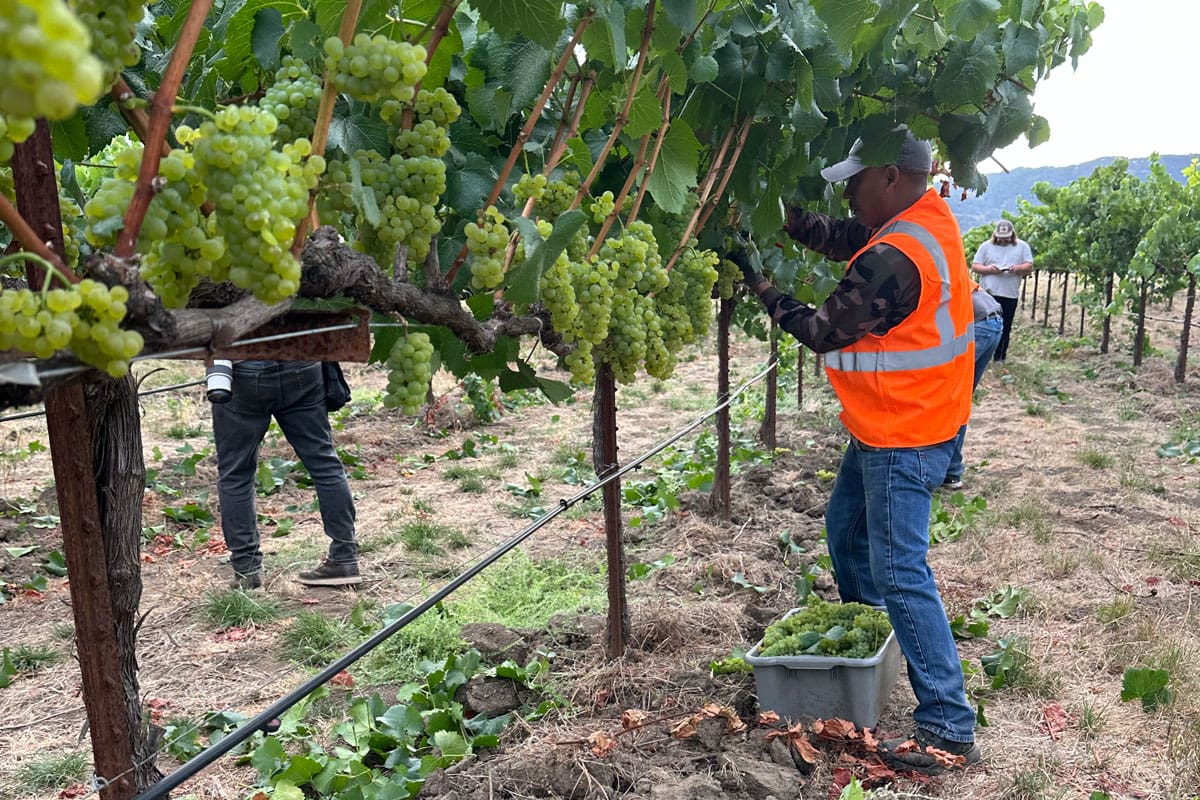
The first grapes destined for sparkling wine have arrived at the crush pad in Napa Valley, signaling the start of the 2026 harvest. While harvest marks the beginning of another vintage, it also transforms Napa Valley into one of the most exciting destinations where visitors can experience winemaking in real time. Harvest Begins Sparkling wine grapes are among the first to be brought in each year to preserve the bright acidity and freshness that define great sparkling wines. Round Pond Estate kicked off this year’s harvest with six and a half tons from their Rutherford, CA estate vineyard on Tuesday, July 21. For Round Pond Estate’s winemaker Jeff Plant, timing is everything. “We are looking for the stars to align. We need acid, sugar and flavor to all be in sync at the exact same moment,” said Plant. “Sparkling is arguably the most difficult pick to call because your pick window is so tight.” This year’s first pick is earlier than usual, but not far off of the 2015 harvest which began
00
This harvest we’re lowering prices on the BioSelect granular pectinase line. For a limited time through September 30, 2026 or while supplies last, all BioSelect enzymes including Aroma Plus will be on sale. BioSelect® Noir Increase color extraction and improve color stability in premium red wines. Aids in early release of anthocyanins, tannins, and polysaccharides during maceration. “We did notice an increase in color. Stability of the color is done really well considering that’s kind of a fight here in Texas since we are dealing with higher pH wines. We’ve noticed even with those higher pHs, the color stability is better with the BioSelect (Noir).” Christopher McIntosh, Winemaker Edge of the Lake Vineyard - Valley View, TX BioSelect® Blanc Purified to control cinnamoyl esterase activity and preserve delicate aromas in white wines. Varietal intensity is increased through the selective release of flavor and aroma compounds from the grape skin. BioSelect® Clear Set
00
July 7, 2026

What happens when your best customers decide to drink half as much wine — but spend twice as much per bottle? For decades, the wine industry ran on volume. More cases, more labels, more shelf space. But that playbook is being rewritten. Across every major demographic, consumers are steadily pulling back on how much wine they drink. Though research shows they are spending significantly more on every bottle they choose. This sweeping shift toward premiumization has completely transformed what the market rewards. Today's wine buyer prioritizes chemical transparency, environmental ethics, authentic flavor, and pristine quality. Mass-produced, heavily manipulated table wine is losing ground fast. Competing on volume alone is no longer a winning strategy. Today's most profitable growth opportunities come from consumers who drink less wine but spend more on quality. The following four strategies will help wineries capture that market. 1. Shift Production Toward Lower-ABV and Fresh Varietals
00

June 29, 2026

Exceptional Structure. Distinctive Character. Some grape varieties are familiar to every winery. Others represent an opportunity to create something that stands apart. Now available: Premium Sagrantino grapes for the 2026 harvest. Native to Italy's Umbria region, Sagrantino is prized for producing deeply colored, intensely structured wines with exceptional aging potential. Its naturally high tannin content also makes it an intriguing option for wineries exploring distinctive varietal wines or adding depth and structure to premium blends. As wineries continue shaping their 2026 harvest plans, unique vineyard opportunities like this allow winemakers to look beyond traditional sourcing and explore varieties that can help differentiate their portfolios in an increasingly competitive marketplace. View Listing Innovation in the wine industry doesn't always come from new technology. Sometimes it begins with discovering a different grape, exploring a new vineyard source, or finding an opportu
00