
Filter Post Type
NewsVideoProductEventLink
Sort:
Most Recent
1–10 of 51
September 15, 2026
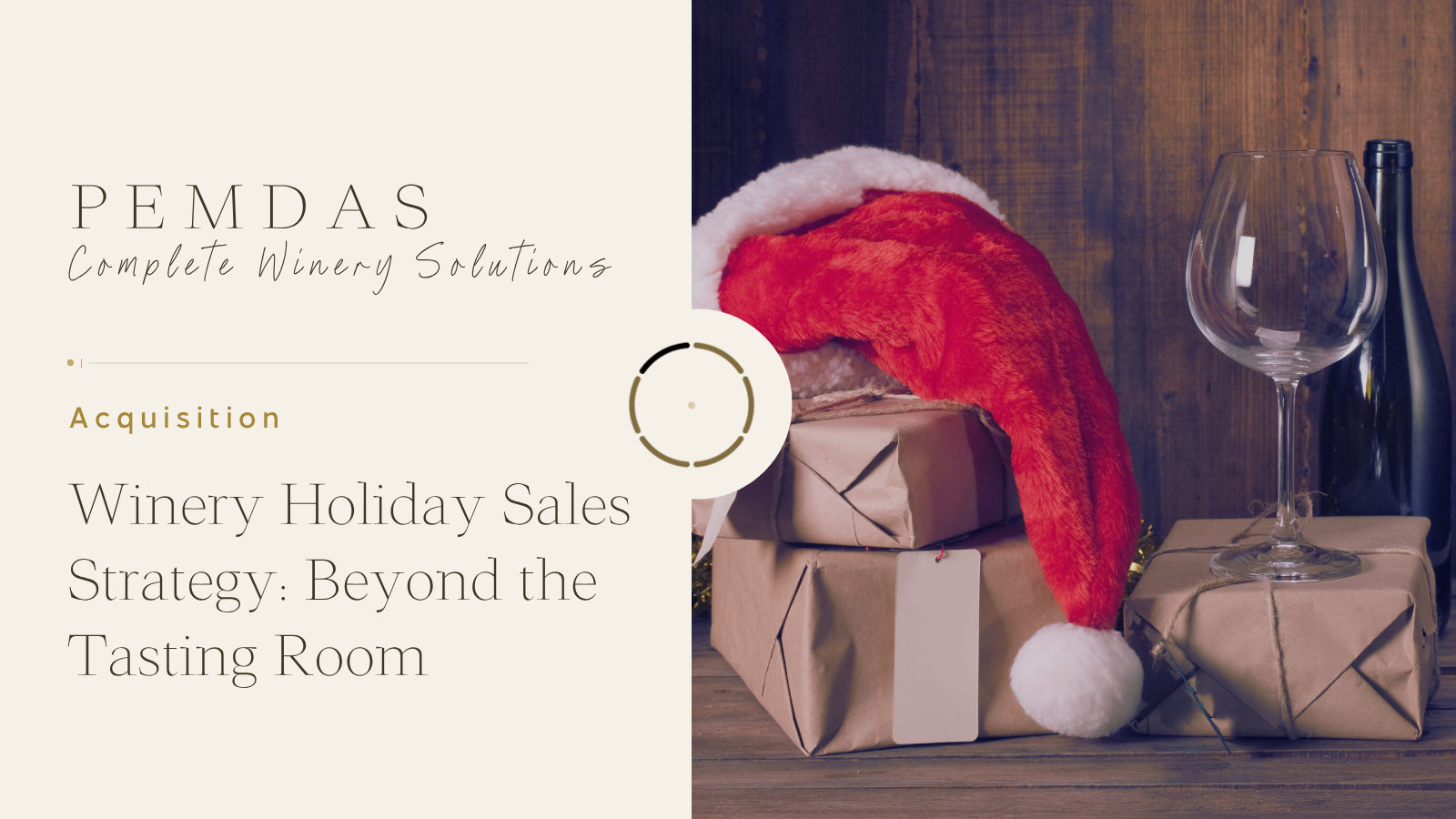
The peak winery holiday sales season, OND, is nearly upon us. OND, which stands for October, November, and December, is the three months responsible for roughly 30 percent of a winery's annual sales and the highest DTC sales of the year. Are you ready? Right now, during harvest, tasting rooms are full. That traffic drops in November and December as the weather turns and calendars fill with holiday plans. Wineries that win next quarter build a winery holiday sales strategy while harvest is still happening, not after the rush ends. This post lays out five pillars: social media, email marketing, wine club and allocations, gift-giving, and personal holiday buying to maximize your end of year sales. A free, downloadable OND Sales Prep Checklist walks through each pillar below in a one-page, build-it-yourself format, and a companion working sheet helps you map out your own posts and emails. Both live with the rest of my free resources on the Planning Tools page. Grab them before you keep rea
00
Lighter yields: Grape activity picks up cautiously The advanced timing of California’s 2026 winegrape harvest has not let up, with the potential for perhaps more than 80% of picking to be complete by the end of September. This month’s California Report drills down into the harvest latest, setting out timing, yield and the grape market’s response by region and variety. Yields are generally coming in lighter than average and some grape buyers have been seeking to replace missing volumes. The harvest can be said to be coming in lighter but not short: Given the large volume uncontracted, finding replacement grapes can prove relatively straightforward. But time is getting on. As this month’s report states: “At this late stage, the dialogue between prospective grape buyer and grower must be clear regarding what condition the vineyard should be in for the grapes to be contracted, and whether the buyer’s offer price covers the remaining farming practices required.” Lighter yields may be drivi
00
I've been quiet since May. Here's the honest reason why. After the Wine Sales Symposium in Rohnert Park this spring, I stopped posting. Not because nothing was happening — the opposite. We'd just onboarded our first winery, Scott Harvey Wines, and real life hit. The product worked. It solved real problems. But the moment I watched it handle actual guests, I knew it wasn't yet something I could stand behind proudly. Maybe that's my perfectionism talking — but I couldn't market something I didn't yet believe was great. So for almost two months, we went heads-down: sharpening the AI's answers, smoothing out how the whole system feels to use, and solving problems we never saw coming when we designed it. Like the spam. When we connected that first winery's inbox, 50–100 emails were landing every day — bots, shipping notices, sales pitches. On a typical day, maybe five were real guest questions. Their team started every morning sorting, not pouring: digging for the five that mattered under a
00
July 9, 2026
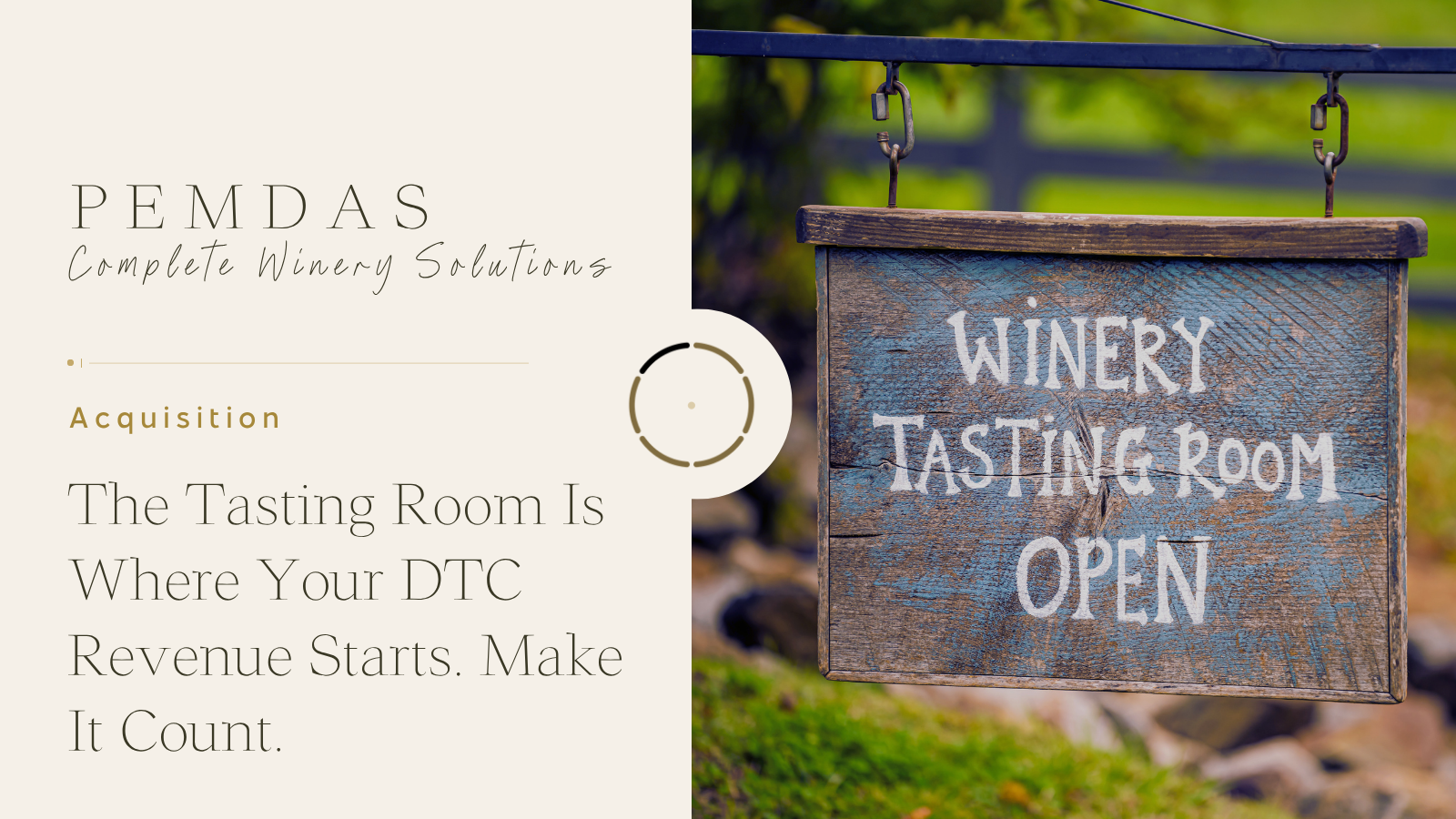
Visitation is down across nearly every US wine region. Wine club retention is softening. Margins are getting squeezed by rising costs on top of it, according to SVB's 2026 State of the U.S. Wine Industry report. Overall DTC revenue is down. If you run a DTC-focused winery, none of this is news. You are living it. This is not a problem you are helpless against. It is not the same as a shrinking pool of visitors that no amount of skill can fix. It is a problem with conversion, and conversion problems are addressable. In fact, wineries have an advantage here that almost no other sales environment on earth has. Most of them just are not using it. Tasting Rooms are the best sales room in the world! This is not a new argument for me. I have made the case before. What you call a tasting room is actually a sales room, whether or not it is run like one. The argument is worth making again here, because the stakes are high. Think about what a salesperson in any other industry has to do before th
00


Situation: A severe decline in grape demand and prices, along with rising grape production costs, have pulled down California’s vineyard values. Finding: The market is distinctly bifurcated, with an uneven decline across and within market segments. Considerable buyer interest remains for top-tier vineyards in premier appellations, whose value has held up relatively well. Vineyards with strategic appeal to a winery or those that can offer guaranteed income streams are also faring well in the market. Outlook: A softening in vineyard values in the near term is fairly certain. But under my base-case scenario that the grape market will begin to stabilize in 2027 or 2028 in most regions, the vineyard market bottom shouldn’t be far behind. The longer-term trajectory of vineyard values will depend largely on the strength of grape price appreciation, which will vary across market segments. Read the full issue
00


Spreadsheets Aren’t “Free” A barrel inventory sheet in one tab. A fermentation log in another. A compliance tracker that’s been handed down and adapted over the years. A blending workbook, a tasting note doc, and a case count sheet. Plus the binders sitting in the desk drawers. None of it connected. When someone asks what the setup costs, the honest answer is nothing. There is no line on the P&L for wine production software. Technically, it’s free. Then you count the hours. When Wynne Sargeant joined Brave & Maiden as winemaker, the production records lived across a whole array of Google Sheets, which is a very common setup for small wineries. Topping a barrel meant opening the inventory sheet to find the right lot, then jumping to roughly a dozen other spreadsheets feeding compliance, logistics, blending, and inventory. Each one updated by hand. Technical sheets for wines already in bottle were incomplete, so producing one meant rebuilding the wine’s history from scratch. The
00

Ten Ways Wineries Can Evolve From Selling Bottles to Creating Experiences That Resonate With a New Generation. If I told you a winery just opened with no vineyard, no winemaker on staff, and no interest in talking about terroir… would you visit? What if I told you it had a silent disco in the barrel room, a drag brunch series, and a 3-month waitlist for a zero-proof pairing menu? Those wineries exist. And they’re thriving. Because for a new generation of visitors, the wine isn’t the reason—it’s the reward. It’s not about what you pour anymore. It’s about how you make people feel. And we used to excel at this. But then we woke up one day… and it wasn’t working like it used to. The same offers stopped converting. The same messages started falling flat. The same visitors didn’t come back. And it’s not because we got worse at what we do. It’s because the customer changed. What they want. How they behave. Where t
00
February 16, 2026

In the world of low- and no-alcohol beverages, innovation isn’t a buzzword — it’s a necessity. After BevZero’s recent WINnovation award, spotlighting game-changing achievements in wine technology, it’s time we take you deeper into the system that’s redefining alcohol removal: ClearAlc. Exclusively distributed by BevZero and engineered and manufactured by Tomsa Destil, ClearAlc is the next generation of dealcoholization equipment. It brings a blend of precision, sustainability, and versatility unique to the beverage world — and it’s earning attention for good reason. Let’s open the hood on ClearAlc and explore what makes this technology not only unique but award-worthy. What Is ClearAlc? At its core, ClearAlc is a patented vacuum distillation system that removes alcohol from wine, cider, and spirits using a single-pass, high-efficiency process. But this isn’t just about pulling out ethanol — ClearAlc
00

February 12, 2026

WineDirect to Commerce7: 19% Growth in Club Customization, 50% Less Support, and the End of "Batch Day" TL;DR: Faced with manual bottlenecks on WineDirect, Hill Family Estate migrated to Commerce7 to empower their members. The results were immediate: a 19% increase in customized club shipments and a 50% reduction in support volume. Most importantly, the team reclaimed 4-5 hours of manual labour per club run by allowing their customers to customize their orders online and move to fully automated background processing. Founded by third-generation farmer Doug Hill, Hill Family Estate is a family-run operation in Napa Valley that blends deep vineyard expertise with approachable hospitality. Their winery and tasting room experiences are known for being family-friendly, intimate, and deeply rooted in the land they have farmed for decades. For Allison Negrón, DTC Manager at Hill Family Estate, the goal is always to provide a seamless, personali
00