Filter Post Type
NewsVideoProductEventLink
Sort:
Most Recent
1–10 of 159
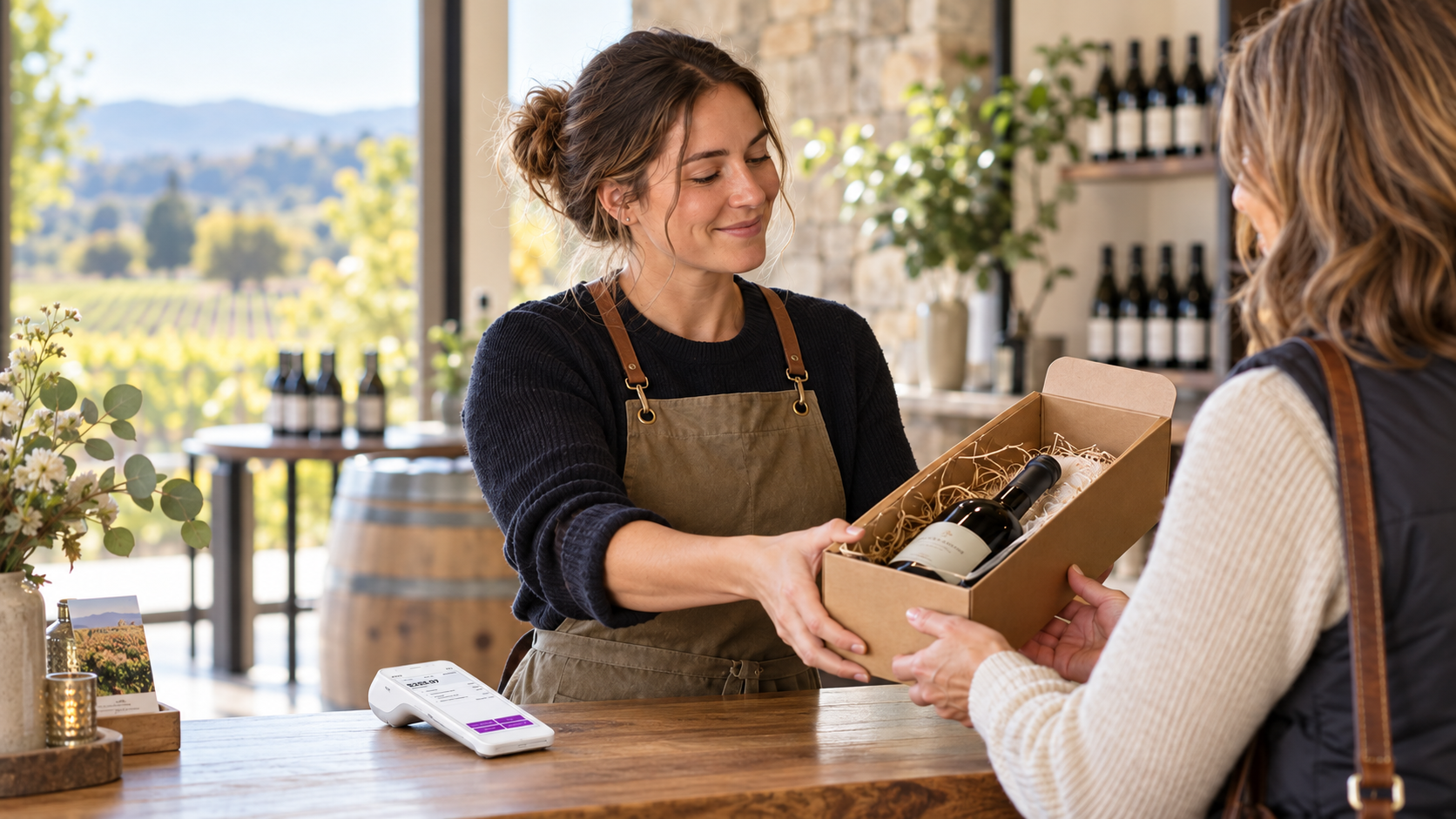
A winery can send a beautiful holiday email, feature the right bottle, and get a customer all the way to checkout. Then the customer notices the gift message field is missing. Or they can’t tell whether the order will arrive in time. Or the wine they wanted was already committed to the next club shipment. These sound like small operational details. To the customer, they are the holiday shopping experience. As wineries plan for OND 2026, I’d spend less time asking, “What campaigns should we run?” and more time asking, “Can we deliver on every promise those campaigns make?” That question connects marketing to inventory, the tasting room, the wine club, and fulfillment. Here’s how to put it to work. Choose offers your whole team can stand behind Start with last year’s holiday orders. Look at what sold, what customers added to club shipments, and which gifts required the most back-and-forth from staff. Then check those opportunities against the inventory you’ll actually have available. A w
00
September 15, 2026
The peak winery holiday sales season, OND, is nearly upon us. OND, which stands for October, November, and December, is the three months responsible for roughly 30 percent of a winery's annual sales and the highest DTC sales of the year. Are you ready? Right now, during harvest, tasting rooms are full. That traffic drops in November and December as the weather turns and calendars fill with holiday plans. Wineries that win next quarter build a winery holiday sales strategy while harvest is still happening, not after the rush ends. This post lays out five pillars: social media, email marketing, wine club and allocations, gift-giving, and personal holiday buying to maximize your end of year sales. A free, downloadable OND Sales Prep Checklist walks through each pillar below in a one-page, build-it-yourself format, and a companion working sheet helps you map out your own posts and emails. Both live with the rest of my free resources on the Planning Tools page. Grab them before you keep rea
00
Winery DTC technology has changed considerably over the years, but so has the customer journey it needs to support. For a long time, the winery direct-to-consumer model followed a fairly predictable path. A guest visited the tasting room, had a great experience, joined the wine club, and stayed connected through allocations, events, email offers, and return visits. That path still exists, and the tasting room remains one of the most valuable customer acquisition channels available to wineries. But it is no longer the only way consumers build relationships with wine brands. Today, a customer's first interaction with your winery may happen long before they walk through the tasting room door—or they may never visit at all. They might discover a bottle at a restaurant, see it in an Instagram post, hear about it from a friend, encounter your winery while planning a trip, search for a varietal or region online, receive a bottle as a gift, or come across your brand in an online wine community
00

The Vision Behind CALSECCO® Co-authored by Manveer Sandhu, Executive Director of Winemaking and Kim Kulchycki, Sr. Director Marketing, Rack & Riddleecutive Director of Winemaking and Kim Kulchycki, Sr. Director Marketing, Rack & Riddle Why California Needs Something Fresh & New Sparkling wine is increasing in popularity, filling more need states for consumers than almost any other type of wine. Once regarded as the primary celebratory beverage for holidays and special occasions, its market position has shifted dramatically in the last 10 years. Sparkling wine has now evolved into an everyday beverage enjoyed throughout the year. The popularity of Prosecco has made sparkling wine accessible and popular with a new and younger group of wine drinkers — the elusive Gen Z and Millennials. The ones who grew up drinking sparkling water, seltzers and other refreshing beverages from other categories but haven’t quite “gotten” wine. Well, they understand Prosecco! Given California’s
00
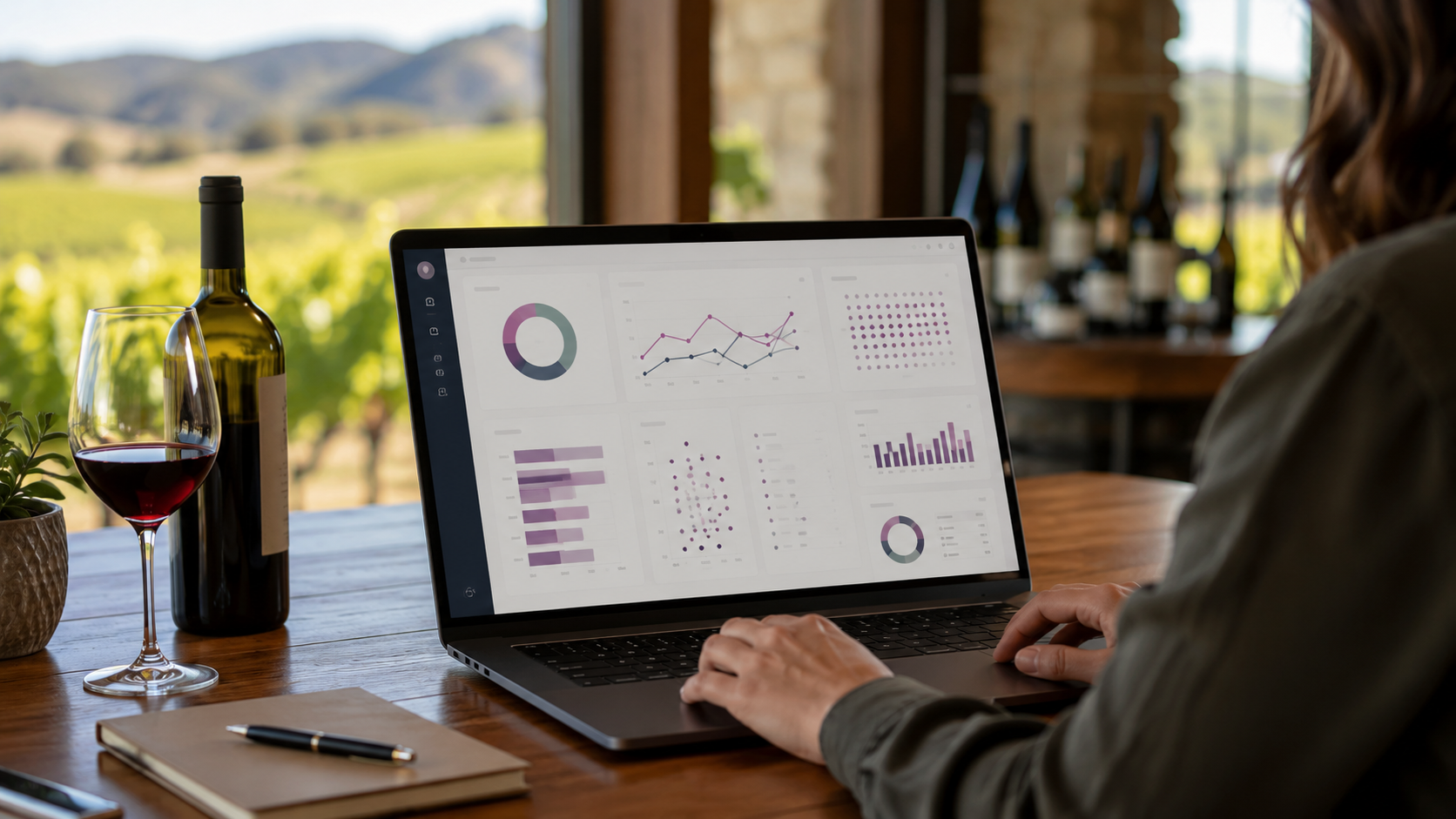
AI is quickly becoming part of the day-to-day toolkit for winery teams. But while writing emails, brainstorming social posts, and creating content may be the easiest places to start, some of the biggest opportunities for wineries are in the customer data they already have. Your winery is already collecting information across e-commerce, wine club, POS, email and SMS, tasting room visits, shipping, events, and customer profiles. AI can help make that information easier to analyze—and, more importantly, easier to act on. During our recent webinar with Sovos ShipCompliant, How AI Is Helping Wineries Improve Wine Club Retention & Reduce Customer Friction, we explored practical ways wineries can begin using AI across their DTC business. The biggest takeaway: you don't need an AI strategy to get started. You need a good business question. How Can Wineries Use AI? At its core, AI is very good at identifying patterns across large amounts of information. For a winery, that means you can mo
00

August 19, 2026
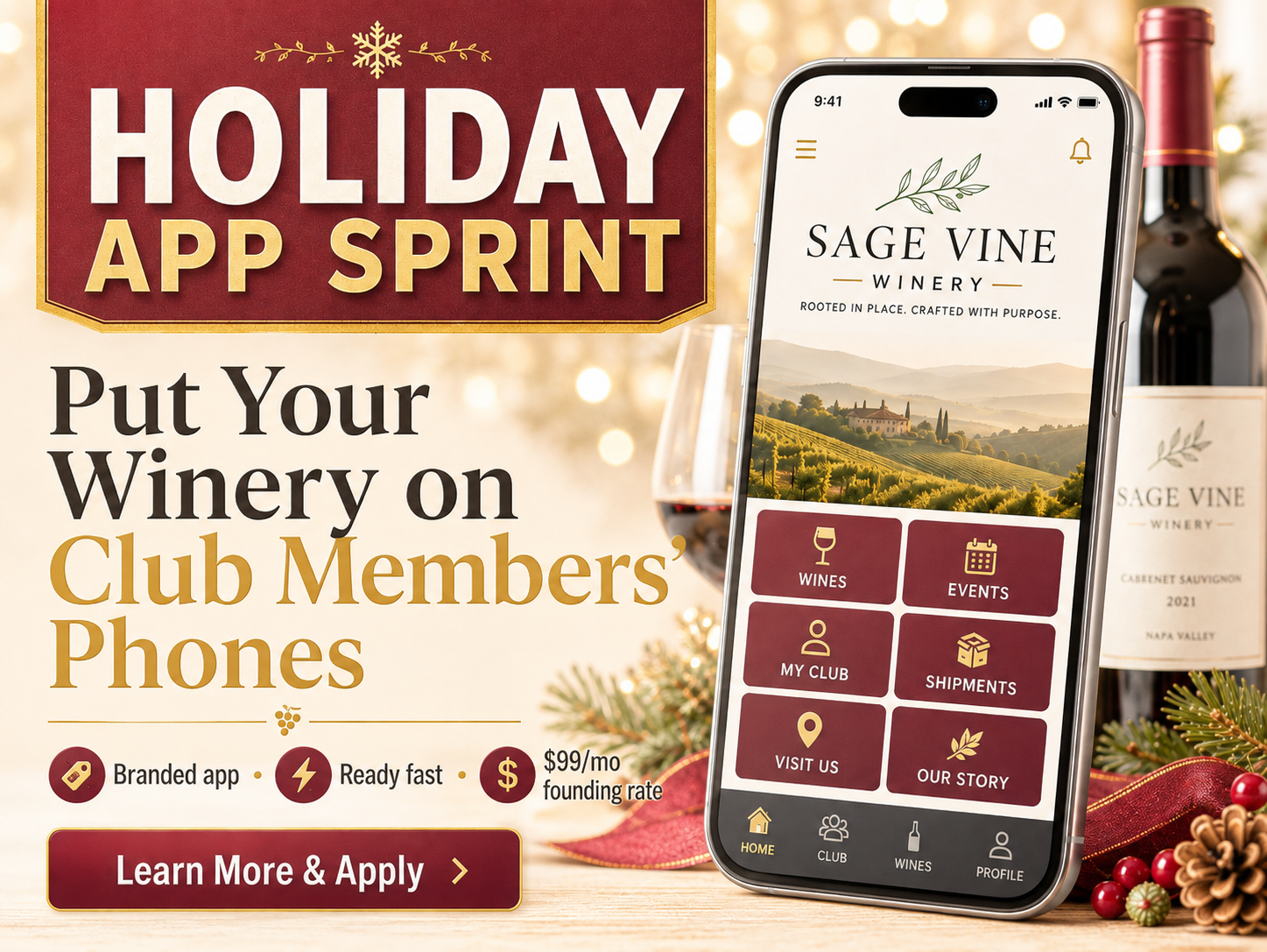
Your Holiday Marketing Mix Has Room for One More Channel Email remains essential to winery DTC marketing, but the holiday season brings a familiar challenge: more messages, more promotions, and more competition for attention. WIN Member VinterActive is offering a different way to expand that communication mix with its 2026 Wine Club Holiday App Sprint, designed to help wineries launch a custom-branded mobile app before holiday campaigns reach full speed. Accepted participants receive a custom myWineClubApp™, with a first working version ready for review within two business days and a consumer-ready app targeted for approximately one week. The program also includes preference-based member notifications, launch tools, a holiday app marketing plan, four personalized coaching sessions over six weeks, and complimentary setup and onboarding. The initial Holiday Sprint is limited to up to five wine brands, with a Founding Pioneer rate of $99/month. For wineries already thinking about holiday
00

August 18, 2026

Wine Clubs Need a Better Way to Reach Members Before the Holiday Rush By Bryan St. Amant, Founder & CEO, VinterActive Let’s not sugarcoat reality. We've all read headlines about fewer tasting room visitors and waning thirst for traditional wine clubs. Every wine marketer seems to know someone who's lost a job, watched a budget vanish, or seen another respected brand struggle to survive. But the latest research reveals one encouraging sign: Silicon Valley Bank’s 2026 Direct-to-Consumer Wine Report found that top-quartile wineries grew DTC revenue by 22%, while the median winery reported no growth and the bottom quartile declined by 13%. They attribute the widening gap largely to the way top wineries focus on customers, relationships, and execution. Since they also found tasting rooms and wine clubs account for 72% of DTC winery performance, the performance of these channels this holiday season can make or break small brands this year. But here's the catch... Problem: Email & SMS
00


Whether you’re evaluating a new fulfillment partner or assessing your current one, the right questions can help determine whether your operation is prepared to support your winery’s future growth. Can They Support Both Traditional Clubs and Subscription Programs? Membership programs continue to evolve, and your fulfillment partner should evolve with you. Look for a partner that can confidently support: Large seasonal club releases Ongoing subscription shipments Personalized wine selections Gift programs and corporate orders Limited releases and allocation offers Marketing promotions Multiple shipment frequencies Pause, skip, or order modification requests Your fulfillment partner should adapt to your membership strategy. Not require you to change it. Do They Become an Extension of Your Team? Exceptional fulfillment is built on exceptional communication. Your fulfillment partner should feel less like a vendor and more like another department within your winery. Look for a partne
00
July 1, 2026
It's July 1, which means you're about to start seeing "Christmas in July" everywhere. Retailers are already thinking about the holidays—even if it still feels like the middle of summer. Smart wineries should be doing the same. October, November, and December (OND) are your biggest sales months of the year. Holiday winery marketing doesn’t start in October—it starts now. They’re sprinting through Q3—right now—while everyone else is still daydreaming about hot cocoa and watching Christmas movies… you’ve got rosé in your glass and wine bundles to plan. Here's how to make the next 90 days count. 1. Clean Up Your Data — Because Bad Data Costs You Money This isn’t just about removing bounced emails. Bad data quietly drains OND revenue by blocking you from segmenting, targeting, or even reaching your customers. Your Move: Export your full email list (now, not later). Verify your SMS audience and make sure customer consent records are up to date. Use ChatGPT to help spot typos like gmaii.com
00
May 20, 2026

A lot of wineries still think AI is only useful for writing social captions or speeding up content creation. But in reality, AI is quickly becoming one of the most valuable tools wineries can use to improve wine club retention, personalization, customer engagement, and operational efficiency. As customer acquisition becomes more expensive and consumer expectations continue to evolve, wineries are under increasing pressure to build stronger relationships with existing customers, not just acquire new ones. That’s where AI is starting to make a real impact. In many cases, wineries can start experimenting with AI using tools they already use every day, including CRM exports, email marketing data, POS reporting, ChatGPT, or AI-powered analytics platforms. Today, wineries are using AI-powered tools and smarter segmentation strategies to: ✅ Spot at-risk members before they cancel ✅ Personalize club shipments, events, and perks ✅ Identify high-value customers who aren’t club members — yet ✅ Au
00