
Filter Post Type
Sort:
Most Recent
1–10 of 132
What Will Your Winery Do Differently in 2027?
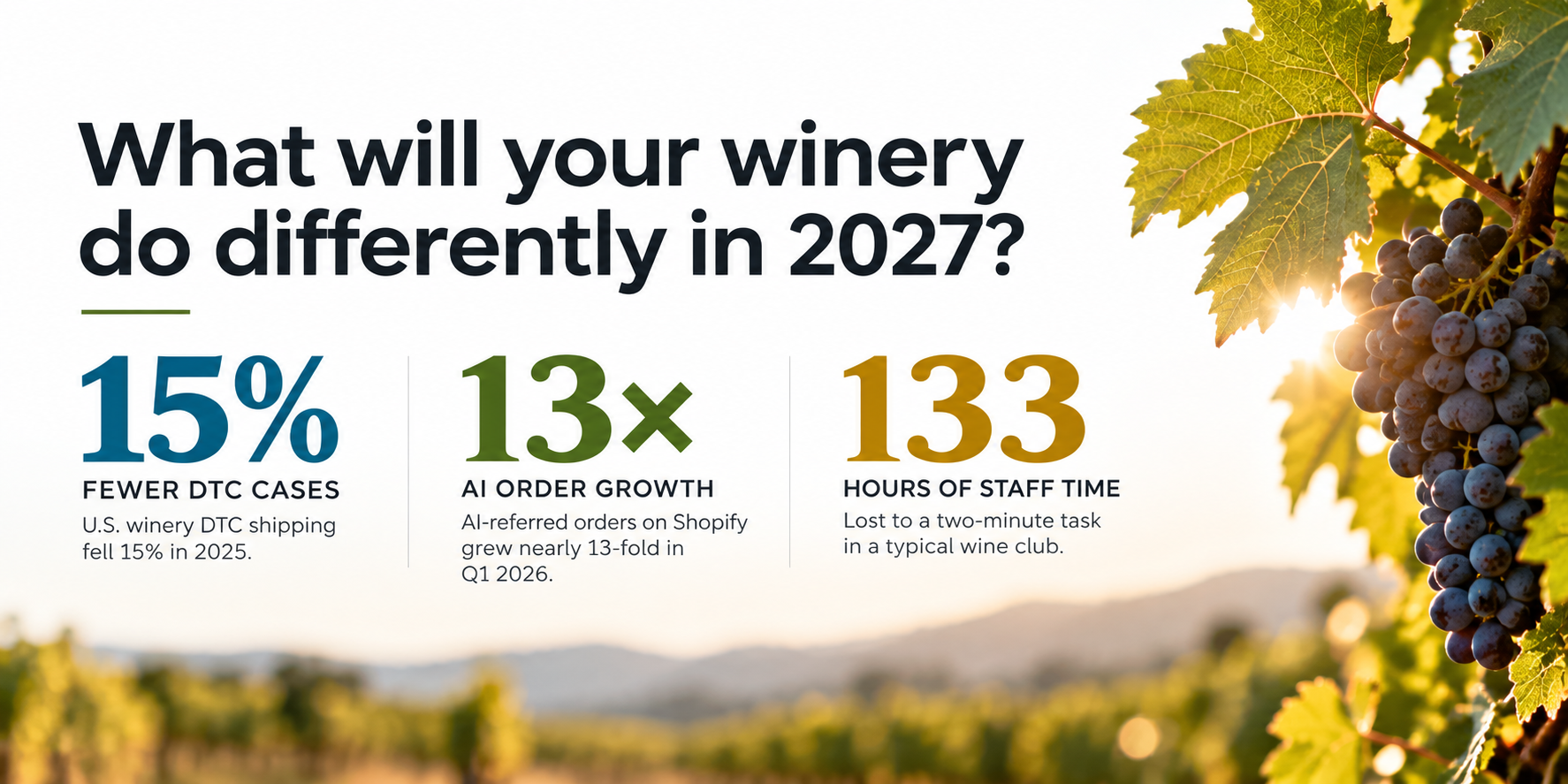
The 2026 harvest is wrapping up, and wineries are beginning to look toward another vintage—and another year of business challenges and opportunities. But before making plans for 2027, consider three numbers. 15% fewer DTC cases shipped. U.S. winery direct-to-consumer shipping volume declined 15% in 2025, according to the 2026 Sovos ShipCompliant/WineBusiness Analytics report. Nearly 13× growth in AI-referred orders. Shopify reported that orders attributed to AI-powered searches grew nearly 13-fold year over year in Q1 2026. 133 hours spent on a two-minute task. A winery with 2,000 club members and four annual releases could spend approximately 133 staff hours a year if just half its members required two minutes of unnecessary manual work per release. The first two numbers reflect real market developments. The third is an illustrative calculation—but one worth doing with your own winery's workflows. Together, they raise some important questions. Are you making it easier for customers to
00
DTC wine shipments fell 15%. What does that mean for winery technology?
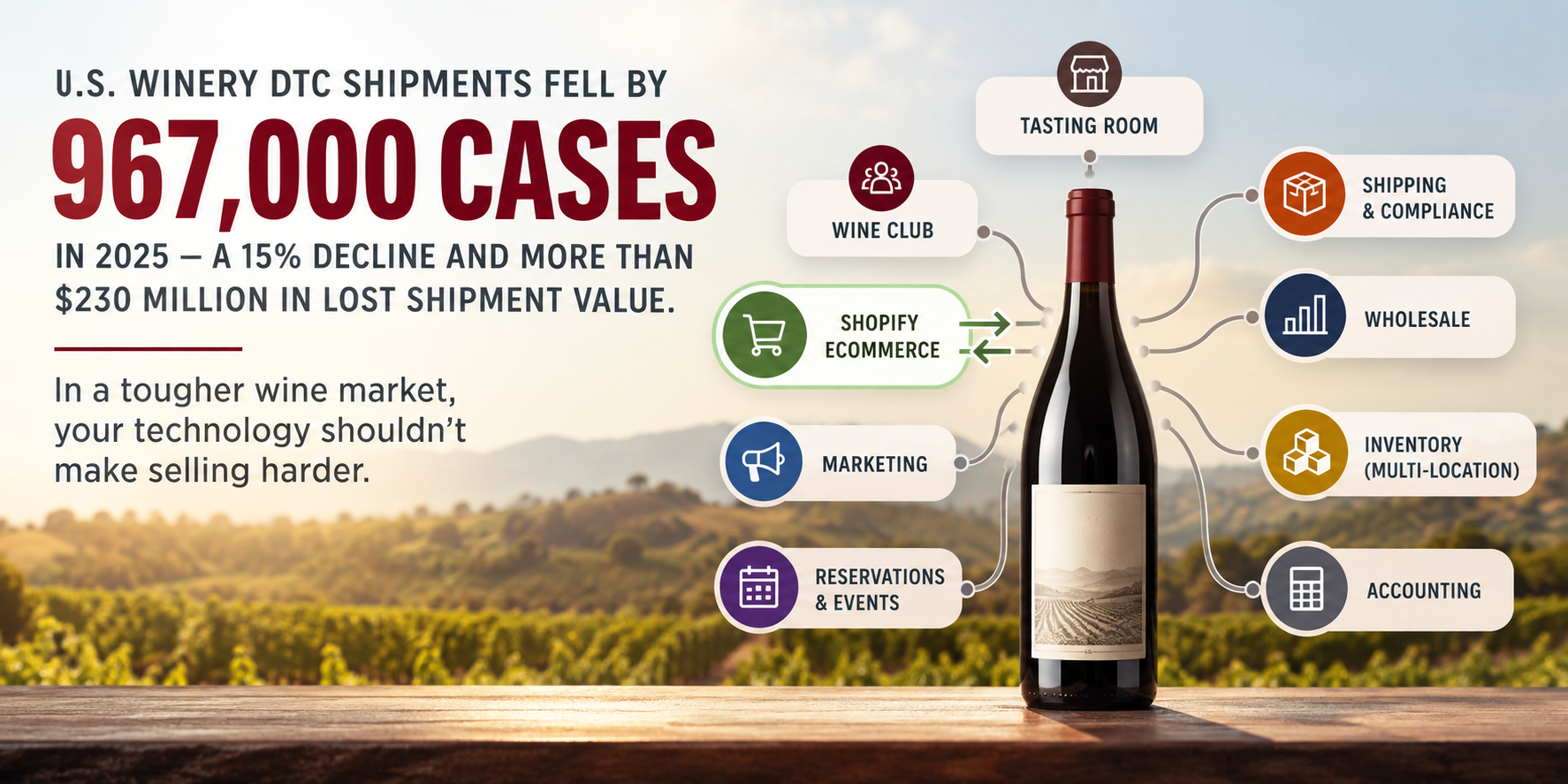
U.S. wineries shipped 967,000 fewer cases directly to consumers in 2025, according to the latest Sovos ShipCompliant/WineBusiness Analytics report. That's a 15% decline in volume and more than $230 million in lost shipment value. Those are difficult numbers. But they also raise a practical question: When selling gets harder, how much friction is your own technology adding? Think about everything that can touch a single bottle: 🍷 Tasting room 👥 Wine club 🛒 Ecommerce 📣 Marketing 📦 Shipping ⚖️ Compliance 📊 Accounting 🚚 Wholesale 📍 Multi-location inventory 📅 Reservations Having multiple systems isn't necessarily the problem. Wineries are complicated businesses, and specialized tools can be extremely valuable. The better questions are: Does information move between them? Does inventory stay accurate across channels? Does customer history stay connected? Can marketing actually use what you know about the customer? How much information does your staff still have to m
00
AI for Wineries: 7 Smart Ways to Improve DTC & Wine Club
AI is quickly becoming part of the day-to-day toolkit for winery teams. But while writing emails, brainstorming social posts, and creating content may be the easiest places to start, some of the biggest opportunities for wineries are in the customer data they already have. Your winery is already collecting information across e-commerce, wine club, POS, email and SMS, tasting room visits, shipping, events, and customer profiles. AI can help make that information easier to analyze—and, more importantly, easier to act on. During our recent webinar with Sovos ShipCompliant, How AI Is Helping Wineries Improve Wine Club Retention & Reduce Customer Friction, we explored practical ways wineries can begin using AI across their DTC business. The biggest takeaway: you don't need an AI strategy to get started. You need a good business question. How Can Wineries Use AI? At its core, AI is very good at identifying patterns across large amounts of information. For a winery, that means you can mo
00
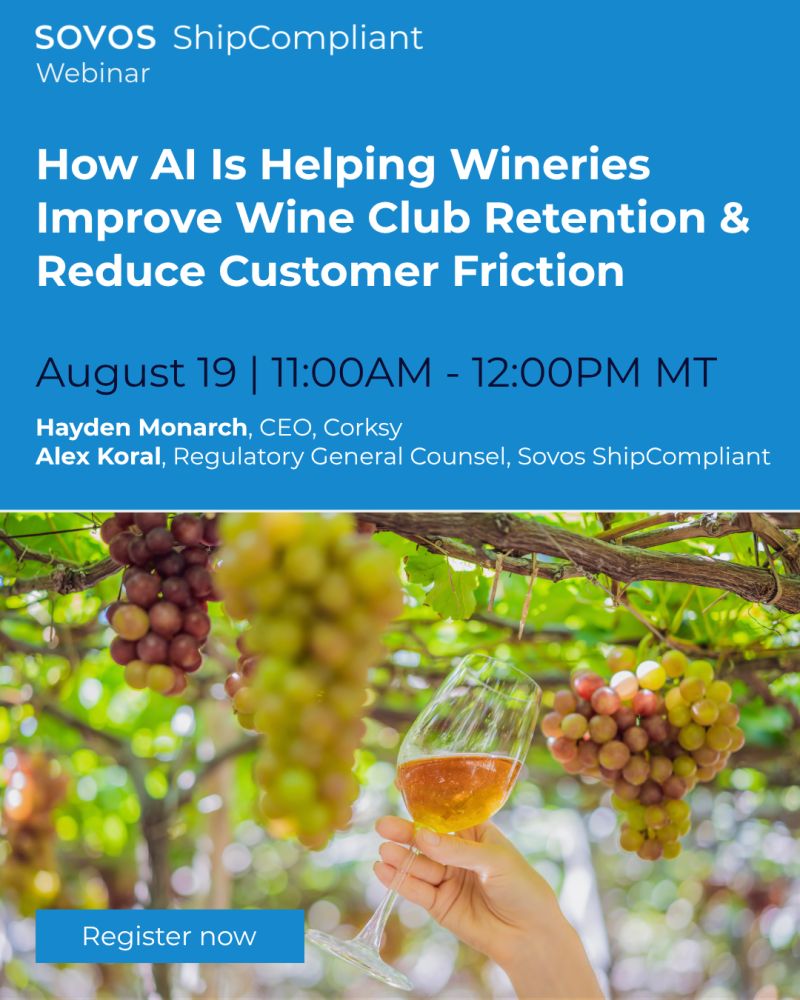
How AI Is Helping Wineries Improve Wine Club Retention & Reduce Customer Friction

Event Type: Webinar

Location: Irvine, CA

Date: 8/19/2026 — 10:00 AM to 11:00 AM
How AI Is Helping Wineries Improve Wine Club Retention & Reduce Customer Friction
Artificial intelligence is changing the way wineries understand and engage with their customers. While content generation is in the spotlight, the biggest opportunity isn't using AI to write content—instead, it's using AI to uncover insights from the customer, club, and shipping data wineries already have. Join Corksy and Sovos ShipCompliant for a practical discussion on how wineries are using AI to identify future club members, improve retention, reduce customer friction, and make smarter DtC decisions. You'll see real-world examples of how AI can turn everyday winery data into actionable insights. In this webinar, you'll learn how to: Identify customers most likely to join your wine club Spot early warning signs of churn and declined payments Analyze shipment deliverability and customer trends Build smarter customer segments and personalized outreach Turn existing winery data into actionable business decisions with AI Whether you're just getting started with AI or looking for
00
5 Product Image Mistakes Quietly Costing Your Winery DTC Sales
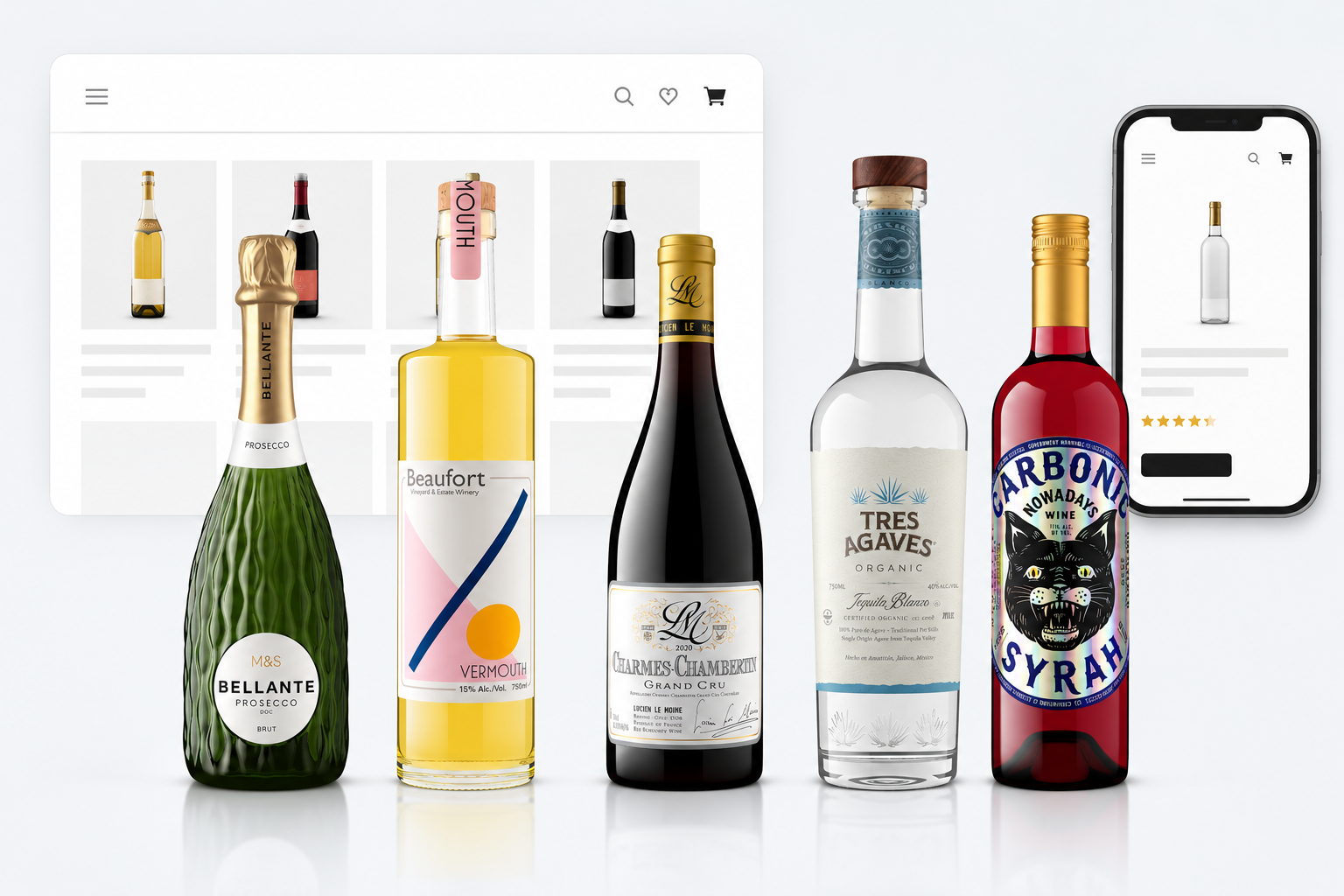
By Laurie Millotte, Founder, Outshinery At Outshinery, we render winery product images. No cameras, no shipped bottles. Photorealistic 3D images of your wine, built from the label file, ready before the wine is even in the bottle. We have made images for more than 2,000 brands across the US, Canada, Australia, and the UK. After that many bottles, you start to see patterns. The same five mistakes show up on winery product pages over and over, regardless of region or size. None of them are about the wine. They are about how the bottle is presented on screen. That matters more than it used to. Direct-to-consumer wine shipments fell a record 15% in volume in 2025, the steepest decline since the channel began tracking in 2010 (Sovos ShipCompliant). The brands holding ground are the ones whose product pages read instantly at thumbnail size on a phone. Here are the five mistakes, and the fix for each. Mistake 1: Your Library Looks Like Five Different Brands Five years of vendors. Three photog
00
The Role of Logistics in DTC Innovation
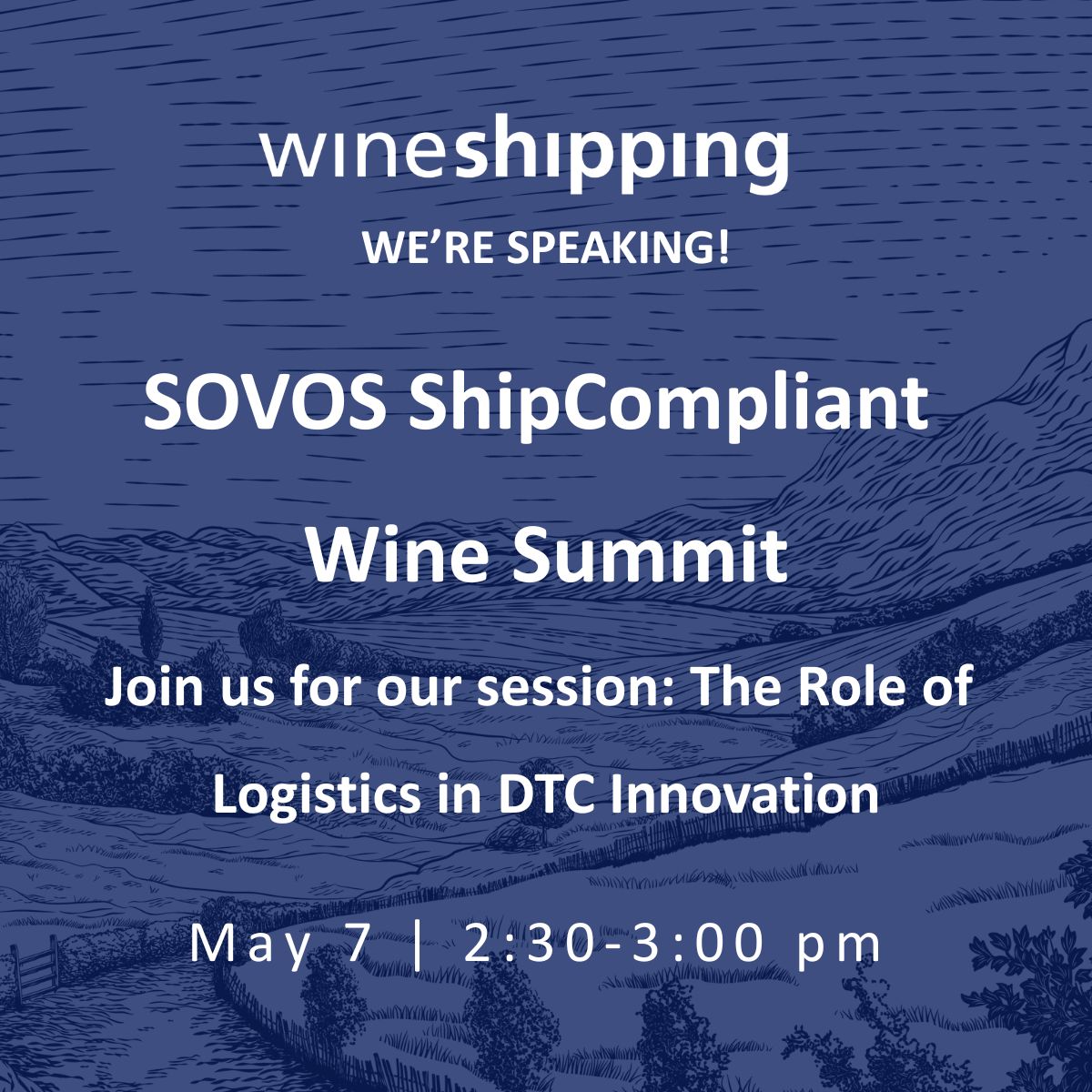
We're excited to be speaking at the Sovos ShipCompliant Wine Summit, May 6-7! Join us on May 7 from 2:30–3:00 PM for our session: The Role of Logistics in DTC Innovation. Making great wine is one thing—getting it into customers’ hands successfully is another. We’ll dig into what’s really driving winery success today: delivery performance, smarter inventory management, and logistics strategies that scale with your business. Whether you’re shipping 100 cases or 100,000, we’ll share practical tools to help you build a stronger, more resilient DTC program. If you’re attending, we’d love to connect! See more about our session here.
00

Wine Club Members Rarely Cancel Out of Nowhere. Here’s What to Watch For Before They Do.

In our recent webinar with Sovos ShipCompliant, we talked about a challenge many wineries know too well: wine club cancellations rarely happen without warning.

Most of the time, the signals show up earlier.
Engagement drops.
Shipments get skipped.
Purchase behavior changes.
The member starts drifting long before they officially cancel.

That was one of the big takeaways from the conversation. In a tougher DtC market, retention has to start before the cancellation report. Wineries need better visibility into which members are still engaged, which ones are slipping, and where to focus outreach before the window closes.

We recapped the key points in this blog, including the churn patterns wineries should watch for and how RFM segmentation can help teams act sooner.

Read the recap: https://vinsuite.com/wine-club-churn-signs-before-cancellation

00
Today's wine business news for wine industry professionals...

Robledo Family Winery, a Sonoma Valley producer founded by the children of Mexican vineyard workers, has filed for Chapter 11 bankruptcy protection, according to federal court records...
00
New Approaches to Preventing Wine Club Churn
Wine club churn has always been a challenge, but the stakes are even higher as the direct-to-consumer (DtC) wine shipping channel has entered a period of sustained contraction. With 2025 seeing the largest year-over-year declines in both DtC wine shipment volume and value — according to the 2026 Direct-to-Consumer Wine Shipping Report — the channel is smaller, more concentrated, and increasingly reliant on a pool of higher-end customers. Stabilizing revenue in this environment means wineries must be more focused than ever on retaining customers in your winery’s wine club. In practice, churn rarely begins with a cancellation request. It typically starts with subtle changes in behavior that are easy to overlook in standard reports. This webinar will discuss: What those signals are — where and how to look for them How early churn forecasting differs from traditional churn reporting Which member behaviors tend to signal increased churn risk before cancella
00
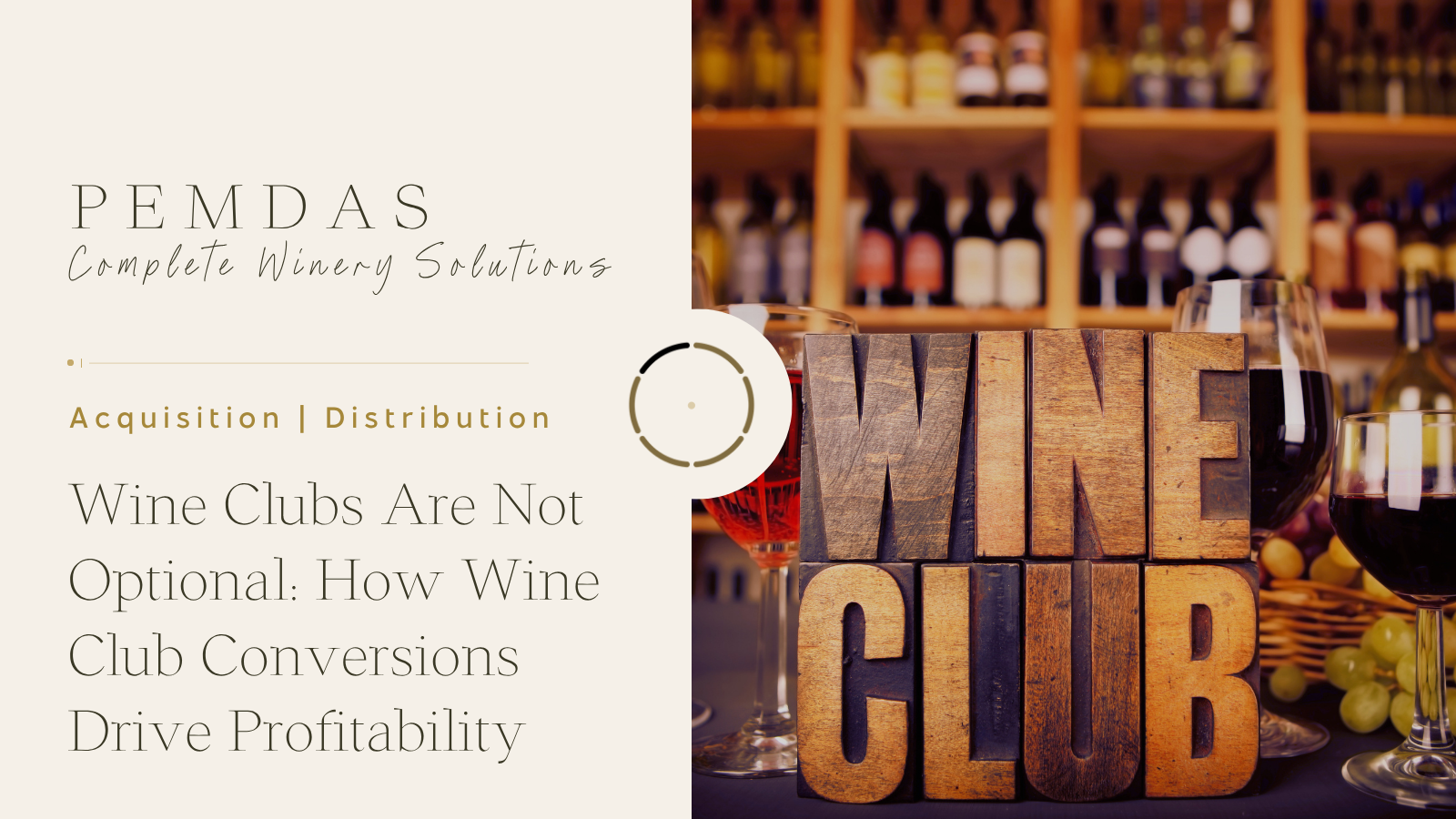
Wine Clubs Are Not Optional: How Wine Club Conversions Drive Profitability
We call it a Tasting Room, when it’s really a Sales Room. Why is that? After the repeal of Prohibition in 1933, wineries re-opened in an environment where the government was highly suspicious of any and all alcohol sales. On-premise consumption was restricted and considered the purview of saloons, which were vilified during the years of Prohibition. So, to comply with laws and distinguish themselves as places of refined moderation, wineries leaned into “tasting,” not drinking. The Tasting Room became the winery’s sales room. Over the decades, tasting rooms have become places of hospitality, education, and increasingly, dinner (or lunch). Along the way, the primary role of the tasting room—to form a connection with the consumer for the purpose of selling wine—got lost. Now, I recognize that I’m being hyperbolic here. In the contracting market we’re living in, too many wineries are focusing only on the hospitality aspect. They need to lean
10