
Filter Post Type
NewsVideoProductEventLink
Sort:
Most Recent
1–10 of 408

November 6, 2026

The spreadsheet every cellar keeps open It is 7 a.m. in the middle of harvest. Thirty ferments are going, and someone is walking the cellar with a clipboard or a tablet, taking Brix and temps tank by tank. Back in the office, those numbers go into a spreadsheet. Later that week, the same spreadsheet tracks a round of SO₂ additions across a few dozen barrel groups, then the topping schedule. If that sounds familiar, you are not alone. Almost every winery we talk to, regardless of size or what production software they use, has a spreadsheet doing quiet, essential work somewhere in the cellar. Why the spreadsheet wins, and what it costs you The spreadsheet wins because it is fast. You see every tank at once, tab across a row, paste in a column of lab results, and move on. Nobody needs training. The catch is that the spreadsheet lives outside your production system. Someone still has to carry those numbers into the real record, and every handoff is a chance for a value to be retyped wrong
00
November 4, 2026
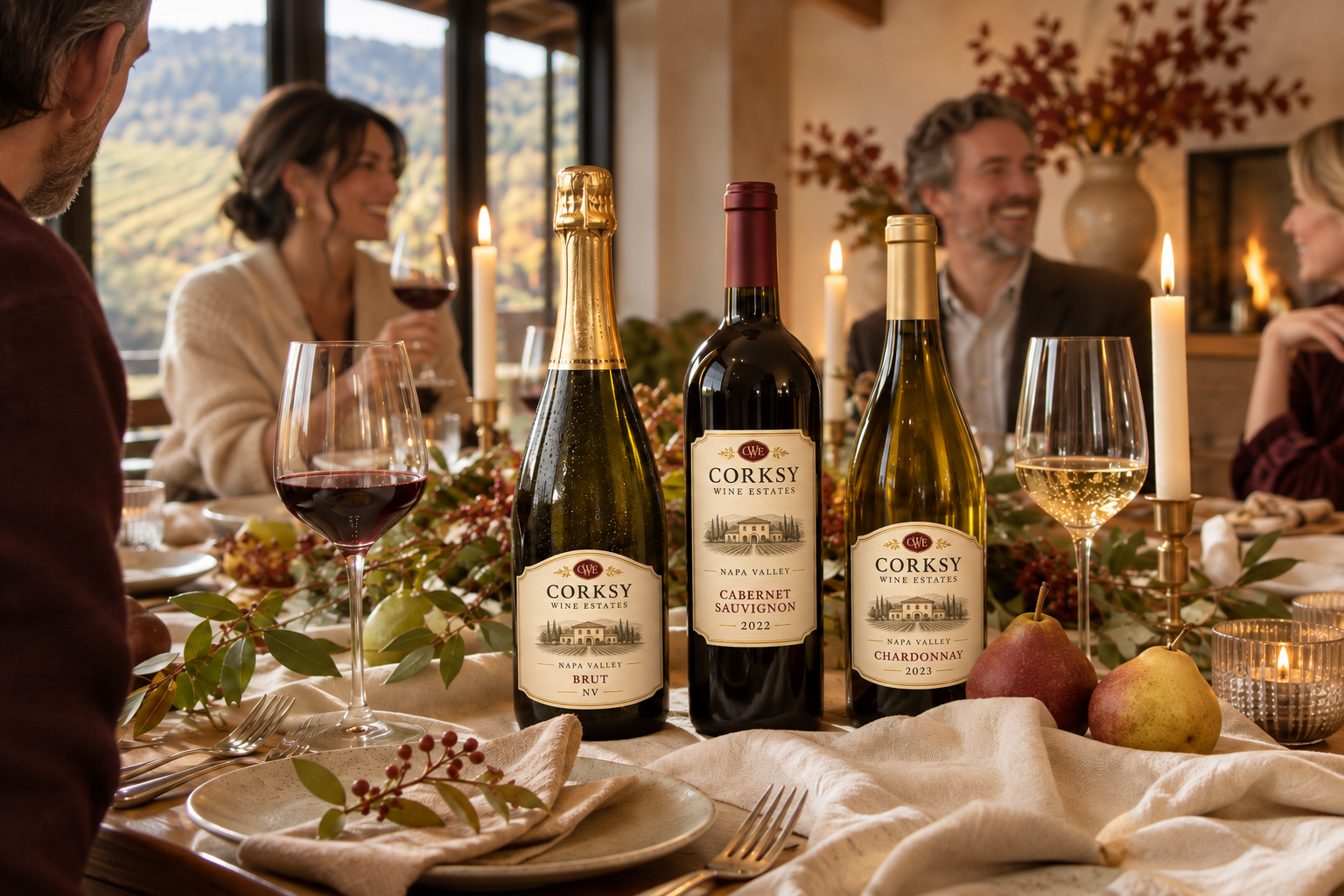
Black Friday is November 27, and Cyber Monday is November 30. If your winery is still finalizing its holiday offers, you have time. But with a few weeks left, I would focus on getting a handful of things right. What do you want customers to buy? Who has a reason to buy it? And what would make that purchase easier? A strong winery Black Friday and Cyber Monday campaign brings together thoughtful wine bundles, relevant customer segments, shipping offers you can afford, and a website that makes buying easy. The discount is one part of that. Decide what each holiday offer should accomplish Before choosing a percentage, decide what you want the promotion to do. Are you trying to move a typical three-bottle purchase to six? Bring back customers who have not ordered since spring? Sell a limited library selection? Help someone finish their client gifting? Those are different goals. They need different offers. In my earlier article, Black Friday for wineries: Bundle before you discount, I cove
00

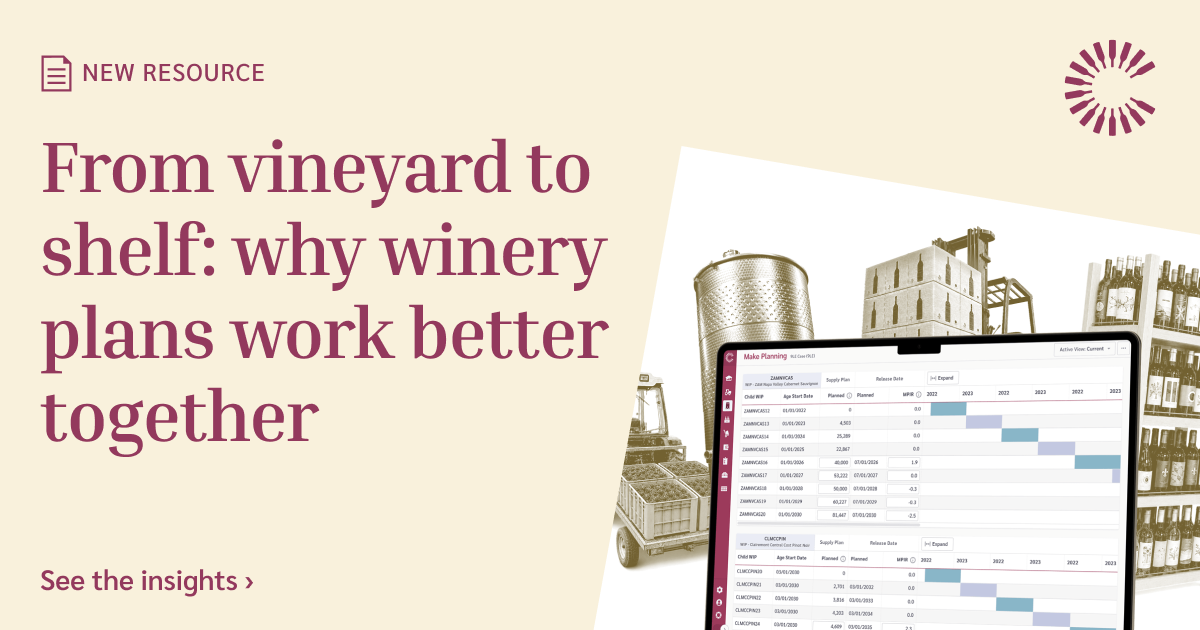
From vineyard to shelf: why winery plans work better together Most wineries don’t struggle with planning because they lack data. They have plenty of it: crush reports, bulk inventory, case goods, depletions, sales forecasts, budgets. The trouble is that it lives in too many places. Each team keeps its own spreadsheet, each spreadsheet tells a slightly different story, and by the time everyone agrees on what happened, the business has already moved on. Integrated planning is the practice of running those plans as one connected process instead of a set of separate ones. It isn’t new, but it matters more in wine than in most industries, and it’s easier to start than many teams expect. Every plan depends on the one before it A winery runs on a chain of plans: Crop supply sets the limits on what you can make. Sales forecasts shape how much finished inventory you need. Inventory tells production what to bottle and when to release it. Production drives a large share of what finance has to
00

Growth creates pressure. Better operations create room to move. Product is moving. Customer demand is growing. The workforce often isn’t. For many manufacturers and fulfillment operations, that tension is what starts the automation conversation. But being “ready for better” does not necessarily mean you are starting from a manual operation. Maybe you already have automation in place. You might have equipment that still works. Or you’re simply reaching the point where something in the operation needs to perform better. That could mean more throughput. Better use of labor. Greater accuracy. More capacity. Better integration. Less physical strain. More visibility. Optimizing available space. Or simply removing the bottleneck that is keeping the rest of the operation from performing the way it should. The important question is not: What equipment should we buy? It is: What needs to work better? 1. Your customer demand is growing faster than your operation Growth is usually a good problem
00

How do you know if MLF is actually finished? You can watch the wine. You can taste it. You can listen for the crackling in your barrel and look for other signs of activity. But if you really want to know what's happening, you have to test the wine for malic acid. The absence of obvious activity doesn't necessarily tell you that all of the malic acid has been converted. One of the easiest mistakes to make during this part of the season is assuming MLF is complete because the wine has been sitting quietly for a few weeks. Regular analysis gives you a much better picture of what's actually happening in the wine. Measuring malic acid allows you to track its degradation and determine whether MLF is progressing toward completion. This is especially useful when you're dealing with a wine that seems to be moving slowly. Instead of guessing whether the bacteria are still working, you can compare results over time and see whether the malic acid concentration is changing. myEnologist offers full
00

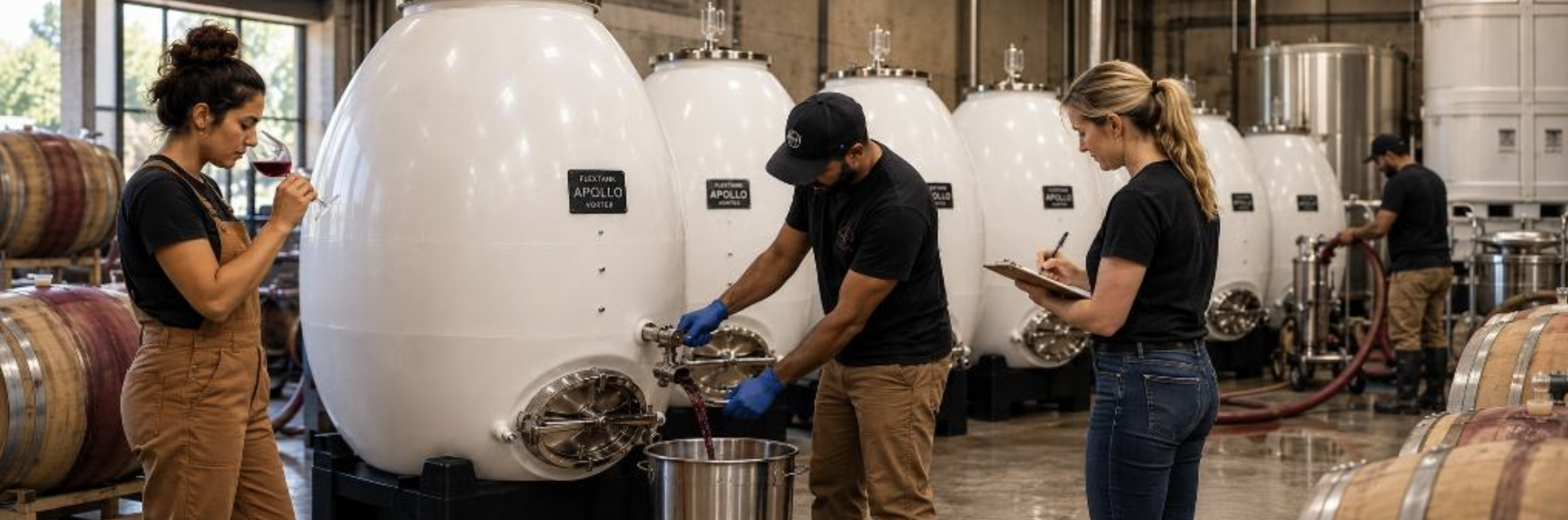
Vortex vessels use natural movement, oxygen permeability and egg-shaped geometry to support active fermentation and aroma development. Fermentation is a dynamic process. Juice or wine constantly changes as yeast consumes sugar, releases carbon dioxide and creates heat. Inside a conventional vessel, movement can slow and yeast can settle. Egg-shaped vessels create a different fermentation environment. Curved geometry promotes natural convection. Fermenting liquid circulates continuously. Yeast remains in suspension longer. Yeast stays in greater contact with the fermenting wine or cider throughout the vessel. Greater circulation and yeast contact keep fermentation active, strengthen aroma development and influence the character of the finished wine or cider. 1. The Egg Shape Keeps Fermentation Moving Egg-shaped vessels promote natural convection during fermentation. Heat and rising CO2 help move liquid through the vessel. Curved walls encourage continuous circulation and
00


Harvest season doesn’t leave much time for anything extra — long days, fast decisions, and nonstop cellar activity. That’s why Gusmer's Micro Essentials Complete-TR Nutrient was created to take the guesswork out of fermentation nutrition. Micro Essentials Complete-TR is the most advanced yeast nutrient on the market, incorporating the latest research in yeast nutrition and Time-Release Technology . The unique sustained-release system provides two tablets both providing complete supplementation while simulating incremental dosing. Micro Essentials Complete-TR Nutrient delivers a convenient, all-in-one solution that helps winemakers save time without compromising performance: Supports consistent yeast health and reduces the risk of sluggish or stuck fermentation Combination of two tablets, each with a distinct time-release profile and nutrient composition Both tablets are added together at onset of inoculation Direct addition, no hydration need
00


Troubleshooting Sluggish and Stuck Fermentations - Could You Get Back on Track Without a Restart? Several factors affect fermentation success, and sometimes a small adjustment can get things moving again without a full restart. Below, we outline common causes of problematic fermentations and next steps. TEMPERATURE STRESS Yeast perform best within a specific temperature range. Temperatures that are too high can stress or damage yeast, potentially requiring a restart. If the wine became too cold, try gradually warming it to about 70°F (21°C) and monitor for renewed fermentation activity. INADEQUATE MIXING Without adequate mixing, yeast can settle out of suspension and lose access to nutrients and sugar. This can slow fermentation or cause it to stall. Gentle mixing can help keep yeast active and fermentation moving. WINE MIGHT NEED DETOXIFICATION Stressed yeast can produce compounds that inhibit fermentation and contribute to sluggish or stuck fermentations. If this is the cause, RESKUE
00

Dear wine friends, Let me cut to the chase. Here are three key takeaways from Enolytics’ DTC SNAPSHOT for September: Still contracting, only slower. The industry is still contracting. What has shifted in pockets of the data is the rate, not the direction. Club members still rule! Losing a club member is meaningfully harder to replace than it was two years ago. Pressure-test both your club retention protocols ahead of October shipments, and your post-visit follow-up sequences. The good news? There IS some! September delivered something wineries have been asking for all year: more tasting room traffic. Read the SNAPSHOT for yourself → It’s free for all to access – headlines, WISE Triple Score, and deeper analysis. It’s part of Enolytics’ information-sharing, always to boost awareness and keep everyone up-to-date. Any ideas? Suggestions? Questions? We’d love to hear them. Drop us a line anytime at cathy@enolytics.com. Warm regards, Cathy Huyghe Co-founder & CEO, Enolytics
00


“Headless ecommerce” sounds complicated. The idea behind it is actually pretty simple: Your website and your ecommerce platform don’t have to be the same thing. Traditionally, changing ecommerce platforms could mean rebuilding or migrating your winery website along with it. That can turn what should be a technology decision into a much larger, slower and more expensive website project. Bottle360’s new headless commerce interface separates the two. Your winery can keep its existing website on WordPress, Wix, Squarespace, Shopify, Weebly, GoDaddy, BigCommerce or another platform that allows embedded code, while Bottle360 powers the store, cart, checkout, club management, allocations and product catalog behind it. And the store doesn’t have to look bolted on. Bottle360’s Styling Studio carries your fonts, colors, spacing, buttons and layout rules into the storefront so the shopping experience remains consistent with your brand. Maybe the best part, wineries can do this design themselves
10