
Filter Post Type
NewsVideoProductEventLink
Sort:
Most Recent
1–10 of 130
From disease-resistant grape varieties and biological pest management to vineyard technology, soil health, and labor solutions, the 2026 Sustainable Ag Expo is bringing a wide range of research and practical expertise to San Luis Obispo, November 10–11. The two-day program brings together university researchers, growers, and industry professionals to explore the challenges and opportunities shaping California agriculture. With 10.5 DPR hours, including 1 hour of Laws & Regulations, and 15 CCA hours approved, attendees can make progress toward continuing education requirements while gaining insights to take back to their operations. Day 1: New Varieties, Natural Solutions, and Smarter Vineyard Management Tuesday's program opens with a look at the future of winegrape growing. Dr. Michelle Moyer of Washington State University will kick off the Expo with Modern Grape Varieties and Their Role in Sustainable Farming, exploring how disease-resistant grape varieties could change approaches
00


Trends don’t happen in a vacuum… They reflect what’s happening with producers, consumers and the culture. In 2026, budgets are tighter. People are drinking differently. They’re looking for connection. And on the shelf, some of the most interesting brands are getting a little quirky. Here’s what we’re seeing at Sara Nelson Design. How Can I Cut Costs on my Packaging? This is the question we hear most often. Money is tight. And wine still needs to be moved out of the tank or barrel, bottled, labeled and sold. But our clients are looking for help in bringing production costs down. Sometimes that means doing without an embellishment. Sometimes it means changing vendors or reconsidering material choices. These days it often means asking AI to generate concepts rather than hiring a designer or forgoing foundational work when creating or refreshing a brand. Skipping those is not a great idea. There’s more to this than a generic pretty image. We see many producers doing away with capsules alto
00

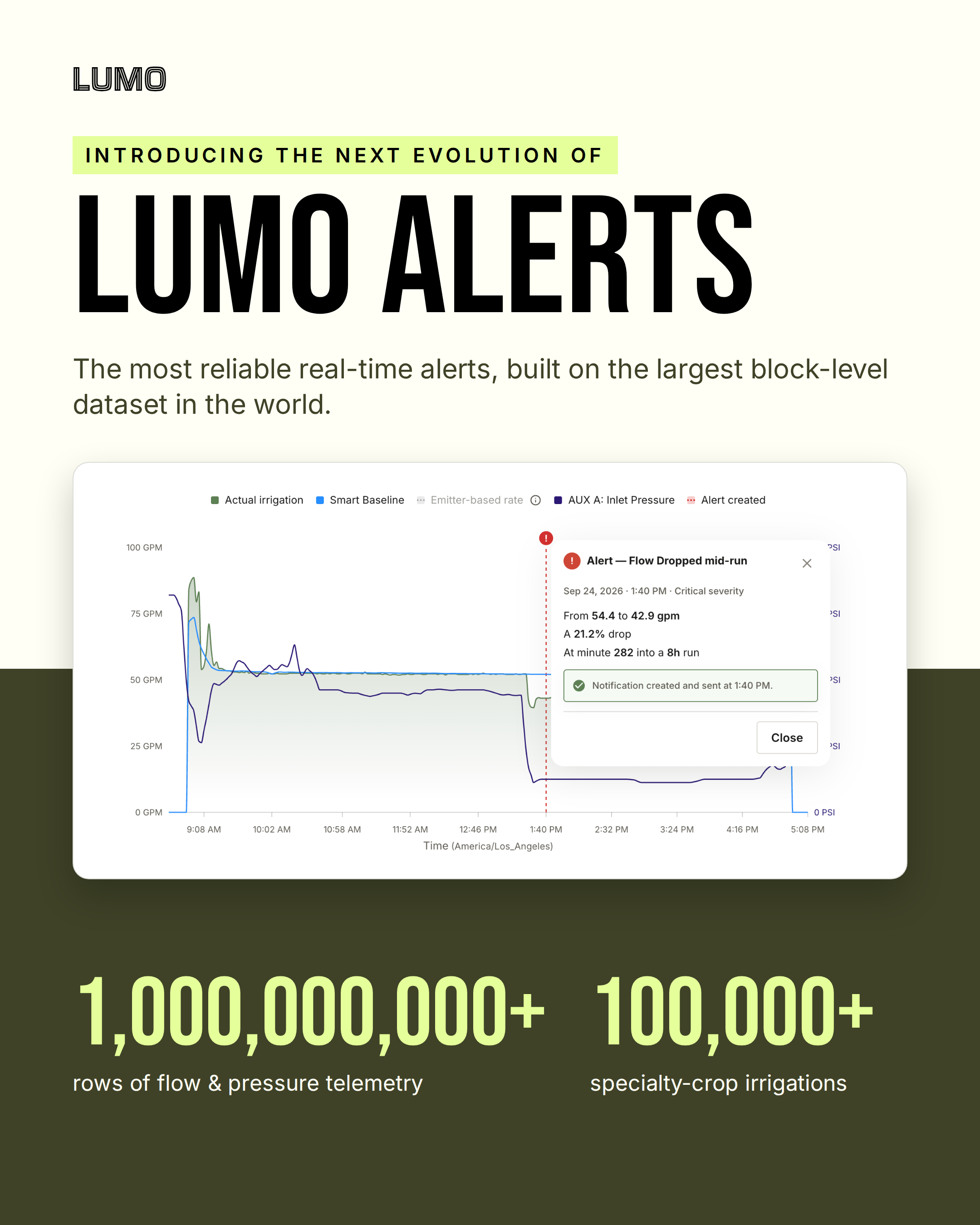
Lumo’s new fault detection engine is officially live, trained on the largest block-level dataset in the world, over a billion points of block-level flow and pressure data across over 100,000 irrigations. It's been completely rebuilt to deliver the most reliable alerts on the market today. Lumo’s been sending real-time alerts to customers from day one. That’s one of the major benefits of putting a flow meter in every valve. Catching leaks and clogs and pump performance issues has always been part of the vision of bringing accountability to irrigation automation. And we’ve caught thousands of problems that massively reduced risk for our growers. But making Lumo Alerts as accurate as possible is an ongoing project. It requires aggregating huge amounts of data to train AI and machine learning models, alongside ongoing collaboration with farmers in the field to build context and close the feedback loop. The goal is to miss no real issues and to send no false alarms. That’s how you
00
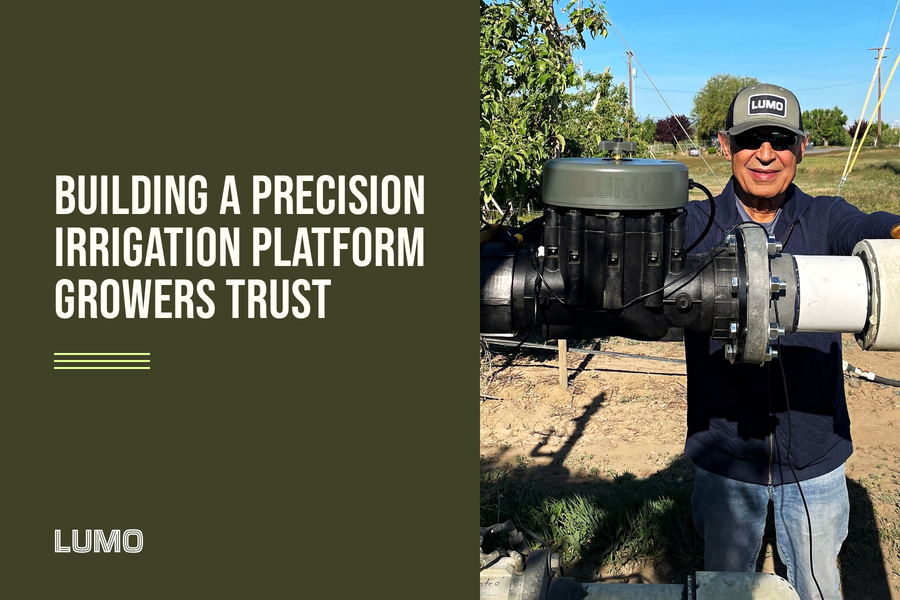
When Devon, Lumo’s CEO, broke a line and flooded his orchard, he searched everywhere for a solution. Went to stores. Asked neighbors. He even worked as an irrigator for a few weeks. Surely, he thought, someone must have already solved this. But instead he found unplugged controllers gathering dust. Systems that looked like they were from the 90s. Complaints about a lack of accountability. Bigger, more expensive versions of the exact same problems he had on his own farm. When Devon first approached Henry about his idea for Lumo, Henry, our Chief Inventor, was appalled by what he saw - an industry, a process, a system that seemed untouched by modern technology. No data. No visibility. No insight. He had spent decades engineering water solutions in other industries and couldn’t believe how little of that technology had crossed over into agriculture. Farmers were not being armed with the right data to dial in their precision and run their system with optimal p
00


Innovation in the wine industry rarely happens in isolation. More often, it happens when the people growing grapes, making wine, managing operations, selling products, and connecting with consumers work alongside the suppliers and service providers developing the tools and solutions they need to do those jobs better. That relationship is at the heart of the WINnovation Awards. For 14 years, Wine Industry Network has recognized the companies and individuals working behind the scenes to solve real industry challenges and drive meaningful progress across every segment of the wine business. Industry Challenges Inspire Industry Innovation Look across the wine industry and you'll find these partnerships everywhere. A vineyard manager searching for better insight into vine health, water use, or disease pressure works with an agtech company developing increasingly sophisticated monitoring and precision-farming technologies. A winemaker pursuing a particular style, improving consistency, or add
00


Peak shipping season extends far beyond the winter holidays. Summer vacations drive spikes in tourism-related products, while the back-to-school season creates a significant surge in school supplies and materials. Each peak period tests your warehouse’s limits differently, but the challenge remains the same — your operation must scale to meet sudden demand without compromising safety, speed or accuracy. Learn how to manage increased shipping demands by optimizing your physical infrastructure, integrating scalable technology and maintaining fleet flexibility when volumes spike. Optimize Your Warehouse Layout A prepared warehouse starts with the physical layout. Before adding new technology or equipment, you must first optimize your existing space. To handle peak shipping season effectively, you need to eliminate bottlenecks and maximize every square foot of storage capacity you already have. Auditing Your Current Layout for Peak-Season Bottlenecks To prevent peak-season disruptions, sy
00

July 8, 2026
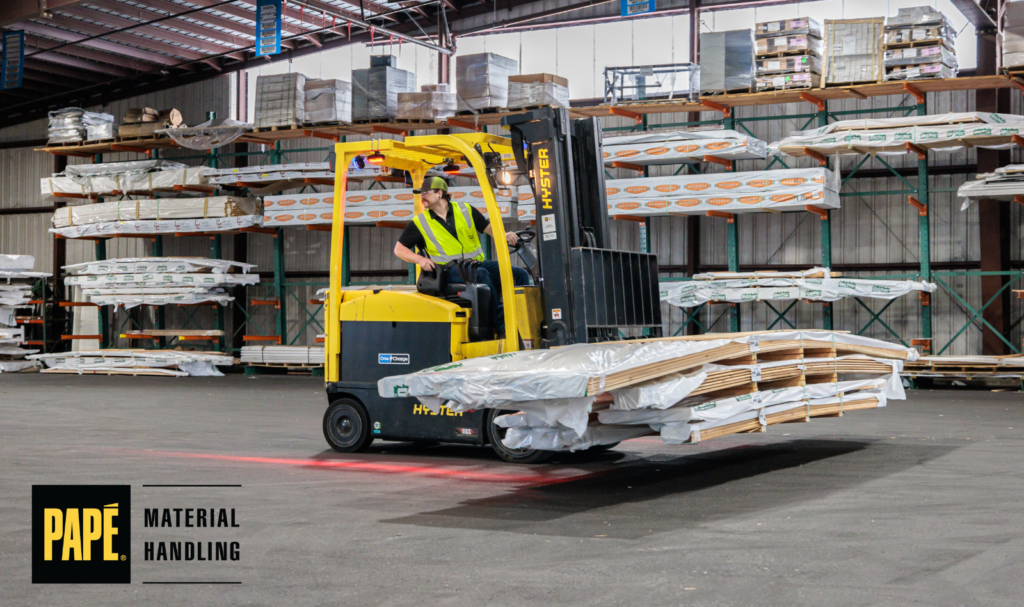
Maintenance expenses, rising labor costs, energy prices, and equipment utilization challenges continue to put pressure on warehouse and distribution operations. Forklifts are essential to productivity, but they can also be one of the largest ongoing expenses in a material handling operation. The good news is that reducing forklift operating costs does not have to mean sacrificing performance. Companies that implement cost-reduction strategies on forklift operations achieve an average 22% decrease in overall material handling expenses while maintaining or improving productivity metrics.* With the right maintenance strategy, equipment selection, operator training, fleet visibility, and rental flexibility, operations can lower costs while maintaining productivity and uptime. Here are five practical ways to reduce forklift operating costs without sacrificing performance. Implement Preventive Maintenance Programs One of the fastest ways to increase operating costs is through unexpected b
00
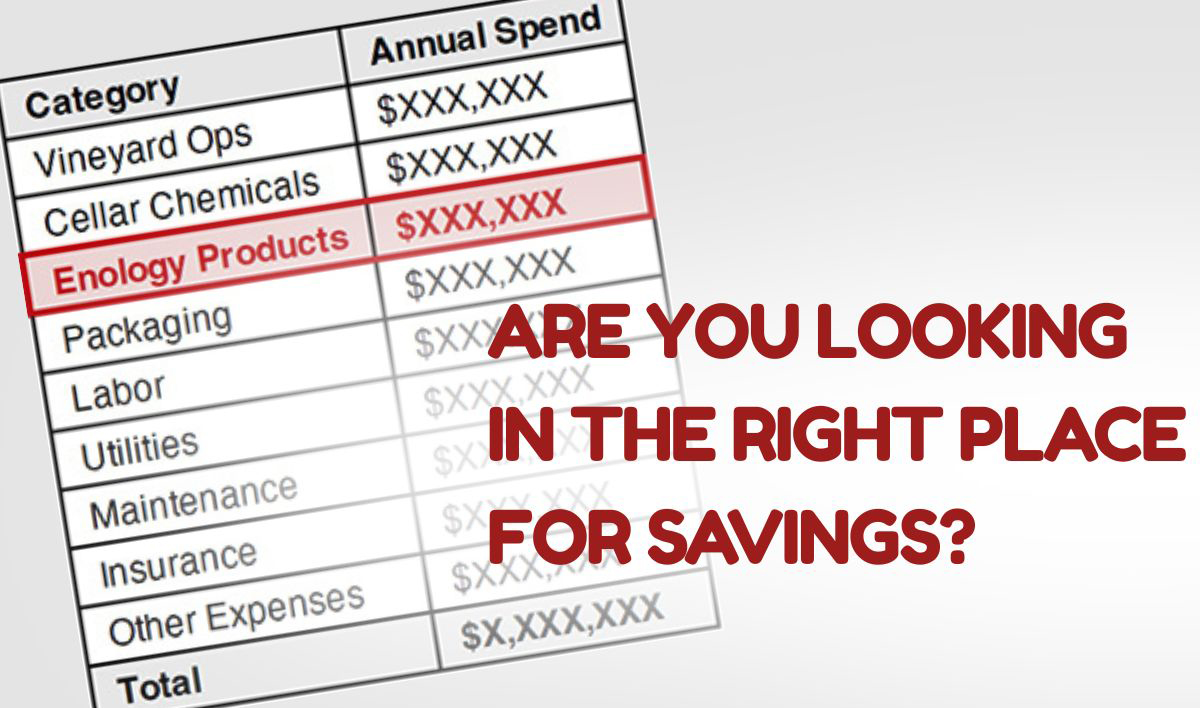
Today’s wineries are facing difficult decisions. Balancing wine quality, operational efficiency, and financial pressure has never been more challenging. That is why cost optimization conversations should go beyond simply negotiating commodity products like cellar chemicals. Sometimes the most meaningful opportunities come from taking a fresh look at long-standing Enology programs, sourcing strategies, and product selection. At ATPGroup, our goal is not to just sell products. It is to help wineries evaluate opportunities objectively, benchmark costs intelligently, and identify technically sound solutions that support both wine quality and financial sustainability. That process may involve: · Reviewing existing Enology programs and product selection · Evaluating technically comparable alternatives · Identifying alternative sourcing opportunities ·
00

Supply Chain Update | Summer 2026 Navigating an Uncertain Global Supply Chain For the wine industry, supply chain planning continues to require far more than simply placing purchase orders. Trade policy, geopolitical events, freight markets, and domestic manufacturing capacity are all changing rapidly—and those changes directly impact cost, availability, and lead times. At West Coast Glass & Packaging Group, our role is to help wineries stay ahead of those changes so they can remain focused on making and selling great wine. Trade Policy Continues to Evolve One of the biggest developments this summer is the U.S. Trade Representative's proposed Section 301 tariff actions targeting imports over forced labor enforcement concerns. While implementation is still under review, the proposals have already caused importers to reassess sourcing strategies and inventory planning. For wineries, this reinforces the importance of working with suppliers that understand both domestic and internation
00


Event Type: Webinar
Location: Bellevue, WA
Date: 7/2/2026 — 10:00 AM to 11:00 AM
With rising labor pressures and evolving guest expectations, wineries are being challenged to do more with less — without losing the personal touch that defines hospitality. This summit explores how smart technology, operational alignment, and empowered teams can work together to create memorable customer experiences while improving efficiency and staff retention.
00