
Filter Post Type
NewsVideoProductEventLink
Sort:
Most Recent
1–10 of 69
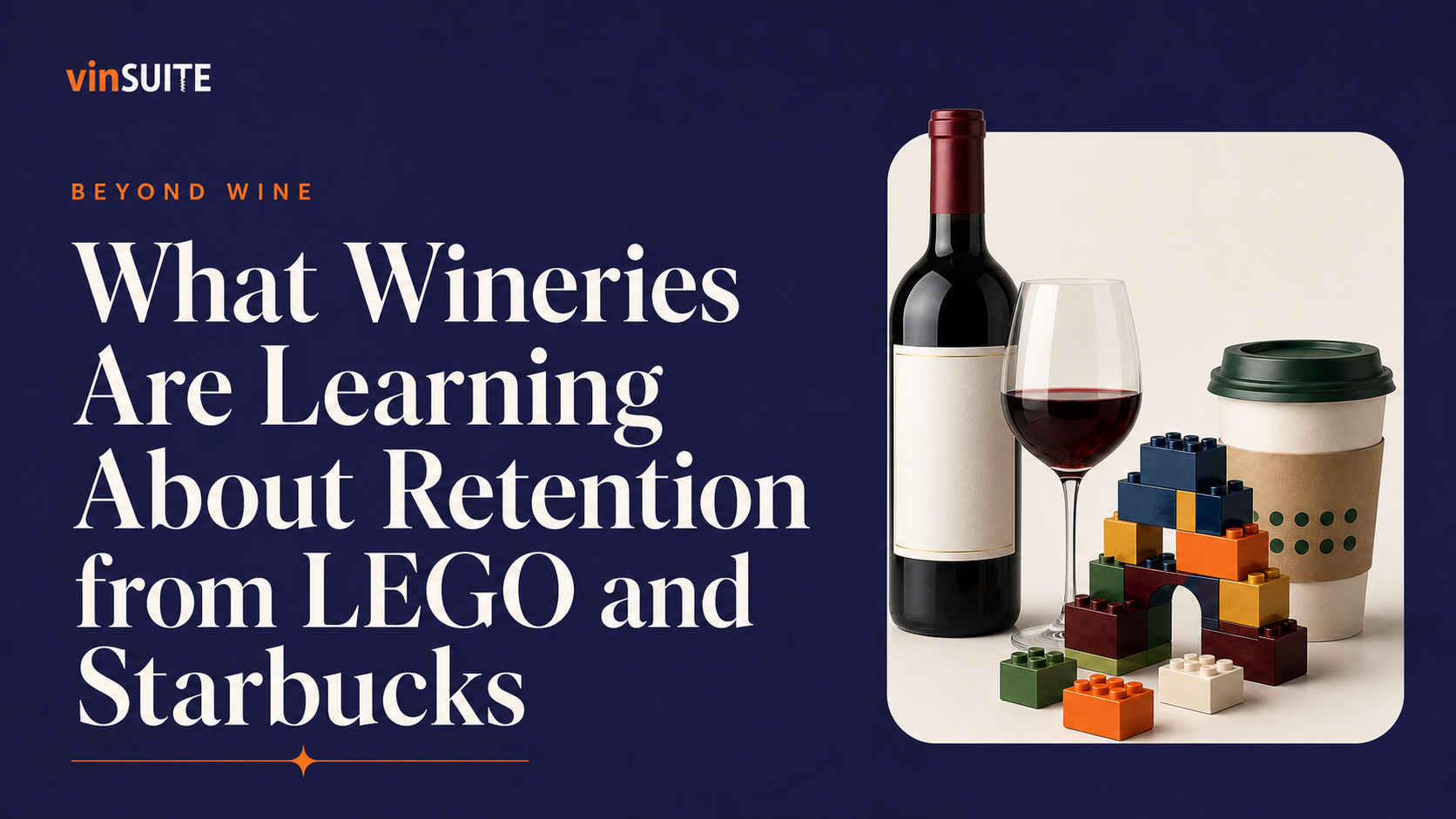
What Wineries Are Learning About Retention from LEGO and Starbucks Every industry has moments where an outside perspective changes how it operates. Restaurants borrowed reservations software from airlines. Fitness studios borrowed subscription models from streaming platforms. Hotels borrowed loyalty tiers from credit card companies. The wine industry is due for a similar borrow. At the recent Beyond Wine webinar with WISE Academy, Jimmy Wu and Liz Mercer walked through seven customer growth strategies that high-performing industries have quietly mastered. Three of those stood out as immediately usable for winery DTC teams, and none of them require new technology or a bigger budget. Former members are alumni, not ex-customers The sharpest moment from the session was Liz Mercer's reframe of how wineries treat cancellations. "Ex-boyfriend is a negative connotation," she said. "Alumni is a positive one." Most wineries treat a cancelled member like an ex. Paperwork requirements. Charge-back
00

July 22, 2026
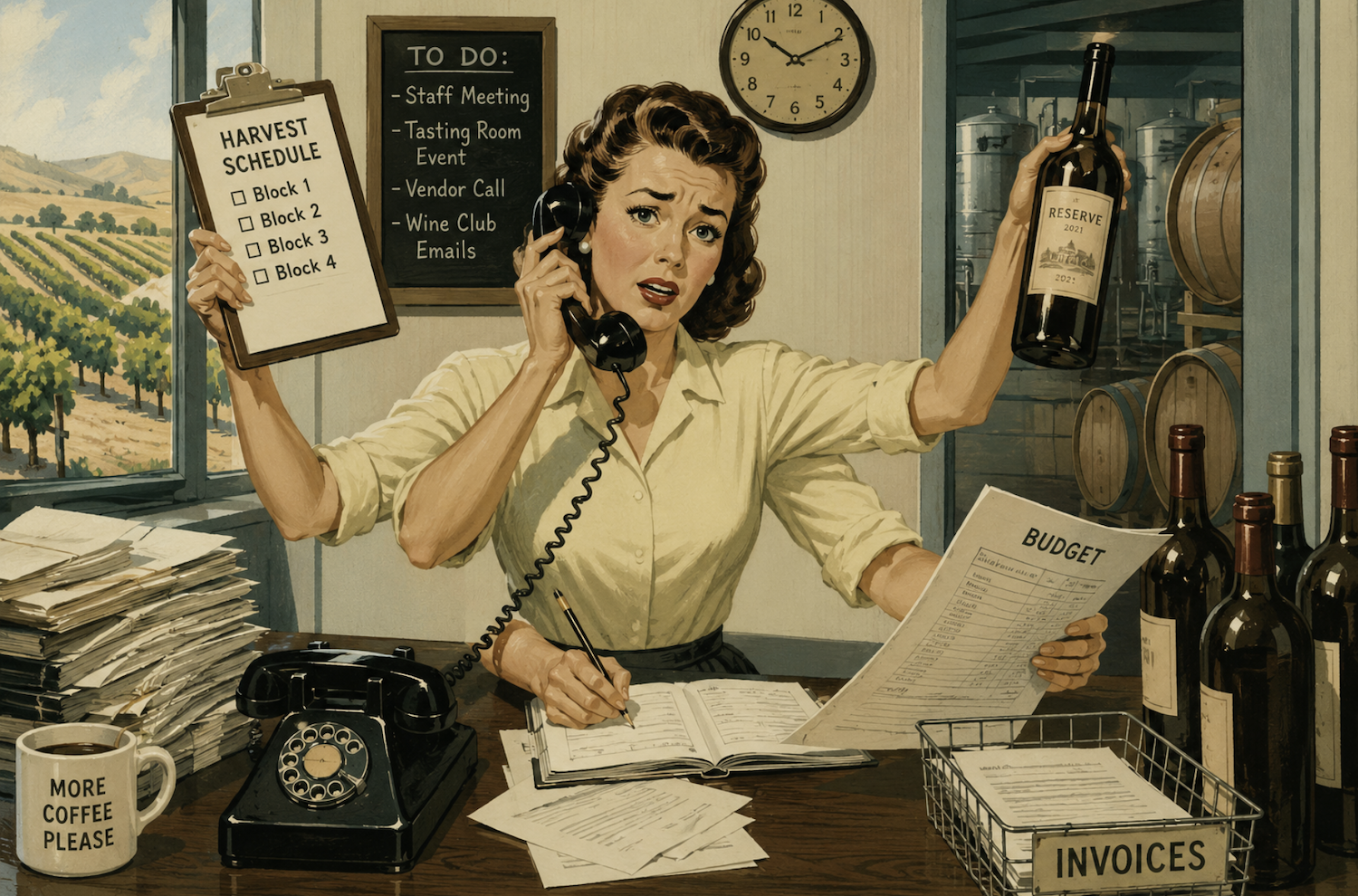
As wineries operate with leaner teams, many employees are taking on broader roles. Recognizing that change does not require ignoring the financial pressure employers are facing. The wine industry is asking many businesses to do more with less. Sales remain under pressure, operating costs have climbed, and wineries are making difficult decisions about staffing, production, facilities, and spending. Silicon Valley Bank’s 2026 State of the U.S. Wine Industry Report found that roughly half of wineries characterized 2025 negatively, although about one-third reported a positive year—an important reminder that conditions are difficult, but not identical, across the industry. Recent winery closures, consolidations, and layoffs have made those pressures especially visible. When positions are eliminated or left unfilled, the work attached to them does not always disappear. It is often redistributed among the people who remain. A marketing employee may inherit wine club communications and event
00


By Jim Trezise, President of WineAmerica The National Association of American Wineries™ Romance vs. Reality It’s not surprising that people dream of getting into the wine business. Just think of it: Sunrise caressing the vines. Perfect weather again. A leisurely coffee while surveying the pristine landscape. A morning stroll through exquisitely manicured vineyards. A smoothly functioning wine cellar. A traffic jam of consumers eager to visit the tasting room. Multiple FedEx trucks waiting for wine club shipments. Ending each day counting the hefty stash. Celebrating with a dinner pairing your world-class wines with world-class food on your terrace overlooking paradise. Sleeping like a baby. Yeah, right! After spending their life savings and taking out a massive loan, new winery owners often discover a very different reality. Clouds mean rain when the grapes need to stay dry. Coffee comes from a drive-thru. License applications and tax forms cover the desk. Labor shortages mean critica
00
July 2, 2026

Your Tasting Room Is Your #1 Club Acquisition Channel. Here's What Top Wineries Do Differently.
A guest walks into your tasting room. They're already engaged. They're already drinking your wine. They're already emotionally invested in the experience.
And then they leave without joining your club.
If that sounds familiar, you're not alone. SVB's Direct-to-Consumer Wine Survey benchmarks conversion rates at 8 to 10% for top-performing tasting rooms, but the average is significantly lower. That means most wineries are leaving signups on the table at the exact moment guests are most ready to say yes.
With tasting room visitation down roughly 8% year over year and wine clubs now accounting for 39% of total DTC sales, the pressure to convert visitors into members has never been higher. The good news is that the wineries growing their clubs aren't doing anything mysterious. They're executing three things consistently. Here's what to focus on.
1. Make the ask easy in the moment
T
00


Event Type: Webinar
Location: Webinar
Date: 6/9/2026 — 9:00 AM to 10:30 AM
Please join us on Tuesday, June 9 for a live, virtual event to review findings and predictions from our 2026 Direct-to-Consumer Report. This year's survey, based on responses from 450 wineries, confirms that the DtC wine channel is navigating a period of pronounced bifurcation. While select brands report meaningful year-over-year improvement, others report declining visitation, lower average transaction values, accelerating wine club attrition and a growing inventory surplus. Our panel will examine those dynamics directly, benchmark the data and discuss the strategies that are making a measurable difference. A few of the topics we plan to address are: Tasting fee trends and flexibility Wine club performance Structural oversupply Where opportunity persists Our exclusive panel of wine industry innovators will include: Ed Feuchuk – General Manager, Farm Collective Napa Valley Barbara Gorder – President, Undisclosed Location & Managing Partner, DTC Wine Symposium Rob McMillan –
00

May 20, 2026

The Shift in Drinking Habits Is Here Something structural has changed in how Americans relate to alcohol, and if you've been watching your DTC numbers, you've probably felt it before you could name it. Gallup's 2023 consumption survey found that the share of U.S. adults who drink has dropped to 62%, the lowest level since 1948. The IWSR has documented consecutive years of volume decline in still wine in the U.S. market. The casual, habitual wine buyer who grabs a familiar label on autopilot and treats wine as a grocery category is drinking less or shifting away entirely. Volume-driven marketing built around that consumer is chasing a contracting audience. That sounds threatening. It isn't, if you're willing to look at who is still buying. The consumer who remains is choosing quality over quantity, spending more per bottle precisely because they're buying fewer of them, and actively looking for brands worth their loyalty. The wineries that adapt their marketing to speak this language h
00
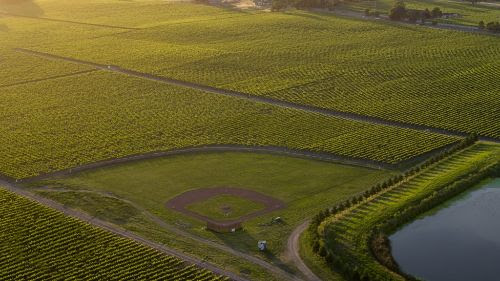
In the film Field of Dreams, a quiet voice whispers a simple promise: “If you build it, he will come.” The idea was never really about baseball. It was about creating something meaningful and trusting that the right people would be drawn to it. The wine industry is standing at a similar crossroads. For decades, wineries have operated on a simple assumption: make great wine, tell a compelling story, and consumers will come. Craft the product. Earn the accolades. Build the brand. But the next generation of wine consumers is telling us something different. Gen Z, now entering legal drinking age and shaping the future of hospitality, is not primarily seeking bottles to collect or scores to chase. Many say they are looking for something more fundamental: connection, community, and places where they can gather with friends away from the constant pull of the digital world. In other words, they are looking for a third space. For winery owners, executives, and Direct-to-Consumer lea
00
February 10, 2026

After 30 years of moving up and to the right, the American wine industry hit a wall. Not a temporary slowdown or a soft patch. A structural shift that requires a fundamentally different marketing playbook. 2025 was the reality check. 2026 is the year wineries either adapt or watch their customer base age out beneath them. The data is now unambiguous: wine sales dropped approximately 6% in 2024, marking the steepest decline in decades according to SipSource industry data. More troubling than the headline number is what's driving it. This isn't a recession blip or a bad vintage. It's a fundamental realignment of who drinks wine, how they buy it, and what they expect from the brands they choose. Here are the five trends reshaping the US wine market and what they mean for your brand's survival. The Demographic Disruption The wine industry built its growth on one generation: Baby Boomers. That generation is now aging out. The Wine Market Council's 2025 U.S. Consumer Ben
00
January 20, 2026

The wineries with the most loyal wine clubs aren't the ones with the best discounts. They're the ones with the strongest emotional identity. This will sound counterintuitive to anyone who's ever tried to stem club churn by sweetening the deal with free shipping or an extra bottle. But the data tells a different story. Companies with strong emotional connections to customers outperform competitors' sales growth by 85%. Not 8.5%. Eighty-five percent. The question isn't whether emotional connection matters. It's how you build one. Enter brand archetypes: a framework rooted in Jungian psychology that helps wineries create the kind of deep, identity-based loyalty that discounts can never buy. When wineries align their story, experience, and messaging with a core archetype, wine club loyalty stops being a battle against churn and becomes a natural expression of who they are. What Are Brand Archetypes? (And Why They Work in the Wine Industry) Brand archetypes are 1
00
January 16, 2026
The 2026 State of the U.S. Wine Industry Report, published by Silicon Valley Bank and authored by Rob McMillan, provides a comprehensive, data-driven assessment of current conditions in the U.S. wine market. Built on more than 25 years of industry research, the report combines results from SVB’s annual winery survey, its Direct-to-Consumer (DTC) survey, demographic and cohort consumption modeling, and a wide range of third-party wholesale, retail, and population datasets. The conclusion is clear: while the industry continues to face structural headwinds, wineries are not experiencing these conditions equally. A widening performance gap has emerged between those adapting to changing demand and those struggling to do so. 2025 Performance: A Difficult Year for Many By nearly every measure, 2025 was a challenging year for the U.S. wine industry. Roughly half of the surveyed wineries rated the year negatively, citing slowing demand, rising costs, margin pressure, and inventory ch
00