
Filter Post Type
NewsVideoProductEventLink
Sort:
Most Recent
1–10 of 20

Key Takeaways A winery is legally two businesses at once: an agricultural employer and a licensed wine producer, and most HR platforms are only built to handle one. Job title doesn’t determine treatment. Duties do. The same employee can move between agricultural and non-agricultural work within a single week. Crush season exposes problems built months earlier, from rushed seasonal hiring to unverified worker classifications. A structured self-audit beats reconstructing records during a DOL, TTB, or state inquiry. Würk’s tools help wineries stay prepared year-round. A winery’s obligations touch more regulatory categories than almost any other small business: agricultural labor law, guest-facing wage rules, wine-production rules, multi-state payroll withholding, and immigration regulations, often within a single organizational chart. This guide walks through a practical internal-review framework for wineries and vineyards with 10 to 500 employees. It’s operational guidance, not advic
00
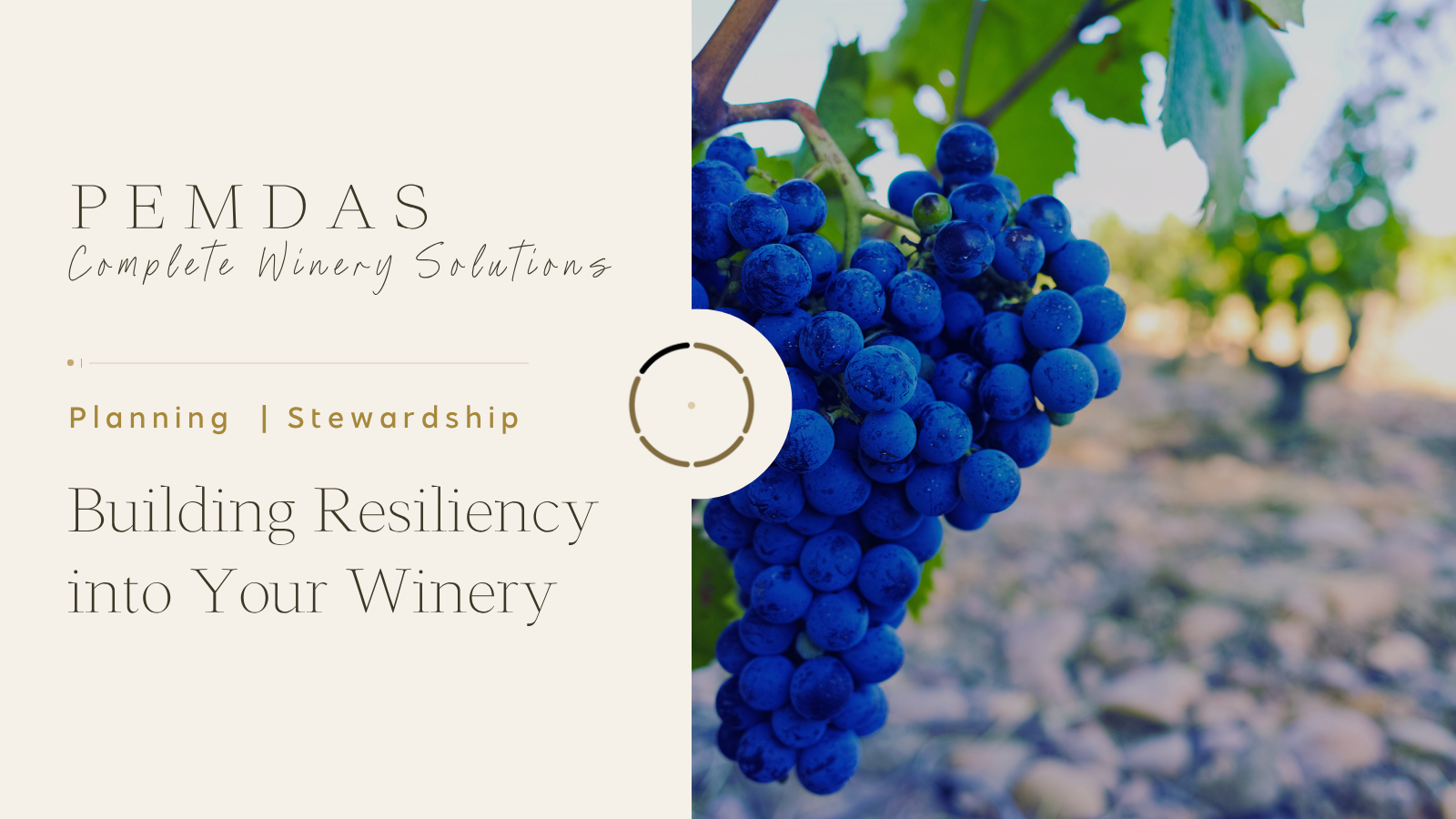
If you've followed any recent news about the wine industry, you know it's going through a rough stretch. Wineries are closing, vineyards are coming out, and visitor traffic is down. On top of that, the weather keeps getting harder to predict. The wine industry will come out the other side of this period, but it will look different. The wineries that make it through will be the ones that built resiliency into their business. Resiliency isn't something that just happens. It's a set of strategic decisions about how you plant, how you sell, how you staff, and how you pay for what you need. That choice is strategic, and it comes with a cost: thought, planning, and often working a different way. When the market slows, these are the decisions that allow resilient wineries to thrive. The Two Stages to Build Resiliency Resiliency gets built in two stages. The planning stage. This is where you can make every decision with minimal additional cost. That covers everything from where you'll so
00

May 26, 2026

Project Overview TM Process & Controls, Inc. executed large-scale mechanical, electrical, and automation modifications across multiple fermentation tanks to support micro-oxygenation, automated pump-over capability, and upgraded pump systems. The project included installation of new tank ports, piping, sensors, wiring, VFD connections, and structural supports, along with calibration, testing, and commissioning services. Work was carefully sequenced to minimize operational disruption while upgrading critical production capabilities. The Challenge The facility required enhanced process control, product quality monitoring, and automation capabilities across a large number of tanks to support modern winemaking techniques. Existing infrastructure lacked standardized instrumentation, automated pump-over functionality, and integration with updated process equipment. The Solution TMPC implemented coordinated mechanical retrofits, electrical installations, and automation integration across
00
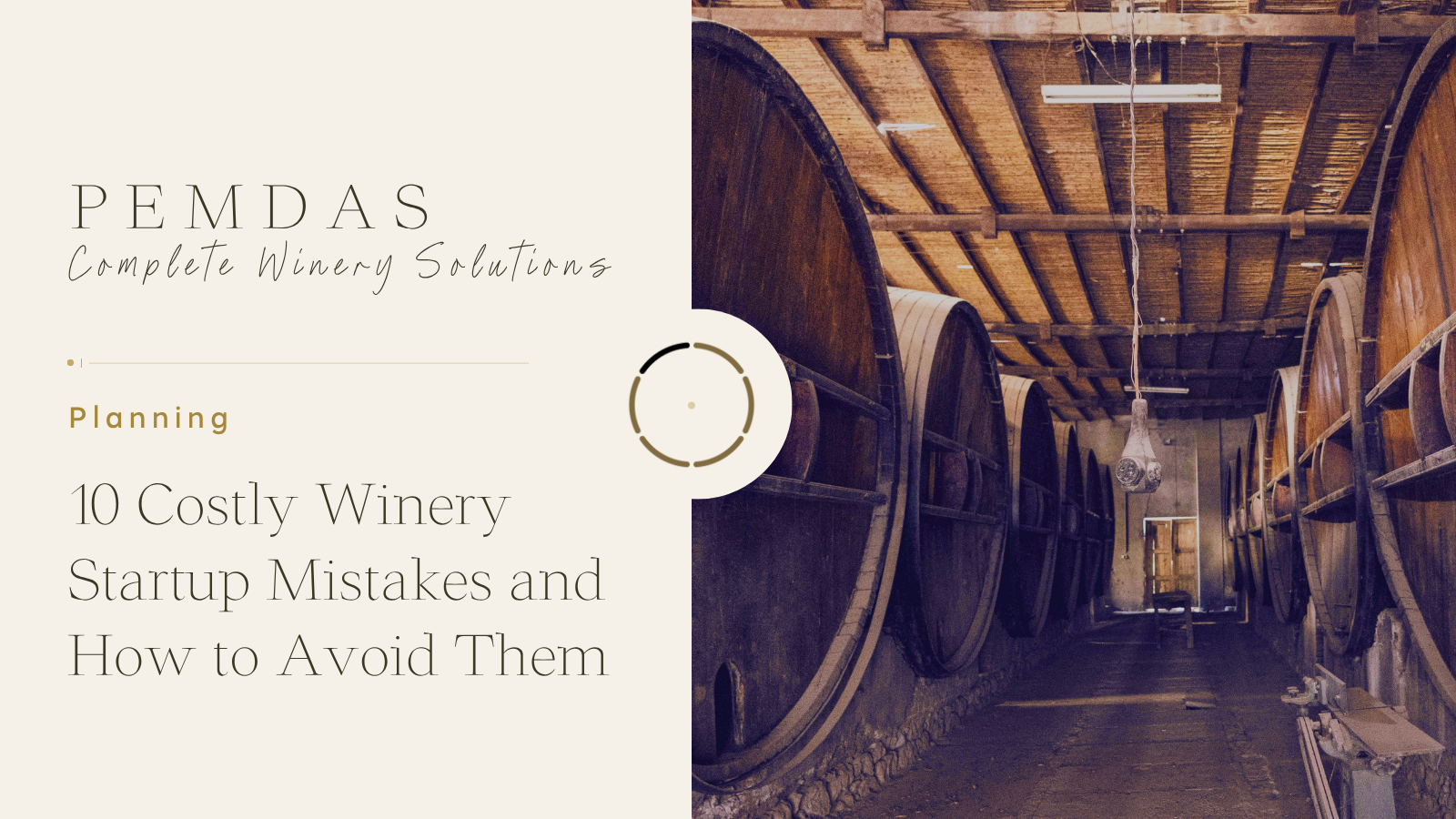
Most winery startup mistakes are preventable. After working with startup founders and existing owners across the industry, the same ten missteps appear again and again — mistakes that don’t just cost money, but can undermine a winery’s potential before it ever opens its doors. Here is what they are, why they happen, and how an integrated approach prevents them. MISTAKE 01: STARTING WITH THE WINE Passion for wine is why most founders enter this business. But a winery is a business first — one built on an integrated consumer experience. Every touchpoint, from your website and label to your price point and location, must work as a cohesive, consistent unit. Wine is one ingredient in that system, not the starting point. MISTAKE 02: NOT HAVING A CLEAR, WRITTEN VISION A vision statement is not a formality. It is the foundation for every consequential business decision you will make — your location, customer experience, pricing, and brand identity. Wineries that struggle financially almost a
00

February 24, 2026

The word “brand” is notoriously difficult to define in marketing. If we were talking about a ranch brand—the kind seared onto livestock to signify ownership—that’s easy to understand. But in marketing, a brand is not a physical thing. It’s a symbolic construct. It’s not the label on the bottle or the winery’s logo or even the product itself. Rather, it’s the entire perception a consumer holds in their mind about your company, your wine, your people, and everything you collectively represent. A brand is a conceptual identity that differentiates you from your competitors. It can be shaped by your name, your origin story, the design of your label, the personalities involved in your winery, your tasting room experience, your packaging, your email tone, your partnerships, or even how you respond to a customer complaint. All these elements come together to form the intangible yet powerful idea of your brand. It is, quite literally, eve
00
September 10, 2025

Customer Privately owned winery and vineyard operation Industry Beverage – Wine Production Services Provided Mechanical installation and utility tie-ins; Structural support fabrication and installation; Piping for compressed air, cold water, and product transfer; Equipment installation and startup support; P&IDs and equipment documentation Overview TM Process & Controls, Inc. (TMPC) was contracted to provide mechanical services for the installation of a GEA CF 4000-71-35 decanter at a family-owned winery in Acampo, CA. TMPC’s scope included setting the decanter, installing associated utility piping, integrating GEA components, and fabricating both wall-mounted and floor-mounted supports. The decanter was positioned across indoor and outdoor utility areas with connections made for cold water, compressed air, and product flow. Problem The winery required a reliable installation of a high-capacity decanter system during peak operations, with precise integration i
00

July 9, 2025

Wine distribution in California just got a whole lot smarter. At LibDib, we’ve always believed that modern wineries deserve modern solutions. That’s why we’re excited to roll out a new Hybrid Distribution Model—built specifically for today’s wine brands that want flexibility, transparency, and full control over their path to market. This isn’t your typical one-size-fits-all distribution model. It’s à la carte distribution designed for how wineries operate now—and how they want to grow. What Is Hybrid Distribution? LibDib’s Hybrid Model blends the best of full-service distribution with the freedom to manage your own sales. That means: You control the relationships with your accounts (or bring your own rep!) LibDib handles all three-tier compliance, invoicing, payments, and reporting Access to warehousing, delivery, and merchandising only if and when you need it Live sales tracking, buyer insights, and inventory visibility v
00


Get Your Cooling System Ready for the Season Ahead As spring arrives and vineyard life begins to bloom again, it’s the perfect time to wake your chiller from winter hibernation. A smooth startup now means reliable cooling when you need it most — whether you’re cold-soaking rosé lots or prepping for bottling. Below is a helpful step-by-step guide to safely and efficiently hook up and prepare your chiller for winery use this season: Spring Chiller Startup Checklist 1. Clean the Condenser Coils Spring debris like cottonwood, pollen, and leaves can restrict airflow. Use a soft brush or coil-safe cleaner to remove buildup. For heavy grime, a gentle rinse with water may help — just avoid damaging the fins. Straighten bent fins with a fin comb if needed. 2. Remove Winter Protection Take off tarps, overhangs, or insulation used for winter protection. Ensure there’s no trapped moisture, which can lead to rust or mold. 3. Inspect Power & Electrical Conne
00

With over 50 years of collective experience in the refrigeration industry, G&D’s Chiller expertise goes far beyond the design and implementation of cutting-edge glycol chilling systems. Many of the leading wineries, here in the USA and around the world, turn to us for innovative Glycol Chillers. G&D has paved the way when it comes to portable glycol chilling. Our sturdy and practical design allows the user to utilize the same robust chiller on a portable platform. Come to our booth 1623 to see our portable Fire & Ice we brought to the show. G&D Chillers, Inc. Unified Symposium Booth: 1623 G&D CHILLERS UNDERSTANDS THE NEEDS OF THE WINE INDUSTRY AND WINERY CHILLING IS ONE OF OUR MAIN PRODUCT APPLICATIONS. We are a dedicated provider of Standard Winery Chillers, as well as Custom Chilling Units, for Wineries throughout the world. With G&D Engineered Winery Chillers installed in over 2,900 Wineries, we have the experience and the know-how to manufacture units
00

November 25, 2024

Afternoon Brief: Sugarloaf Custom Winery Seeks Bankruptcy Protection as $13 Million Loan in Default
Sugarloaf Wine Co. southeast of Santa Rosa filed for Chapter 11 reorganization as loan on winery goes into foreclosure. Founder says hundreds of thousands of dollars from the winery and a separate vineyard operation went to fund a fintech startup...
Sugarloaf Wine Co.Come Over OctoberWineAmericaFish Friendly FarmingTaste of SonomaSonoma County VintnersKendall-Jackson Wine EstatesCab Franc DayBrecon EstateMid.Point WineryPianetta WineryBrooks Note WineryWashington State Grape SocietyConstellation BrandsBarbagali VineyardMount Majura VineyardMount Langi GhiranWine AustraliaAustralian Society of Viticulture & OenologyRootlingsKunde EstatePSPS PowerOmnia TechnologiesWine Compliance AllianceTM Process & ControlsLedson Winery & VineyardsBaghera WinesCloud SellersSpraying Systems Co.VinoshipperAmcor Capsules
00