


Trenolin® FastFlow is a specialized enzyme designed for pressing, clarification, and filtration, particularly effective for intensive pectin degradation in pectin-rich grape varieties. Its performance excels even at low temperatures of 8°C to 10°C, enhancing filtration at every stage.
For more information about Trenolin FastFlow, visit: https://lnkd.in/ezzzQhQW.

- For traditional bottle fermentation of high‐quality wines
- Aroma profile blackcurrant and chocolate notes
- Short lag phase, quick onset of fermentation
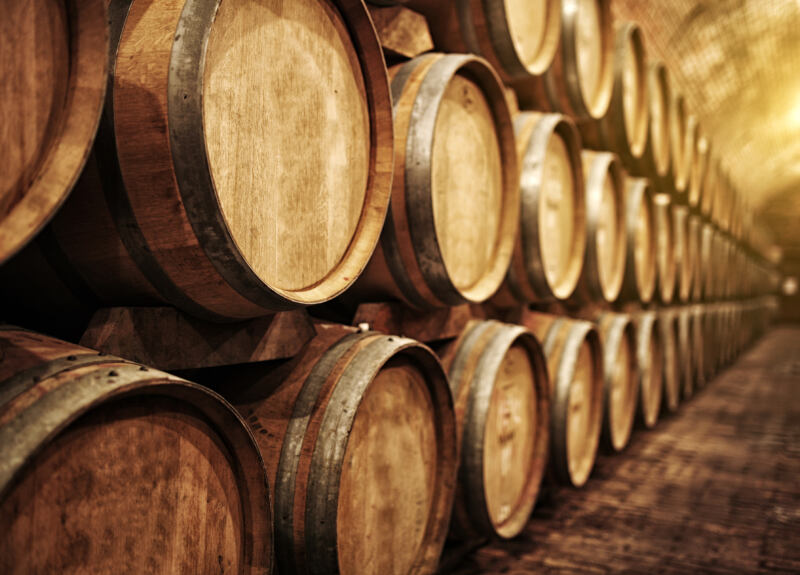
Do you want to exploit the potential of your barrels to the full? We make it possible!
The majority of our customers is already familiar with our Tannivin® range of tannins produced specifically for beverage production. They are available in an impressive assortment of woods and different degrees of toasting, so the popular range offers a possible solution for any wine production challenge.
Our latest addition is Tannivin® Intense, a toasted tannin from American oak. We were repeatedly overtaken by the desire for a tannin that could be used to stabilise the wine and protect it from oxidation, especially towards the end of maturation and before bottling. Of course we wanted to fulfil this desire and, as a result, would like to introduce our new product, Tannivin® Intense.
Older, pre-used barrels can be refreshed and therefore used for longer thanks to the complex toasted notes reminiscent of freshly toasted barrels. The reductive potential has also been increased, supporting the wines’ stabilisation in the barrel. The natural buffer quality is rejuvenated and the wines protected from oxidation. The unusually high lactone content assists the wines’ maturation. The lactones in the wooden barrel are quickly absorbed by the wine. Tannivin® Intense delivers the typical lactone profile reminiscent of coconut and vanilla. The result is wines with an elegant depth and balanced style.
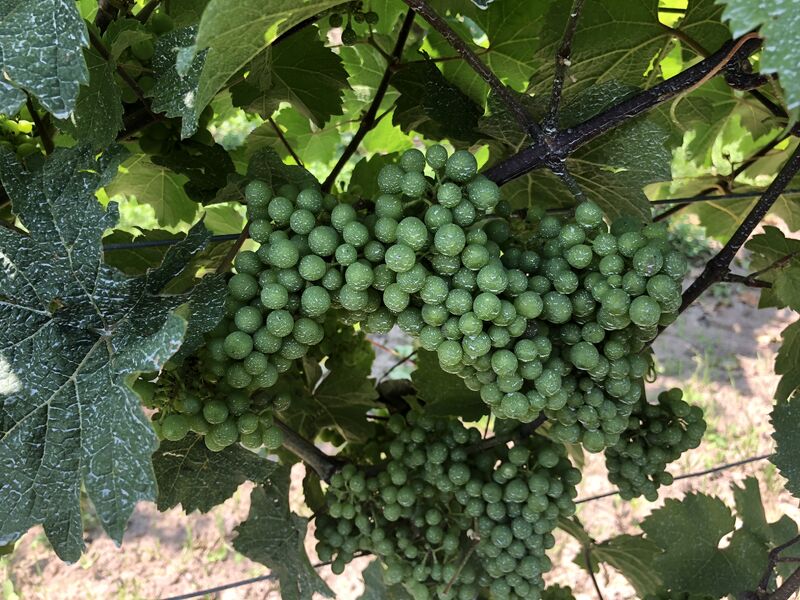
The mostly very early bud break in 2024 is still ahead of last year in many regions. Temperatures are above average and the sun is out – resulting in a high UV influx even at this time of the year. Unlike 2023, however, there is more water available in the soil this year.
This water needs to be conserved in the event of a hot, dry growing season. This will give the vines what they need to fend off hydric stress, sunburn and yield loss.
GrapeGuard® can be easily applied to the entire foliage and can be flexibly adapted to the specific conditions of each year and each vineyard.
Here we show you what GrapeGuard® can do!
https://erbsloeh.com/2024/05/15/grapeguard/
Having hybrid or fungus-resistant varieties in one’s own range is increasingly important. Their reduced need for pesticides means they save valuable time and are more economic to cultivate. They enhance the product offering and arouse customers’ curiosity.
But hybrids have a completely different pectin and phenol structure, often have a different aroma spectrum and therefore need winemaking procedures specific to them. With the right know-how the new varieties have outstanding potential to be anything from easy drinking to top wines.
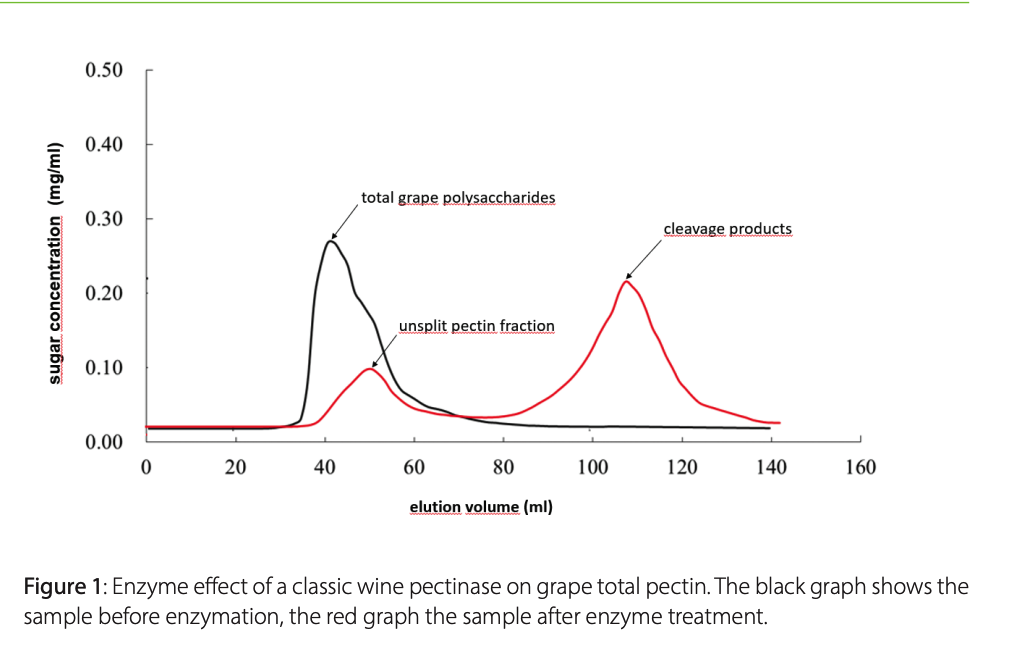
Not only do hybrid varieties usually have a tougher skin, they also have a more complex pectin structure that is comparable with familiar American grapes. This tough, complex pectin structure is due to the increased presence of what are known as “hairy regions”. In this case the D-galacturonic acid chain of which pectin is composed also has side chains of unfermentable sugars, such as araban and rhamnogalacturonan. Conventional pectinases cannot degrade these, which impedes process stages such as pressing, clarification and filtration. It is therefore necessary to use an enzyme with corresponding side activity to break down the mash and for subsequent clarification. Without such an enzyme you do not have the right key to unlock the necessary process stages. Enzyme formulations such as Trenolin® FastFlow DF, which due to its side activities has been used successfully for years with tough-skinned, difficult grape varieties such as Silvaner, can give full rein to its strengths here, for breaking down the mash, for pectin degradation, and to facilitate clarification.
Improved Filtration for Hybrid Varieties_Orchard_and_Wine_2022.pdf

FermoBent® PORE-TEC is a highly effective, granulated bentonite for co-fermentation with extremely low iron solubility.
It is added to the tank before or during fermentation and is racked off with the yeast lees at the end of fermentation.
Therefore, protein stability can be achieved right after fermentation.

By Michael Sobe and Sebastian Bausinger
Protein precipitation is a major problem, mainly in white and rosé wines. This is caused by the aggregation of proteins. In the process the proteins dissolved in the wine group together to form precipitates or floccules. Protein aggregation is affected by changing conditions, such as the pH value, storage temperature and phenolic compounds (Claus et al. 2014).
Since the International Organisation of Wine and Wine (OIV) approved aspergillopepsin I for winemaking, for the first time the user has a reliable and reasonably priced enzymatic method of protein stabilisation at their disposal. As a result, use of aspergillopepsin I in combination with heat treatment and subsequent filtration to remove turbidity-forming proteins from white, rosé and sparkling wines has been included in the OIV Codex. Adoption into EU law took place as a result of amendment of Regulation EU 2019/934 on 27 October 2021.
Depending on the conditions during harvest time it is necessary to perform must treatment as soon as possible. Preserving the primary aromas is of paramount importance. If the grapes have been damaged by Botrytis, Peronospora (Oidium), sunburn or hail, eliminating the negative effects has proved advantageous. Especially organoleptic quality can be improved significantly (Fig.1 ). Treatment of young wine usually leads to increased cost and labor and may affect wine quality negatively. CarboTec GE offers the optimum preventive treatment before alcoholic fermentation.