
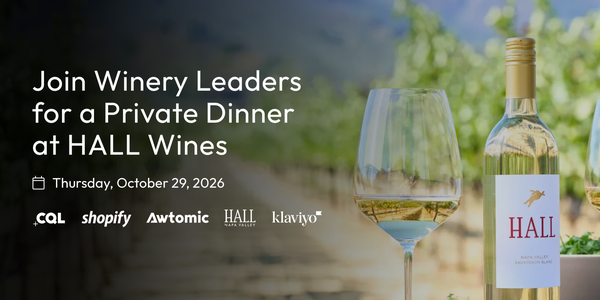
When your wine club, POS, and ecommerce systems don't work together, it's harder to understand customers, grow memberships, and drive revenue. Join us at HALL Wines on October 29 for a private winery leadership dinner on how connected technology improves customer experiences and growth. This exclusive event will feature wine tasting, a private tour, dinner, and a candid conversation with the HALL team about unifying their tasting rooms, club, and online sales on Shopify.
Learn more about this event and RSVP!
Wineries have spent decades perfecting the in-person customer experience. But the way consumers shop has changed dramatically, and the digital experience hasn’t always kept pace.
Customers expect fast websites, easy checkout, personalized experiences, flexible subscriptions, and the ability to buy on their terms. When the online experience makes any of that difficult, it can directly impact how much customers buy and how often they come back.
That’s one of the reasons we’re bringing together HALL Wines, Shopify, CQL, and Klaviyo on October 29 at the HALL Wines property in St. Helena for a conversation about the future of winery ecommerce. We’ll dig into HALL’s move to Shopify, what they learned rebuilding their digital experience, and what other wineries can take from it.
Seating is limited to a small group of winery leaders. Request an invitation here.
Ahead of the event, here are five revenue opportunities we think more wineries should be thinking about.
1. You’re Making It Too Hard to Buy
When someone lands on your website ready to purchase, the hard work is already done. They know your brand, they’re interested in your wine, and they’ve decided to take action. Every additional point of friction puts that purchase at risk.
Slow load times, a clunky mobile experience, complicated account management, and unnecessary checkout steps all create opportunities for customers to abandon a purchase.
This was one of the challenges HALL wanted to solve when rebuilding its ecommerce experience. Across four brands and eight tasting room locations, the team needed a faster, more flexible digital experience that made it easier for customers to shop and manage their accounts.
Moving the brands onto a unified Shopify foundation gave HALL a faster site, improved mobile performance, and a simpler customer experience, all while migrating tens of thousands of customer records and 100% of payment tokens without disrupting the business.
Takeaway: when someone wants to buy wine, make buying the easiest possible next step.
2. Your Wine Club Is Too Rigid
Recurring revenue is incredibly valuable, but it shouldn’t require customers to give up control.
Traditional wine clubs are built around fixed shipments and predetermined schedules. That works for some customers, but modern customers want to choose their wines, swap bottles, adjust quantities, or make changes before an upcoming shipment.
Giving members more flexibility can seem like a churn risk. But allowing someone to swap a bottle, adjust an order, or change a shipment is often far better than forcing them to choose between accepting an order they don't want and leaving the club altogether.
Across Awtomic wineries, roughly 55% of club shipments are customized by members. Those customers are actively shaping an order around what they actually want rather than simply receiving a predetermined shipment.
Takeaway: Flexibility isn't the enemy of recurring revenue, in fact, it can be one of the reasons customers stay.
3. You’re Treating the Club Shipment as the Sale
Getting someone into the wine club is only the beginning.
Wineries tend to think about club revenue as a simple equation: number of members multiplied by the value of each scheduled shipment. But every shipment can also become an opportunity for increased lifetime value.
Can a member add another bottle before their order ships? Can you recommend something based on what they've purchased before? Can they build a bundle, discover a new release, or easily make another purchase between club shipments?
The best direct to consumer ecommerce brands constantly think about how to increase the value of an existing customer relationship. Wineries should approach club members the same way.
Takeaway: Instead of focusing on getting more members, emphasize creating more opportunities for existing members to buy.
4. Your Customer Data Isn’t Working Hard Enough
Wineries have access to an incredible amount of high-quality customer data. They know what someone purchased, what club they joined, when they visited, what they like, how much they spend, and how frequently they buy.
The challenge is turning that information into action.
When ecommerce, membership, marketing, and customer information live across disconnected systems, it becomes much harder to create a cohesive experience.
HALL faced this challenge at a particularly large scale. Four distinct brands needed to operate on one commerce foundation while maintaining the unique experience of each brand. Consolidating them on Shopify created a more unified infrastructure while giving the HALL team greater flexibility and control over how they operate.
Takeaway: Customer data is only valuable if it helps determine what you do next.
5. You’re Building Around the Tasting Room Instead of the Customer
The tasting room remains one of the most powerful tools wineries have for creating customer relationships, but it can't be the only one.
There is an enormous audience of wine drinkers who may love your brand but aren't regularly getting on a plane to Napa. And even for customers who discover you through the tasting room, the majority of their relationship with your winery will happen after they go home.
The opportunity is to extend the experience beyond the visit. Make it easy to reorder, give members reasons to stay engaged, personalize what they see, create benefits they can use from anywhere, and build a digital experience that feels like a continuation of the hospitality they experienced in person.
Takeaway: Your tasting room might start the relationship, but your digital experience determines where it can go next.
Where Do Wineries Go From Here?
These are all opportunities to grow revenue, but taking advantage of them requires the right foundation. Wineries should have the same ability as any modern ecommerce brand to improve the customer experience, test new ideas, connect their data, and adapt as customer expectations change.
Join Shopify, CQL, Klaviyo, and Awtomic at HALL Wines on October 29 for a private winery leadership dinner. We'll go behind the scenes of HALL's move to Shopify, why the team decided it was time for a change, what it took to migrate four brands and tens of thousands of customers, and what the new foundation makes possible going forward.
Seating is limited to a small group of winery leaders. Request an invitation here.
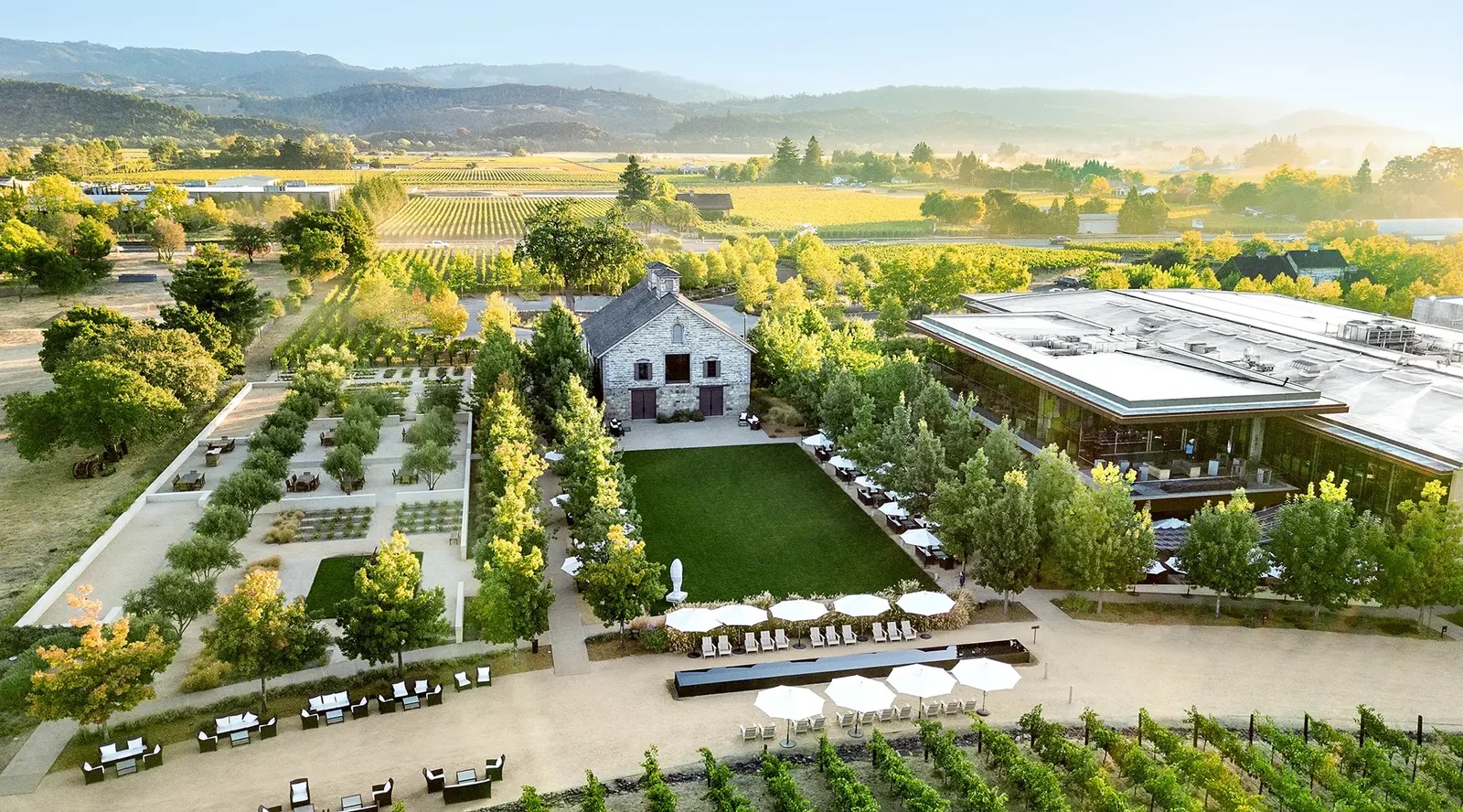
Event Type: Consumer, Reception
Location: St Helena, CA
Date: 10/29/2026 — 4:00 PM to 8:00 PM
The wine business is harder than it has been in decades. Standing still is not a strategy. Join us for a private winery leadership dinner at HALL Wines in St. Helena to hear how one of Napa’s most respected producers rebuilt its commerce operation on Shopify, Awtomic, and CQL, the proven enterprise stack for wineries.
Modernize your tech stack for marketing and AI, without disrupting the white glove experience your customers love?
Unify your on-site, club, and ecommerce systems with an enterprise solution built for the future?
Reduce complexity and total cost of ownership so you can invest in growth?
Find a commerce solution that understands hospitality and the complexities of the wine industry?
Most of the wineries I talk to (which is dozens every week) claim the thing that sets them apart from other wineries is their wine. Theirs is grown a special way on a special hill in a special part of the world.
But according to Liz Mercer, Winery Coach, Content Developer, and Instructor at WISE, that's not what separates the wineries that are growing from the ones that are standing still.
After helping educate winery teams, consulting with DTC leaders, and conducting nearly 7,000 mystery shops, Liz’s experience and recommendations follow one consistent pattern: The wineries seeing the most success have built a culture around customer data.
"The number one distinguishing factor is they have a strong culture of data capture, and they do something with it. They're building their mailing lists and they're using their tasting room as a launchpad for a long-term relationship."
So what happens when wineries emphasize learning, understanding, and treating the customer like a friend? In short, magic. Customers respond with higher lifetime value, lower churn, and overall satisfaction.
Great Wineries Collect More and Better Data
Ask most wineries what customer data they collect and you'll hear the basics. Name, email address, phone number, maybe a birthday. Liz actually jokes she'd be excited if every winery consistently captured ZIP code because even that isn't always happening.
Without the basics, you can't continue the relationship after someone leaves your tasting room. But top-performing wineries don't stop there and Liz thinks about customer data in three layers.
Level 1: Contact data
This is the information that allows you to stay in touch with someone.
Name
Email
Phone number
SMS and email opt-in permission
Birthday
Address
Level 2: Behavioral data
This tells you how someone interacts with your winery.
Purchases
Tasting room visits
Event attendance
Wine club membership
Favorite wines
Referral activity
Level 3: Relationship data
Relationship data provides context.
Who referred them?
What other wine clubs do they belong to?
Do they travel often?
Are they local or destination visitors?
Do they host guests at home frequently?
Why did they visit your winery in the first place?
Who did they attend with?
Level one helps you contact a customer. Level two helps you understand their behavior. Level three helps you build an actual relationship.
As Liz puts it, wineries need to move "beyond anecdotal to actionable."
How to Train Your Tasting Room Team to Reveal Relationship Data
Every day, guests tell wineries exactly how to build better relationships with them.
One guest mentions they're visiting from out of state. Another says they're members at three other wineries. One group mentions they only make it to wine country once every few years.
Those are opportunities to better understand your customers. The challenge is that too much of this information lives in employees' heads instead of your CRM.
Liz believes wineries should intentionally train tasting room teams to uncover relationship data, understand why it matters, and consistently record it.
That doesn't mean hospitality needs to turn into an interrogation. It means wineries are responsible for creating a culture where conversations become meaningful customer insights.
I recognize that most wineries don't have perfectly built-out CRMs, robust training programs, or convenient places to record every customer insight. We're not working in a scientific lab, and the data capture process doesn't have to be perfect.
What I consistently see among the wineries that are growing is a willingness to start anyway. They're finding creative ways to capture relationship data today because they understand its long-term value, even if the process is held together with a little duct tape.
Every Useful Piece of Data Should Change What Happens Next
If someone gives you their email address, the easiest solution is to add them to your monthly newsletter and move on. A better approach is to use every piece of information you've gathered to intentionally guide that customer into the right lifecycle flow.
Someone who attended a winery event has a different relationship with your brand than someone who was referred by an existing wine club member. An event attendee may need more education about your winery before they're ready to join. A referred guest has already borrowed trust from someone who loves your brand so you may be able to skip some introductory messaging and instead recommend wines or membership benefits that align with what you already know about them.
If a guest tells you they belong to three other wine clubs, ask why. What attracted them to those clubs? Which benefits do they actually use? That conversation can shape how you position your own membership, what benefits you emphasize, and even ideas for future improvements.
During a personal trip, Liz told a winery she was visiting from across the country and likely wouldn't be back anytime soon. Instead of emphasizing shipping benefits, exclusive wines, or the convenience of membership from afar, the tasting room associate focused almost entirely on complimentary tastings, winery events, and bringing friends. The winery had the right data, they just didn't use it.
The same principle applies everywhere:
ZIP code: Segment local guests from destination visitors, promote nearby events, regional roadshows, pickup opportunities, or shipping benefits accordingly.
Referral source: Strengthen relationships with hotels, concierges, existing members, creators, or local businesses that consistently send high-quality guests your way.
Favorite wines: Recommend similar bottles, new releases, or club customizations that align with what they already enjoy.
Purchase history: Someone who buys the same bottle of sparkling rosé every visit shouldn't receive the same recommendation as someone building a reserve wine collection.
Visit frequency: Reward your regulars differently than someone who visits once every few years. Frequent guests may value member events and exclusive experiences, while infrequent visitors may need more digital touchpoints to stay connected.
None of these data points are valuable on their own. Their value comes from changing what happens next.
Turn Customer Data Into “Controlled Chaos"
One of Liz's favorite concepts is what she calls "controlled chaos." Rather than overwhelming customers with endless choices, wineries should use customer data to confidently guide people toward the right experience.
Instead of asking, "Would you like to take anything home today?" Try, "You mentioned you really enjoyed the Reserve Chardonnay and the single-vineyard Pinot Noir. How many bottles can I set you up with?"
The same philosophy applies to memberships. You likely don't need six different club structures with dozens of benefits. You need a few clear options that staff understand well enough to confidently recommend based on what they've learned about the guest.
Technology can surface purchase history, preferences, and customer attributes, but your staff still provides the judgment. Together, they create a much better customer experience.
Better Data Creates Better Relationships
The wineries seeing the most growth don't think of guests as people moving through a tasting room. They think of every tasting as the launchpad for a long-term relationship.
Data isn't collected because your CRM needs another field filled out. It's collected so your next email feels more personal, your next text message is more relevant, and your next membership conversation is more helpful.
Technology makes that easier, but technology isn't what creates memorable hospitality. People do.
The wineries that continue to grow will be the ones that consistently collect the right information, empower their teams to use it, and make every interaction a little more personal than the last.
How to Build Better Wine Club Retention in Between Shipments
The tasting room is winery gold. Always has been, always will be.
There's nothing quite like welcoming guests onto the property, sharing your story over a glass of wine, and creating the kind of hospitality that turns visitors into lifelong members.
But what happens after they leave?
Maybe they visit once a quarter, maybe it's once a year, or maybe they're across the country and may never make it back. Like it or not, the vast majority of your relationship with a wine club member happens somewhere other than the tasting room.
I’ve seen endless "we miss you" campaigns or heavy discounting emails to drive another purchase. Neither creates the kind of experience that keeps members engaged for years.
The wineries with the strongest retention understand that some of the most important customer moments happen between shipments. Every email, every text message, every shipment announcement, every harvest update, and every personalized recommendation is another opportunity to remind members why they joined in the first place.
I recently sat down with Renée Lee, Founder of Loop & Ladder Digital, to talk about how wineries can create those moments through thoughtful lifecycle marketing. From onboarding new members to rethinking the pre-shipment email, Renée shared practical ideas that any winery can use to build stronger, longer-lasting member relationships.
The First 60 Days Set the Tone for the Entire Membership
"We spend so much time talking about getting people to join. We don't spend enough time talking about what happens after they join.”
— Renée Lee, Founder, Loop & Ladder Digital
A new member has made a commitment to your winery, but they haven't yet experienced what it actually means to be part of the club. Instead of immediately trying to sell another bottle or promote the next event, use those first few weeks to reinforce their decision and make them excited about everything that's ahead.
Start your welcome flow immediately
Renée recommends building a structured welcome journey of around five emails. Use that time to introduce your winery's story, explain membership benefits, set expectations for upcoming shipments, and give members a reason to feel confident about what's ahead.
Don't wait days or weeks to continue the conversation. The tasting room experience may be over, but the membership experience is just beginning. Reinforce their decision while the excitement is still fresh, making every new member feel just as welcomed online as they did in person.
Resist the urge to sell again
The first 60 days shouldn't feel like another marketing campaign. Once members understand the value of belonging, personalized recommendations, exclusive offers, and upsells become much more effective.
Use the first month to educate, tell your story, and reinforce the benefits of membership before asking for another purchase. The short-term revenue from an early upsell is rarely worth sacrificing the long-term value of a loyal member.
Create phases of communication
The 5-email welcome flow may be complete, but communication should evolve as the relationship matures. Early on, focus on onboarding and education. Later, shift toward exclusive content, harvest updates, founder messages, loyalty rewards, and other experiences that make long-time members feel recognized.
The goal is to build a stream of communication that recognizes what a member needs in week one looks very different from what they'll value five years into the relationship.
Every Shipment Should Feel Experiential, Not Transactional
Once you've established the relationship during onboarding, it’s time to deliver on the promises you made. The first major opportunity comes before the first shipment ever leaves your winery.
Renée and I both like to geek out over email strategy, and after reviewing hundreds of winery email programs, we've noticed the same pattern. Too often, the pre-shipment email is treated like an operational necessity, a checkbox email notifying members their card is about to be charged and their wine is about to ship.
Renée sees it completely differently. "The pre-shipment email is the most underused, highest-intent moment in the entire membership. It shouldn't feel like a charge warning. It should feel like a reveal and an invitation."
You've invested so much into creating an incredible tasting room experience. Your staff welcomed the guest, shared your story, converted them into a member, and your onboarding emails reinforced that decision.
Don't let the pre-shipment email become the transactional moment that breaks the bottle.
A great pre-shipment experience should make it easy for members to:
Customize their upcoming shipment
Add additional bottles or limited releases
Receive personalized recommendations based on previous purchases
Update payment or shipping information before processing
When done well, everyone wins. Members feel more in control of their membership, wineries reduce failed payments and support requests, and average order values naturally increase through thoughtful personalization rather than constant upselling.
Every interaction should feel like the customer is back in the tasting room talking with your staff, every shipment is another opportunity to remind members why they joined your club in the first place.
Loyalty is Built Between Shipments
The shipment is the biggest moment in a wine club membership. Members have been anticipating it for weeks. They open the box, taste the wines, and experience the product you've worked so hard to create.
But no relationship is built on four moments a year. The shipment is one milestone in a much larger relationship. Everything in between is where loyalty is earned and churn is avoided.
Renée recommends using the months between shipments to continually remind members why they joined in the first place by helping them feel connected to the people, place, and story behind every bottle.
None of those emails should exist with the main goal of selling another bottle, they exist to strengthen the relationship. I’ve talked at length in the past about how a smaller membership that lasts 3 years is more valuable than a larger one that cancels in 6 months.
Renée and I discussed something that might get you in trouble with email marketers: every email doesn't need to generate revenue. Sometimes the goal is simply to remind members that they're part of something bigger than a recurring shipment.
The shipment alone isn't what keeps them coming back, the connection does.
The wineries with the highest retention don't simply deliver great wine every quarter. They consistently remind members why joining the club was worth it, creating dozens of small moments throughout the year that make membership feel personal, exclusive, and connected.
Three Ways to Prevent Churn Before It Happens
By the time a member clicks "Cancel Membership," the relationship has often been weakening for months. Instead of waiting until someone leaves, Renée recommends looking for the warning signs much earlier.
Monitor engagement, not just cancellations
Pay attention to members who stop clicking emails, skip shipments, stop customizing orders, or purchase less frequently between shipments.
Build simple automations to re-engage these members, or create internal alerts for your team to reach out personally. A quick check-in before cancellation is almost always more effective than a discount after they've already left.
Reach out before they're gone
A skipped shipment or several months of inactivity doesn't always mean a member wants to cancel, an active membership continues to extend LTV.
Ask for feedback, recommend wines based on previous purchases, or remind members about benefits they haven't taken advantage of yet.
Learn from every cancellation
Not every member will stay forever, and that's okay. Instead of immediately sending a discount, look for patterns in why members leave, identify gaps in your communication, and refine your lifecycle strategy so future members have a better experience.
Tasting Rooms Will Always Be the Heart of a Winery
The winery experience shouldn’t end when a customer drives away. Every welcome email, shipment announcement, harvest update, and personalized recommendation continue telling their story and reminding members why they joined in the first place.
Technology can automate emails, but it can't automate hospitality. That's still up to us.
AI is a starting point, not an endpoint. Use it to brainstorm 50 ways to drive more tasting room visits, launch a digital campaign for a new wine release, or convert email subscribers into wine club members.
Not every idea will be great, but that’s not the point. The goal is to move from staring at a blank page to refining and iterating on ideas that actually fit your winery. READ MORE
Wine club retention should be about making your experience feel like an extension of your tasting room.
The best wine clubs don’t operate like traditional ecommerce subscriptions, nor should they. For products like toothpaste, cleaning supplies, or pet food, it makes sense to ship a package at a regular cadence for a regular price.
Wine doesn’t behave like that.
Customers want to explore different varieties and vintages of wine depending on the season. Some months they’re celebrating and opening multiple bottles. Others they’re slowing down or stocking up their collection.
When a wine club is treated like an extension of the tasting room, customers want to be a part of it. When it feels like a commodity subscription, the experience falls apart.
Quick Wins to Improve Wine Club Retention
Wine club cancellations often come down to a few controllable factors. Customers end up with too much wine, don’t have flexibility to manage shipments, or don’t feel like they’re getting anything beyond the product.
Start with the basics:
Let members skip or delay shipments without friction
Add a pre-shipment selection window so they can update selections
Offer multiple shipment cadences, not just one default schedule
Reduce default shipment size to avoid overloading customers
Introduce simple loyalty milestones like early access or anniversary perks
These are table stakes. Without them, retention will always be a challenge.
Wine clubs that people don’t cancel are built around three pillars: flexibility to manage the experience, retention economics that prioritize lifetime value, and a sense of experience and belonging that goes beyond the bottle.
How to Build a Flexible Wine Club That Reduces Cancellations
How to let members control wine club shipments
The fastest way to improve wine club retention is to give customers control over timing and frequency. Give members the ability to:
Skip, pause, or delay shipments
Choose when wine arrives
Removing this friction eliminates one of the biggest drivers of churn.
How to match your wine club to customer drinking behavior
All customers don’t drink the same way. Some want wine for casual weeknights while others are buying for dinners or occasional events. Your wine club should reflect that.
Offer multiple cadences: monthly, quarterly, or flexible
Allow customers to slow down without cancelling
Additionally, the way people drink changes over time. If your cadence doesn’t match how people actually drink, they’ll eventually cancel their subscription.
How to offer customizable wine club shipments
Before shipments go out, give customers a window to:
Swap individual bottles (merlot for cabernet)
Select different packages entirely (red for white)
Bonus added value: find ways to guide choices based on preferences or occasions. This shifts the experience from “fulfillment” to “curation.”
How to avoid over-shipping in your wine club
Too much product is the most preventable churn driver. Make it easy for customers to manage volume:
Offer smaller shipment options
Make downgrade paths simple
Clearly communicate what’s coming next
Avoid the common scenario where a customer signs up for a larger shipment, builds up inventory, and cancels instead of adjusting down.
If you ship faster than they drink, you’re creating your own churn.
How to balance flexibility with participation
With all the focus on flexibility, there’s still a balance between giving customers control and removing structure entirely.
For example, wineries can allow members to pause shipments while temporarily limiting certain perks, like complimentary tastings or event access, until shipments resume.
The goal is to create flexibility without disconnecting membership benefits from active participation.
The most effective way to improve wine club retention is to give customers control over shipments, match their drinking behavior, and avoid over-shipping.
How to Structure Your Wine Club for Long-Term Retention
How to increase wine club lifetime value
To improve wine club retention, don’t optimize for bigger boxes, optimize for longer relationships, repeat engagement, and steady participation.
Think about how you’d handle this in the tasting room. If a customer is deciding between 4 bottles and 6, you wouldn’t push them into 6 if it risks a bad experience.
You’d rather they buy 4, love the wine, and come back again. Your wine club should work the same way.
How to reduce wine club churn with flexible membership tiers
As long as it’s not an outright cancellation, a downgrade is not a failure. Most wineries see a downgrade as lost revenue, when in reality it still extends lifetime value.
A smaller membership that lasts 3 years is more valuable than a larger one that cancels in 6 months.
Give customers a way to stay in your wine club membership, even if they spend less.
How to improve wine club retention with loyalty incentives
Instead of focusing on sign-up perks, reward tenure and consistency. This might look like shipping anniversary bottles, providing access to limited releases before the general public, or offering perks that unlock over time.
Retention isn’t about preventing cancellation entirely, it’s about giving people reasons to stay.
Wine club retention improves when you prioritize long-term relationships over short-term revenue.
How to Turn Your Wine Club Into an Experience Customers Won’t Want to Cancel
This is where the biggest opportunity is for wine club retention.
How to create experiences beyond the bottle
Wine has a built-in advantage because there’s a story behind it.
Use it everywhere. Bring customers behind the scenes of harvest, production, and sourcing. Show how decisions are made. Let them experience the wine alongside you through virtual tastings or guided sessions with the winemakers.
These moments bring customers closer to the product and the people behind it. Each time you offer something they can’t get elsewhere, you strengthen the relationship and increase retention.
How to build a sense of belonging in your wine club
People don’t stay because of products, they stay because of identity.
Make members feel like insiders. They should feel recognized, valued, and part of something bigger than just a subscription.
This can be simple. Acknowledge long-term members. Personalize communication so it feels like a relationship, not a transaction. Create moments where members are brought together, whether that’s through events, invites, or shared experiences.
How to turn shipments into moments
Your shipment is your most important touchpoint. That box shouldn’t feel like a transaction, it should feel like the most intentional part of the whole process.
Explain why each wine was selected. Share when to drink it and what it pairs with. Give customers context that extends beyond the bottle.
That turns a routine delivery into an experience that lasts beyond the unboxing.
How to prioritize access over discounts
Discounts can help, but they’re easy to copy. Access creates differentiation.
For most wineries, early access to new releases is already table stakes. The bigger opportunity is creating access customers can’t easily get elsewhere.
Library wines, limited experimental batches, harvest experiences, private tastings, or direct interaction with the winemaking team all deepen the relationship beyond the transaction.
The more your club feels like exclusive access, the less it feels like something customers can cancel.
Create an Experience, Increase Wine Club Retention
Wine club retention isn’t solved with better wine or bigger discounts, it’s solved by how the club is built.
The wineries that get this right intentionally build something to allow for maximum engagement between the customer and the winery.
They give customers flexibility, create paths to stay over time, and make the club feel like access to the winery, not just another subscription.
Schedule a demo from Awtomic and we’ll source ways to supercharge your wine club today.
Wineries have always operated differently from traditional ecommerce, and for good reason.
The business model isn’t the same, wine clubs aren’t standard subscriptions. The tools wineries relied on weren’t built for wine, they were adapted from broader DTC models and retrofitted to fit a completely different type of business.
Because of that, wineries have had a natural hesitation to adopt AI.
The relationship is the core of the winery. That’s not something you want to automate away or reduce to a system.
However, AI has matured to a point where it’s no longer experimental. Used correctly, it’s a net benefit across the winery. Not as a replacement for the experience, but as support for it. It can make your team more effective, your content more consistent, and your customer interactions more thoughtful.
To break down where AI actually creates value, Awtomic Founder and CEO Emily Yuhas spoke with Shem Swerkes, Senior Director of Global Digital Innovation at Treasury Wine Estates, about how wineries should be using AI today.
Whether you’re just starting to explore AI or already using it in parts of your workflow, this guide is about where AI actually creates leverage for wineries in practical ways you can start using tomorrow.
How Wineries Should Actually Use AI
How to use AI
Turn one asset into multiple pieces of content
Start with a strong first draft in minutes
Build consistent posting systems
Train AI on your brand and reuse context
Systematize follow-ups and personalization
Build repeatable workflows that compound
Show up across reviews, content, and mentions
Scale output without losing your voice
How NOT to use AI
Create each piece of content from scratch
Spend hours getting past the blank page
Post inconsistently when there’s time
Re-explain your brand every time
Handle customer details manually
Redo the same work over and over
Rely only on your website for discovery
Trade quality for volume or vice versa
“A lot of people are going to approach AI as how they can save time or scale. And yeah, that’s where it’s strongest. But the reality is mediocre strategy with strong execution will beat big ideas with poor execution every time. AI just makes it easier to actually execute.”
— Shem Swerkes
AI Rewards Execution, Not Ideas
AI doesn’t replace strategy or creative thinking. It accelerates execution once you already know what you’re trying to accomplish. Use it to generate ideas, structure workflows, and remove friction so your team can spend more time refining the things that make your winery unique.
Turn one asset into ten pieces of content
“When you think about a winery, your history, your vineyard, your winemaking, that stuff doesn’t really change. That content is basically immortal. So instead of constantly trying to come up with something new, it’s how do you refresh it, cut it up differently, and use it across different channels without starting from scratch every time.”
— Shem Swerkes
Most wineries are sitting on years of content they’ve already paid for, the challenge becomes effective distribution over new content creation.
Take one asset and turn it into multiple outputs. A blog becomes a video, that video becomes social posts, those posts become an email. The goal is to create more output in less time from what already exists.
Use AI to get past the blank page
“The hardest part for most teams is just getting started. You’re staring at a blank page every day. AI takes you from that blank page to something you can actually work with, and that’s where it becomes really powerful.”
— Emily Yuhas
AI is a starting point, not an endpoint. Use it to brainstorm 50 ways to drive more tasting room visits, launch a digital campaign for a new wine release, or convert email subscribers into wine club members.
Not every idea will be great, but that’s not the point. The goal is to move from staring at a blank page to refining and iterating on ideas that actually fit your winery.
Build a repeatable posting system
“We talk a lot about creativity, but if you really look at it, most campaigns aren’t that unique. It’s the same ideas done slightly differently. The difference is who actually executes consistently.”
— Shem Swerkes
Consistency across Instagram, Facebook, LinkedIn, email, and even YouTube will outperform a single high-production post every few weeks. Spend more time identifying repeatable content pillars for your winery like your values, vineyard history, tasting notes, food pairings, harvest updates, and the people behind the brand. Then use AI to turn one piece of content into 5-10 different assets so you can distribute consistently without constantly starting from scratch.
AI Works Best Behind the Scenes
The best use of AI in wine is rarely customer-facing. Treat it like a new member of your team by training it on your brand voice, customer experience, and operational workflows. The more context and direction you provide, the more useful and differentiated the output becomes.
Train AI on your brand like you would a new hire
“If you think about AI like a tool, you’re going to use it wrong. It’s more like a team member. If you hire someone, they don’t come in on day one knowing everything. You have to teach them your systems, your processes, how you think. AI is the same way. The more context you give it, the better it gets.”
— Emily Yuhas
If you feed AI generic input, you’ll get generic output. If you want differentiated results, give AI context. Constantly provide examples of your content, your tone, and your audience.
Tell it stories of what happened in the tasting room that day so it can learn and start to think like the most senior operator of your winery. Treat it like constant onboarding and mentoring, not a one-time interaction.
Use AI to upgrade your tasting room, not replace it
“The opportunity isn’t to replace the human experience. It’s to remove friction from your team’s job so they can focus on that human experience. How do you give them better information so they can create stronger interactions with the customer?”
— Shem Swerkes
Wine is still sold through relationships, hospitality, and experience. Customers still want recommendations from real people, conversations in the tasting room, and a sense of connection to the winery. The opportunity is letting AI handle the backend operational work so your team can spend more time focused on customers.
Use it to summarize customer preferences before visits, organize wine club notes, draft follow-up emails, or prepare staff with talking points before an event.
Systematize small personal touches that drive loyalty
“It doesn’t take much to create a meaningful experience. Remembering a birthday, something from a past visit, those small details go a really long way. That’s what people remember, and that’s what drives loyalty and retention.”
— Emily Yuhas
Retention isn’t built on big moments, it’s built on consistency. Small details, applied consistently, create loyalty over time.
AI Only Works After You Invest In It
AI is most effective when it becomes part of a repeatable system. Like onboarding a new employee, it improves through iteration, feedback, and structure over time. The wineries seeing the best results are using multiple tools, refining outputs, and building workflows that compound instead of restarting from zero every time.
Use AI for the first 90%, then finish the last 10%
“A lot of people expect to just open a tool and have it do everything. But you have to put the work in upfront. You’re building something that makes future work faster. If you try it once, don’t like the output, and quit, you’re missing the point.”
— Shem Swerkes
The real value of AI comes from building repeatable systems around the work your winery already does every year. Harvest updates, wine releases, allocation emails, club announcements, tasting event promotions, holiday campaigns, and food pairings all follow similar patterns.
Use AI to create the first 90% quickly, then step in to refine the final details, voice, and storytelling that make your winery unique. Over time, those workflows become faster, more consistent, and easier for your entire team to execute without starting from scratch every season.
Run outputs through a second AI to improve quality
“What I’ll do a lot of times is take the output from one model and have another one critique it. They’re actually better at evaluating each other’s work than doing their own.”
— Shem Swerkes
One of the easiest ways to improve output quality is to have different AI tools evaluate each other’s work instead of relying on a single result. Generate a wine club email in ChatGPT, then ask Claude to critique what feels generic, unclear, or off-brand. Have Gemini review a tasting room campaign and identify what’s missing or repetitive.
AI models are often better at spotting weaknesses in existing work than creating perfect output from scratch. This simple feedback loop leads to stronger ideas, sharper messaging, and fewer generic results.
Build workflows once so you don’t repeat work
“You’re building something that makes future work faster. It might take longer upfront, but that’s what creates efficiency later.”
— Emily Yuhas
Build prompts for tasting notes, templates for release emails, systems for social posts, and repeatable campaign structures for events and club pushes. The upfront setup takes more time initially, but it creates a system your winery can reuse every season instead of constantly reinventing the process.
Discovery and Brand are Changing at the Same Time
Search behavior is shifting quickly from traditional SEO toward conversational discovery through AI-powered search engines and assistants. That means clarity, usefulness, and authentic content matter more than volume or keyword stuffing. The wineries that win will be the ones creating content that genuinely connects with customers across websites, reviews, video, and social channels.
Write like someone is asking a question
“People don’t search the same way anymore. They’re talking to AI like it’s a person. And that AI might be looking at 20, 40, 60 different sources to generate an answer, and you have zero visibility into what those sources are.”
— Shem Swerkes
Search is becoming more conversational, which changes how wineries should create content. Instead of writing for keywords like “best Napa cabernet” or stuffing pages with SEO, GEO, or AEO phrases, write content that answers the actual questions customers are asking.
Show up beyond your website
“It’s not just your website anymore. It’s reviews, mentions, threads, content across the internet. AI is pulling from all of it.”
— Shem Swerkes
AI-powered search tools are pulling answers from reviews, blogs, videos, forums, and winery websites all at once. The wineries that win will be the ones creating clear, useful content that directly answers customer intent instead of trying to game search engines.
Focus on clarity and usefulness, not volume
“Everyone can generate content now. That’s not the advantage. The advantage is creating something that actually connects.”
— Emily Yuhas
More content isn’t always better. Focus on answering real questions, simplifying wine education, and helping customers feel more confident in what they’re buying. A straightforward article explaining the difference between two varietals or helping someone choose a wine for a dinner party will outperform dozens of pieces of generic AI-written content that say nothing meaningful.
Make the customer the hero, not the winery
“People aren’t buying because of structured data or even your brand story most of the time. They’re buying because of a connection or an experience. The shift is making the customer the hero.”
— Emily Yuhas
People buy wine emotionally, not logically. Talk about the moments, the people, the experience.
Most winery marketing focuses too heavily on the winery itself, but customers ultimately buy based on how the wine fits into their life and experiences. Talk about the dinner party it belongs at, the trip it reminds people of, or the kind of person who would enjoy it.
Start Here
AI is actually making the human side of wine even more important.
The wineries that benefit most from AI use it to remove operational friction, execute more consistently, and create more space for hospitality, storytelling, and customer relationships.
Start small. Pick one workflow, campaign, or piece of content.
From wine club management to AI-powered retention and customer experiences, Awtomic gives wineries the tools to grow while keeping the relationship at the center of the brand.
Wondering if Shopify or a Wine-focused platform is the best ecommerce solution for your winery? Learn why Shopify’s ecosystem, app support, and agency partnerships make it a powerhouse for wineries looking to grow online.
Shopify for Wineries: Addressing the "One-Stop Shop" Concern
When wineries consider ecommerce platforms, a common concern we hear is: “With Shopify, I have to work with multiple vendors, but verticalized ecommerce platforms for wine feel like a one-stop shop.”
We get it—running a winery is complex, and simplifying operations is always a priority. But let’s break this down because, in reality, no platform is truly a one-stop shop. Instead, it’s about choosing the right ecosystem that gives you flexibility, innovation, and the best possible tools for your business.
The Myth of the "One-Stop Shop"
Verticalized systems do a great job serving wineries, but even with their platforms, you’re still working with multiple vendors. Most wineries using them also work with:
- A website/CMS provider – Many don't provide a website builder, so you’ll need to integrate with a separate provider.
- Analytics tools – Advanced reporting and insights often require third-party solutions.
- Email marketing platforms – While some systems have built-in email functionality, most wineries use dedicated tools like Mailchimp or Klaviyo for more robust campaigns.
- Appointment booking software – Many wineries also rely on Tock or similar services for reservations and experiences.
So, while verticalized wine solutions provide some core ecommerce and club management features, you’re still assembling a tech stack with outside vendors. The real question is: which ecosystem sets you up for long-term success?
Shopify’s Strength: A Powerful, Innovative Ecosystem
What makes Shopify different is its vibrant app marketplace and the passionate developers behind it.
- Shopify has thousands of apps, many built by experts specializing in ecommerce solutions.
- App developers in the Shopify ecosystem are constantly innovating, often learning from the best practices of top ecommerce brands worldwide.
- Because these developers compete to provide the best solutions, support is often faster and more personalized than what you’d get from a single vendor.
For wineries, this means you’re not locked into a single platform’s roadmap. Instead, you can choose best-in-class solutions, whether that’s Awtomic for wine club management, a specialized booking tool, or cutting-edge marketing automation.
"But I Don't Want to Manage Multiple Vendors"
That’s a fair concern! This is why we strongly recommend working with a Shopify agency that understands the winery space. A great agency will act as your single point of contact and help manage your tech stack, troubleshoot issues, and optimize your online presence.
Some top-tier Shopify agencies that specialize in wineries include:
🍷 DRINKS Amplify – Experts in alcohol ecommerce and compliance.
🍷 WalkWest – A digital marketing and ecommerce powerhouse.
🍷 Seamonster Studios – Shopify specialists with deep experience in winery solutions.
By partnering with an agency, you get the best of both worlds: Shopify’s flexibility and innovation, with a dedicated team to help manage your ecommerce needs.
The Bottom Line
There’s no truly "one-stop shop" ecommerce platform—every solution requires integrations and third-party tools. But with Shopify, you gain access to a thriving ecosystem of experts, cutting-edge technology, and agencies that can simplify everything for you.
If you're looking for an ecommerce solution that’s scalable, innovative, and tailored for growth, Shopify (with the right partners) is a game-changer for wineries.
Why Wineries Are Leaning Into Technology for Growth
Wine Has Finally Caught Up to Ecommerce
Wine has always operated differently from the rest of ecommerce.
Most industries follow similar patterns. They invest in digital acquisition, optimize conversion, and build systems that scale. Wineries never really did. Between compliance, wine clubs, tasting rooms, and long-standing industry habits, wineries built their businesses around in-person relationships, not online performance.
Because of that, wine has historically been underserved by modern ecommerce tools. Platforms weren’t designed for how wineries actually operate, so wineries adapted by working around those limitations instead of solving them.
That’s starting to change.
Shopify has quickly become a leading ecommerce platform for wineries looking to modernize how they sell wine online.
Checkout is faster thanks to Shop Pay
Building and updating curated customer experiences is easier
The platform integrates with tools that handle specific parts of the business well
At the same time, platforms like Awtomic are finally solving the subscription layer specifically for wineries. Wine clubs can now be flexible, customer-friendly, and built for retention.
All of this is happening while the pressure to grow is increasing. Gen Z are drinking 20% less than millennials, competition is expanding beyond traditional wine into food and other verticals, and relying on tasting room traffic or static wine clubs is no longer enough to drive meaningful growth.
Wineries are adapting because the old way isn’t working anymore.
How Wine Commerce Has Traditionally Operated
Wine has never been built like a traditional ecommerce category. It’s been built as a sales organization.
Most wineries are designed to convert in-person traffic. Tasting rooms, events, and hospitality drive the initial relationship, and wine clubs are the primary way to turn that relationship into recurring revenue. Ecommerce exists, but it’s rarely the primary growth engine. This is why many wineries have struggled to build an ecommerce strategy that drives consistent growth.
At the same time, the systems behind the experience are disconnected. Subscriptions, ecommerce, and marketing often live in separate platforms, which makes it difficult to create a cohesive customer journey or even understand how customers interact with the brand across touchpoints.
On one end of the spectrum, wine-specific systems like Commerce7 are stable, but rigid in their customization options. On the other end, ultra-customizable platforms like Salesforce Commerce Cloud require developers to make even the simplest changes, which slows down marketing and limits the ability to test or iterate.
To make things work, wineries have historically stitched together tools and manual processes. Campaigns are harder to launch, changes take longer to implement, and growth requires more effort than it should.
Why Shopify Plus Awtomic Works for Wine
Wineries didn’t suddenly adopt new technology, so why the shift now?
Younger customers are drinking less, growth requires more than foot traffic in a tasting room, and the technology finally caught up.
Subscription Finally Works
Wine club software has historically been built for payment processing and fulfillment, not customer experience. Awtomic changes that.
Wineries can design wine clubs that fit their brand and are built around retention. Subscribers can customize their experience, interact with the product, and stay because they want to, not because they’re locked in. This is what a modern wine subscription platform should look like.
And because 40-60% of winery revenue is tied to subscriptions, a reliable subscription platform makes all the difference.
Self-Service Without Losing the Experience
Modern customers expect control. They want to manage their own subscription, swap bottles from shipment to shipment, and interact with the brand without friction. At the same time, wineries still rely on high-touch relationships.
This stack supports both. Customers can self-serve when they want to, and wineries can focus their efforts on delivering a high-touch experience where it matters.
Speed is an Advantage
With Shopify, wineries can launch pages, update offers, and test campaigns without relying on developers. What used to take weeks now happens in days.
This turns marketing into a real growth lever. Instead of static product pages, wineries can build dedicated experiences for wine clubs, dynamic seasonal offers, and featured pages for new product launches.
The ability to test messaging, adjust offers, and iterate based on performance is now part of day-to-day execution.
The Technology Actually Works Together
Shopify handles the front-end experience as the ecommerce platform for wineries. Awtomic manages subscriptions. Tools like Klaviyo power lifecycle marketing. Shop Pay reduces friction at the most critical point in the customer journey.
Wineries can finally operate like a cohesive ecommerce business without abandoning what makes them unique.
What This Means for the Future of Wine Commerce
There are so many things that make wineries special. The history behind each vineyard, the people building the brand, and the connection customers have to the product.
Technology shouldn’t change that. But it should modernize everything around it.
Customers have changed their shopping habits, and the wineries that adapt will be the best suited to continue their growth.
Tradition isn’t going anywhere. But growth in wine is now driven by how well you can meet customers where they already are.
And right now, that’s online. Schedule a demo from Awtomic.