
Transform your winery operations with NetSuite’s cloud-based platform. Our unified solution brings together your critical business processes – from allocations and wine club management to production and financial operations – into one powerful system.
In support of an industry driven by seasonal rhythms and aging timelines, NetSuite provides a robust infrastructure to streamline processes at every stage. Whether managing multiple vintages, expanding distribution channels or growing your direct-to-consumer business, NetSuite delivers real-time visibility and control across your entire operation.
Core NetSuite modules
NetSuite’s integrated platform aligns with your winery’s natural cycles:
Financial Management
Track profitability across vintages, varieties and sales channels with precision. Streamline cash flow management during capital-intensive periods and maintain clear visibility into costs from vineyard to bottle.
Inventory Management
Manage allocations across distribution channels and sales channels while maintaining optimal stock levels across locations. Real-time visibility helps balance wholesale commitments with direct-to-consumer opportunities.
Order Management
Deliver a seamless experience across all channels. Whether processing distributor orders, managing wine club releases, or handling daily tasting room sales, automated workflows ensure accurate fulfillment.
Production Management
Support production planning and resource allocation while integrating with your winery management software. Track finished goods and materials to align bottling schedules with inventory needs and sales forecasts.
Procurement
Build reliable supply chains for everything from grapes to dry goods. Coordinate deliveries with production schedules and maintain strong relationships with growers and vendors.
Reporting and Analytics
Track key metrics from 9L case equivalents to wine club retention, making informed decisions based on real-time data. Standardized industry reporting helps benchmark performance and analyze sales across channels.
Human Resources Management
Scale your workforce smoothly from quiet periods to harvest rush. Manage seasonal labor, streamline payroll and maintain compliance.
Customer Relationship Management
Nurture customer relationships across seasons. Manage wine club allocations, coordinate events and automate communications while maintaining the personal touch.
The Realities of Modern Winery Operations
Today’s wine industry demands more than exceptional winemaking. As your winery grows, you face increasing operational complexities:
- Managing limited allocations across growing sales channels while maintaining key customer relationships
- Connecting online sales seamlessly with inventory and fulfillment systems
- Capturing true costs through each stage of wine production and aging
- Moving away from time-consuming manual processes that slow month-end close
- Coordinating inventory across multiple locations through different stages of production
- Staying current with compliance requirements across expanding markets
- Working around disconnected systems that create data delays and duplicated effort
Key Features Spotlight
NetSuite delivers essential functionality across your entire winery operation:
Operations Management
Production planning and scheduling tools adaptable for wine-making processes
Multi-location inventory tracking for vineyards, production facilities, and warehouses
Lot traceability for quality control and compliance
Capacity planning tools for harvest and production seasons
Mobile access for in-field inventory updates and sales
Sales & Customer Management
Multichannel order management for direct-to-consumer, wholesale, and tasting room sales
CRM features for wine club management and event planning
Integrated e-commerce capabilities for online sales
Integrated point-of-sale system for tasting rooms
Financial Management
Financial reporting customized for winery operations
Automated billing and invoicing systems
Grant management for agricultural subsidies and incentives
Automated tax calculations for various sales channels
Fixed asset management for vineyard equipment and facilities
Multi-currency and multi-language support for international operations
Supply Chain & Vendor Management
Supply chain management for tracking grape sourcing and other inputs
Vendor portal for managing relationships with grape suppliers
Demand planning tools to optimize production and inventory levels
Analytics & Workflow
Customizable dashboards for real-time winery performance metrics
Business intelligence tools for market trend analysis
Forecasting tools for sales and production planning
Customizable workflows for approval processes
Compliance & HR
Compliance management tools for regulatory reporting
Employee scheduling and payroll management for seasonal workers
BPM’s NetSuite Accelerator Program
Faster Implementation, Lower Risk
Time is critical in the wine industry. Whether you’re preparing for harvest, planning for a new release or managing allocation cycles, you need business systems that can keep pace. BPM’s NetSuite Accelerator Program cuts typical implementation time by at least 50%, getting you up and running in as little as three months.
Our structured program combines industry-tailored solutions with hands-on support to ensure a smooth transition. We evaluate your current processes, configure NetSuite to match your needs and provide training to your team. From initial setup through go-live, BPM’s team provides the guidance needed to realize value from your NetSuite investment sooner.
Each step is designed to minimize disruption to your daily operations while maximizing the benefits of your new system. Our focused approach means you can modernize your operations without missing a beat in your wine-making calendar.
Partner with BPM’s NetSuite Team
Your winery’s success requires more than software – it needs a partner who understands both NetSuite and the wine industry. BPM’s dedicated team combines technology and industry knowledge to help your winery thrive.
Schedule a consultation to:
- Review your unique winery operations
- See a personalized NetSuite demo
- Learn about our accelerated implementation
- Discuss transition timing that aligns with your production calendar

Industries: Financial Services
As we approach 2025, the financial services landscape stands at a critical juncture. With the Federal Reserve signaling a shift in monetary policy and projections indicating the federal funds rate could decrease to 3.9% by year-end 2025, small- and medium-sized businesses (SMBs) face both challenges and opportunities. Understanding the key priorities for the year ahead will be essential for organizations looking to adapt and thrive in this evolving environment.
Six strategic priorities for 2025
1. Capitalize on shifting rate dynamics
After years of aggressive rate hikes that saw borrowing costs reach historic levels, the financial services sector is entering a transitional phase. With recent rates of 8 to 12 percent constraining deal flow and capital deployment, the anticipated rate decreases in 2025 present new opportunities for strategic positioning. The improved financing conditions, with credit spreads tightening and base rates lowering, are already stimulating dealmaking activity — IPO capital raised reached $67.9 billion through October 2024, compared to $27.8 billion for all of 2023, according to PitchBook Data, Inc.
Companies should focus on developing flexible investment strategies that can adapt to these improving conditions while maintaining robust risk management frameworks. This includes reassessing lending criteria, adjusting portfolio allocations, and positioning to capitalize on the expected surge in capital markets activity.
2. Leverage private credit opportunities
The private credit landscape is transforming, with total assets under management approaching $1.7 trillion and direct lending strategies accounting for approximately $800 million of AUM, a nearly fourfold increase from the start of 2018. As banks face regulatory pressures and increased competition from nonbank players, alternative lenders have opportunities to fill the gap. Success will depend on robust infrastructure and risk management capabilities, including AI-driven analytics for credit assessment and portfolio monitoring.
For smaller firms, partnership opportunities with larger institutions and investment in technology infrastructure will be crucial to scale efficiently while maintaining strong credit quality standards.
3. Optimize strategic position in M&A landscape
Financial services M&A activity has surged, with announced deal volume up over 20 percent in the first three quarters of 2024. This rebound follows the sector-wide downturns of 2022 and 2023, with improving credit conditions and lower base rates driving renewed dealmaking momentum. While community banks focus on internal restructuring and organic growth, larger institutions are pursuing capability-building and scale efforts through acquisitions of technology platforms, specialized talent and robust product portfolios. The environment appears increasingly conducive to both M&A and IPO activity, with IPO capital raised reaching $67.9 billion through October 2024 — nearly triple 2023’s total of $27.8 billion, according to PitchBook Data.
Companies should evaluate whether they are better positioned as potential acquirers or acquisition targets, focusing on strengthening core operations and maintaining strong capital positions to capitalize on this dealmaking momentum.
4. Accelerate digital banking transformation
The fintech landscape is maturing from “growth at any cost” to sustainable business models. Digital banking platforms are driving increased user engagement, particularly in the SMB market. Blockchain technology is emerging as a transformative force, with the World Economic Forum projecting that 10 percent of global GDP could be tokenized by 2027.
Success requires a strategic focus on digital transformation and selective technology adoption, including partnerships with established providers to enhance service offerings without overextending resources.
5. Adapt to new payment paradigms
Payment systems are transforming amid changing consumer preferences and technological advancement. Traditional methods now intersect with emerging technologies like decentralized finance and Central Bank Digital Currencies. Transaction margins face pressure as merchants push back against interchange fees and seek lower-cost alternatives.
Thriving in this environment requires enabling seamless, secure transaction flows while developing value-added services that enhance the customer experience. Companies must stay agile through updated infrastructure or strategic partnerships to access new payment capabilities cost-effectively.
6. Strengthen cybersecurity defenses
Cyber threats continue growing more sophisticated and coordinated, with attackers employing AI-driven tools and polymorphic malware that can adapt and evade traditional security measures. Financial institutions must respond with advanced defensive systems, including biometric authentication and blockchain technology.
Success requires balancing technology investments with human factors, as employee error remains a significant vulnerability. Organizations must implement comprehensive security protocols, including regular audits, staff education and incident response planning.
Looking ahead
While 2025 presents complex challenges for the financial services sector, it also offers significant opportunities for those prepared to adapt. Organizations that effectively balance innovation with risk management while staying attuned to changing market conditions and customer needs will be best positioned to thrive in the year ahead.
Maximize your financial services strategy with BPM
BPM’s Financial Services Industry Group offers comprehensive Assurance, Advisory and Tax Services. Our team brings deep industry experience — including professionals who have managed financial institutions and investment portfolios — enabling us to provide insights beyond traditional services. Whether you’re operating a community bank, investment firm, fintech company or other financial services business, we can help you navigate regulatory compliance, risk management, digital transformation and financial reporting while bringing peace of mind to your operations.
To discuss how we can support your financial services priorities and help position your business for success in 2025 and beyond, contact us.

Did you know that companies with high levels of diversity are 70 percent more likely to capture new markets? With this guide, you’ll learn the clear, actionable steps to take when implementing DEIB initiatives and fostering a lasting culture of belonging.
What you will learn about DEIB:
- The journey from DEI to DEIB
- Actionable DEIB initiatives
- Implementing and evaluating DEIB programs effectively
- Driving DEIB success from the top down
Ready to transform your workplace?
Embrace the power of DEIB and realize your organization’s full potential.

Americans currently hold an estimated $7.4 trillion in assets in more than 700,000 401(k) and other types of retirement plans, according to the Investment Company Institute. Those assets and the personally identifiable information (PII) tied to them make plans a prime target for cybercriminals. Yet until recently, there’s been little guidance regarding protecting the retirement assets of America’s workers.
That all changed in 2021 when the U.S. Department of Labor (DOL) released its first-ever cybersecurity guidance for plan sponsors and fiduciaries regulated by the Employee Retirement Income Security Act (ERISA). The DOL guidance states that plan fiduciaries have an obligation to ensure proper mitigation of 401(k) cybersecurity risks and outlines their responsibilities to protect ERISA-covered benefit plan data.
Addressing 401(k) cybersecurity risks
Fifteen to twenty years ago, IT systems were mainly on-premises. At the time, a single environment, such as a massive data center, confined data. That made it more difficult for bad actors to slip through the cracks.
However, today’s IT systems are often cloud-based and can involve an infinite number of third parties. With so many interdependent trust relationships at play, it doesn’t take much for a single point of failure to wreak havoc on an entire system.
The broader financial services sector experienced this impact in 2023. A failure to provide adequate patching for a Citrix server jeopardized a credit union’s virtual desktop environment. The cascading effect forced 60 to 70 credit unions offline and compromised an undisclosed amount of PII.
401(k) cybersecurity best practices for providers
The DOL’s guidance reflects two significant shifts in the IT environment – the evolving technology landscape and the growing sophistication of threat actors. Let’s take a closer look at the DOL guidance and the best practices the agency suggests.
The guidance states that plans’ service providers should:
- Have a formal, well-documented cybersecurity program.
- Conduct prudent annual risk assessments.
- Have a reliable annual third-party audit of security controls.
- Clearly define and assign information security roles and responsibilities.
- Have strong access control procedures.
- Ensure that any assets or data stored in a cloud or managed by a third-party service provider are subject to appropriate security reviews and independent security assessments.
- Conduct periodic cybersecurity awareness training.
- Implement and manage a secure system development life cycle (SDLC) program.
- Have an effective business resiliency program addressing business continuity, disaster recovery, and incident response.
- Encrypt sensitive data, stored and in transit.
- Implement strong technical controls in accordance with best security practices.
- Appropriately respond to any past cybersecurity incidents.
What should plan fiduciaries be thinking about and doing in response?
The DOL’s guidance reminds plan sponsors, fiduciaries, record keepers and participants to continuously evaluate their cybersecurity programs, protocols and best practices. Many 401(k) plan service providers form committees that meet regularly to assess various aspects of the business. This provides a chance to evaluate your overall cybersecurity posture and ensure you are comfortable with your plan and current level of risk.
But it’s not only about your own organization. The DOL guidelines also extend to third parties. That means plan fiduciaries need to make prudent decisions about service providers and the third parties they work with. Adopting strong cybersecurity practices and oversight of third-party providers can help reduce an organization’s exposure to cybersecurity events. Requiring evidence of adequate due diligence from service providers is crucial for vetting their security practices and interdependencies.
It’s up to you to ensure it’s not just about checking a box. Third parties should be able to provide attestation via penetration testing or an independent audit. Doing some extra digging to ensure the organizations you work with have robust security programs can pay off in the long run.
Why BPM for 401(k) cybersecurity?
There is no silver bullet when it comes to protecting 401(k) and other retirement assets from cyber threat actors, but the importance of doing so cannot be understated. Without sufficient protection, participants and assets may be at risk from both internal and external cybersecurity threats.
Should a breach occur, an organization faces not only the potential for monetary loss but also loss of PII, reputational risk and potential litigation. Ensuring you adequately protect plan-related IT systems and data is about embracing a cybersecurity culture. It’s also about developing a security program that’s built into your organization’s core. We can help.
BPM is more than an accounting firm. We are a security-focused professional services organization with the depth and breadth of experience to help you develop a robust and well-documented cybersecurity program that covers all 12 of the DOL’s best practices recommendations.
Our team of seasoned professionals has extensive knowledge of 401(k) and other retirement plans. With significant experience in the financial services industry, we can help guide you through the types of threats you’re most likely to encounter and how to prepare for them. To find out more about how we can assist you in better understanding the DOL guidance and your associated fiduciary responsibility, contact us.

Are you hearing about CDP reports or receiving requests from your customers to submit one? If so, it’s important to understand what CDP is and how it works before the reporting deadline of September 18, 2024. Companies are leveraging the CDP platform to better understand their value chains. Going forward, companies of all sizes will increasingly be expected to report environmental data through CDP.
What is CDP?
The Carbon Disclosure Project, now known as CDP, is a global nonprofit organization established in 2000. It runs an environmental disclosure system that serves as a platform for companies, cities, states and regions. Through this platform, they can disclose their environmental data.
CDP aims to drive environmental improvement through information transparency and stakeholder engagement. This guide will delve into key aspects of CDP and its reporting process.
Their mission is to harness the power of disclosure to drive environmental action. By providing a platform for comprehensive environmental reporting, CDP strives to create a sustainable economy. It seeks to prevent the dangers of climate change and protect natural resources.
CDP now focuses on four critical environmental areas:
- Climate: Encouraging the reduction of greenhouse gas emissions.
- Water: Promoting the sustainable management of water resources.
- Forests: Addressing the impacts of deforestation.
- Plastics: Gaining visibility into plastic footprints.
Who reports to CDP?
A diverse range of entities, including companies, cities, states and regions utilize CDP’s reporting framework. In 2023, over 23,000 companies, representing USD $67 trillion in market capitalization, reported their environmental performance data to the organization.
Participation in CDP reporting has been steadily increasing. As of the latest data, over 1,100 cities also disclose environmental data through the organization. Additionally, the White House now requires major federal contractors to disclose their environmental data through CDP. These vendors must set science-based decarbonization targets, further expanding reach and impact.
How does CDP reporting work?
Annual reporting cycle and process
CDP invites organizations to disclose their environmental data during an annual reporting cycle. This typically involves:
- Preparation: Collecting relevant environmental data.
- Questionnaire submission: Completing CDP’s specific questionnaires.
- Review: CDP reviews and scores submissions.
CDP questionnaires
CDP requests information tailored to different aspects of environmental impact:
- Climate change: Questions on emissions methodologies, exclusions, emissions inventory and breakdown, energy-related activities, and electricity transmission and distribution. Additionally, it asks about production data and intensity, and efficiency metrics. The questionnaire requests information on your low-carbon energy targets, other climate-related targets and net-zero targets. It also requests details on emission reduction initiatives and low-carbon products.
- Water: Questions on organization-wide water accounting, facility-level water accounting and verification, water efficiency and intensity, products and services, and water-related targets.
- Forests: Questions on your organization’s dependency on commodities and implementation of policies and commitments related to deforestation and conversion of other natural ecosystems.
- Biodiversity: Questions on exclusions, actions on biodiversity-related commitments, biodiversity indicators, areas important for biodiversity, and land resourced and land disturbed.
- Plastics: Questions on plastics-related targets and activities. This includes metrics for plastic polymers and durable goods and components. The metrics also include plastic packaging on total weight, raw material content and circularity potential (for packaging only). To cover the entire lifecycle of plastics, there is also a question on the end-of-life management.
Scoring methodology
A company’s CDP climate score provides a snapshot of its overall climate strategy and risk management performance. It may include Scope 1, 2 and 3 emissions. It informs investors and stakeholders about the company’s carbon intensity, resource use, risk management and supply chain sustainability.
The organization uses a detailed scoring methodology. Ratings range from A to F. These reflect the completeness and quality of the disclosed information. An “A” indicates leadership in environmental performance and transparency.
- Leadership (A/A-)
- Demonstrates environmental leadership.
- Discloses actions on climate change, deforestation or water security.
- Aligns with frameworks like TCFD and sets science-based targets.
- Management (B/B-)
- Demonstrates good environmental management.
- Indicates effective impact management, but not industry leadership.
- Awareness (C/C-)
- Shows awareness of environmental issues’ impact on business and ecosystems.
- Disclosure (D/D-)
- Answers all questions on questionnaire.
- Starting point for environmental reporting.
- Failure to disclose (F)
- Did not provide requested information.
If you’re interested in learning more about environmental performance leaders, check out 2023’s A List.
CDP disclosure requirements
These disclosures are crucial for stakeholders to assess environmental impacts comprehensively. They enable informed decision-making and promote accountability across global supply chains.
Required information
Organizations need to report various types of information, including:
- Climate: Scope 1, 2 and 3 emissions, risk assessments, and mitigation strategies.
- Water: Water usage, risks and management practices.
- Forests: Deforestation risks and policies.
Scope emissions reporting
- Scope 1: Direct emissions from owned or controlled sources.
- Scope 2: Indirect emissions from the generation of purchased energy.
- Scope 3: All other indirect emissions in the value chain.
Sector-specific and size-based differences
CDP questionnaires may vary based on the sector and size of the organization. This helps ensure the data’s relevance and comparability.
Updates to the 2024 questionnaire
CDP periodically updates its reporting requirements to reflect the latest scientific insights and regulatory changes. Significant changes to its corporate questionnaire for 2024 include:
- Integrated questionnaire: One single questionnaire will merge the three existing questionnaires related to climate change, forests and water security. This unified approach aims to streamline companies’ reporting by avoiding duplicate entries and simplifying the process.
- Customization by sector: The sector or business activity of the disclosing company influences the customization of the new questionnaire. Despite the integration, CDP provides ratings individually for each of the three environmental topics.
- Alignment with standards: The organization aligns its questionnaire with the International Sustainability Standards Board (ISSB) S2 Climate Standard, emphasizing commitment beyond legal requirements.
- Small and Medium Enterprises (SME) Questionnaire: CDP is launching a SME Questionnaire to support the majority of global businesses. Collaborating with the European Financial Reporting Advisory Group (EFRAG), CDP aims to shift towards the European Sustainability Reporting Standards (ESRS). The organization provides resources to assist disclosers in meeting legal requirements.
- Interoperability: Reporting to CDP will mean interoperability across different sustainability and climate reporting tools. This will help businesses expand their reporting horizons. It also helps them comply with new EU reporting requirements like the Corporate Sustainability Reporting Directive (CSRD).
- Efficiencies and collaboration: The integrated questionnaire lets companies describe their sustainability program holistically while choosing relevant metrics and topics. The organization aims to foster collaboration among stakeholders and empower both businesses and governments in their sustainability journey.
- Wider frameworks: The organization strives to make its questionnaire interoperable with various voluntary and mandatory reporting frameworks. It aligns with the ISSB’s S2 reporting, the Taskforce on Nature-related Financial Disclosures (TNFD) and Europe’s CSRD. Alignment with the new U.S. SEC climate disclosures is pending.
These changes aim to enhance corporate transparency, efficiency and impact on environmental reporting. Businesses reporting to the organization will benefit from streamlined processes and broader compliance opportunities across reporting frameworks.
Benefits and challenges of CDP reporting
CDP reporting plays a pivotal role in corporate sustainability efforts by promoting transparency and accountability. However, it also presents challenges such as data accuracy and meeting stakeholder expectations.
Key advantages
Reporting to CDP offers several benefits, including:
- Improved transparency and accountability: By disclosing environmental information through the organization, companies demonstrate their commitment to transparency and accountability. This enhances their reputation and strengthens stakeholder trust.
- Risk management and mitigation: CDP reporting helps identify and manage environmental risks. Companies can proactively address issues related to carbon emissions, water usage and deforestation, reducing potential negative impacts.
- Benchmarking: Participating in CDP reporting allows companies to compare their environmental performance against industry peers and competitors. This benchmarking helps drive continuous improvement and informed decision-making.
- Regulatory compliance readiness: CDP reporting prepares organizations for regulatory requirements related to environmental disclosure. It ensures they stay ahead of evolving standards and legal obligations.
- Stakeholder expectations: Sharing data through the organization meets stakeholder expectations. Investors, customers and the public increasingly value sustainability efforts. CDP disclosure provides accurate, reliable information to inform their decisions.
- Enhanced reputation: Transparent reporting fosters a positive reputation. Companies actively engaging in CDP reporting signal their commitment to sustainability, attracting socially responsible investors and customers.
Challenges and criticisms
Despite its benefits, CDP reporting also faces challenges such as:
- Complexity and scale: Integrating multiple environmental topics and customizing questionnaires for different sectors can be complex and resource-intensive. This is especially the case for companies that do not have a dedicated team for this work.
- Data collection and accuracy: Gathering accurate data on emissions, water usage and deforestation is challenging; discrepancies may arise.
- Stakeholder expectations: Meeting transparency expectations can be demanding. Some argue that CDP ratings may not fully reflect overall performance.
- Limited adoption by non-technical teams: Non-technical teams may struggle with reporting, affecting data quality.
How BPM can help
When preparing a CDP report for submission, the critical steps involve data collection and preparation. BPM provides best-in-class software solutions that allow you to measure and monitor performance. BPM can assist your organization in preparing your CDP report for submission through:
- Data collection: We collaborate with your team to collect accurate and comprehensive data related to carbon emissions, water usage and other relevant environmental factors. Our specialists ensure that the data aligns with CDP reporting requirements.
- Emission calculations: We calculate emissions following industry-standard methodologies. Our goal is to provide precise and reliable emission figures.
- Customized reporting: BPM tailors the CDP report to your specific industry and business context. We integrate your emissions data seamlessly into the overall report.
- Quality assurance: Our team verifies the accuracy and completeness of the data to comply with the organization’s guidelines. We address any gaps or inconsistencies to enhance the quality of your submission.
- Timely submission: BPM assists in meeting submission deadlines. We promptly prepare and support you in submitting your CDP report.
Given the urgency of the upcoming September deadline, it’s crucial to prepare your CDP report promptly. Assembling accurate data, calculating emissions and customizing the report can often be time-consuming. If you haven’t already, we recommend initiating the process soon to ensure a thorough and timely submission.
By partnering with BPM, your organization can streamline the data collection process, improve reporting accuracy and demonstrate your commitment to environmental transparency. Connect with us today.

The recently passed Securities and Exchange Commission (SEC) climate disclosure rule and California Senate Bills, are just two of the many regulatory calls for carbon audit. For companies that are not subjected to these regulatory requirements, a third-party carbon audit gives internal and external stakeholders confidence that your emissions data is accurate, reliable and prepared in accordance with recognized reporting standards and guidelines.
In this article, written by BPM team members Su Rim and Raffaella Pate-Forti, you’ll discover that the best way to prevent greenwashing your business is to foster transparency and accountability.

A closer look at BPM’s Wine & Craft Beverage Industry Group
Climate change impacts and consumer demand for more sustainable farming and wine production practices are just some of the pressures confronting todays wine...
Through implementing genuine and thoughtful diversity, equity, inclusion and belonging (DEIB) practices, businesses can create environments that honor and celebrate diversity, paving the way for both individual fulfillment and organizational success. DEIB initiatives serve as the actionable steps and policies that will get them there.
These initiatives aim to create an environment where everyone has access to the same opportunities, feels welcome and included, and can thrive. An inclusive workplace both reduces negative experiences and leverages diverse perspectives to promote growth and innovation.
By committing to DEIB initiatives, organizations can not only enhance their internal company culture but also position themselves to attract and retain top talent and customers in a competitive global economy.
Seven simple DEIB initiatives to prioritize in 2024
The goal of DEIB initiatives is to deliberately create a workplace where everyone can perform at their best without facing unfair treatment or feeling marginalized. When executed effectively, these initiatives enhance worker productivity, boost job satisfaction and make it easier for companies to keep and attract diverse talent.
There are dozens of possible initiatives that organizations can choose to focus on, depending on their culture, needs and goals. Here, we have listed seven of the most important ones:
1. Diverse hiring practices
DEIB begins by making sure that your hiring practices are fair and inclusive. Start by asking yourself the following questions:
- Are your job descriptions free of biased language?
- Do your job postings include an explicit commitment to DEIB values?
- Are your job openings posted in places where diverse candidates are likely to see them?
- Are the requirements listed in the posting truly necessary for the job?
- Is your interview panel diverse?
- Are your managers asking candidates the same, unbiased questions during the interview process?
Looking at how you hire from start to finish can show you where you might need to make changes. A fair and inclusive HR recruiting & staffing process helps you welcome more diverse talent and creates a better workplace for everyone.
2. Employee engagement
DEIB initiatives contribute to higher levels of engagement by helping workers feel seen, heard and welcomed, regardless of their different backgrounds. Highly engaged employees are more productive, more innovative and contribute to a more positive work environment.
It’s important to start by understanding your current level of employee satisfaction. Organizations can gather feedback through an employee survey, listening session or one-on-one conversations. Of course, simply collecting this information isn’t enough. Taking action lets employees know that their voices are being heard.
One effective way to boost engagement is through employee resource groups (ERGs). These are groups where employees with similar backgrounds or interests can support each other. The structure and focus of ERGs can vary depending on the company’s size and goals, but the key is to provide a platform for underrepresented voices. Organizations should encourage these groups and actively support them with resources and leadership involvement.
3. Pay equity and transparency
Pay equity means ensuring all employees are compensated fairly for their work, irrespective of gender, race, or any other factors unrelated to job performance or qualifications. This practice not only creates a sense of fairness but also conforms to the salary disclosure requirements imposed by an increasing number of states and cities.
Organizations should review salaries, bonuses and other forms of compensation to identify any discrepancies that can’t be justified by role, experience, performance or market factors. When they find disparities, they should take immediate action to adjust pay scales and ensure that their compensation policies are both fair and transparent.
Being clear about pay helps build trust with employees and shows they are valued regardless of their role or background. It also makes a company more attractive to potential candidates – according to one survey, one-third of job seekers would not attend a job interview before knowing the salary.
4. Inclusive benefits
Thoughtful and inclusive benefits packages demonstrate an organization’s commitment to supporting its employees’ needs. Going beyond the traditional one-size-fits-all approach, these packages offer a range of benefits that acknowledge and support the varied lifestyles, family structures and health requirements of a diverse workforce.
For example, a comprehensive health insurance package could cover a wide range of medical needs, including mental health services, fertility treatments and gender-affirming care. Financial planning assistance and retirement savings plans could cater to different income levels and financial goals, helping employees secure their future. Education and professional development opportunities could include training, scholarships or reimbursement for courses that aid career advancement.
Inclusive benefits promote the physical and mental well-being of employees and support organizations by assisting them in building a healthy and happy workforce.
5. Flexible work arrangements
Flexible work arrangements can facilitate the breakdown of barriers to career progression and make the workplace more accessible and equitable for everyone. These arrangements can include options for flexible schedules, remote work and part-time positions. Flexibility is especially critical for those with caregiving responsibilities, health issues or other personal circumstances that make adhering to traditional work hours challenging.
A flexible approach to time off also demonstrates a commitment to employee well-being. For example, organizations can also offer floating holidays that allow employees to take time off for dates important to them rather than adhering to a fixed holiday schedule. Bereavement policies can recognize that, in many cultures, the definition of “immediate family” extends well beyond the traditional nuclear family. Sabbatical leave policies allow employees extended time off for personal development, volunteering or simply to recharge.
These and other creative approaches to work arrangements demonstrate an organization’s dedication to creating a supportive and inclusive culture where every employee’s unique needs and background are respected.
6. Assessment and metrics
Assessment and metrics are critical to successful DEIB initiatives. Begin by collecting data on key diversity and inclusion metrics, such as workforce diversity, retention and promotion rates, and employee satisfaction. Also, examine current policies and solicit employee input through surveys, stay and exit interviews, and other forms of feedback. Once you have benchmarks in place, you can track progress by regularly reviewing results and using DEIB data to guide decisions and set future objectives.
Sharing these results openly can build trust and ensure accountability. This structured approach to assessment and measurement can significantly enhance the effectiveness of your organization’s DEIB efforts.
7. Inclusive leadership
No DEIB initiative can have a lasting social impact without genuine support from leadership. It is imperative for HR leaders to wholeheartedly commit to these initiatives and ensure that their actions and words consistently promote a culture of inclusion. This commitment entails more than just verbal endorsement; it requires the allocation of resources — time, money and employees — to support these efforts. Additionally, consistent and public communication about the significance of DEIB throughout the entire organization is crucial.
Further, demonstrating emotional intelligence and the capacity to gracefully accept criticism are hallmarks of truly inclusive leadership.
The process for successfully implementing these DEIB initiatives
Successfully implementing DEIB initiatives calls for a thoughtful approach, commitment from leadership and active participation from each team member. Here is a breakdown of the steps involved in successfully integrating DEIB strategies into an organization’s culture and operations:
Develop clear and measurable goals
Clear goals provide a focused direction for your organization’s DEIB efforts, provide accountability and enable more effective resource allocation. Goals should be specific, measurable, achievable, relevant and time-bound (SMART). For example, a goal to increase workplace accessibility for employees with disabilities could include completing an accessibility audit and implementing recommended changes in 75% of the organization’s facilities within two years.
Invest in DEIB training and development
Training and development are key pillars of any DEIB strategy. This can include diversity training workshops, leadership development programs tailored for underrepresented groups and education on unconscious bias. The goal is to build awareness, knowledge and skills that support DEIB principles across the organization. It’s important that this training is ongoing and evolves with the needs of the organization and its diverse employees.
Promote an environment of open communication
Creating an environment where open communication is encouraged is essential for successful DEIB initiatives. This means establishing clear channels for employees to express concerns, share experiences and offer suggestions related to DEIB. Leadership must also be committed to listening and responding constructively to feedback. Open communication helps build trust and ensures that DEIB efforts are inclusive of everyone’s voice.
Celebrate milestones and successes
Recognize and celebrate progress and achievements in DEIB efforts and be sure to share these wins with your employees. Highlighting successes can motivate continued effort and commitment from the entire organization.
How to make sure your DEIB initiatives won’t fall short
However well-intentioned, DEIB efforts often face challenges that, if not addressed, can cause them to fall short of their goals. Anticipating these challenges, planning for sustainability and implementing strategies for meaningful change are essential for the success of DEIB efforts.
Resistance to change
Resistance can manifest as passive disregard for new policies or active pushback against changes in workplace culture. It can come from all levels within an organization and is often rooted in a lack of understanding of the value of DEIB initiatives or fear of the unknown.
Unconscious bias
Unconscious biases are social stereotypes about certain groups of people that individuals form without being consciously aware of them. These biases can infiltrate decision-making processes, affecting hiring, promotions and daily interactions within the workplace.
Lack of resources
DEIB initiatives often require both financial and human resources to be effective. Budget constraints, limited personnel dedicated to DEIB efforts or insufficient training materials can hinder the ability to implement comprehensive programs or sustain them over time.
Not planning for sustainability
For DEIB efforts to succeed, planning long-term sustainability is essential. This means setting clear, achievable goals and regularly revisiting and revising strategies as the organization evolves. Sustainability also involves embedding DEIB principles into the core operations and values of the organization so that they remain a priority regardless of changes in leadership or business strategy. Here are five tips for implementing genuine, long-term change:
- Listen to employee feedback
Listening to employees is vital in creating an inclusive environment. Regularly soliciting and prioritizing feedback allows organizations to understand their workforce’s specific needs and experiences, tailor initiatives to address those needs and demonstrate to employees that their opinions are heard and honored. - Take microaggressions seriously
Microaggressions are subtle, often unintentional expressions of racism, sexism, ageism or other types of bias. They can significantly impact the workplace environment and employee well-being. Taking microaggressions seriously involves educating employees about them, encouraging reporting, and addressing them promptly and effectively. - Educate employees
Continuous education on DEIB topics is necessary for fostering an inclusive culture. This can include workshops, seminars and resources on topics like unconscious bias, cultural competency, and the importance of diversity and inclusion. Education should be an ongoing effort, not a one-time event. - Recognize people for their DEIB efforts
Recognize and, when appropriate, compensate employees who contribute to DEIB efforts, especially those who take on these responsibilities in addition to their regular roles. This acknowledges the value of their work, while motivating others to participate actively in DEIB initiatives. - Encourage consultation with experts
DEIB efforts are not hard but require organizational change. Relying on consultants who specialize in diversity and inclusion strategies can make an immense difference in the success of DEIB efforts. These consultants can provide external perspectives, proven methodologies and customized solutions to meet your specific challenges and goals.
Get started with BPM’s HR Consulting Team
DEIB initiatives help create a better work environment for employees and, by extension, contribute to better business outcomes. But getting DEIB initiatives off the ground and ensuring their ongoing success isn’t always easy. Without the right approach, efforts can fall short, disappointing the very employees they were supposed to help. That’s where BPM can help.
With our deep understanding of diverse organizational needs, we’re here to ensure your DEIB initiatives are meaningful and sustainable and that they positively impact both your staff and your organization.
Contact us today to explore how our DEIB Consulting services can guide your organization toward genuine inclusivity and success.
It’s been fifteen years since Hollywood’s writers put down their pens and took their fingers off their laptop keyboards. But the memory of that 100-day shutdown endures — and another strike is imminent.
The Writers Guild of America has failed to come to terms with the studios and networks on compensation for its membership. Not quite Battle of the Titans, but another emotional chapter in a recurring struggle.
Economic ripple effects suggest enduring pain
The looming Writers Guild strike will have a domino effect not only on studios, networks and production companies, but on the services industries adjacent to them.
The 2008 WGA strike cost an estimated $3.2 billion or more to the economy in Los Angeles. Economic impacts rippled beyond the boundaries of the entertainment industry, extending to contractors and service providers from titling companies to restaurants and caterers, from drivers and stunt performers to designers and make-up artists, from dry cleaners to production assistants.
It goes without saying that prolonged negotiations also affect families, at a time of enduring inflation. Thousands of workers are involved in entertainment directly; many thousands more serve the industry.
During shutdowns, focus on improving the business
So, is a strike and ensuring protracted labor negotiations time to batten down the hatches?
In short, no. It’s time to improve how your business operates. Notwithstanding the instinct to immediately shut down certain lines of business, or make radical operational and staffing changes, companies can adopt various strategies to survive protracted negotiations.
Hollywood and the creative industry are not alone in facing labor strife. When shutdowns occur in industries such as transportation, automotive, manufacturing and services, the impact is not isolated to the few large companies at the negotiating table. With the right practical business and financial moves, proactive companies can emerge stronger than their peers.
Whether they provide services or specific goods, owners and operators of businesses involved in a vertical supply chain or horizontal services “sphere” can consider any of the following:
- Control costs: Rethinking and right-sizing staffing, negotiating better deals with suppliers, or finding ways to streamline operations to control costs and cash flows can offer both near-term savings and longer-term safeguards to the bottom line.
- Diversify markets: Expanding their customer base, launching new products or services, or expanding into new markets all can help insulate businesses from the blow of a long strike while opening avenues to improved top-line revenue once the strike settles.
- Amplify the brand: Revamping a company’s branding and positioning, running targeted advertising campaigns, or leveraging social media to reach a wider audience support any of the initiatives above, and reassure customers that the company is solid and will be available to serve them once the dust settles and terms are reached.
- Improve customer experience: Training staff to provide better service, improving the company’s website or app, or launching loyalty programs to incentivize repeat business all help protect current and new customer relationships—and can differentiate a company from its peers.
Being able to pull certain operational levers, from assigning and training staff to controlling near-term outlays while seeking new customers, all help insulate the company and its brand.
And while they are likely always a principal focus at your company, forward financial planning is a common-sense measure. Claiming all available write-offs for new initiatives and/or research and development expense, reviewing capital assets and real estate costs, examining the balance sheet to gain leverage from debt or equity allocations, and related tax strategies all should come into play.
While titans battle, plan to survive and thrive
Labor strife is often bitter and can drag on for months. The effects of protracted negotiations are felt by thousands, including executives and workers at service contractors, suppliers and subcontractors. BPM can help you survive — and emerge stronger than your competitors.
To learn more, contact Tony Gales at tgales@bpm.com.
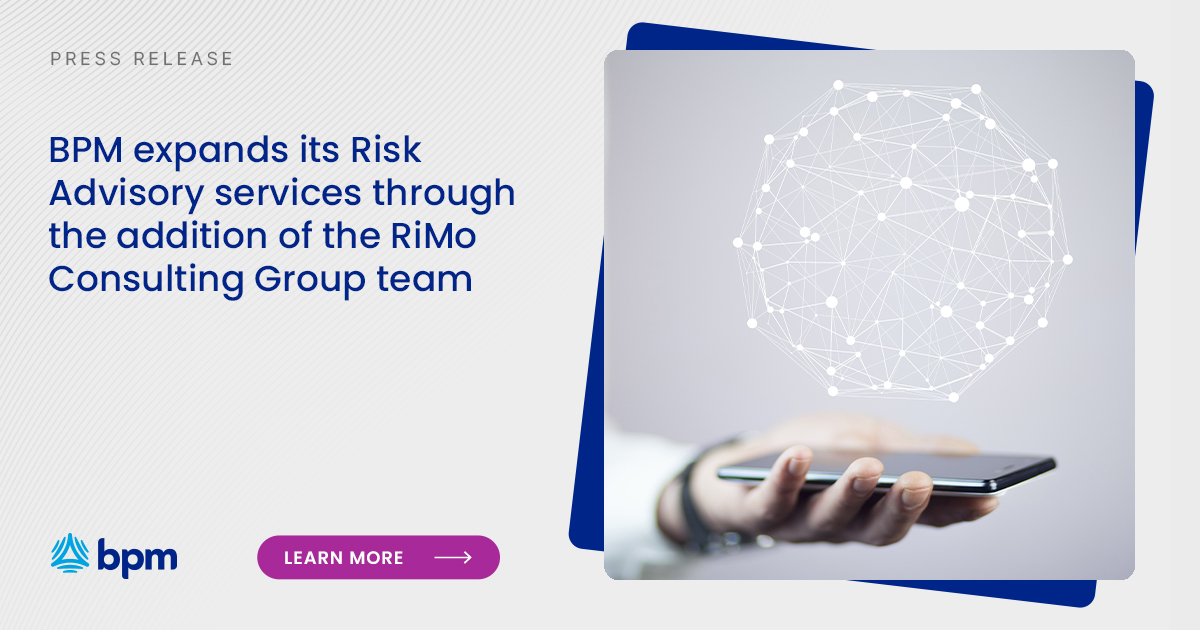
BPM LLP, one of the 40 largest public accounting and advisory firms in the country, has grown its nationwide presence through its addition of the Las Vegas-based RiMo Consulting Group team, effective March 1, 2023. The team is led by CEO Kevin Berman, who will also join BPM.
“We found the RiMo team’s values to be consistent with those at BPM – Because People Matter,” said BPM CEO Jim Wallace. “Kevin and his team believe in helping their clients, colleagues and communities to be successful in work and life. They share BPM’s commitment to providing clients with leading expertise that goes beyond providing a service. Both BPM and the RiMo team operate with a forward-thinking, client-centric approach to delivering Risk Advisory and Managed Services. We are excited to welcome them to the BPM community.”
The RiMo Consulting Group team serves clients across the U.S. With extensive experience in helping clients grow their businesses, they provide a full suite of Risk Advisory services. This offering includes Enterprise Risk Management, IT/Cyber Risk Management, Regulatory Compliance, Business Resiliency, ESG and Managed Services. Leveraging strategic alliances within the Integrated Risk Management (IRM) Technology, Cyber and Cloud ecosystems, they bring a number of specialized client services and complementary channel relationships to BPM.
“Our team’s goal is to serve as a trusted partner and consistently transform our clients’ modern business environments with best-in-class Risk Advisory solutions,” said CEO Kevin Berman. “With BPM’s diverse practice groups and expanded service offerings, they share our commitment to delivering the best results and building lasting relationships with our clients. We look forward to greatly increasing our expertise and capabilities to our clients by blending our pragmatic, data-driven approach with the talents of our BPM colleagues. This is significantly enhanced and accelerated by BPM’s deep bench of resources.”
BPM’s addition of the RiMo team follows its 2023 combination with Long Beach-based O&S CPAs and Business Advisors in January. Since 2020, the Firm has also expanded through combinations in Orange County, Long Beach, Santa Monica, Sacramento and Santa Rosa.
The RiMo Consulting Group team will rebrand under the BPM name. Along with establishing its first presence in Nevada, BPM’s growth nationwide is complemented by 16 locations across California, Oregon, Washington and India, with specialized professionals strategically located across the globe.
About BPM
BPM LLP is one of the 40 largest public accounting and advisory firms in the United States with a global team of over 1,000 colleagues. A Certified B Corp, the Firm works with clients in the agribusiness, consumer business, financial and professional services, life science, nonprofit, wine and craft beverage, real estate and technology industries. BPM’s diverse perspectives, expansive expertise and progressive solutions come together to create exceptional experiences for individuals and businesses around the world. To learn more, visit our website.