Selected for its very low fermentation capacity, SafŒno™ Bioprotect MP-72 is particularly suitable for the bioprotection of musts and grapes.
SafŒno™ Bioprotect MP-72 is recommended for pre-fermentation phases on white and rosé musts (cold settling and stabulation) and on red grapes during cold soak/cold maceration.


SafŒno™ BioProtect MP-72 was isolated in a Loire Valley vineyard in France through a program carried out in partnership with the French Institute of Vine and Wine (IFV). Selected for its very low fermentation capacity, SafŒno™ Bioprotect MP-72 is particularly suitable for the bioprotection of musts and grapes.
More information: Bioprotection for Grapes & Fruits | SafŒno™ Bioprotect MP-72
As a wine consumer, if you are looking for qualitative low-to-no-sulfite wines, you know it can be challenging. As a winemaker, if you are trying to craft wines with lower levels of sulfites, you know it is difficult to achieve. It requires a deep understanding of your processes, a solid knowledge of the science behind sulfites mechanisms of action, and continued efforts at all stages of your wine’s life cycle.

The reasons why you are working on a low(er) SO2 winemaking program can be very diverse and multiple. You may be producing organic wines or simply trying to follow regulatory limits. You may be targeting to reduce the allergens in your wines or trying to use fewer chemicals in general. You may be worried about the negative effect that SO2 can have on your wines’ organoleptic qualities, or you are simply targeting to follow the overall health trend. In any case, Fermentis has solutions for you.
As a global leader in the research and development of fermentation solutions for the beverage industries for nearly 170 years, Fermentis by Lesaffre has developed creative products to help winemakers in their low sulfites projects. A recent Wine Industry Advisor webinar on Low SO2 Winemaking Solutions benefited from the expertise of Anne Flesch, Technical Sales Support Manager for Fermentis in the Americas. “For those seeking a low SO2 regimen, we recommend employing a multi-targeted approach using microbiological, chemical, and/or physical alternatives to replace its functions. Focusing and harnessing the power of Yeast and Yeast Derivatives is a good first step to take”, says Anne Flesch.

Understand the value of SO2 and the great potential of alternatives
In the must, SO2 helps prevent the onset of undesirable fermentations, such as those from acetic acid bacteria, and inhibits oxidative enzymes like grape tyrosinases and laccases. In the finished wine, it protects against bacterial and Brettanomyces spoilage. It also guards against oxidation during winemaking operations and helps prevent off-flavors and color degradation. Thus, lowering SO2 risks losing its antimicrobial, antioxidant, and oxidase-inhibiting properties and requires far greater stringency by the winemaking team. Anne Flesch noted that “it’s very easy to go overboard with SO2 as a safeguard of your operations but high levels can result in less fruity wines, a bitter or burning taste, or even a matchstick odor”, all characteristics that can be apparent to consumers.
This harvest Fermentis’ portfolio will include a new non-Saccharomyces yeast strain, a Metschnikowia pulcherrima, called SafOeno™ Bioprotect MP-72, which can be a great bioprotection tool for your must. It has the ability to colonize the pre-fermentation must, reducing the growth of non-desirable yeast and reducing the need for SO2 at this stage. It can be used in white or rose musts from short clarification to longer pre-fermentation practices such as stabulation for up to 5 days at ~10°C /50°F or 10 days at ~4°C /40°F. It can also be used in red winemaking during cold soak. Then, as soon as you inoculate with your chosen commercial Saccharomyces cerevisiae, it will quickly take over for the alcoholic fermentation’ adds Flesch. The additional value is that it can increase the aromatic profile and volume of your wines, while keeping its analytical profile without fault and lower in sulfites.

Other products that help craft low sulfite wines include a selection of low SO2 producing SafOeno™ yeasts and yeast-derived nutrients, including SpringFerm™ Equilibre rich in thiamine (a vitamin proven to reduce SO2 production during fermentation) and SpringFerm™ Xtrem. “Carefully managing your fermentations should be a big part of your low SO2 winemaking program”. Other yeast-derived tools include SpringArom™, an inactivated yeast rich in glutathione, a natural antioxidant molecule. It can be used before and until the end of the fermentation in whites and roses. There are also yeast derivatives that mimic aging on lees and limit the microbial risks associated with such practices, such as SpringCell™ Color G2 to be used just before yeast inoculation or SpringCell™ Manno for use at the end of fermentation or the beginning of aging.
In addition, Fermentis’ North American distributor, ATPGroup, also carries products that complete a low SO2 program, including antioxidant tannins, antimicrobials like Vin-Chito (chitosan) and Vin-Lyso (lysozyme) or antioxidation products such as OxyGuard (micro- and nano-crystalline cellulose).
For more information and recommendations of protocols, Fermentis would love for you to reach out. For more details, please also refer to Fermentis and ATPGroup’s Low SO2 Winemaking Solutions webinar

Watch this Fermentis & ATP Group webinar to explore practical strategies for lowering sulfites in winemaking. From harvest to bottling, learn how to optimize SOâ‚‚ use with bioprotection, fermentation tips, and cellar management for the 2025 vintage.
Lowering SO2 in Your Wine is Getting Easier
With this New Bioprotection Solution
As a wine consumer, if you are looking for qualitative low-to-no-sulfite wines, you know it can be challenging. As a winemaker, if you are trying to craft wines with lower levels of sulfites, you know it is difficult to achieve. It requires a deep understanding of your processes, a solid knowledge of the science behind sulfites mechanisms of action, and continued efforts at all stages of your wine’s life cycle.
The reasons why you are working on a low(er) SO2 winemaking program can be very diverse and multiple. You may be producing organic wines or simply trying to follow regulatory limits. You may be targeting to reduce the allergens in your wines or trying to use fewer chemicals in general. You may be worried about the negative effect that SO2 can have on your wines’ organoleptic qualities, or you are simply targeting to follow the overall health trend. In any case, Fermentis has solutions for you.
As a global leader in the research and development of fermentation solutions for the beverage industries for nearly 170 years, Fermentis by Lesaffre has developed creative products to help winemakers in their low sulfites projects. A recent Wine Industry Advisor webinar on Low SO2 Winemaking Solutions benefited from the expertise of Anne Flesch, Technical Sales Support Manager for Fermentis in the Americas. "For those seeking a low SO2 regimen, we recommend employing a multi-targeted approach using microbiological, chemical, and/or physical alternatives to replace its functions. Focusing and harnessing the power of Yeast and Yeast Derivatives is a good first step to take", says Anne Flesch.
Understand the value of SO2 and the great potential of alternatives
In the must, SO2 helps prevent the onset of undesirable fermentations, such as those from acetic acid bacteria, and inhibits oxidative enzymes like grape tyrosinases and laccases. In the finished wine, it protects against bacterial and Brettanomyces spoilage. It also guards against oxidation during winemaking operations and helps prevent off-flavors and color degradation. Thus, lowering SO2 risks losing its antimicrobial, antioxidant, and oxidase-inhibiting properties and requires far greater stringency by the winemaking team. Anne Flesch noted that “it's very easy to go overboard with SO2 as a safeguard of your operations but high levels can result in less fruity wines, a bitter or burning taste, or even a matchstick odor”, all characteristics that can be apparent to consumers.
This harvest Fermentis’ portfolio will include a new non-Saccharomyces yeast strain, a Metschnikowia pulcherrima, which can be a great bioprotection tool for your must. It has the ability to colonize the pre-fermentation must, reducing the growth of non-desirable yeast and reducing the need for SO2 at this stage. It can be used in white or rose musts from short clarification to longer pre-fermentation practices such as stabulation for up to 5 days at ~10°C /50°F or 10 days at ~4°C /40°F. It can also be used in red winemaking during cold soak. Then, as soon as you inoculate with your chosen commercial Saccharomyces cerevisiae, it will quickly take over for the alcoholic fermentation’ adds Flesch. The additional value is that it can increase the aromatic profile and volume of your wines, while keeping its analytical profile without fault and lower in sulfites.

Other products that help craft low sulfite wines include a selection of low SO2 producing SafOeno™ yeasts and yeast-derived nutrients, including SpringFerm™ Equilibre rich in thiamine (a vitamin proven to reduce SO2 production during fermentation) and SpringFerm™ Xtrem. “Carefully managing your fermentations should be a big part of your low SO2 winemaking program”. Other yeast-derived tools include SpringArom™, an inactivated yeast rich in glutathione, a natural antioxidant molecule. It can be used before and until the end of the fermentation in whites and roses. There are also yeast derivatives that mimic aging on lees and limit the microbial risks associated with such practices, such as SpringCell™ Color G2 to be used just before yeast inoculation or SpringCell™ Manno for use at the end of fermentation or the beginning of aging.
In addition, Fermentis’ North American distributor, ATPGroup, also carries products that complete a low SO2 program, including antioxidant tannins, antimicrobials like Vin-Chito (chitosan) and Vin-Lyso (lysozyme) or antioxidation products such as OxyGuard (micro- and nano-crystalline cellulose).
For more information and recommendations of protocols, Fermentis would love for you to reach out. For more details, please also refer to Fermentis and ATPGroup’s Low SO2 Winemaking Solutions webinar

Join Fermentis and ATP group to discuss different winemaking solutions to craft wine with lower sulfites. In this session we will discuss the basics of SO2 management, why reduce it, the different strategies to implement from harvest to bottle to help decrease the use and production of SO2, how to optimize its efficiency.
Some topics discussed will be good pre-fermentation practices, bioprotection, fermentations optimization, aging in the cellar and pre-bottling practices. We will discuss microbial and oxidation management through the life of wines. The seminar will focus on sharing implementable solutions for the 2025 harvest.
Speakers
Anne Flesch, Technical Sales Support Manager – The Americas / Fermentis
Sean Thommen, Sales Manager – West USA / Fermentis
James Roblee, Enology Technical Support Representative / ATP GroupE2U™ is a groundbreaking step taken by Fermentis in the world of yeasts and yeast derivatives for beverages.
With E2U™ certified products, save time and energy. With less to worry about, you can focus on what you do best: creating the finest fermented beverages for your customers.
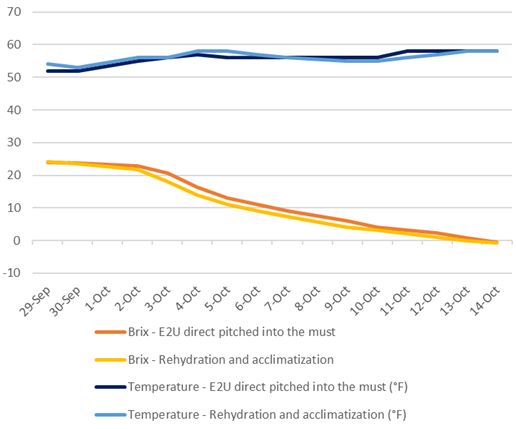
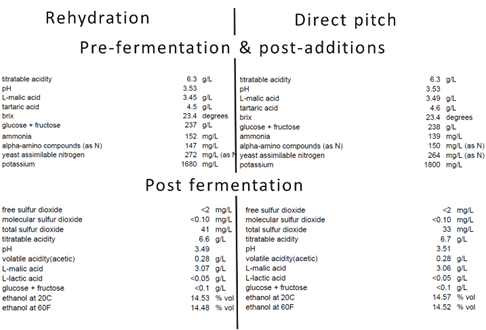
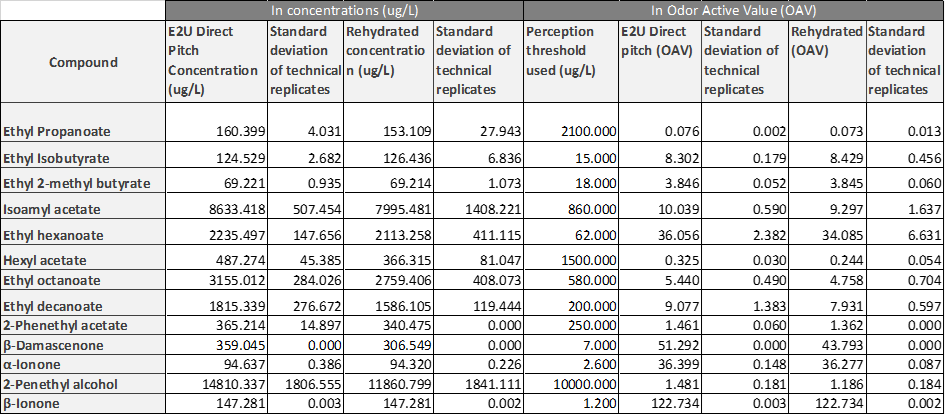
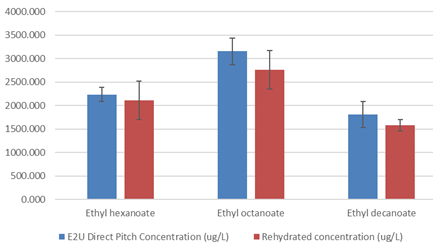
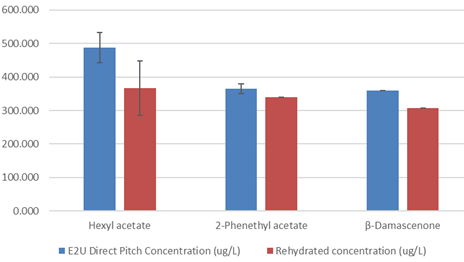
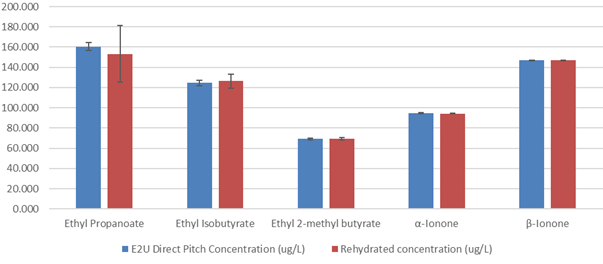
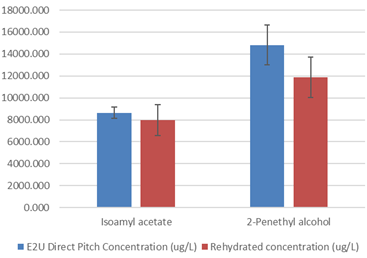
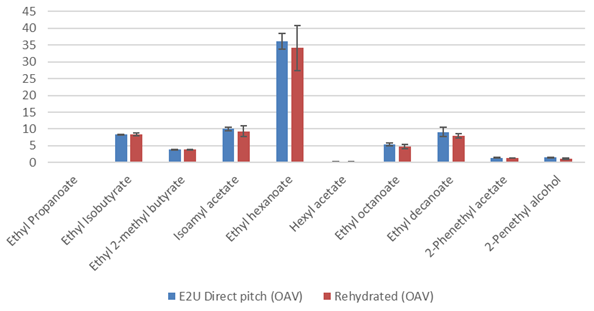
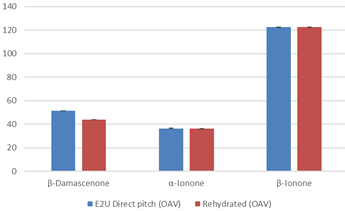
When it comes to yeast, E2U™ certification means you can choose to pitch directly into the wort, or proceed to rehydration. It makes no difference, it’s up to you. We guarantee the same results.
For yeast derivatives, with E2U™ certified products, you’ll enjoy low dustiness and high dispersibility in the tank.
Learn More!
Join the Fermentis team for an interactive seminar on positive aromas from fermentation in wine: learn to identify them through tasting, understand how to select the right yeast to promote them and finally how to drive them through fermentation management (temperature, nutrition, etc.). This seminar will alternate tastings with aroma kits -in wine- provided by our partner AROXA and training on the art of fermentation. You will be tasting to identify 9 key aromatics compounds the yeast can produce and/ or impact: 3 thiols and 6 key esters. We will also discuss and answer your question on Easy-To-Use (E2U) yeasts and yeast direct pitching.
To finish this seminar will propose a small session about coffee cherry fermentation and how selected yeast can shape coffees’ aromas, with tasting of different Colombian coffees fermented with different yeasts.
The half day will start with a light breakfast and conclude with a lunch to socialize and continue our discussions. The registration will close on to accommodate for the organization of the tastings. For any request after that please contact Sean at s.thommen@fermentis.lesaffre.com.
Date: May 7th from 9am to 1pm
Location: Paso Robles Inn
1103 Spring Street. Paso Robles, CA 93446.
Program of the day:
Welcome and breakfast: 8:30-9:00 AM
Tasting and fermentation technical program: 9:00-11:00 AM
Yeast can be Easy-To-use and FAQ: 11:00-11:30 PM
The world of coffee fermentation 11:30-12pm
Innovative upgrades at major Fermentis production plant deliver significantly improved beer yeast quality and packaging flexibility.
Fermentis, a world-leading manufacturer of active dry yeast for beverages, has recently completed significant upgrades to its production facilities and packaging lines at Algist Bruggeman, one of its major production plants in Ghent, Belgium. The developments were designed and built to meet strict quality, traceability and logistical requirements with the goal of improving the microbiological quality of yeast and better servicing Fermentis customers around the world.
Key components of the project include:
- Existing yeast production workshop upgrades.
- New state-of-the-art machinery and dry yeast transport and cleaning equipment.
- Fully cleanable production lines in both humid and dry conditions, to reduce possible cross contamination.
- Additional quality control checks to eliminate any leaks, soft bags or labelling errors including an intelligent camera system.
- A self-storage system featuring robot cells for automatic packaging, transport and intermediate storage.
- Innovative new packaging updates, including easy-to-open features, unique QR codes for improved product traceability, and on-demand customizable secondary label
- printing to meet market- or customer-specific requirements.

Stéphane Meulemans, General Manager at Fermentis, says, “We are thrilled to see the results of another big investment in our future: a brand-new production line in one of our key factories of the Lesaffre Group. This new facility has allowed us to raise the quality of our yeast to new standards, unheard of in the industry.”
Geert Van Renterghem, General Manager at Algist Bruggeman, says: “A well- functioning team has the power to achieve extraordinary results. And this has been my overwhelming experience with this project. The collaborative spirit is a hallmark for our organization, driving cutting-edge advancements in the quality of our end products, exceptional customer service and responsible resource management. Our commitment to sustainable energy and water use underscores our dedication to protecting and preserving the planet.”
Fermentis creates fermentation and characterization solutions for brewers, winemakers and all producers of beverages. The company is a business unit of Lesaffre Group, a global key player in yeast and all its applications for over 170 years. All fermentation products from Fermentis are developed with unsurpassed expertise under meticulous production procedures, which guarantees the highest microbiological quality and maximum fermentation activity.
Tell us a few words about yourself and your wines:
Born in a family with strong roots in the Douro Valley and a long winegrowing tradition, to Tiago Alves de Sousa the land appeal was listened from a tender age. With a degree in Agricultural Engineering by the University of Trás-os-Montes e Alto Douro, he was distinguished with the award Foundation “António de Almeida” and with a special distinction by the Portuguese government for being the best student of the degree.
After some periods of harvest training, collaborating with consecrated winemakers such as Manuel Vieira, Luís Cabral de Almeida and Anselmo Mendes, complemented with studies of winemaking and viticulture and a passage in the Institute of Viticulture of the Università Cattolica de Piacenza (Italy) where he collaborated with the reputed Professors Mario Fregoni and Luigi Bavaresco, he joins definitely Alves de Sousa’s winemaking team in 2002.
For some years he accumulated the work at the Alves de Sousa’s winery with a PhD in Viticulture & Œnology at the University of Trás-os-Montes e Alto Douro, which was concluded in 2011 with maximum classification. He has several publications about Viticulture and Œnology in international scientific magazines and in conference proceedings, being often invited to give lectures in Portugal and abroad. Tiago is also often judging in some of the most important international wine competitions (UK, China, Portugal, Germany, etc.).
Today he’s responsible for the winemaking of all the Alves de Sousa family’s Douro & Port wines. Since Tiago became the winemaker, the Alves de Sousa family won the award “Producer of the Year” in 2006, received more than 300 medals in the most prestigious international wine competitions and had some of the highest ratings ever of Portuguese wines in the most important international publications. In 2016 Tiago was invited to become a member of “Fórum de Enólogos” (Winemakers Forum), an exclusive wine club that gathers the most prestigious Portuguese Winemakers.
In 2017 Tiago was distinguished with the “National Winemaker Award” by the Fraternity of Algarve’s Gastronomists, an award held only every two years, distinguishing the persons that have contributed to the elevation of Wine and Gastronomy in Portugal and Europe. A very special distinction on the same year of a double nomination for the awards “Winemaker of the Year” (by magazine “Wine – A Essência do Vinho”) and “Winemaker Generation XXI” (by magazine “Paixão pelo Vinho” ), adding also on the same year nominations on two of the most important Portuguese wine publications.
A triple recognition of a very special year for the work of Tiago Alves de Sousa in the Douro & Port wines of the Alves de Sousa family. He’s also responsible for the exports and for the promotion of the wines all over the world. Tiago is one of the members of the 5th generation of the Alves de Sousa family.

When did you first start using ViniLiquid™?
First trials in 2016 and in bigger scale in 2019.
Tell us the story of why you came to use ViniLiquid™, what challenges were you facing?
In the Douro valley, we have extraordinary conditions for winemaking but also some challenges – the soils are very poor, the vineyards are often under water deficit conditions, it’s a relatively warm climate, all leading to a great concentration in the berries. So, the musts may be of great quality potential but often with low nitrogen levels and sometimes with high sugar content.
So, there may be risks of stuck fermentations or some metabolic deviations.
In what ways does ViniLiquid™ improve your winemaking process?
It helped to guarantee a more robust yeast population, leading to very consistent and progressive fermentations, and therefore giving us much more control over how we want our fermentation to develop.
Naturally, this will help also to preserve very bright, clean, and pure flavors.
And in a few varieties aromatically more neutral, the free amino acids content also helped to make the juices a bit more expressive but still respecting the grape’s character.
Would you recommend ViniLiquid™ to someone else and why?
Sure. The results are very consistent, it’s a good tool, especially when you know that your fermentation conditions can be challenging.
The liquid form is also a great bonus – during harvest time every little help, every little detail matters, so being easier and faster to measure and apply always saves us time that we can to dedicate to all the other things we have to do.
And, although I should say that it’s expensive … I must admit that it’s not that bad in terms of quality/value.