
how do you use oak?
Some winemakers are very wary of using oak, treading lightly or avoiding it altogether when crafting their wines. I have heard the phrase “I like to let the fruit speak for itself” many times which is great when you make wines from high quality grapes farmed for quality rather than quantity. In the right hands, high quality grapes make high quality wines. These wines are complex, concentrated, and have all the wine attributes that make them a pleasure to drink. The one wine attribute that rarely gets top billing but is something that really separates good wine from great wine is a wine’s mouthfeel. Mouthfeel incorporates a combination of attributes like Midpalate Weight, Texture, Sweetness. It’s the way the wine feels in your mouth and to me constitutes a great deal of a wine’s reward. Without the proper mouthfeel, wines can be thin and insipid and lack reward. Winemakers that avoid oak or aren’t utilizing oak in their wines are missing a great opportunity to improve their wine’s mouthfeel which can be easily done without the oaky impact.
don’t make the dreaded donut wine!
Wine that looks good, smells good and tastes good but is lacking mouthfeel is such a disappointment to anyone that really enjoys wine. Unfortunately, a good number of wines on the market are just that, and what I refer to as “donut wines.” Donut wines are of course wines that have nice flavors and aromas, but a hole exists where the mid-palate should be. Oak does a nice job filling the hole in and Winemakers have been using oak for this purpose for many years. Traditionally, ordering French Oak barrels with Untoasted Heads has been used as an effective way to improve a wine’s texture without adding additional oak impact. In fact, barrels with untoasted heads actually results in less overall oak impact from an aroma and flavor standpoint but more impact on texture. But why would you want to add oak without impact? Mouthfeel baby! Untoasted heads are effective, but they can overwhelm some wines and make them astringent.
Always opt for seasoned oak!
The same can be said for using untoasted barrel alternatives for this purpose. After primary fermentation a Winemaker should be judicious with their use of Untoasted Oak. I have used a few barrel alternative products meant to mimic the impact of an untoasted barrel head with some success, but they can dry the wine out if you’re not careful. This is especially true when the oak has not been properly seasoned. In pursuit of a much better alternative to these existing oak complements, and without the roughness and astringency associated with their use, Innerstave has created our new revolutionary Foundation Toast.
foundation toast!
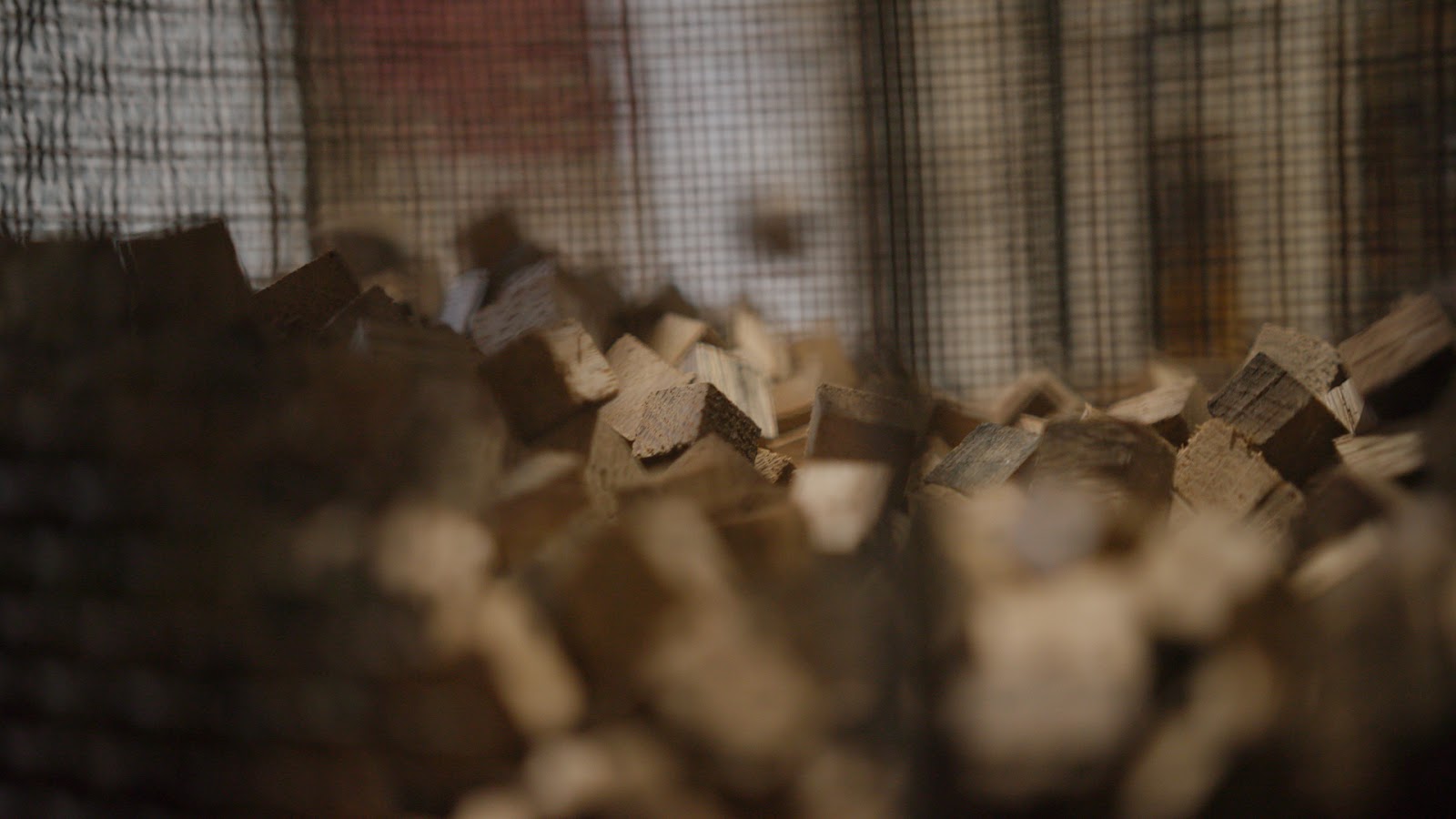
Only available in French Oak, this toast was developed utilizing the oldest, most seasoned wood from our facility in Carneros CA where the cold and rainy winters, hot summer sun, and daily fog rolling in and out across San Pablo Bay have softened and mellowed this oak for over six years. We then very lightly toast the oak just to the point where any “greenness” in the wood fades and the natural sweetness comes out but before any “toasty” oak characters develop. The result is an oak complement that provides amazing weight, texture and sweetness without any toasty oak impact and without astringency. Currently, Foundation toast is available in all formats from the largest Tank Staves and Fan Packs, to Blocks, Cubes, Chips, and Fines.
Foundation at 25%-30% paired with your favorite aromatic toasts provides a much richer, rounder, more complex and barrel-like profile than a single toast alone and has all the reward a Winemaker needs to avoid creating the dreaded donut wine.
-Jason Dodge, Managing Director, Winemaking

lets take this relationship to the next level!
In my twisted brain, I see modifying your winery to take full advantage of barrel alternatives a lot like asking your girlfriend to move in with you. You’ve been dating for a while now and it just makes sense that you show your commitment and take that next big step. But what alterations or adjustments do you need to make to your bachelor pad to help with this transition? Other than picking your dirty clothes off the floor – she’s asked you nicely several times and the hamper is literally 5 feet away. The great news is that modifying your winery is actually a lot easier than modifying your behaviors or your bachelor pad. Some equipment and modifications are relatively easy to employ and fairly inexpensive, yet others can take a bit more engineering and financial resources.
d-rings are your friend
One of the easiest ways to modify your existing tanks to accommodate barrel alternatives is to install stainless steel chain or cables. This can be done by welding d-rings directly to the inside of the tank every 3-4 feet, threading the chain or cable through the rings and connecting the cable/chain end-to-end. The rings should be installed 4-5 feet above the bottom of the tank to keep the oak out of the lees. Connecting the cable or chain to itself ensures that the downward force of the oak is spread equally around the tank.
When using stave fan-packs or any format in an infusion bag the stainless chain does the best job of spacing your oak out and not sliding together as they would on a cable. When spaced out, the oak will be allowed to float freely and fully extract into the wine, giving the winemaker a much better result.
Is there a holy grail?
The holy grail of using barrel alternatives with wine has always been and will continue to be the replication of aging or fermenting in a barrel. With that being said, winemakers should think about the conditions inside the barrel that impact the wine. Obviously, the oak itself has a tremendous impact and luckily, that can be very precisely dialed-in with barrel alternatives. Temperature, exposure to oxygen, and the presence of lees can also have a significant impact on the wine.
tiny bubbles
The use of Micro Oxygenation (Micro-Ox) to continuously dose pure oxygen into the wine to mimic the gradual introduction of oxygen that happens in barrels is a powerful tool for achieving the best results when using barrel alternatives. Micro-Ox helps to integrate the oak into the wine, softens tannins, can improve aromatics and allows the wine to “evolve” in tank. Several companies make units, and their costs vary from a few thousand to tens of thousands based on the number of tanks needing to be serviced at once and the scope of installation. Single-tank portable units are probably the most economic choice for those starting out.
Stir the Lees, but do it carefully
Lees stirring is a time honored and proven winemaking practice that has been employed for hundreds of years. Stirring juice lees before fermentation has been proven to add depth and complexity in white wines like Sauvignon Blanc and Rose’s as well. Sur Lie (on the lees) aging is an old-world technique in Chardonnay production in which the yeast lees are periodically stirred in barrel. This process results in a softer mouthfeel, improved texture and weight and additional complexity from the breakdown of the yeast. The lees also help to absorb oxygen during aging and can act as a fining agent.
There are several ways to stir lees in tanks. One way has been with the use of “snakes” which are hoses that lie at the bottom of the tank and create a sweeping motion when wine is circulated through them which kicks up the lees into the wine. I am not a big fan of these as I have seen the use of snakes cause premature degassing and oxidation of the wine especially at the large scale wineries. However, they are relatively cheap, and a small producer could probably employ the use of snakes with great success if monitored closely. Other stirring techniques include the use of mixers that are inserted through a 2” or 3” ball valve or mixers permanently installed through the side of the tank. Both of these are relatively effective unless the lees have been allowed to settle for too long and as long as you keep the oak away from the blades. I have seen rack arms used fairly successfully where the winery circulates from the bottom valve and back into the tank through the rack arm pointed down at the bottom of the tank. This does a fairly decent job but only really gets a small portion of the lees back into solution and the risk of oxidation and/or contamination is a concern. The absolute best lees stirring in a tank I have seen has been from the installation of a stirring device that is mounted to the bottom of the tank or inserted through the top of the tank and connected to a programmable controller. This “Batonneur” (lees stirring) device can be programmed to turn on and off at regular intervals throughout the day keeping the lees in suspension without having to touch the tank and without degassing the wine. This device can also be used when a wine (white or red) is being aged with barrel alternatives – with or without Micro-ox to keep the wine homogenous and help accelerate the evolution of oak into the wine.
the goldilocks zone
And finally, maintaining proper storage temperature while using barrel alternatives is extremely important for success. Your new housemate will definitely appreciate your attention to the temperature of your shared home, and you will be pleased with the end result. Finding this “goldilocks” zone could mean the difference between success and you sleeping on the proverbial winemaking couch. Too cold could mean your wine relationship never evolves and you eventually part ways and spend the rest of your life wondering what could have been. Too hot could mean your wine relationship moves too quickly, you miss the warning signs (of course) things deteriorate past the point of no return with the end result leaving a bad taste in your mouth.
Whatever reason you have for utilizing barrel alternatives – cost, efficiency, sustainability, quality, winestyle, or staffing, it’s important to know that there are winery modifications, techniques, and technologies that can help ensure a successful and happy relationship for many years to come.
–Jason Dodge, Managing Director, Winemaking.
ready to get started?
Get in touch with our Oak Specialists today!
why is innerstave buying wine? - Innerstave
so we can better serve our customers It has been said that to be successful in business one should know their product better than anyone else. We agree, and with that in mind the team here at Innerstave decided to []
fixing wine faults with oak - Innerstave
from winemaker to wine fixer It turns out winemaking is not always about romance and strolls through sun-drenched Tuscan vineyards. While I have personally frolicked across Tuscan hillsides, it was not in a winemaking role, yet wine certainly played its []
the benefits of oak chips in fermentation - Innerstave
building your wines foundation I have always looked at crafting wines like building a house. You start with a good solid foundation and sturdy framework (i.e grapes) and continually build upon that throughout the winemaking process. Unfortunately, I have yet []
a winemaker's guide to planning for harvest - Innerstave
planning for harvest season Here we go againWinemakers everywhere are now just waking up from their harvest-induced fog only to find out that winter is over, spring has sprung and its time once again to start putting together their harvest []
learning the oak alternatives process - Innerstave
We are always talking about pairing wine with food. But what about pairing your wine with wood? As a Winemaker, the use of oak, specifically oak complements, or barrel alternatives has proven to be an efficient, sustainable, and cost-effective way []
February 24, 2022
Sonoma, CA Innerstave has announced the appointment of Jason Dodge as Managing Director, Winemaking. In his role, Dodge will offer his career of winemaking expertise to Innerstave customers by advising best practices and recommendations on oak and micro-oxygenation use.
“We are ecstatic to see Jason Dodge don the Innerstave Blue,” said Cody Ewers, VP of Global Sales and Marketing. “His experience building oak programs and executing winemaking protocols over the course of 20+ harvests will allow our customers to leverage the lessons of past vintages as they craft the wines of tomorrow.”
Whether it is helping customers finish wines before bottling or developing new oak programs from scratch, Dodge stands ready to lend his extensive production experience to the Innerstave family.
“I have enjoyed working with Innerstave’s products and the amazing team over here for years,” Dodge said. “I am excited to come aboard and help support the company’s commitment to providing real-world, practical consultation to our clients and I look forward to being able to apply what I have learned over the years and help contribute to the success of our clients.”
Dodge brings over 20 years of experience in the Wine Industry, starting his career as an Assistant Brandy Maker for E&J Gallo. He then went on to assume Senior Winemaker roles at Gallo and Diageo, as well as Director of Winemaking and General Manager roles for both Constellation, and Oak Ridge Winery. He has worked with more than 30 different grape varietals and is excited to bring that knowledge to bear in this new chapter.
Steve Dorfman, President of Innerstave also notes that, “It is awesome to have a dynamic industry stalwart join the Innerstave team. Dodge brings a superior level of winemaking expertise to the creation, adaptation and refinement of our oak complements for the wine industry.”
About Innerstave
For more than forty years, Innerstave has helped beverage producers around the world enhance the color, mouthfeel, structure, and aromatic complexity of their beverages through oak barrel alternatives and advice on how to use them. Winemakers, Brewers and Distillers the world over have used our products and services for decades to improve their products as well as reduce new barrel expenses by taking wood to their beverages rather than their beverages to wood.
Today Innerstave combines a range of services and products beyond our line of oak barrel alternatives to include Accuro Micro-oxygenation devices and Fiber Infusion Technology.
In this way, Innerstave’s Oak Complements help beverage producers reduce their environmental impact, lowers costs of production, and increases the amount of consistency, quality, and control for the beverage professional.
In 1979, Innerstave was created by one simple idea: build a system to replenish premium wine oak barrel flavors without needing to purchase new barrels every year. The company is responsible for an entire industry of new barrel oak alternatives, also known as oak adjuncts, oak alternatives, oak add-ins™, oak integration systems, oak infusion products and oak complements.
Visit their website to learn more at www.innerstave.com and follow @innerstave across all social media platforms or call them for more information at (707) 996-8781.