

 Having hybrid or fungus-resistant varieties in one’s own range is increasingly important. Their reduced need for pesticides means they save valuable time and are more economic to cultivate. They enhance the product offering and arouse customers’ curiosity.
But hybrids have a completely different pectin and phenol structure, often have a different aroma spectrum and therefore need winemaking procedures specific to them. With the right know-how the new varieties have outstanding potential to be anything from easy drinking to top wines.
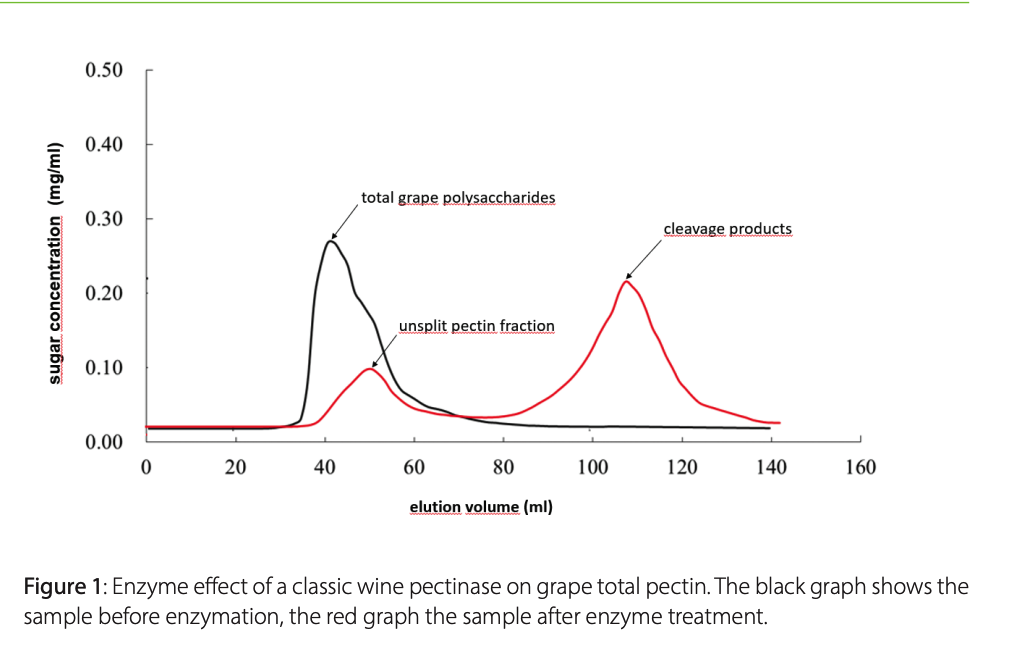
Not only do hybrid varieties usually have a tougher skin, they also have a more complex pectin structure that is comparable with familiar American grapes. This tough, complex pectin structure is due to the increased presence of what are known as “hairy regions”. In this case the D-galacturonic acid chain of which pectin is composed also has side chains of unfermentable sugars, such as araban and rhamnogalacturonan. Conventional pectinases cannot degrade these, which impedes process stages such as pressing, clarification and filtration. It is therefore necessary to use an enzyme with corresponding side activity to break down the mash and for subsequent clarification. Without such an enzyme you do not have the right key to unlock the necessary process stages. Enzyme formulations such as Trenolin® FastFlow DF, which due to its side activities has been used successfully for years with tough-skinned, difficult grape varieties such as Silvaner, can give full rein to its strengths here, for breaking down the mash, for pectin degradation, and to facilitate clarification.
Improved Filtration for Hybrid Varieties_Orchard_and_Wine_2022.pdf