

We have only been offering our complete and final smoke taint removal for a few months. We can barely keep up with the demand by existing and new customers alike.
So far we have been seeing a wave of very relieved customers who are shocked at how we can improve their wine for so little time and money.
In Oregon this sentiment has been especially strong. Our clients are grateful that they have not had to resort to more invasive processes. Speaking of "non-invasive" smoke taint removal, although ours is the least invasive process for removing smoke taint, we've learned something. There is one means of eliminating smoke taint that is even less invasive.
Down here in California the levels of smoke taint are more variable than up North (for 2020). On a few occasions, we have advised clients with very low levels of smoke taint first to try fining with products we recommend (but don't make a penny off of), without our selective treatment first. And we have been glad we did, because we made a few of them very happy when they learned that this solved their problem.
We have always made a point of advising customers on the best approach--even when it means something other than our services. This is why, for example, we have never offered TCA removal--a better and cheaper alternative already exists.
Click here to learn more, or get answers to questions like these:
Why do "free" and "bound" not matter with smoke taint?
What fining agent should I try for low level taint?
Do I need any smoke taint analysis in order to get the taint removed?
How do I get rid of my wine's smoke taint permanently and completely?
How can I get rid of smoke taint w/o any collateral damage?
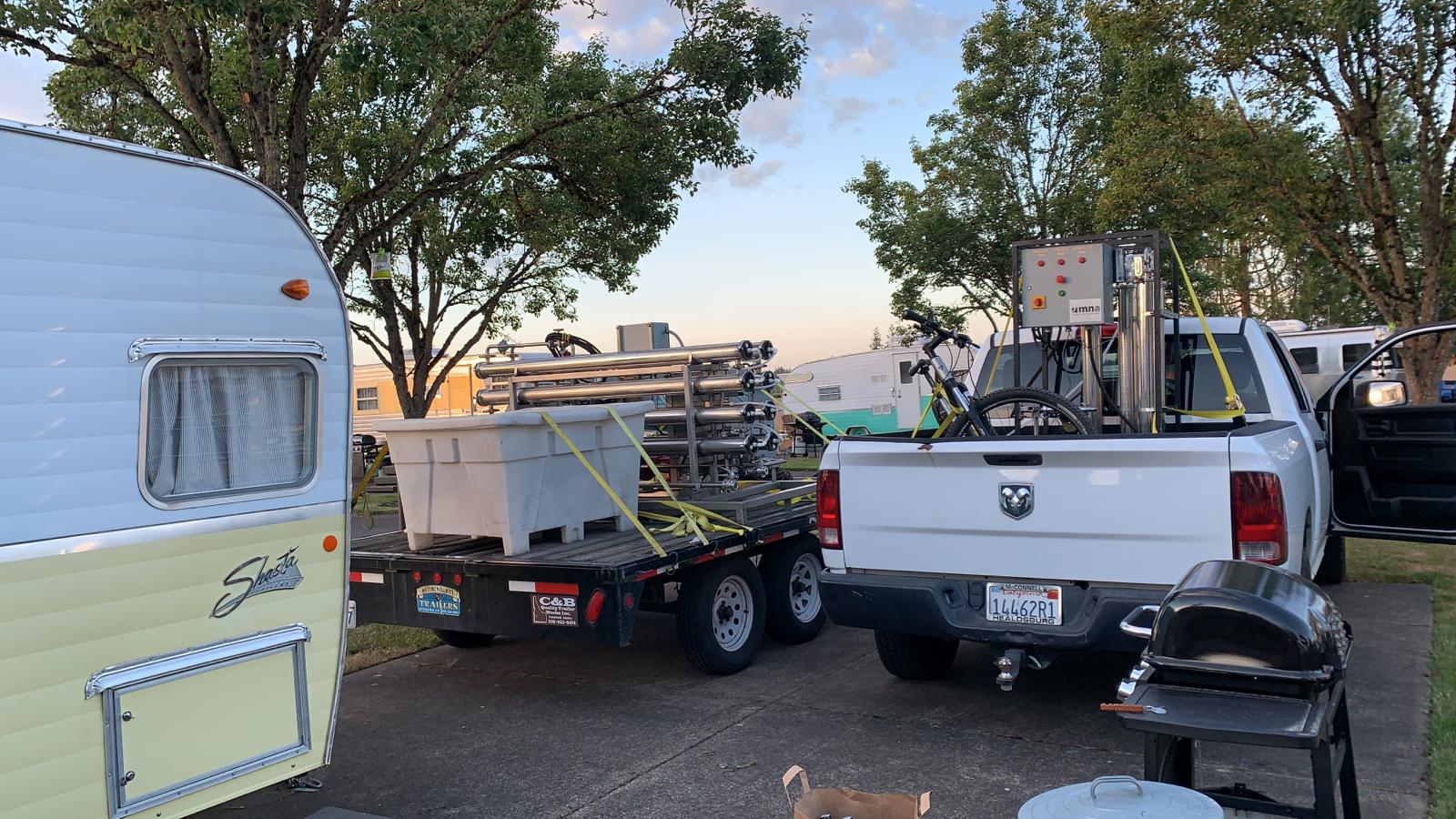 One of our crews in Oregon staying at a super cool vintage camper "hotel".
http://www.mavrikna.com/index.php?option=com_content&view=article&id=78&Itemid=67