Investing in Future Growth in Digital
2020 is now receding in our rearview mirror, and 2021 is about to hit us right between the eyes. Usually, businesses go through years of transition in making changes to the way they do business. Thanks to Covid, this year has been one of rapid transformation rather than transition. The Old World has become the New World before our eyes. Not surprising that when the survival of one’s business is at stake, we look at all reasonable options for staying afloat, even if it means navigating in uncharted waters. In this case, I am referring to digital marketing and eCommerce, which wineries and other businesses discovered in real-time in 2020. In one short Covid year, the wine industry likely achieved 5 years of progress in moving to a dedicated commitment to online sales.
WHAT DOES THAT MEAN?
It means that through pestilence and fires, fewer visitors than ever before came to wine country and this perpetual engine of growth stopped dead in its tracks. To survive, wineries scoured their data for customers new and old and started a full-scale ambush through email, social media, digital advertising, telesales, and other means, including a heightened appreciation for SEO to acquire new customers. It means that virtual tastings became menu du jour for most wineries looking to engage and connect in a more personal way with customers who could no longer visit their winery tasting rooms. It means that a proactive can-do attitude toward marketing produced dramatic results for many wineries, some of whom were able to achieve substantial year-over-year DTC growth even with tastings rooms closed or with limited traffic due to regulations. And it means that digital appetites were whet for more in 2021, only with better results from what we learned in 2020.
BUT WHAT IS BETTER?
For wineries, the mission in 2020 was to get the most out of sales from the customers you already had, while picking up a few more along the way that happened to discover them. That won’t be good enough in 2021, because the low hanging fruit has already been picked. As brutal as it sounds, we’ve exhausted the wine promotions that played off of the novelty or the shock-factor of Covid. The flood of orders that came from the silly “Sip-In-Place” emails or the more straightforward “support us by ordering our wine online” posts aren’t going to cut it as they did in the spring of last year. It’s time to climb that fruit tree and find new customers who won’t be walking in the tasting room door for quite some time. It’s what wineries should have been doing even before Covid hit but didn’t know they needed to. With more competition than ever and more time for consumers to discover, engage, and buy through digital resources, it takes a well-thought-out digital marketing strategy for new customer acquisition to sustain and grow your business.
IT’S ALL ABOUT THE MATH.
There is a rule of thumb in marketing that says a business should expect to spend on average between 5% and 15% of sales to invest in marketing to achieve their sales goals. This amount may differ depending on the industry, the lifecycle stage of the business, gross margins, and other factors. Winery owners have long understood this intuitively by investing in expansive and well-designed tasting rooms, beautiful winery structures, and landscaping which were attributed to “in-kind” marketing expenses. This is a “build it and they will come” strategy, ala Castello di Amorosa, who unfortunately suffered a heartbreaking loss this year during fire season.
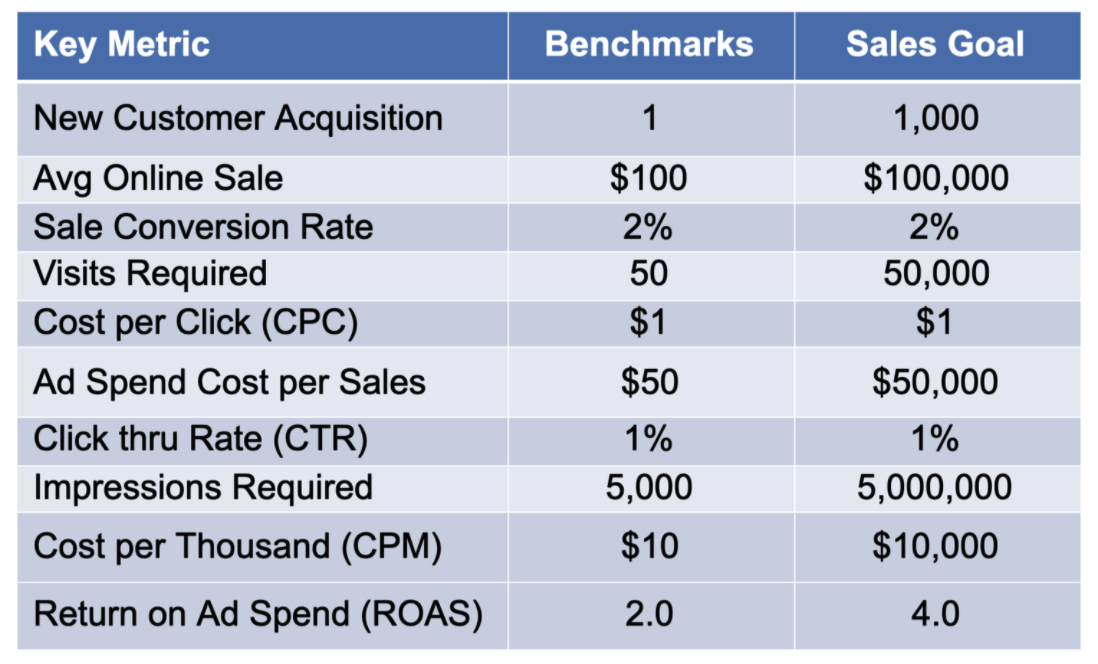
For those without winery castles to market, here is the math behind a strong digital marketing budget: