

For manufacturers and distributors, the true cost of wooden pallets extends far beyond the initial purchase price. Storage requirements, material handling, freight inefficiencies, product damage, and workplace injuries can quietly erode profitability across the supply chain.
Wooden pallet-related accidents are a particularly costly concern. Broken boards, exposed nails, splinters, falling loads, and the physical handling of empty pallets create workplace hazards that can result in injuries, lost workdays, overtime expenses, disrupted production, and increased workers' compensation premiums. In some cases, elevated workers' compensation ratings can translate into hundreds of thousands of dollars in additional annual costs.
Repsco's recycled SuperSheets offer a different approach to material handling—and a compelling financial opportunity.
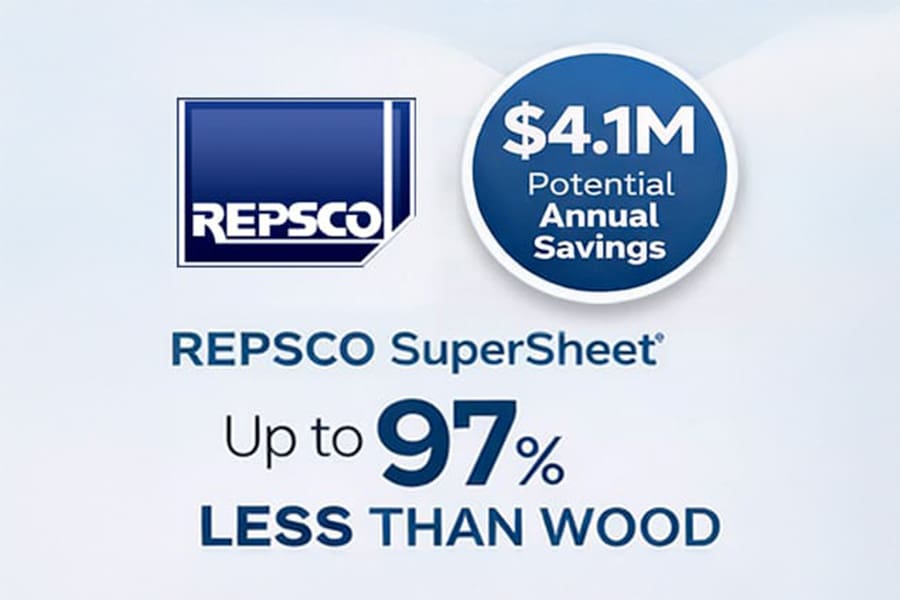
In one modeled scenario involving a 300-person food manufacturer operating 200,000 square feet of facilities and using 40,000 SuperSheets annually, the estimated financial benefits totaled $4.1 million in annual savings, including:
$2,092,000 in freight load savings from more efficient shipping.
$638,000 in reduced finished goods transit damage.
$520,000 in material savings.
$350,000 in worker safety savings.
$331,000 in indirect material movement savings.
$174,000 in indirect material storage savings.
Perhaps most importantly, 88% of the estimated financial benefits came from operational improvements—not simply replacing the cost of wooden pallets.
Reducing unnecessary pallet movements, improving freight utilization, freeing valuable warehouse space, and minimizing handling-related risks can deliver measurable advantages throughout an operation.
For companies evaluating their supply chain costs, the question isn't simply how much a pallet costs. It's how much the entire pallet-based system is costing the business.
Repsco's SuperSheets make a strong case for looking at the bigger financial picture.
Explore the potential ROI of switching to SuperSheets with Repsco.

Reducing shipping costs often starts with eliminating unnecessary weight, storage, and return logistics. That’s why many businesses are moving away from traditional wooden pallets—but choosing an alternative involves more than simply finding something lighter and less expensive.
Fiber sheets can reduce the weight and bulk associated with wooden pallets, but they still have many of the vulnerabilities that come with paper-based materials. Moisture can compromise their strength and edge integrity, while exposure to damp conditions can lead to degradation, mold, and other issues.
Repsco SuperSheets offer the same space- and weight-saving advantages in a durable recycled plastic format. They maintain their integrity in conditions that can compromise fiber sheets, without the rot, mold, pest concerns, broken boards, or protruding nails associated with traditional shipping materials.
The cost advantages extend throughout the supply chain. SuperSheets can cost up to 90% less than traditional wooden pallets, weigh significantly less, require no repair or return program, and are fully recyclable—making them particularly well suited for one-way shipments.
And transitioning away from wooden pallets doesn’t necessarily require a major equipment investment. For businesses that don’t already have the equipment needed to handle slip sheets, Repsco can provide one or more units with an order.*
From wooden pallets to fiber sheets, lighter shipping alternatives can reduce costs. But when durability, moisture resistance, edge integrity, and long-term performance matter too, SuperSheets offer an alternative designed to deliver both savings and reliability.

When businesses look for ways to reduce shipping costs, the focus usually falls on freight rates, carriers, routes, and load optimization. But one expense is often sitting directly underneath the product: the pallet itself.
Traditional wooden pallets add considerable weight and take up valuable space with every shipment. Repsco plastic slip sheets offer an alternative that weighs nearly 97% less than a standard wooden pallet while measuring less than half an inch thick. That difference can mean more usable space in trailers and warehouses—and less unnecessary weight being transported with every load.
The savings can extend beyond freight. Wooden pallets can break, absorb moisture, develop protruding nails, and require repair, storage, or return programs. Slip sheets eliminate many of those recurring issues while still providing the load stability needed to move products efficiently through the supply chain.
For operations shipping at scale, those seemingly small differences can add up. Businesses switching to Repsco slip sheets can see savings of 84–90% per use compared with traditional pallets, while also reducing storage requirements and simplifying material handling.
When every pound, inch of space, and operational expense matters, it may be worth looking beneath the load. The pallet you've always used could be costing more than you think.
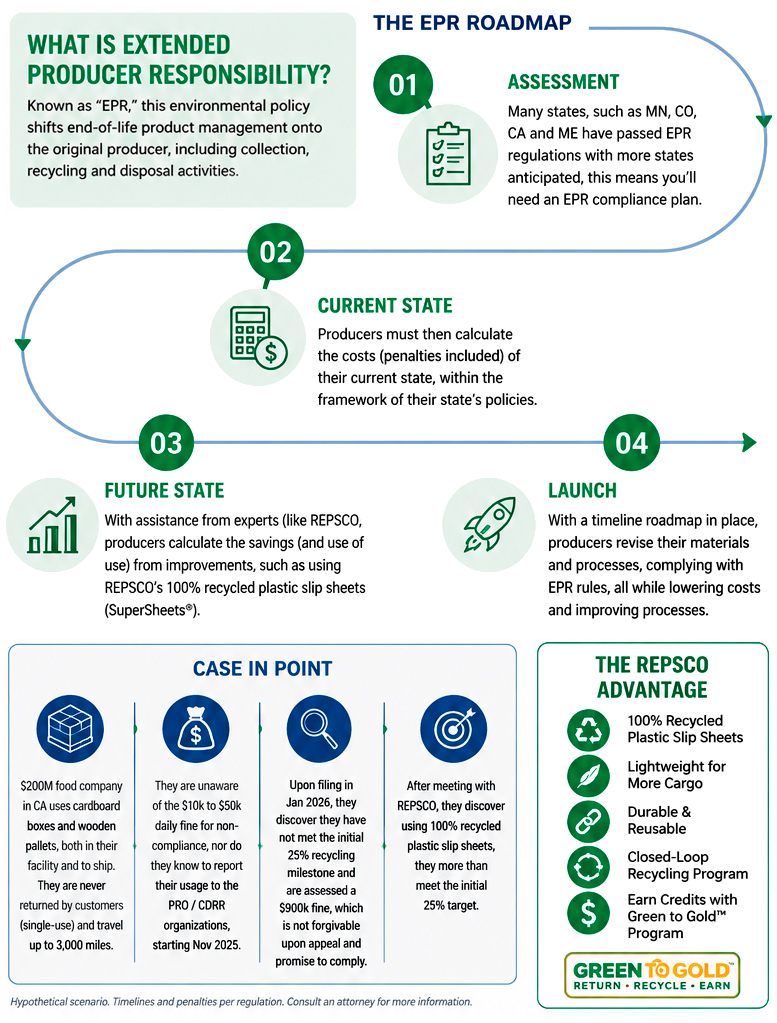
Our game-changing SuperSheet dramatically improves EPR compliance.
Get ahead. Stay ahead!
This is more than just avoiding penalties. Save massive amounts on indirect material costs and even more on optimized processes.
To learn more about recycled plastic slip sheet solutions and evaluate whether they are right for your operation, contact Repsco material handling expert George Isaac at gisaac@repsco.com.

When every shipment matters, the amount of product you can fit into a trailer or container has a direct impact on transportation costs and overall efficiency.
Traditional wooden pallets consume valuable space and add unnecessary weight to every load. By replacing pallets with Repsco's recycled plastic slip sheets, companies can maximize available cargo space and increase the amount of product shipped per load.
The result? More product moved with fewer shipments, lower transportation costs, improved warehouse efficiency, and a reduced environmental footprint.
For operations looking to optimize logistics without investing in new equipment or facilities, switching from pallets to slip sheets may be one of the simplest ways to improve supply chain performance.
More cargo. Fewer shipments. Better efficiency.

Extended Producer Responsibility (EPR) is no longer a future concept—it's becoming a business reality.
Under California's evolving packaging regulations, producers are increasingly being held accountable for the environmental impact of the packaging they introduce into the marketplace. The responsibility doesn't end when a product leaves the warehouse or arrives at a customer. Instead, companies are being asked to consider what happens throughout the packaging's entire lifecycle, including reuse, recycling, recovery, and disposal.
For manufacturers, distributors, and brand owners, this creates an important question: Are your packaging and material handling systems helping or hurting your long-term sustainability goals?
Traditionally, many companies have relied on wooden pallets to move products through the supply chain. While pallets remain a common solution, EPR is encouraging businesses to look beyond the purchase price and evaluate factors such as weight, transportation efficiency, durability, reuse potential, and end-of-life recovery.
That's where recycled plastic slip sheets are gaining attention.
Because they are lightweight, reusable, and manufactured from recycled materials, plastic slip sheets can help reduce transportation weight while supporting circular economy initiatives. Even more importantly, programs such as Repsco's Green to Gold recycling program create a closed-loop system where used slip sheets are recovered, recycled, and returned to productive use rather than entering the waste stream.
As EPR requirements continue to expand, companies will increasingly be asked to demonstrate how their packaging choices support waste reduction and resource recovery goals. Material handling products that can be recovered, recycled, and reintroduced into the supply chain may become an increasingly valuable part of that strategy.
The conversation around EPR isn't simply about compliance. It's about designing supply chains that are more efficient, more sustainable, and better prepared for the future.
If your organization is evaluating ways to reduce waste, improve sustainability metrics, and prepare for evolving packaging requirements, now is the time to explore alternatives to traditional pallet systems. Repsco's recycled plastic slip sheets provide a practical solution that supports both environmental goals and operational efficiency.

Sustainability initiatives often require investment before companies see a return. Repsco's Green to Gold program flips that equation by helping businesses transform used slip sheets into a valuable resource that benefits both the environment and the bottom line.
The concept is simple: customers return used plastic slip sheets to Repsco for recycling and receive credits toward future purchases. Instead of sending materials to landfills, companies participate in a closed-loop recycling system that keeps valuable resources in circulation while reducing waste.
The financial impact can be significant. Businesses participating in the program earn rebates based on the weight of slip sheets returned. In some regions, participants can receive credits of up to $0.20 per pound, creating meaningful savings for operations that handle large volumes of materials.
For example, returning 500,000 pounds of slip sheets could generate $100,000 in credits toward future orders.
Beyond the financial benefits, the program supports broader sustainability goals by reducing waste and helping preserve natural resources. Every slip sheet returned contributes to a continuous recycling cycle designed to maximize material reuse and minimize environmental impact.
As manufacturers, wineries, distributors, and logistics operations continue to look for ways to improve efficiency and strengthen sustainability programs, initiatives like Green to Gold demonstrate that environmental responsibility and cost savings can go hand in hand.
To learn more about the Green to Gold program and how your operation can participate, contact Repsco material handling expert George Isaac at gisaac@repsco.com.

For many wineries, beverage producers, and manufacturing operations, material handling is one of those behind-the-scenes processes that rarely gets attention—until costs start adding up.
From transportation expenses and storage limitations to damaged packaging materials and sustainability initiatives, companies are increasingly evaluating every component of their supply chain for opportunities to improve efficiency. One area gaining renewed attention is the use of slip sheets as an alternative to traditional pallet systems.
Plastic slip sheets offer several advantages that can help businesses streamline operations while reducing long-term costs. Their lightweight construction can reduce shipping weight, contributing to transportation efficiencies and potentially lowering freight expenses. Because slip sheets are less than 1/4-inch thick, they also maximize storage space compared to bulkier alternatives.
Durability is another key consideration. Unlike fiberboard products that can be susceptible to moisture and wear, recycled plastic slip sheets are designed for repeated use and can perform reliably in a variety of storage and transportation environments. Their resistance to moisture makes them particularly attractive for refrigerated, frozen, and other demanding applications.
Customization is also driving adoption. Operations often have unique load configurations, packaging requirements, and material handling systems. Plastic slip sheets can be manufactured in a range of sizes and thicknesses to meet specific operational needs, helping businesses optimize performance without compromising product protection.
Sustainability remains another important factor. As companies seek practical ways to reduce waste and support circular economy initiatives, reusable recycled plastic slip sheets provide an opportunity to extend material life cycles. Repsco's closed-loop GREEN & GOLD program further supports these efforts by helping customers keep materials in use and out of the waste stream.
While every operation has unique requirements, the conversation around material handling is evolving. More companies are looking beyond traditional solutions and exploring alternatives that can improve efficiency, reduce waste, and support long-term operational goals. For many, recycled plastic slip sheets are becoming an increasingly compelling part of that strategy.
To learn more about recycled plastic slip sheet solutions and evaluate whether they are right for your operation, contact Repsco material handling expert George Isaac at gisaac@repsco.com.
Sustainability regulations are accelerating across the U.S., and wineries are increasingly in the spotlight. One of the most significant developments is Extended Producer Responsibility (EPR) - a policy shift that is redefining how packaging waste is managed and who is responsible for it.
For many wine businesses, EPR isn’t a future concern, it’s already here.
What is EPR?
Extended Producer Responsibility (EPR) is an environmental policy that places responsibility for the end-of-life management of packaging materials on the producer. This includes the collection, recycling, and disposal of materials once they’ve been used.
In practical terms, that means wineries and beverage brands may now be accountable for:
The recyclability of their packaging
Reporting and tracking material usage
Meeting state-mandated recycling targets
Paying fees or penalties if requirements aren’t met
With multiple states already implementing EPR legislation—and more on the way—compliance is quickly becoming a critical operational consideration.
Why It Matters for Wineries
EPR has direct implications across several areas of a winery’s business:
Operations & Compliance
New regulations introduce reporting requirements, material tracking, and potential financial penalties—adding complexity to already busy operations.
Production & Packaging
Packaging decisions now carry long-term consequences. Materials that are difficult to recycle or reuse may increase compliance costs.
Sales & Marketing
Sustainability is no longer just a brand story—it’s becoming a regulatory requirement. Wineries that can demonstrate responsible packaging practices will be better positioned with both consumers and trade partners.
A Practical Path to Compliance
While EPR requirements vary by state, most wineries will need to take a structured approach:
1. Assess Your Exposure
Determine which states you sell into and understand the specific EPR regulations that apply. Requirements can vary significantly depending on location.
2. Evaluate Your Current Packaging
Take inventory of the materials you’re using—glass, cardboard, plastics, pallets, and more. Identify which components may create compliance risks or added costs.
3. Identify Opportunities for Improvement
Look for ways to reduce material usage, improve recyclability, or transition to more sustainable alternatives. Even small changes can have a meaningful impact on both compliance and cost.
4. Implement and Monitor
Once changes are made, establish processes to track, report, and continuously optimize your packaging strategy as regulations evolve.
The Cost of Inaction
One of the biggest risks with EPR is simply being unprepared. Companies that fail to understand their obligations may face:
Unexpected compliance fees
Significant financial penalties
Operational disruption when regulations take effect
On the other hand, wineries that take a proactive approach can avoid these pitfalls and position themselves for long-term efficiency.
Turning Compliance Into a Competitive Advantage
While EPR introduces new challenges, it also creates an opportunity for wineries to rethink their packaging and operations more strategically.
Forward-thinking companies are already:
Reducing material costs through smarter packaging choices
Streamlining logistics and handling processes
Strengthening their sustainability credentials
Building trust with environmentally conscious consumers and partners
In many cases, the same changes that support compliance can also drive measurable business improvements.
Stay Ahead of What’s Next
EPR is part of a broader shift toward greater accountability in packaging and sustainability. As regulations continue to expand, wineries that act early will be in a stronger position to adapt, compete, and grow.
The key is simple: understand your exposure, take action now, and build a strategy that supports both compliance and long-term success.

For decades, wooden pallets have been the default standard for warehouse storage and freight movement. But for many operations teams, that standard is creating more problems than it solves.
From rising material costs and freight inefficiencies to workplace injuries and sustainability pressure, traditional pallets are becoming an expensive bottleneck in modern logistics.
That’s why more companies are making the transition to recycled plastic slip sheets — and once they switch, they rarely go back.
The Problem with Traditional Wooden Pallets
Wooden pallets may be familiar, but familiarity doesn’t always mean efficiency.
They are heavy, bulky, and prone to wear over time. Splintering, broken boards, protruding nails, and damaged corners can create serious safety hazards for employees while also increasing the risk of product damage.
Beyond safety, pallets consume valuable warehouse space and add unnecessary weight to every shipment. Those added pounds directly impact transportation costs, especially at scale.
For companies focused on streamlining operations, these issues add up quickly.
A More Reliable Alternative
Recycled plastic slip sheets offer a smarter, more durable solution.
Unlike wooden pallets, slip sheets are lightweight, flexible, and built to withstand repeated use without the same wear-and-tear concerns. There are no nails, splinters, or broken boards to worry about, helping reduce injury risk and improve workplace safety.
Because they take up significantly less space, slip sheets also improve storage efficiency and free up room in warehouses and distribution centers.
Lower Costs Across the Supply Chain
One of the biggest advantages of switching to slip sheets is cost savings.
Lighter materials reduce freight weight, which can significantly lower transportation expenses. Their slim profile also means more efficient storage and less wasted space.
When combined with their durability and reduced replacement needs, slip sheets often deliver meaningful savings over time compared to wooden pallets.
Improved Logistics Performance
Efficiency doesn’t stop at storage.
Slip sheets can improve shipment consistency, reduce product movement during transit, and support cleaner warehouse workflows. Their reduced footprint helps minimize aisle obstruction and makes staging areas easier to manage.
For businesses looking to optimize fulfillment and transportation, this can have a measurable impact on both cost and operational performance.
A Stronger Sustainability Story
Sustainability is becoming a growing priority across supply chains.
Recycled plastic slip sheets support those goals by reducing material waste and extending product lifecycle through reuse and recyclability.
For companies focused on reducing landfill waste and improving ESG performance, this transition can be a practical step toward more sustainable operations.
Is It Time to Make the Switch?
For companies still relying on heavy, aging wooden pallets, the question may no longer be if it makes sense to switch — but when.
Improved safety, lower costs, better logistics performance, and stronger sustainability outcomes make recycled slip sheets an increasingly attractive alternative.
For many operations leaders, the switch is proving to be a simple change with long-term benefits.