
The equipment you put in the ground today should still be the right choice five seasons from now.
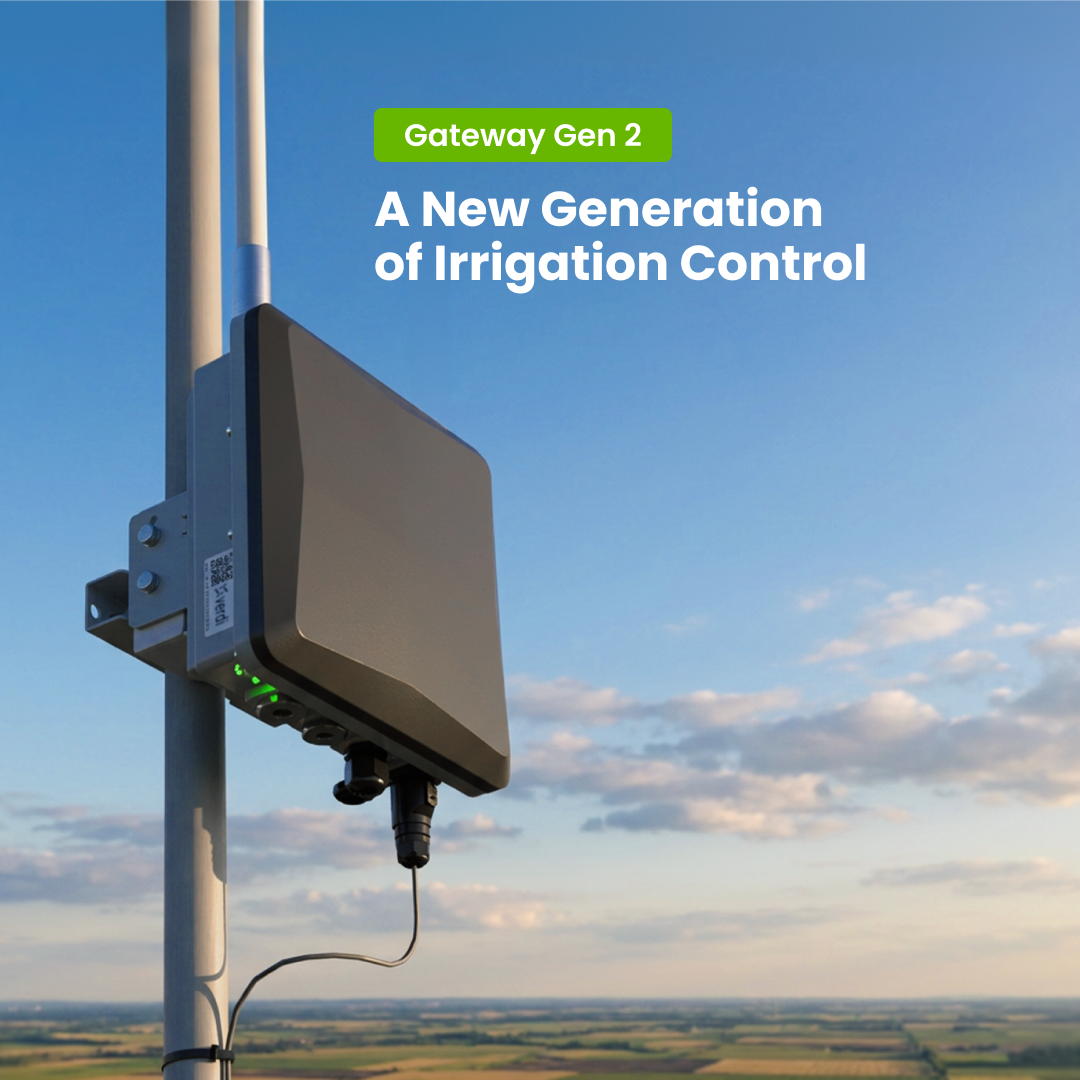
That's the bar we built Gateway Gen 2 to. It's now the standard gateway included in every new Verdi deployment, and it changes a few things worth knowing about, whether you're starting fresh, expanding an existing operation, or already using Gen 1.
What the gateway is doing for you
Most growers don't think much about the gateway. That's by design.
It sits on a pole at the edge of your field, connects every block controller, valve, and sensor to the Verdi Dashboard, and handles thousands of commands a season without drawing attention to itself. It's the backbone of the whole system. When it's working well, you forget it's there.
Gateway Gen 2 gives you more of that, with the capacity, durability, and connectivity options that larger and more demanding operations require.
You won't outgrow your gateway
Gen 2 supports up to 16 simultaneous LoRa channels, double the 8 supported on Gen 1.
More field devices can communicate reliably through a single gateway. If you're expanding into new blocks, adding telemetry nodes, or building out a larger deployment, you're doing it on infrastructure with real room to scale. The gateway will not become the constraint. For operations that are growing, that matters.
Fewer things to break in the field
Gen 1 had external cables and exposed antenna connection points. Gen 2 doesn't.
Wi-Fi, GPS, and LTE antennas now live inside a fully sealed enclosure. It's IP67-rated, protected against dust and temporary immersion, built with aluminum and engineering plastic, and rated to operate from -40°C to +70°C. Fewer components exposed to the elements means fewer potential failure points.
Whether your operation runs through Central Valley summers, Pacific Northwest winters, or anything in between, the enclosure is built for it. This is hardware designed for permanent outdoor installation, not seasonal removal and storage.
Connect from anywhere on the farm
If your gateway location doesn't have Ethernet or Wi-Fi, the LTE variant handles it.
The Gen 2 model supports cellular backhaul via a NanoSIM card with an active data plan. For remote fields or new blocks without existing network infrastructure, you no longer need to run cable to get connected. Gen 2 also supports multi-WAN failover. If your primary connection drops, cellular picks it up without any action from you.
For operations expanding into new ground, this removes a real barrier.
Your system gets better automatically
For the first time, your Verdi field devices can receive firmware updates over the air.
Bug fixes, new hardware support, and feature improvements reach your system automatically. No field visits, no scheduling, nothing to coordinate on your end. The gateway you install today will keep running improved software as Verdi ships updates. Your system gets better while you focus on farming.
This is a meaningful change from how updates have worked until now, and one that compounds over time.
15 second response time for when you need to act fast
Customers on the Advanced Software Plan will see a significant change in how quickly manual commands reach the field.
Response time for on-demand controls drops to 15 seconds, down from around 2 minutes on the previous gateway. When you're making a real-time call on irrigation, responding to an unexpected heat event, adjusting a run mid-cycle, or intervening during a problem, that speed changes how you work. You get answers from the field faster, and you can act on them.
This feature requires the Advanced Plan ($50/device/year). Talk to your rep if you want to know more about upgrading.
Already using Gen 1?
Your gateway keeps working. There's nothing to replace unless you're expanding capacity or need LTE cellular backhaul for a remote site.
Gateway Gen 2 connects to the same Verdi Dashboard you already use – no software changes, no new setup, no retraining. If you add a Gen 2 unit to your operation, it works alongside your existing deployment from day one. When you're ready to expand, the infrastructure is ready for it.
Ready to add Gen 2 to your farm?
Get in touch with your rep to talk through what it looks like for your farm.
Brian Borges (California) +1 (559) 366,9237 | brian.borges@verdiag.com
Eugene Kovalenko (Pacific Northwest) +1 (250) 328,2982 | eugene.kovalenko@verdiag.com
Gill Costa (All other regions) +1 (530) 564,5272 | gill.costa@verdiag.com
Most conversations about AI in agriculture lead nowhere.
There is plenty of speculation, plenty of marketing, and very little shared understanding of how AI is actually being used inside real vineyard operations.
There is no manual.
No proven tools, and even fewer examples that go beyond theory.
That is what makes this story different.
Rather than discussing what AI could do someday, this article looks at what happened when a professional vineyard management team, operating at scale and under real economic pressure, put AI to work on the unglamorous parts of their operation: scheduling, coordination, and administrative complexity.
The outcome was not what most people would expect.
The biggest gains did not come from automation itself, but from what changed once friction was removed from daily work.
First, You Have to Start With a Real Problem
A vineyard operations leader managing large-scale acreage described a situation many vineyard operators recognize immediately: an operation saturated with data but constrained by human capacity.
Sensors, labor systems, equipment logs, spray schedules, and compliance records all existed. Each system was useful on its own, but together they created constant cognitive load. Managers spent their days coordinating people and plans rather than improving outcomes in the field.
Rather than adding more dashboards or reporting layers, the focus shifted to removing friction from daily operations. AI was applied to scheduling, coordination, and administrative work that consumed time without improving decisions.
What followed was not simply efficiency.
The real shift came after the pressure lifted, when managers and supervisors had time and mental space to work differently.
What Happened When Time Came Back
When vineyard operators talk about technology ROI, the conversation usually stops at hours saved.
For the vineyard management team, time savings were only the beginning.
The real value emerged from how that reclaimed time was reinvested across the operation.
1. From Meetings Back to the Field
As scheduling and coordination became automated, equipment managers spent far less time in planning meetings. That time moved back into the field, where early visibility matters most.
Being present more consistently allowed teams to identify issues sooner, reduce execution errors, and prevent small problems from becoming expensive ones.
2. Training Instead of Reacting
With fewer last-minute crises, supervisors had space to focus on training and skill development.
Rather than fixing mistakes after they happened, managers could proactively identify gaps, improve consistency across crews, and reduce equipment misuse. Over time, this translated into fewer repairs, safer operations, and better performance.
3. Leadership, Morale, and Retention
Freed from constant firefighting, managers were able to spend more time doing human work: coaching, motivating, and leading.
The effects were tangible. Productivity increased. Injury-related claims declined. Retention climbed to levels rarely seen in agricultural labor. Crews experienced greater predictability, clarity, and confidence in their schedules.
4. Proactive Instead of Reactive Operations
Perhaps the most meaningful shift was cultural.
With less daily chaos, the organization moved away from reactive decision making. Planning improved. Communication stabilized. Trust increased, both internally and with vineyard owners.
Technology did not make the operation faster. It made it calmer, more deliberate, and more resilient.
Why This Matters for AI in Agriculture
This story highlights a point that often gets missed in AI conversations.
AI does not create value by replacing people or making decisions in isolation. Its real value comes from removing friction so experienced operators can focus on work that actually improves outcomes.
At Verdi, this insight shapes how we think about irrigation AI.
Farms already generate enormous amounts of data. Soil moisture, pressure, flow, weather, and irrigation logs are everywhere. The problem is not data scarcity. The problem is that too much of it demands attention without helping growers act.
Our approach is to build AI that works quietly in the background.
Not more dashboards. Not more alerts for the sake of alerts. But systems that reduce mental overhead, automate the busywork, and support better decisions without demanding constant input.
Building the Infrastructure for Irrigation AI
The future of irrigation AI is not about telling growers what to do. It is about building systems that understand how farms actually operate and adapt accordingly.
That means infrastructure that can:
Learn from real field conditions, not theoretical models
Close the loop between sensing, decision making, and execution
Detect problems early instead of after damage is done
Support operators when they need help, without adding complexity
This kind of AI only works when it is grounded in real operations and real constraints. It has to respect existing infrastructure, labor realities, and the fact that farming decisions happen quickly, often under pressure.
The work happening today is not about flipping a switch and calling it intelligence. It is about laying the foundation so irrigation systems can become more adaptive, more reliable, and easier to manage over time.
The Real Lesson
Saving time is easy to measure.
Using time well is where the real return lives.
In this case, AI did not replace people or judgment. It removed friction so experienced vineyard teams could focus on leadership, planning, and execution in the field.
That is the unexpected result of putting AI to work on vineyards. And it is the direction irrigation AI needs to go if it is going to matter in the real world.
Ready to get AI working on your farm? Want to find out how to do it?
Read more here.
It’s not hard to see the promise of AI on a vineyard: process a ton of information and get meaningful answers quickly.
The problem is that no one knows how to get started. There are no clear standards, few proven playbooks, and almost no shared examples of AI delivering measurable results inside real vineyard operations.
How can you use AI on your vineyard? Keep reading...
This article looks at how one vineyard management team approached AI not as a trend to adopt, but as a constraint to manage. They had too much information, too many variables and far too little human capacity to process them all. This is how they did it.
The Question You Should Be Asking First
A vineyard operations leader managing large-scale acreage described a situation where scale magnifies every inefficiency.
Across thousands of acres and dozens of properties, the team was already using sensors, labor tracking systems, equipment data, compliance tools, and agronomic models. The problem was not lack of information. It was decision fatigue.
Adding more technology was not going to help. More dashboards would only deepen the bottleneck. What the team needed was a way to handle complexity without increasing cognitive load on managers and supervisors.
Instead of asking, “What AI tools should we buy?” they asked a more useful question:
Where does human decision-making break down first?
How the AI Investment Was Made and Justified
The decision to invest in AI did not start with a product demo or a budget line item. It started by identifying work that was essential to the operation but poorly suited for humans to perform manually.
1. Start With the Bottleneck, Not the Technology
The first insight was straightforward. Scheduling, coordination, and administrative work were consuming enormous amounts of attention without improving outcomes.
These tasks required consistency, constraint handling, and repetition. They were areas where humans struggle and machines excel.
AI was positioned as a decision support layer, not as a replacement for agronomic judgment or field expertise.
2. Apply AI Only Where It Has a Clear Advantage
The team deliberately avoided using AI to “think” like a grower.
Instead, they focused on what AI does well:
Processing hundreds of variables at once
Optimizing schedules across labor, equipment, property rules, and compliance
Recalculating plans instantly when conditions change
Fungicide scheduling became a core use case. AI could integrate operator availability, equipment constraints, weather windows, and property specific restrictions faster and more consistently than any human team.
3. Justify the Investment With Obvious, Defensible ROI
Before expanding use, the team quantified the simplest return:
How many administrative hours per day could be eliminated
What was the fully loaded cost of that time
Even modest time savings created a clear financial case. Importantly, this justification did not rely on theoretical yield gains or speculative upside. It focused only on work that was already happening every day.
4. Assign Clear Internal Ownership
Rather than relying entirely on vendors, Renteria assigned one internal owner to focus on AI and emerging technology.
This person was not selected for deep technical expertise. They were chosen for curiosity, adaptability, and the ability to learn both farming operations and software systems.
That role became essential in translating between:
Developers and operational reality
Technical language and vineyard needs
The result was fewer miscommunications, less wasted development, and faster progress.
5. Build Before You Buy
Instead of expanding their technology stack, the team focused on improving what already existed.
AI was layered into current workflows and tools. It eliminated repetitive coordination work rather than creating new systems that required management.
This approach kept complexity in check while delivering real operational value.
6. Evaluate the Second Order Effects
Beyond direct cost savings, the team paid close attention to outcomes that are harder to measure but far more meaningful:
Reduced equipment downtime
Fewer injuries and safety incidents
Improved crew utilization
Higher morale and stronger leadership effectiveness
Over time, these effects compounded and reinforced the original decision to invest.
The Core Lesson
AI did not earn its place by being impressive.
It earned its place by being useful.
By removing cognitive load and operational friction, AI allowed experienced vineyard professionals to focus on judgment, leadership, and execution. That is work no system should try to automate, but every good system should protect.
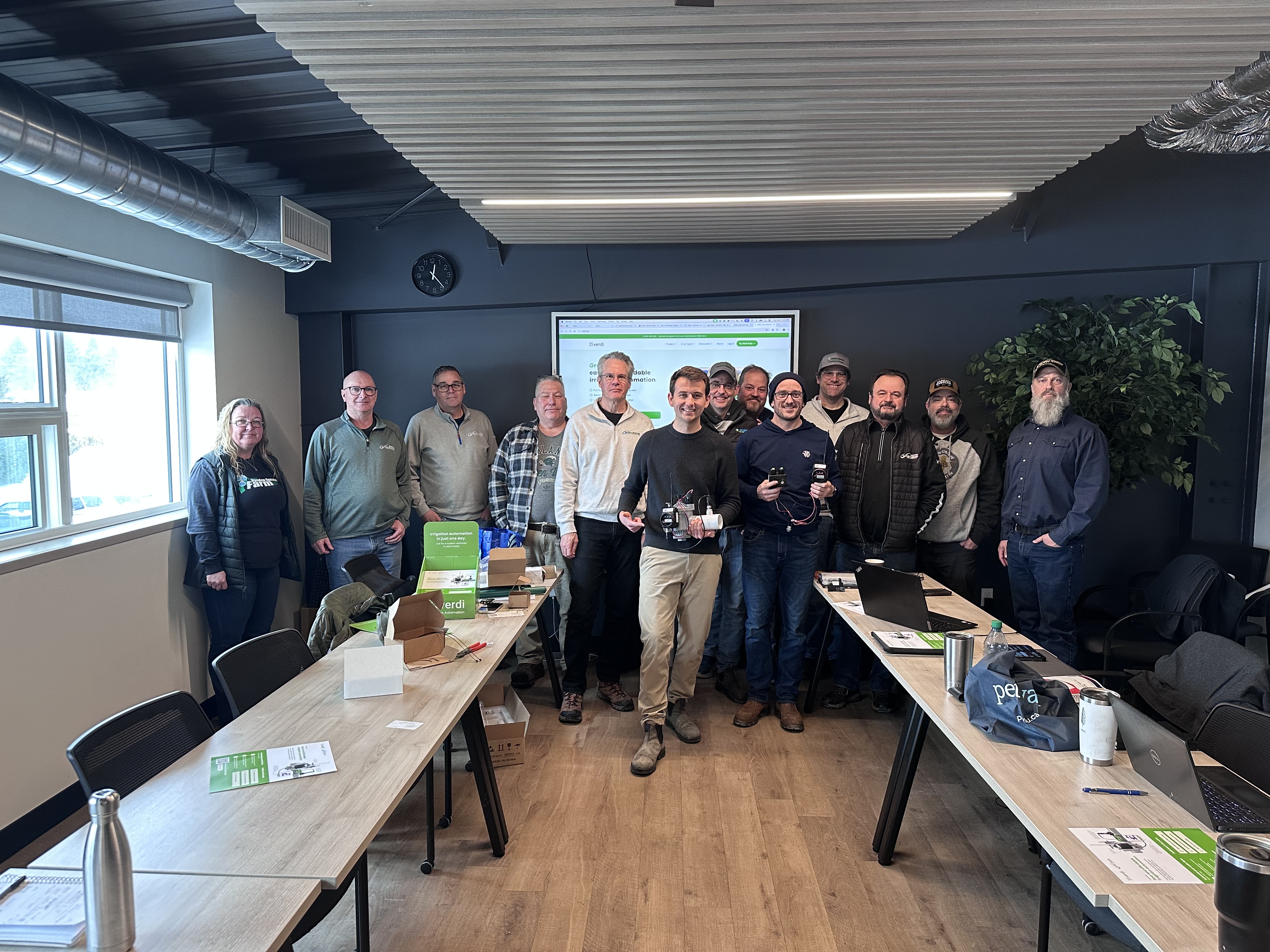
Ontario growers gain local access to affordable, retrofit irrigation automation backed by more than 70 years of irrigation expertise.
Verdi, the leading global provider of easy and affordable irrigation automation, today announced a new partnership with Vanden Bussche Irrigation, Ontario’s leading provider of irrigation solutions.
Verdi currently supports more than 20,000 acres across North America, works with some of the world’s largest food producers, and helped farms save over 1 billion liters of water last year. Through this partnership, Ontario growers will now have local access to Verdi’s automation platform, delivered with design, installation, and ongoing support from the Vanden Bussche team.
For growers managing labor constraints, rising water costs, and increasing pressure to protect yield and quality, the partnership brings together Verdi’s retrofit automation platform and Vanden Bussche’s long-standing irrigation expertise.
Expanding Access for Ontario Growers
Vanden Bussche Irrigation has served Ontario’s agriculture industry for more than 70 years. As a fourth-generation family-owned company with locations in Delhi, Simcoe, Burlington, and Concord, the company supports growers with irrigation design, installation, service, and training across the province.
Through this partnership, Vanden Bussche will work directly with growers to assess irrigation systems, design automation plans, install and commission equipment, and provide ongoing support.
“Our mission is to make easy and affordable irrigation automation accessible to every farm by retrofitting intelligence onto the systems growers already use,” said Val King, Director of Channel Partnerships at Verdi. “Vanden Bussche has built deep trust with growers across Ontario. Their technical expertise and commitment to service make them an ideal partner as we expand access to affordable irrigation automation in the region.”
Interest in irrigation automation continues to grow across Ontario, particularly among specialty crop producers facing labor shortages and tighter water management requirements.
“Vanden Bussche Irrigation is very excited to bring Verdi products to the Ontario market,” said Gerard Vanden Bussche, Vice President at Vanden Bussche Irrigation. “Growers are under constant pressure to produce high-quality crops while managing costs. Verdi’s automation platform fits those needs extremely well. We believe this technology is exactly what many growers in our region have been looking for.”
Easy and Affordable Irrigation Automation That Works With Existing Infrastructure
Verdi upgrades the irrigation infrastructure growers already use and trust by retrofitting wireless intelligence onto existing valves and pumps.
The system enables growers to remotely control irrigation, monitor pressure and flow in real time, receive alerts when issues occur, and verify that each irrigation completed as intended.
Because Verdi retrofits onto existing infrastructure, there is no need for trenching, rewiring, or full system replacement. This makes automation significantly more affordable and far less complex to implement compared to traditional solutions.
Growers can start with a single block and expand over time, making automation scalable and accessible to farms of all sizes.
Verdi customers report:
- $250 to $500 per acre in labor and fuel savings
- 10 to 30 percent water savings
- 10 to 20 percent per acre revenue increases through improved crop stress management and uniformity
Now, Ontario growers can access those same outcomes with trusted local support.
About Verdi
Verdi is an agricultural technology company making irrigation automation easy, affordable, and accessible for specialty crop growers. By retrofitting wireless intelligence onto existing irrigation systems, Verdi enables growers to automate valves and pumps, verify irrigation completion, monitor soil moisture and pressure, and protect yield and quality without replacing infrastructure.
About Vanden Bussche Irrigation
Founded more than 70 years ago, Vanden Bussche Irrigation is a fourth-generation family-owned company and Ontario’s leading provider of irrigation solutions for agriculture, golf, residential, and commercial landscape industries. With locations in Delhi, Simcoe, Burlington, and Concord, the company is committed to service excellence, trusted products, and innovative solutions tailored to customer needs.

Vineyard irrigation has a familiar frustration. You can do everything right and still end the day wondering whether each set actually ran the way you intended.
A stuck valve, a pressure issue, a line break, or a simple timing miss can quietly turn into wasted water, uneven blocks, and unnecessary stress. In many vineyards, the only reliable way to catch those problems is still the old way. Drive out, walk the line, and check.
At a time when the wine industry is navigating declining demand and tightening margins, lowering operational costs matters more than ever. Growers are looking for ways to cut labor, reduce water waste, and get more certainty from every dollar invested in the vineyard because the broader wine market continues to face headwinds. Global wine consumption has seen persistent downward pressure in recent years, and many regions are adjusting acreage and operations in response to weaker demand.
Visit Verdi at Unified
Verdi will be exhibiting at the 2026 Unified Wine & Grape Symposium at the SAFE Credit Union Convention Center in Sacramento. Visit Booth A2600 to see how vineyards are adding modern irrigation automation without replacing the system they already use and trust.
A Smarter Path to Irrigation Automation
Traditional irrigation automation solutions can be expensive. Many growers face sticker shock when reviewing proposals that require trenching, hardwiring, and system redesigns. This is especially difficult in a market where keeping costs low is critical to staying competitive.
Verdi approaches automation differently by retrofitting intelligence onto the valves and pumps you already have. Because it leverages existing infrastructure, Verdi systems run at roughly one-tenth the cost of many traditional automation systems, making automation accessible to more vineyards without a heavy upfront investment.
This means you can modernize irrigation while protecting your bottom line and getting more value from your current equipment.
Control, Scheduling, and Knowing What Happened
The real job isn’t collecting more data. The real job is knowing what happened and being able to act quickly.
Verdi gives vineyard teams remote control and schedule-based irrigation, along with real-time verification using live field signals like pressure and flow. When something does not look right, the system can alert you immediately so issues get addressed sooner rather than after vines show stress.
This reduces manual checking, limits surprises, and builds confidence across every block. In a year when many vineyards are tightening belts and seeking operating efficiencies, that confidence translates into fewer wasted labor hours and better water use.
Start Small, Grow with Your Needs
Not every operation wants to automate everything at once, and most do not need to. Verdi is designed for practical adoption. Growers can start with a single block where labor, risk, or variability is highest, prove the workflow, and expand across additional blocks or properties over time. This makes automation approachable both operationally and financially.
And because vineyards vary so much in layout and resource constraints, Verdi offers a 90-day money-back guarantee. If the system isn’t a fit for your operation, you can return it within 90 days. That guarantee removes risk during a time when careful budgeting and certainty of outcomes are top priorities for growers.
See Verdi in Action at Booth A2600
If you are attending Unified, stop by Booth A2600. Our team will walk you through the hardware and dashboard and talk through what retrofit automation could look like in your vineyard, block by block.
Unified Wine & Grape Symposium
January 27–29, 2026
Exhibits: January 28–29
SAFE Credit Union Convention Center, Sacramento, CA
Verdi Booth: A2600
Not attending Unified? Book a demo to get a free consultation with our agronomists today.
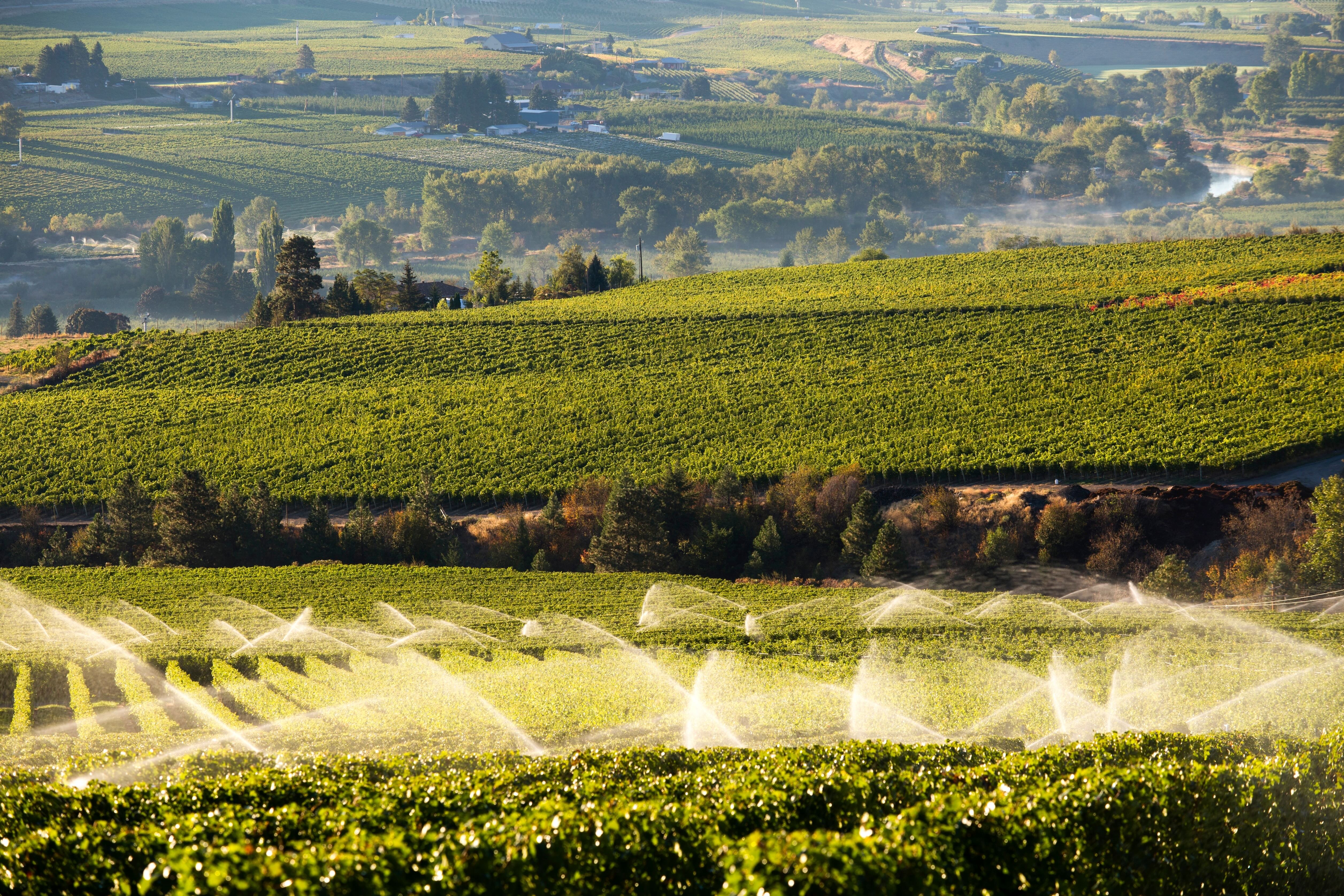
Declining groundwater levels and increasing pressure under the Sustainable Groundwater Management Act are changing how California wine growers think about water. What was once largely an operational concern is now directly tied to long-term viability, regulatory compliance, and sustainability planning.
These issues were front and center during a session at the 2025 WIN Expo, where vineyard operators, hydrologists, and county leaders discussed how groundwater management is evolving and what growers can do to stay ahead. Moderated by Val King, Director of Channel Partnerships at Verdi, the session underscored a clear reality. There is no single solution, but there is a shift toward local control, better data, and practical changes in vineyard management.
SGMA Was Built to Be Local, Not One-Size-Fits-All
SGMA is often misunderstood as a rigid, top-down mandate. In reality, it was designed around California’s variability in geology, climate, and water availability.
Instead of a one-size-fits-all approach, SGMA places responsibility with local Groundwater Sustainability Agencies, which develop plans based on basin conditions. As Marcus Trotta, Principal Hydrologist and SGMA Plan Manager at Sonoma Water, explained, “having a one size fits all, this is how you all have to manage groundwater, was never going to work here in California.”
For growers, the takeaway is straightforward. Participation matters. Local agencies rely on shared data and grower input to build workable plans. If agencies fail to act, the state can step in temporarily, but long-term management always returns to the local level.
SGMA is less about enforcement today and more about forcing better planning before problems become irreversible.
Improving Infiltration Starts in the Vineyard
Policy sets the framework, but many of the most impactful changes happen in the vineyard. Improving infiltration and soil water-holding capacity is one of the most direct ways growers can influence groundwater outcomes.
Building organic matter through compost, cover cropping, and reduced tillage helps soils absorb and store more water. David Gates, Vice President of Vineyard Operations at Ridge Vineyards, highlighted how early-season conditions shape outcomes, noting that “those first rains, if they’re hitting dry soil, they tend to seal the soil,” limiting infiltration later in the season.
That makes winter vineyard floor management critical. Ground cover, straw ahead of early storms, and simple water-slowing features like berms or swales can help keep water on-site longer. Avoiding compaction and bare ground further supports infiltration during recharge periods.
Why Groundwater Risk Is More Complex Than It Looks
Groundwater conditions are rarely uniform, especially in coastal California. Some areas draw down quickly and rebound just as fast. Others decline slowly and recover with difficulty. That variability makes simple answers unrealistic.
As Will Drayton, Director of Technical Viticulture, Sustainability and Research at Treasury Wine Estates, put it, “there really is no silver bullet.” Resilience comes from stacking practical, site-specific actions over time.
Those actions include soil and floor management, slowing and absorbing winter water, and improving surface water systems so less water leaves the basin during high-flow events. Underlying all of it is measurement. Better monitoring helps growers and agencies understand what is working and where adjustments are needed.
What This Means for Wine Growers
Across the panel, a few themes were consistent:
Groundwater management is becoming more local
Winter water is an opportunity when managed well
Vineyard practices directly affect infiltration and recharge
Measurement and shared data are increasingly essential
SGMA is accelerating a shift toward more intentional water management, with growers playing a central role. Groundwater security will be built through informed decisions and steady adaptation, block by block and season by season.
Turning Better Data Into Easier SGMA Reporting
As groundwater management becomes more local and data-driven, growers face a familiar challenge: documenting water use without adding administrative burden.
Measurement is foundational under SGMA. Clear records of how much water was applied, when, and where are becoming increasingly important.
Verdi supports this by creating a live, historical water record at the block level. These records help growers manage irrigation more precisely and make SGMA reporting and local data-sharing easier as requirements evolve.
The goal is not more technology. It is less guesswork, fewer surprises, and clearer documentation that aligns daily irrigation decisions with long-term groundwater sustainability.
Learn How Verdi Supports SGMA Reporting
If you are thinking about how to simplify irrigation management while preparing for evolving SGMA requirements, Verdi can help.
Verdi retrofits onto existing irrigation systems to automate valves and pumps, verify irrigations actually ran, and generate accurate water records by block. Those records support both operational decisions and SGMA reporting, without adding extra steps for your team.
Book a demo to see how Verdi helps growers automate irrigation and maintain clear water records for SGMA reporting.