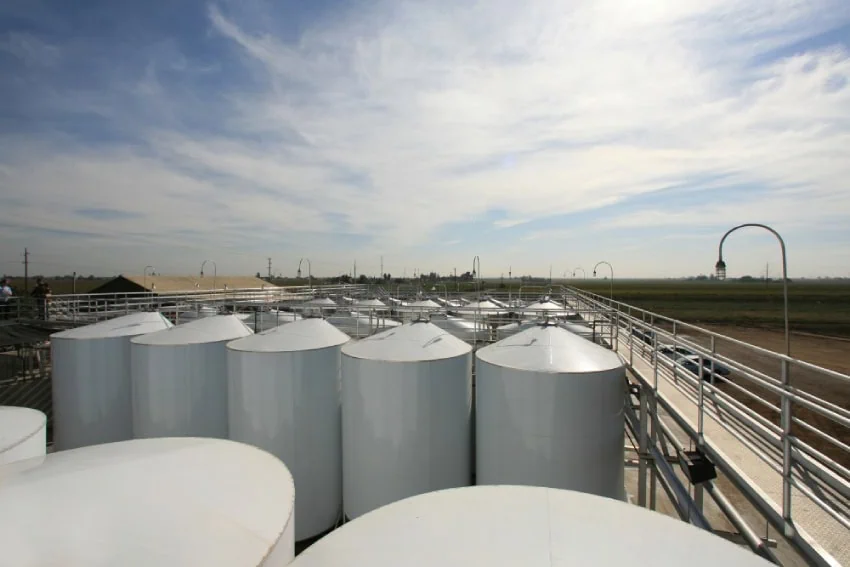
Budget season means picking a handful of purchases from a much longer list. If beverage manufacturing equipment is anywhere on yours, here are 5 reasons to put it in the 2027 budget. Each one comes with a real number attached, not a sales pitch.
Key Takeaways
PolarClad/BevClad tank insulation typically pays for itself in as little as 1.5 years, and wineries typically spend about 60% of their energy bill on refrigeration alone. Tank insulation protects your beverage from increasing temperatures while saving you money.
VinFoil cuts cold stabilization time by a factor of 3 and saves on energy and labor.
ClearAlc single pass dealcoholization allows you to remove alcohol gently down to <0.05% ABV, eliminating the need for additional passes, decreasing energy, cost, and time.
Reason 1: It Pays for Itself Faster
PolarClad tank insulation, BevClad in Europe, typically pays for itself in as little as 1.5 years. That’s a fast return for a capital purchase, and it comes from one specific line on your utility bill: refrigeration.
Wineries typically spend about 60% of their energy costs on refrigeration alone. PolarClad and BevClad cut into that number directly, with up to a 96.5% reduction in ambient thermal energy reaching the tank.
Reason 2: It Protects Wine Quality
The same insulation that cuts your energy bill also protects what’s inside the tank. Stable tank temperature means fewer swings that can stress a wine, and it makes cold stabilization easier to manage.
That matters because quality problems cost more than the energy bill ever will. A batch that needs rework, or a lot that doesn’t taste the way you expect at bottling, is a bigger budget hit than a slightly higher power bill.
Reason 3: It Makes Mixing More Efficient
VinFoil tank mixers get cold stabilization done 3 times faster than the pump method, saving time and energy. The impeller is engineered for a clean axial flow with minimal turbulence, which is what makes both numbers possible.
Faster cycles change how much hands-on time mixing takes. A job that used to mean checking on a pump for hours, or running it overnight and hoping for even results, finishes in a fraction of the time, with less monitoring in between, and no moving between tanks.
The same mixer handles more than cold stabilization. VinFoil also does general blending, oak extraction, bentonite fining, feeding solids to a centrifuge, and controlling white wine fermentation temperature, so one purchase does more jobs than a single-use tool would.
Reason 4: It Gets You Where the Demand Is Heading
ClearAlc uses single-pass vacuum distillation to dealcoholize wine, cider, or spirits down to 0.05% ABV, and it can rectify the alcohol fraction it pulls out up to 92% ABV. Model sizes run from 800 to 3,000 liters per hour, fully automated with remote data acquisition, and the system is skid-mounted, which keeps installation simpler than a ground-up build.
It’s built by Tomsa Destil, which brings more than 170 years in alcohol technology, and BevZero is Tomsa Destil’s exclusive global distributor. The technology won the 2025 WINnovation Award.
If NA and low-alcohol demand keeps growing the way it has, owning that capacity means you’re not waiting on outside processing time during your busiest weeks. BevZero also runs dealcoholization as a service, so you can test demand for an NA line before deciding whether to buy the equipment outright.
Reason 5: You Can Test It in Your Own Cellar Before You Buy It
Before any of this goes on a purchase order, you can try it first. VinFoil’s trial unit is custom-built to fit any standard tank door, so you can run it in your own cellar and compare it against what you’re already using. You can also trial the ClearAlc equipment with your own product at one of our facilities.
That’s the point of testing equipment where it’s going to work, on your wine, in your tanks, before a real number goes into next year’s budget, not a guess.
What to Do Next
List what’s already costing you money.
Refrigeration, mixing labor, and any capacity you’re currently outsourcing are the easiest costs to check against these 5 reasons.
Ask for numbers scoped to your site. Payback and energy savings depend on your tank sizes, climate, and current setup. Get numbers for your specific facility, not the averages in this post.
Plan for a trial run of your wine on the ClearAlc Equipment. Doing a small dealcoholization trial with your wine can help you visualize your non-alcoholic wine product and next steps. Call today to learn more.
Ask the BevZero team any questions you have. To help with your decision, contact the bEvZero Equipment team and ask them any questions you may have. Our team is very knowledgeable about our equipment and the wine industry. They can assist with even the smallest questions.
Map Your 2027 Budget Against Real Payback Numbers
Tell BevZero what’s already on your list, insulation, mixing, dealcoholization capacity, or other beverage production equipment, and get real numbers back for your specific site.
👉 Contact BevZero online now or email us at info@bevzero.com.
Freqently Asked Questions
Do I Have to Buy All 5 Types of Equipment at Once?
No. Most wineries pick 1 or 2 to start, usually whichever solves the most expensive problem first. Insulation and mixing tend to have the fastest payback, while dealcoholization capacity is more often a decision tied to how fast your NA volume is growing.
Does BevZero Only Sell Beverage Production Equipment, or Can I Use These as a Service Too?
Both. BevZero’s Equipment division distributes ClearAlc, VinFoil, and PolarClad/BevClad as equipment, and BevZero’s Service division runs dealcoholization and other beverage processing as a service. That means you can validate the case with your own volume before deciding whether to buy the equipment outright.
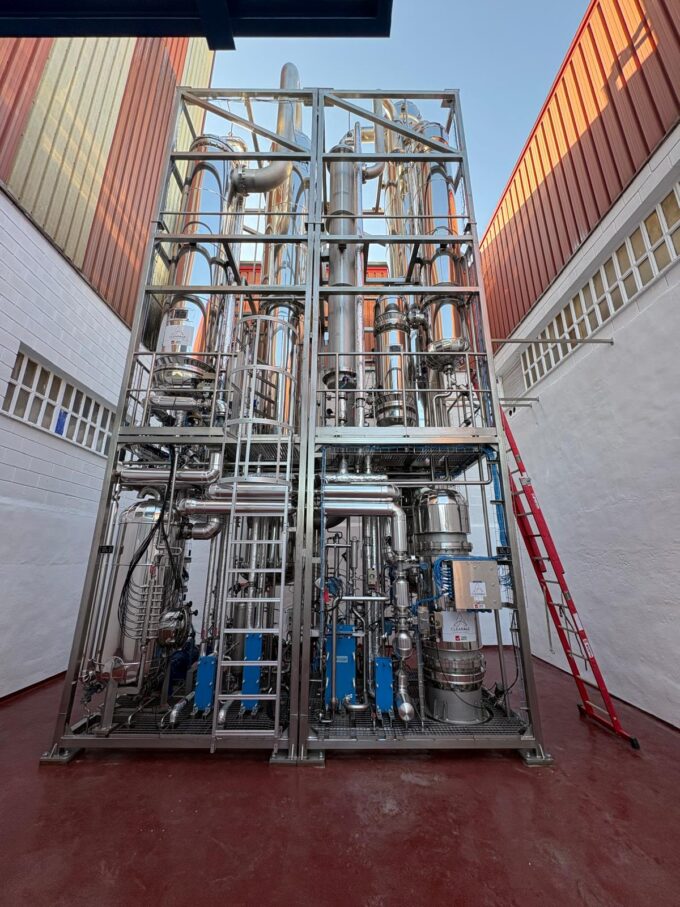
Commercial-scale installation demonstrates how wineries and beverage producers can bring advanced dealcoholization capabilities in-house to meet growing no- and low-alcohol demand.
Villatobas Spain, 2026 SEP 21 — BevZero Equipment Sales & Distribution and Tomsa Destil today announced the installation of ClearAlc dealcoholization technology at Destilerías San Valero in Cariñena, Spain, as part of the cooperative’s new wine dealcoholization facility serving wineries throughout the region.
Manufactured by Tomsa Destil and exclusively distributed by BevZero, ClearAlc is an advanced dealcoholization technology designed to help wine and beverage producers reduce or remove alcohol while prioritizing the aromas, flavors and sensory characteristics of the original product.
The installation at Destilerías San Valero demonstrates the application of ClearAlc technology at commercial scale. The new facility has processing capacity of up to 2,000 liters per hour and the potential to produce more than 10 million liters annually, enabling Destilerías San Valero to support projects across a range of production volumes.
The project comes as wineries around the world explore new ways to respond to changing consumer preferences and growing interest in no- and low-alcohol wines. For producers considering developing these products at scale, investing in dedicated dealcoholization equipment can provide greater control over production schedules, product development and long-term capacity.
“The San Valero installation is an exciting example of how producers can bring advanced dealcoholization capabilities directly into their own operations,” said Mario Moltó, BevZero Global Engineering Manager. “As demand for no- and low-alcohol wine continues to create new opportunities for the industry, ClearAlc gives producers another option for building that capability into their long-term production strategy. We are proud to work with Tomsa Destil to make this technology available to wineries and beverage producers worldwide.”
From Demonstration to Commercial Application
The San Valero project follows BevZero’s installation of a ClearAlc demonstration unit at its facility in Spain, where producers have been able to explore the technology and evaluate its potential applications. The new commercial installation provides another example of how the technology can be configured for larger-scale production requirements.
ClearAlc dealcoholization technology is designed around packed column, high-vacuum distillation and can be configured for different production capacities and operational needs. BevZero works with producers to evaluate their dealcoholization objectives, production requirements and facility needs to determine an appropriate ClearAlc configuration.
For those interested in the ClearAlc equipment for service or purchase, they can contact BevZero to schedule a time to bring their product in for trialing.
Technology Developed by Tomsa Destil
Tomsa Destil, the manufacturer and developer of ClearAlc technology, worked with the project partners to adapt the system to the specific requirements of the Destilerías San Valero facility.
“The San Valero project is an important example of what ClearAlc was designed to achieve: efficient dealcoholization at commercial scale while prioritizing the sensory characteristics of the original wine,” said Miguel Villena Reyes, CEO Tomsa Destil. “Working together with BevZero and Destilerías San Valero has allowed us to adapt the technology to the specific production needs of this facility, and we are proud to see ClearAlc supporting the continued development of the no- and low-alcohol wine category.”
Supporting a New Opportunity for D.O. Cariñena
The ClearAlc installation is part of a broader investment of more than €1.5 million by Destilerías San Valero to establish Aragón’s first wine dealcoholization plant.
The location is particularly significant for wineries within D.O. Cariñena. Following modifications to the D.O.’s specifications to include partially dealcoholized wines, qualifying wines processed at the new facility can carry the D.O. Cariñena designation because production takes place within the denomination’s geographic territory and under the Regulatory Council’s quality controls.
Destilerías San Valero will combine the new production capabilities with comprehensive support for wineries, offering assistance from initial trials and formulation through finished product—an approach described as “from concept to bottle.”
Bringing Dealcoholization In-House
For wineries and beverage producers outside the Cariñena region, the installation also illustrates another path into the no- and low-alcohol category: investing in dedicated dealcoholization equipment at their own production facility.
As the exclusive distributor of ClearAlc, BevZero Equipment works with producers interested in evaluating and purchasing systems for their own operations, from initial project assessment and equipment selection through installation and technical support.
For more information about ClearAlc dealcoholization equipment or to discuss a trail of your product, or bringing dealcoholization capabilities in-house, visit the BevZero website or contact BevZero Equipment at info@bevzero.com.
About BevZero Equipment Sales & Distribution
BevZero Equipment Sales & Distribution provides technology and equipment solutions for wineries, beverage producers and other processing industries. Its portfolio includes equipment supporting dealcoholization, mixing, temperature management and quality control. BevZero is the exclusive distributor of ClearAlc dealcoholization technology manufactured by Tomsa Destil. For more information, visit BevZero.com.
About Tomsa Destil
Tomsa Destil is a Spanish company with more than 170 years of experience. Thanks to this vast career and a strong commitment to research, they own the most advanced technology in processes such as extraction, fermentation, distillation, waste treatment, utilities, valorization of by-products, among other processes involved in the production of alcohol and biofuels. Additionally, Tomsa Destil controls its whole supply chain with in-house manufacturing, assembly, maintenance, commissioning, and operation and management. Tomsa Destil has its headquarters in Madrid, Spain as well as commercial branches in Mexico, Colombia, India, Portugal and Thailand.
About Destilerías San Valero
Founded in Cariñena in 1957 by cooperative wineries from the region, Destilerías San Valero is a cooperative serving more than 40 member wineries as well as private wineries in Aragón and northeastern Spain. Its operations add value to winemaking byproducts including grape pomace and lees, producing rectified and distilled alcohol, calcium tartrate, grape seeds and organic fertilizers. 2026 09 02 NP DESTILERÍAS SAN VALERO-DO CARIÑENA nueva planta desalcoholización.
Santa Rosa, CA, Aug. 18, 2026 - Strategic Beverage Services, a Santa Rosa, California-based beverage processing company, has acquired the U.S. operations of BevZero, a HACCP- and organic-certified provider of dealcoholization and beverage processing services. The acquisition makes the combined company the largest dealcoholization service provider in the United States.
Key Facts
Acquirer: Strategic Beverage Services (headquartered in Santa Rosa, California)
Acquired company: BevZero's U.S. operations ("BevZero-US")
Industries served: Wineries, distilleries, cider producers, and functional beverage producers
Market driver: Growing U.S. demand for low- and no-alcohol beverages
Why It Matters
Demand for low- and no-alcohol beverages is accelerating in the United States. This acquisition expands Strategic Beverage Services' capacity and geographic footprint to meet that demand, combining its existing operations with BevZero-US's technology, personnel, and industry track record.
Leadership Statement
Patrick Morgan, Chief Operating Officer of Strategic Beverage Services, said the acquisition strengthens the company's ability to deliver dealcoholization services at scale and positions it to lead what he called the fastest-growing segment of the beverage industry.
About BevZero-US
BevZero-US is headquartered in California and employs winemakers, distillers, and food scientists who help beverage brands take products from concept to market, including regulatory guidance, equipment, and technical expertise.
Industry Recognition
BevZero-US wines placed at the third annual International Non-Alcoholic Competition, held in New Jersey in June 2026:
BevZero-US and its customers won multiple medals across wine categories
BevZero-US-produced wines earned two of the only four Double Gold medals awarded in the wine category
BevZero-US was named Rosé Producer of the Year
Morgan commented that the company's dealcoholization process removes alcohol while producing award-winning wine and invited producers entering the low- and no-alcohol category to work with BevZero-US on recipe development.
Customer Base and Future Plans
BevZero-US currently provides services to eight of the Top 10 U.S. wine companies. Looking ahead, BevZero-US plans to open additional locations in 2027 that combine bottling, canning, and sparkling wine capability under one roof, reducing scheduling complexity for wineries and contract partners.
Additional services include:
Co-packing and production services
High-proof spirits for sanitation or blend adjustment
Alcohol adjustments
SO2 removal
Concentration
Cross-flow filtration
Stuck fermentation and volatile acidity (VA) removal
Wine destruction and disposal
About Strategic Beverage Services and BevZero-US
BevZero-US is a global leader in beverage services and innovation, helping brands craft the highest quality low- and non-alcoholic beverages across wine and other categories. Since pioneering vacuum distillation for alcohol removal in 1991, BevZero has grown into the world leader in dealcoholization, offering unique processes and streamlined solutions for low- and no-alcohol and infused functional beverages across wine, cider and spirits, while preserving aroma and flavor.
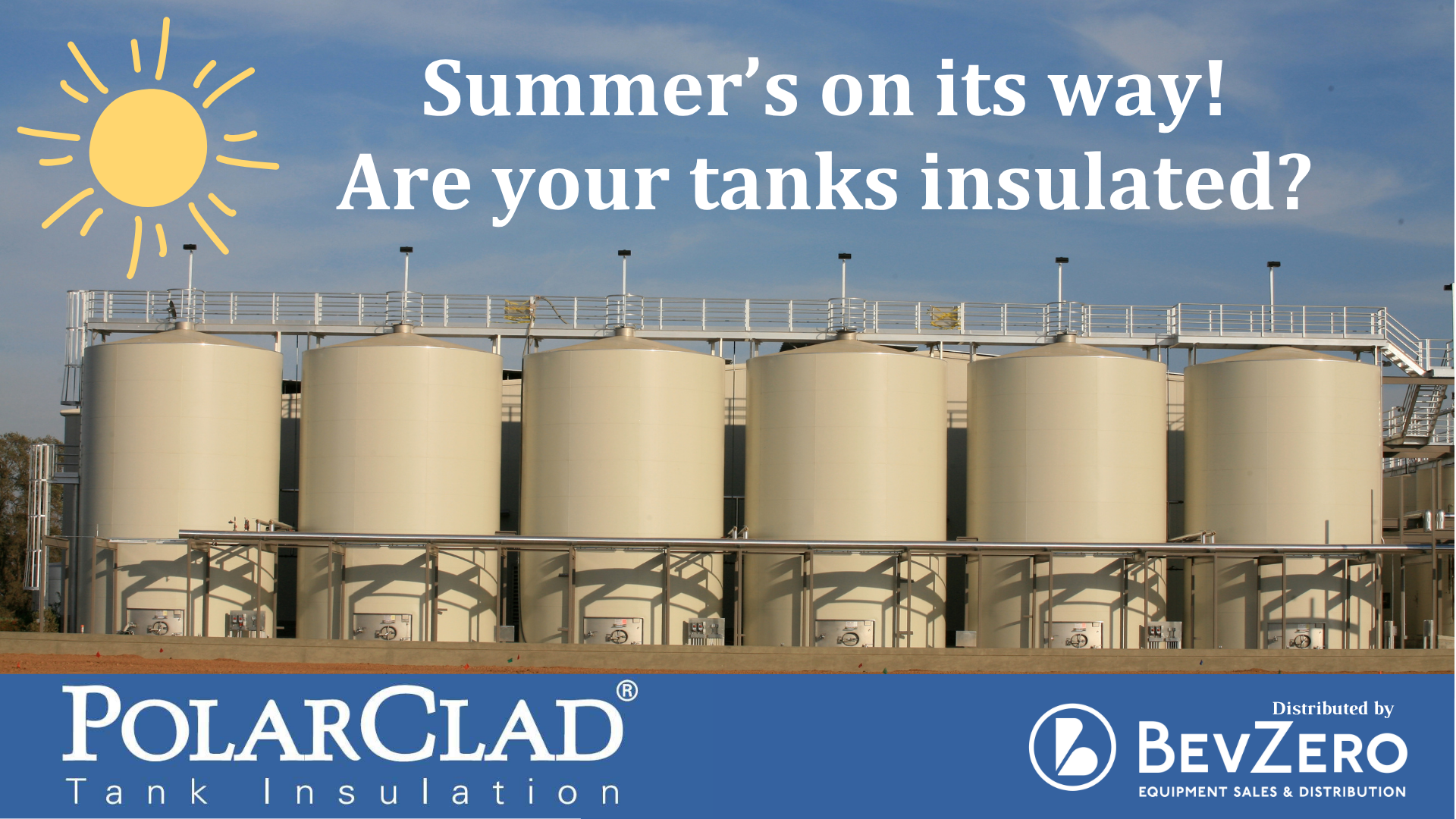
Winemakers are facing a harvest problem that has nothing to do with the vines. As summer temperatures climb across California and other major wine regions, wine tanks heat up right along with the vineyards, forcing wineries to run refrigeration harder and longer just to hold onto the quality they worked all year to grow. BevZero, the Santa Rosa-based global leader in alcohol and flavor management, is helping producers take that control back with equipment built for temperature management and technology built for a changing market.
“One of the biggest challenges [winemakers] have is dealing with ambient temperature, which is out of their control,” said Todd Dicello, BevZero’s sales manager for the PolarClad tank insulation division. “Any way that they can improve temperature variation and stratification in the tank is important.”
That variation, heat pooling at the top of a tank while the bottom stays cool, is what BevZero’s equipment line is designed to close. PolarClad, an R-12 thermal barrier BevZero distributes in the U.S. (BevClad in Europe), reduces ambient heat gain into a tank by as much as 96.5%. Dicello described a tank farm sitting outside on a hot August day in Sonoma County, chillers running full bore just to keep up. “As soon as you put the insulation on, it’s going to help you get there much quicker, and you can maintain it,” he said.
Paired with insulation, BevZero also distributes the VinFoil tank mixer, built by CPE. VinFoil moves large volumes of wine gently, using an impeller designed to maximize flow and minimize turbulence, and it reaches cold stabilization roughly three times faster than pump-based mixing, with average energy savings of more than 80%. “By mixing a tank, you can keep the temperature the same at the top, the middle, and the bottom,” Dicello said. “It’s designed to move a ton of product efficiently, and it does it very gently.”
Together, the two systems attack the same problem from different angles: PolarClad slows how fast heat gets into the tank, and VinFoil clears out the swings that build up once it does. For wineries watching energy bills climb with their thermometers, BevZero’s equipment combination targets both the quality risk and the cost of a hot season at once.
A second pressure point: what’s actually in the bottle
Rising temperatures aren’t the only thing changing the way wine gets made. Consumer demand for lower-alcohol and non-alcoholic wine keeps growing.
“Because of the temperatures, we are seeing that the acidities in the wines are lower and lower,” said Sylvia Cedeno Daguerre, BevZero’s managing director and an enologist by training. “It’s playing a big role on the pH and freshness of the wine.” Lower acid and higher heat tend to move together, adding another layer to an already difficult season. Cedeno Daguerre pointed to alcohol adjustment as one tool producers can use to respond, dialing in freshness and balance even when the fruit itself is working against them.
That’s where BevZero’s ClearAlc dealcoholization equipment comes in. Manufactured by Tomsa Destil and distributed exclusively by BevZero, ClearAlc uses a single-pass vacuum distillation process that can reduce alcohol to as low as 0.05% ABV, or rectify the alcohol fraction back up to 92% ABV, depending on the goal. This system won the 2025 WINnovation Award for its approach to wine dealcoholization.
“The trick for any of us, and anybody with any technology trying to do this, is how you remove alcohol without losing the quality, the flavor, the aroma,” Dicello said. “Anybody can remove alcohol, but you’ve got to have an end product that’s close to what people were actually searching for. That’s where ClearAlc separates itself from everybody else.”
Dicello was direct about where the category is headed. “At the end of the day, wine’s not going anywhere. We’re going to see both alcoholic and non-alcoholic products moving forward.”
Managing what you can, when the weather won’t cooperate
The throughline across BevZero’s equipment lineup is control. Wineries can’t set the temperature outside, and they can’t decide how a hot growing season affects sugar and acid in the fruit. What they can control is how their tanks respond to that heat and how their finished wine responds to changing consumer demand. PolarClad and VinFoil address the first problem. ClearAlc addresses the second, giving producers a way to protect quality through a hot harvest while staying flexible enough to meet a market that increasingly wants lower-alcohol and alcohol-free options.
About BevZero
BevZero is a global leader in beverage services, equipment, expertise, and innovative solutions—helping brands create the highest quality low- and non-alcoholic beverages across wine and spirits, with a one-stop approach from brainstorm to bottle.
BevZero has worked in this space for more than 30 years, since founder Tony Dann pioneered a vacuum distillation process for alcohol removal in wine in 1991. The company operates facilities in Santa Rosa, California; Villatobas, Spain; and Wellington, South Africa, with a team of winemakers, brewers, distillers, and food scientists supporting clients across all three regions.
As harvest approaches, wineries are facing more than just challenges in the vineyard. Rising summer temperatures can cause wine tanks to heat up, increasing cooling demands and making it more difficult to maintain consistent fermentation temperatures and product quality.
In this video, Todd DiCello and Silvia Cedeño from BevZero discuss how changing climate conditions are impacting wine production and share practical equipment solutions that help wineries better manage heat throughout the production process. Learn how tank insulation, efficient mixing, and other temperature management technologies can improve energy efficiency, reduce heat stratification, and help protect wine quality during harvest and beyond.
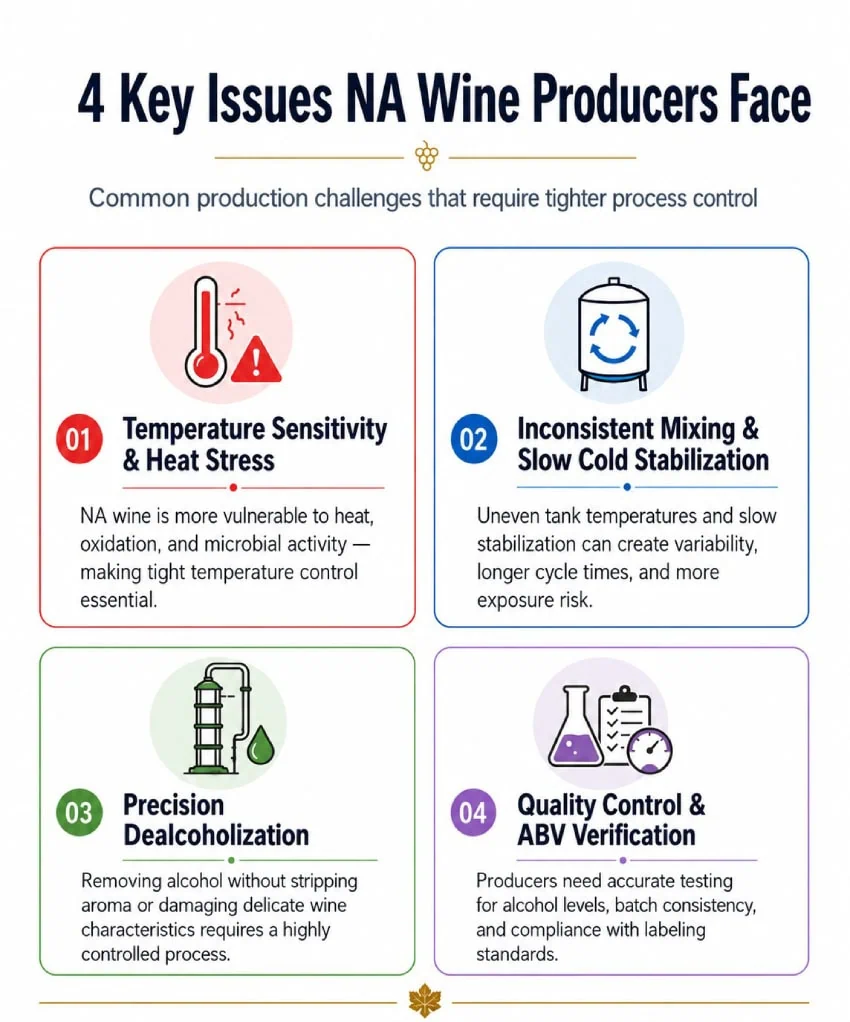
Running a winery that’s moving into NA production means your standards just went up. The margin for error is tighter, the product is more reactive, and the challenges you already manage, temperature control, oxidation risk, microbial stability, matter even more when alcohol isn’t there to act as a buffer. The right equipment for beverage production doesn’t eliminate all the hard work, but it gives you reliable control where guessing is expensive.
Here’s a practical look at the most common winemaking challenges wineries face in NA production, and the specific equipment BevZero’s Equipment team offers to address them.
Key Takeaways
NA wine is more temperature-sensitive and microbiologically vulnerable than traditional wine, your equipment needs to account for that
BevZero Equipment distributes 4 solutions designed to address the most critical winemaking challenges: tank insulation, tank mixing, dealcoholization, and quality control
All 4 can be integrated into an existing winery facility without a full infrastructure overhaul
The Challenge: NA Wine Demands More Control
“Producing high-quality non-alcoholic wine requires a different level of control — especially around temperature and microbial risk. The facilities and equipment you use play a direct role in whether that product succeeds or fails.” — Blair Sande, BevZero Equipment, PolarClad Division General Manager
Alcohol does quiet, important work in traditional wine. It inhibits microbial growth, softens acidity, carries aroma, and adds body. When you remove it, all of those properties need to be managed actively. That means tighter temperature windows, more disciplined oxygen management, faster processing cycles, and more consistent monitoring throughout production.
The challenges aren’t new, they’re the same ones every winery manages. They’re just less forgiving in NA production.
Challenge 1: Temperature Sensitivity and Heat Stress
Heat is the most persistent quality threat in any winery. For NA wine, it accelerates chemical reactions, speeds oxidation, and increases microbial risk — especially in products with residual sugar and lower alcohol protection.
Wineries in hot climates often spend around 60% of their energy bills on refrigeration alone. Even then, uninsulated tanks are constantly fighting ambient heat, which means inconsistent temperatures, higher energy draw, and quality variability across lots.
How PolarClad Tank Insulation Helps
PolarClad (USA) and BevClad (Europe) are tank insulation systems that BevZero Equipment distributes exclusively. The system delivers up to a 96.5% reduction in power usage for tank refrigeration and has an R-12 thermal barrier rating.
In practical terms, that means:
Tanks hold tighter temperature bands without constant refrigeration cycling
Daily temperature swings are reduced, which is critical for protecting delicate NA base wine
Cold stabilization becomes easier and more consistent
Energy savings can pay back the installation cost in as little as 1.5 years
Challenge 2: Inconsistent Mixing and Slow Cold Stabilization
Cold stabilization is time-consuming with traditional pump methods. The longer wine sits in an in-between state, partially stabilized, thermally uneven, the greater the exposure to oxidation and microbial risk. For NA wine, that window matters.
Thermal inconsistency inside large tanks also creates localized warm pockets that can behave differently from the rest of the batch. You can end up with lot-to-lot variation that has more to do with tank position than the wine itself.
How VinFoil Tank Mixers Help
BevZero Equipment is the exclusive distributor of the VinFoil mixer, designed and manufactured by Chemical Plant & Engineering (CPE). The hydrofoil impeller is engineered to maximize axial flow while minimizing turbulence. Its blades are slim at the tip, where rotational speed is highest, and wider at the base, where speed is lowest, allowing energy to be transferred efficiently into a pure axial flow pattern. The blade twist is computer-proportioned to reduce turbulence and support gentle, efficient mixing.
The results:
Cold stabilization is achieved 3 times faster than pump-based methods
Significant labor and energy savings compared to other methods
More even temperature distribution throughout the tank
Lower turbulence means gentler handling of fragile aromatic profiles
VinFoil is also useful beyond cold stabilization. It works for general blending, bentonite fining, oak extraction, and white wine primary fermentation control. For non-alcoholic solutions to ensure product safety due to absence of alcohol’s natural antimicrobial protection, there is a sanitary design available (Sanfoil).
BevZero offers a custom-built trial unit. Contact us for more information.
Challenge 3: Precision Dealcoholization
This is the core technical challenge in NA wine production. Removing alcohol gently, without stripping aromas, damaging delicate volatiles, or losing significant volume, requires the right process and the right equipment.
Vacuum distillation is the method BevZero uses for its own dealcoholization services, and it’s the technology behind ClearAlc. The principle: low temperatures, brief residence times, and thin turbulent films allow selective separation of alcohol and aroma compounds without the thermal stress that damages wine quality.
How ClearAlc Dealcoholization Equipment Helps
ClearAlc is manufactured by Tomsa Destil, a European company with over 170 years of expertise in alcohol technology. BevZero is the exclusive global distributor. The system won the 2025 WINnovation Award for innovation in wine dealcoholization.
Key specs:
Single-pass vacuum distillation process
Reduces alcohol down to 0.05% ABV
Can rectify the alcohol fraction up to 92% ABV
Extracts heads, hearts, and tails for full fractionation control
Model sizes from 800 L/h to 3,000 L/h
Fully automated with integrated control panels and remote data acquisition
For wineries that want to bring dealcoholization in-house, ClearAlc gives you the same technology BevZero uses for its own processing services. You own the process, the throughput, and the flexibility to run the ABV targets your products require.
Optional enhancements include a degasification column, heat pump, and electrical boiler. Spare parts and O&M services are available.
Challenge 4: Quality Control and ABV Verification
NA wine has a tighter tolerance for error. Hitting your ABV target matters not just for quality, it affects labeling compliance, since the definitions of “alcohol-free” and “non-alcoholic” vary by market. In the USA, non-alcoholic means under 0.5% ABV. In the UK, alcohol-free means under 0.05% ABV.
Beyond ABV, you need to monitor for fermentation activity in finished product, track consistency across batches, and identify deviations early, especially as distribution widens.
How the ImplenQ UV-Vis Spectrometer Helps
BevZero is an authorized partner and distributor of the ImplenQ, an all-in-one UV-Vis spectrometer from Implen designed for wine and spirits quality control.
What it does:
Alcohol content testing with no dilutions required
Wine analysis across red, white, and rosé
Fermentation monitoring
Batch consistency checks across production runs
What makes it practical on the floor:
Only 5 microliters of liquid needed per sample
No calibration, no recalibration, no regular maintenance ever required
Battery-powered for mobile use
Works as a standalone unit
World’s smallest footprint in its class at 20 x 20 x 12 cm
For process application details, BevZero has application flyers available on the QC Spectroscopy equipment page.
How These 4 Work Together
These aren’t 4 separate purchases for 4 separate problems. They cover the main control points in an NA production workflow:
Tank insulation protects base wine quality during storage and processing
Tank mixers reduce cycle time and improve thermal consistency
ClearAlc handles the dealcoholization itself with precision and efficiency
ImplenQ gives you verification at every stage — fermentation, post-processing, and final QA
Together, they give a winery the same level of process control that BevZero has built into its own facilities over 30 years.
What to Do Next
Identify your biggest production gap
Is your biggest challenge temperature consistency, dealcoholization throughput, or batch verification?
Start with the equipment that addresses the problem costing you the most in product loss or rework
Talk to BevZero’s equipment team
BevZero’s engineers, enologists, and equipment specialists can assess your facility and help you figure out which combination makes sense for your production volume and goals
Contact BevZero at bevzero.com/contact
Ready to Bring Better Control to Your NA Production?
BevZero has spent over 30 years developing the processes and equipment that make high-quality NA wine possible. If you’re exploring what it would take to upgrade your facility, or just want to understand which equipment makes the most sense for your production stage, our team is glad to walk through it with you.
👉 Contact BevZero online now or email us at info@bevzero.com to start your NA wine production today.
Frequently Asked Questions
Does BevZero sell equipment directly, or only offer dealcoholization as a service?
Both. BevZero runs dealcoholization services at its facilities in California, Spain, and South Africa, but it also sells and distributes equipment for wineries that want to bring production in-house. ClearAlc Dealcoholization Plants, PolarClad/BevClad Tank Insulation Systems, VinFoil Tank Mixers, and the ImplenQ spectrometer are all available through BevZero’s equipment division.
What size winery is ClearAlc designed for?
ClearAlc systems are available in model sizes from 800 L/h to 3,000 L/h, which covers a fairly wide range of production volumes. BevZero’s technical team can help you determine the right configuration based on your throughput targets and facility setup.
Can PolarClad tank insulation be retrofitted to existing tanks?
Yes. PolarClad is designed to be installed on existing tanks and is available in the USA, while BevClad covers Europe. BevZero’s team can advise on installation requirements for your specific tank dimensions and cellar conditions. Additionally, if you are purchasing new tanks, PolarClad insulation and Vinfoil mixers can be added to your tanks during the manufacturing process saving down time on site. Contact us to learn more. We have relationships with the top tank manufactures and can help you bundle a solution.
Is the ImplenQ suitable for wineries that don’t have a dedicated lab?
It’s designed to work without a dedicated lab setup. The unit requires no calibration, no dilutions, and only 5 microliters of sample per test. It runs on battery power and has a built-in touchscreen, so it can be used on the production floor or in the cellar without specialized equipment or infrastructure.
Does BevZero offer support after equipment purchase?
Yes. Spare parts and O&M (operations and maintenance) services are available for ClearAlc systems. BevZero’s global team of engineers and enologists also provides technical support across all equipment lines.
Breaking into the non-alcoholic beverage space takes more than a good idea. It takes sourcing, formulation, dealcoholization, regulatory navigation, packaging, and production — often all at once. That’s a lot to figure out alone, which is why more brands are looking for a partner who can handle non-alcoholic beverage development end to end. BevZero, with its 30 years of dealcoholization experience, is the right turnkey NA partner for you.
Key Takeaways
BevZero handles the full NA production process (from base product sourcing through final packaging) so you don’t need to build your own infrastructure.
If speed matters most, BevZero’s white label program lets you launch a ready-made NA wine under your own brand in the fastest possible timeframe.
For brands that want an exclusive formula and full ownership, BevZero’s custom development and private label path delivers that too.
You Don’t Have to Figure This Out Alone
A lot of brands come to BevZero at the same point: they know what they want to make, but they don’t know where to start, or they’ve started and hit a wall.
The most common questions we hear:
Who can actually produce a non-alcoholic wine for my brand?
What does the full process even look like?
Can one company handle development and production?
The short answer to that last one is yes. BevZero operates as a one-stop shop, with winemakers, food scientists, and production specialists across facilities in California, Spain and South Africa.
The Fast Path: White Label NA Wine
If your goal is getting to market quickly, to test demand, fulfill a contract, or launch a brand without a long development cycle, BevZero’s white label program is worth knowing about.
White label means you put your brand on an already-developed, ready-to-go NA wine. BevZero handles the formulation, sourcing, and production. You choose from available varieties and supply the label.
Available white label varieties from BevZero:
Still White
Sparkling White
Still Red
Still Rosé
Sparkling Rosé
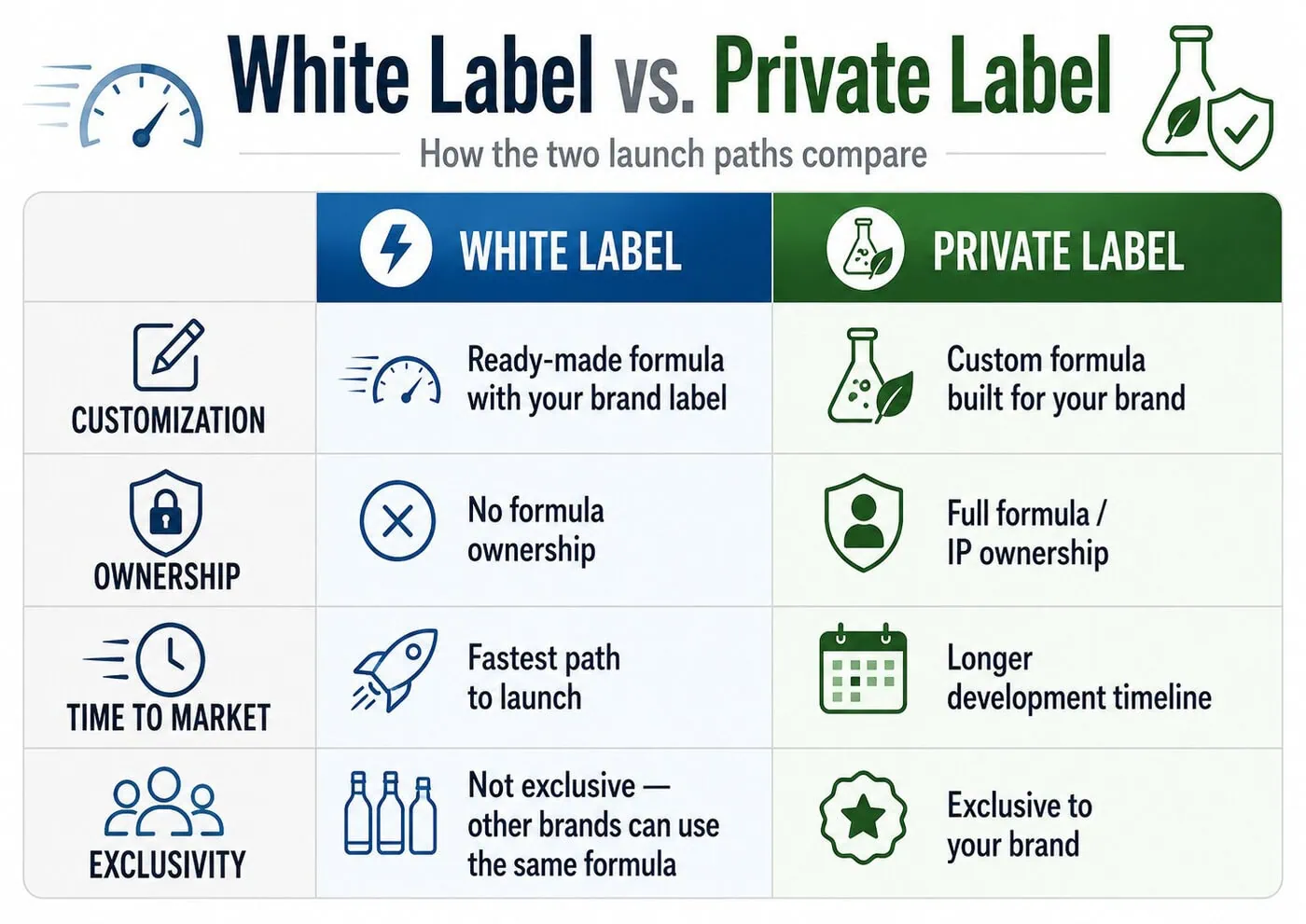
It’s the lowest-cost, fastest entry into the NA wine market. The tradeoff is that the product isn’t exclusive, other brands can carry the same formula under different names. You also don’t own the formula.
For a lot of brands, that’s a worthwhile tradeoff. You get a quality NA wine, proven to work, without months of development time.
The Custom Path: Private Label and Full Development
For brands that want an exclusive product, their own flavor profile, their own formula, full IP ownership, BevZero’s private label and product development services are the right fit.
This path takes longer. But it gives you something the white label route can’t: a product that belongs entirely to your brand.
“Successful non-alcoholic products aren’t built in silos. They’re built through collaboration — from sourcing the right base wine to refining flavor, dealcoholization, and final production.” — Christian, Product Development Manager at BevZero
Here’s what that collaboration looks like depending upon the path you choose.
BevZero’s 6-Step Production Process for Private Label
Step 1: Planning and discovery
This is where BevZero gets specific about your goals. Target audience, price point, distribution channel, style preferences (dry or off-dry? still or sparkling?), and timeline all get mapped out before anything else happens. Knowing the end goal upfront saves significant time later.
NOTE: If you plan to move to market fast with a white label solution, the process is much simpler with decisions on wine style and labeling, and the rest is taken care of. Contact us to learn more.
Step 2: Custom formula development
BevZero’s winemaking and food science team develops your product formula for a Private Label product. The development package includes up to 8 hours of in-person or remote development time, benchtop samples for pre-production review, and a certified Nutritional Facts Panel for label readiness.
You own the formula when the project is complete.
Step 3: Sourcing the base product
For NA wine, the base wine matters more than most people expect. Alcohol carries aroma and body. When it’s removed, the underlying wine has to be able to hold up.
BevZero helps identify base wine with the right acid structure, aromatic concentration, and phenolic maturity to survive dealcoholization in good shape.
Step 4: Supply chain and logistics
From raw goods and packaging materials to co-packer identification, production scheduling, and trucking, BevZero handles the operational side. Most brands don’t have existing relationships in this space — BevZero does, and those introductions save real time.
Step 5: Dealcoholization
This is the technical core of the process. BevZero uses very low temperature vacuum distillation — a method that removes alcohol gently, at low temperatures, with brief residence times. The goal is to preserve the aroma and flavor compounds that make a wine taste like wine.
BevZero can reduce alcohol to a specific target — whether that’s a slight reduction for a lifestyle wine (say, 9% ABV from 13.5%), or full removal down to less than 0.5% or even less than 0.05% ABV for a fully non-alcoholic product.
For non-alcoholic beverage development, getting the dealcoholization step right is where quality is won or lost.
Step 6: Final packaging
BevZero coordinates the co-packer for final packaging — fill, closure, carbonation if sparkling, and QA sign-off. Getting this step right is what turns a well-made liquid into a product that performs on shelf.
What About Regulatory and Labeling?
Labeling requirements for non-alcoholic beverages vary by market. In the US, “non-alcoholic” means less than 0.5% ABV. In the UK, “alcohol-free” means less than 0.05% ABV. Australia has different standards again.
BevZero supports clients through federal regulatory compliance as part of the production process, including the Nutritional Facts Panel from a certified lab that comes with the product development package. It’s one less thing to figure out on your own.
Who Is BevZero Right For?
BevZero works with a wide range of clients. A few examples:
Established wine brands that want to add an NA SKU without building new production capacity
Entrepreneurs entering the beverage space for the first time, with no existing infrastructure
Retailers and hospitality operators (hotels, restaurants, airlines, cruise lines) that want a branded NA wine option for their guests
Beverage startups building a brand around low-alcohol or alcohol-free products
If you’re in any of these categories and have been wondering whether one partner can take you from concept to bottle, the answer is yes.
What to Do Next
Looking to get started in the world of NA beverage production? Here’s what we suggest:
1. Pick a Path
Decide which path fits your timeline
Need to move fast and test the market? Start with white label.
Building a long-term brand with an exclusive product? Plan for private label or custom development.
2. Contact BevZero
Reach out to BevZero for a discovery conversation Tell them your target style, your ABV goal, and your timeline. That’s enough to start mapping out a plan.
3. Get More Information
Learn more about BevZero’s Non-Alcoholic services by exploring the resources available on our website. Visit our blogs, news articles, brochures, and educational content to gain insights into dealcoholization, product development, equipment solutions, industry trends, and more.
Ready to Launch Your NA Brand? Let’s Talk.
Whether you’re starting from scratch or already have a brand and just need the production side handled, BevZero’s team can walk you through the options. The process is practical and the team has done this across dozens of non-alcoholic product launches.
👉 Contact BevZero online now or email us at info@bevzero.com to start your NA wine production today.
Frequently Asked Questions
Can one company handle all of my non-alcoholic beverage development and production?
Yes. BevZero handles the full process, from base product sourcing and formula development through dealcoholization and final packaging. Clients don’t need to build their own production infrastructure or manage multiple vendors across each step.
What’s the difference between white label and private label NA wine?
White label uses an already-developed BevZero formula that multiple brands can carry. Private label is developed exclusively for your brand, and you own the formula at completion. White label is faster and lower cost to enter; private label gives you exclusivity and full IP ownership.
How low can BevZero remove alcohol in a finished wine?
BevZero can reduce alcohol down to less than 0.5% ABV for standard non-alcoholic products, and in some cases down to less than 0.05% ABV. The right target depends on your market, your labeling goals, and your style preferences. BevZero can help you identify the right ABV before processing begins.
Does BevZero help with labeling and regulatory compliance?
The product development package includes a certified Nutritional Facts Panel for label readiness. BevZero also supports clients with federal regulatory compliance navigation, which matters especially because ABV definitions and labeling requirements vary significantly between the US, UK, EU, and Australia.
What beverages can BevZero dealcoholize and develop?
BevZero works across wine (all varieties, including fermenting juices and wines with dissolved CO2), cider, and spirits. The company also serves brands in the infused functional beverage space, including cannabis and hemp-derived products.
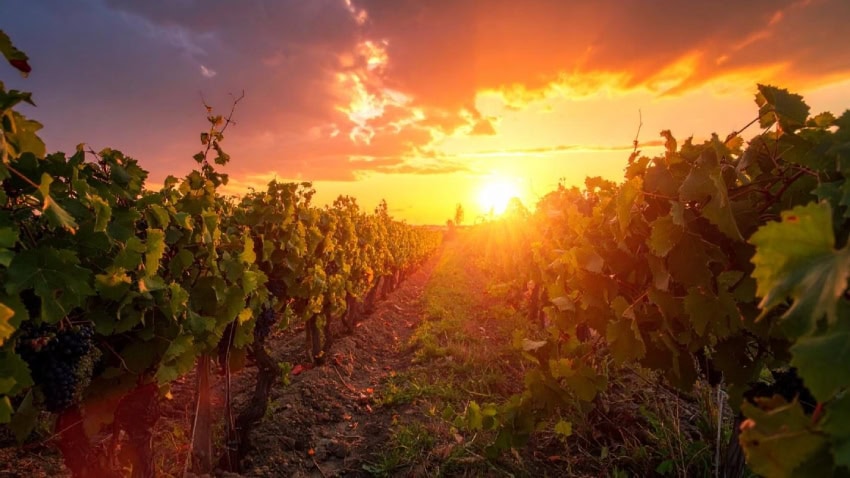
If you’ve ever walked into the cellar on a hot day and felt that “warm tank room” air hit you in the face, you already know the uncomfortable truth: summer heat doesn’t just raise temperatures—it raises risk .
And for non-alcoholic (NA) and low-alcohol wines , that risk climbs even faster. Alcohol is more than a sensory component; it contributes to stability. When it’s reduced or removed, you’re working with a product that can be more delicate, more reactive, and more vulnerable —especially when temperatures drift upward.
This is where two practical tools earn their keep:
-
PolarClad tank insulation (and BevClad in the EU) to stabilize tank temperature and reduce refrigeration load
-
VinFoil tank mixers to circulate wine more evenly, improve thermal uniformity, and speed cold stabilization
At BevZero, we’ve spent decades working in alcohol and flavor management for wine—helping producers protect aroma, mouthfeel, and shelf life while navigating the realities of production, packaging, and warm-weather logistics.
Why Heat Stress Changes Wine Chemistry
Heat doesn’t have to “cook” wine to cause damage. Even moderate elevation, days or weeks at warmer-than-ideal cellar conditions, can accelerate changes that show up later as:
Aroma Loss and “Flattening”
Many of the bright, fruity, fresh notes consumers expect (especially in whites, rosés, and NA styles) are tied to volatile compounds that shift with time and temperature. Higher storage temperatures are well documented to accelerate chemical reactions and speed up wine development in ways that reduce freshness.
Faster Oxidation and Premature Aging
Heat accelerates oxidation pathways and the overall pace of wine aging, often presenting as muted fruit, darker color, and early “tired” character. Reviews of wine shelf life consistently flag storage temperature as a major driver of oxidation impact.
SO₂ Loss and Browning Risk
Warm storage can increase loss of protective SO₂ and push white wines toward browning and aged aromatics. Extension guidance for wine storage also warns that elevated temperature can speed oxidation and reduce protective factors.
Microbial Risk Climbs with Temperature
Microbes generally love warmer environments. When wine warms up, especially if it has residual sugar, low molecular SO₂ protection, or post-processing exposure points, microbial stability becomes a moving target .
How Heat Specifically Effects NA Wines
Let’s tackle the questions producers keep asking:
Is Non-Alcoholic Wine More Sensitive to Heat?
Often, yes—because NA wine can be less inherently protected .
Alcohol contributes to microbial inhibition and overall stability. In NA wine, you’ve removed a stabilizing component and often introduced extra handling steps (dealcoholization, blending, adjustments, filtration), each of which can add opportunities for oxygen pickup or microbial exposure if controls aren’t tight. BevZero’s own technical guidance highlights that NA wine lacks alcohol’s preservative power, increasing susceptibility to spoilage organisms and post-bottling fermentation.
Does Removing Alcohol Make Wine Less Stable in Hot Weather?
It can, especially when heat triggers a chain reaction:
-
Higher temperature = faster chemical change (aroma shifts, oxidation)
-
Higher temperature = higher microbial activity potential , particularly if any spoilage organisms are present and the product matrix supports growth
That’s why summer planning for NA can’t just be “keep it cool if possible.” It needs to be designed into the system —tank environment, processing pace, monitoring, and QA.
How Should Non-Alcoholic Wine Be Stored in Summer?
Think in terms of stability windows :
-
Keep bulk NA wine thermally stable (avoid daily swings)
-
Reduce time sitting warm in tank, line, or staging areas
-
Increase monitoring frequency during heat spikes
-
Treat packaging/shipping temperature as part of your quality program (not an afterthought)
Temperature Swings Cost Quality and Money
“Temperature control isn’t just a comfort factor — it’s a quality commitment. Every degree matters when it comes to preserving flavor and efficiency.”
— Blair Sande, BevZero PolarClad Division General Manager
In hot climates, refrigeration is often the largest energy draw. BevZero’s equipment guidance notes wineries can spend a major share of energy on refrigeration—especially when tanks are uninsulated and fighting ambient conditions.
That’s the double hit of summer:
-
Quality risk goes up
-
Energy cost goes up
This is exactly where PolarClad tank insulation (and EU BevClad ) becomes more than a “nice-to-have.” It’s both wine temperature control and winery energy efficiency in the same decision.
Strategy #1: PolarClad tank insulation (BevClad in the EU)
If your tanks are constantly battling ambient heat, you’re forcing them to work overtime—and you’re still exposed to temperature gradients: warm shoulders, fluctuating jacket performance, and uneven tank temperatures that can quietly stress a delicate NA base.
PolarClad tank insulation is designed to reduce heat gain and stabilize tank temperature . BevZero’s PolarClad/BevClad program positions it as a leading insulation system with reported major reductions in power usage and strong payback potential depending on site conditions.
Here’s what insulation helps you do in practical winery terms:
1) Hold Tighter Temperature Bands
Less drift means fewer “reaction spikes” and fewer surprises—especially important for NA where freshness is a feature, not a bonus.
2) Reduce Refrigeration Cycling and Peak Load
Insulation reduces how often (and how hard) refrigeration has to work, helping stabilize both temperature and operational
3) Improve Consistency Across Tanks and Lots
When tanks behave more similarly, you get fewer lot-to-lot differences driven by tank placement, sun exposure, or building hot spots.
4) Support Sustainability Goals Without Compromising Quality
Energy saved is emissions avoided. And unlike some shortcuts, insulation doesn’t ask you to trade quality for efficiency—it protects both.
(For EU producers: the equivalent solution is BevClad tank insulation .)
Strategy #2: Reduce Residence Time and Improve Thermal Uniformity
When heat hits, wineries often respond by chilling harder. But chilling alone doesn’t solve thermal inconsistency inside large tanks or the process inefficiencies that keep wine sitting in vulnerable “in-between” states longer than it should.
That’s where VinFoil tank mixers can make a meaningful difference, especially for NA programs where you’re protecting aroma and minimizing heat-driven quality loss.
BevZero’s equipment overview notes that VinFoil is engineered to maximize flow while minimizing turbulence , creating efficient axial flow. It’s also positioned as significantly faster for cold stabilization than pump-based methods, with major potential labor and energy savings.
What that means for NA wine in summer
1) Faster cold stabilization windows
If you can cold-stabilize faster, you reduce time at risk, reduce energy draw, and free up tank capacity.
2) More even tank temperature
Uniform temperature reduces localized warm pockets that can accelerate oxidation or increase microbial risk—especially in more delicate NA matrices.
3) Gentler handling
Lower turbulence can mean less aggressive mechanical stress compared to high-shear recirculation setups, helping protect fragile aromatic profiles and overall balance (depending on your specific configuration).
4) Sanitary Option
For additionally protection, Vinfoil’s sanitary design option is ideal for non-alcoholic beverages, helping reduce contamination risk while ensuring hygienic, consistent mixing for sensitive products.
Put it Together: Summer Heat Mitigation Plan
Utilizing both PolarClad tank insulation and Vinfoil mixers together creates an ideal solution for managing summer heat and reducing microbial risk in non-alcoholic wines. PolarClad helps maintain stable tank temperatures and minimizes energy demand, protecting sensitive NA wines from heat-driven instability and unwanted microbial activity. At the same time, Vinfoil mixers provide gentle, consistent circulation—eliminating temperature gradients, improving process efficiency, and supporting uniform product conditions throughout the tank. Together, they deliver greater control, enhanced product stability, and a more reliable path to high-quality non-alcoholic wine production, even in the most challenging warm-weather conditions.
Quick FAQ for Producers
Is non-alcoholic wine more sensitive to heat?
In many cases, yes. Heat speeds chemical reactions (aroma shifts, oxidation) and NA wine may have less natural antimicrobial protection due to reduced alcohol.
Does removing alcohol make wine less stable in hot weather?
It can. Removing alcohol can increase reliance on tight process control, oxygen management, and microbial stability programs—especially in warm conditions.
How should non-alcoholic wine be stored in summer?
Aim for stable, cool, consistent tank conditions , reduced residence time, and tighter QA around oxygen and micro risk. If your refrigeration system is constantly battling ambient heat, tank insulation and efficient mixing become high-impact levers.
Make Sure Your Product Can Beat the Heat with BevZero
As temperatures rise, so do cooling demands—making PolarClad and Vinfoil a smart investment that not only protects product quality but also significantly reduces energy consumption and operating costs.
If you tell us what you’re making, we can help you identify the biggest thermal risk points and where insulation + mixing will deliver the most impact—quality-first, ROI-aware, and practical for your cellar workflow.
👉 Contact BevZero online now or email us at info@bevzero.com to start your NA wine project today.

Sustainability in winemaking comes down to operational decisions. The right equipment can reduce refrigeration demand, lower water use, cut product loss, and simplify production flow without compromising wine quality. That is where BevZero’s equipment portfolio stands out: it addresses the day-to-day constraints wineries actually face during beverage product development , from cold stabilization and insulation to dealcoholization and wastewater management.
Key Takeaways
Wineries improve sustainability through systems, not one-off fixes.
BevZero distributes equipment that targets major production pain points, including energy-intensive refrigeration, water waste, and process inefficiency.
ClearAlc supports lower-impact dealcoholization.
The system uses a single-pass vacuum distillation process designed for high energy efficiency, low operating temperatures, and minimal water use.
Tank-level efficiency can deliver measurable savings.
BevZero’s VinFoil Tank Mixer can cut cold stabilization energy use by more than 80%, while the PolarClad and BevClad insulation systems can reduce power usage by up to 96.5%.
Sustainability also affects innovation.
Better production infrastructure gives wineries more flexibility to launch premium low- and no-alcohol products and support beverage product development with fewer operational tradeoffs.
Sustainability Starts with Better Winery Infrastructure
BevZero Equipment Sales and Distribution offers equipment that solves real wine production process problems, while keeping sustainability in mind. BevZero focuses on technologies that reduce utility demand, improve process control, and support long-term return on investment inside working wineries.
That portfolio includes ClearAlc dealcoholization equipment, VinFoil tank mixers, PolarClad and BevClad tank insulation systems, UV-Vis quality control tools, and additional winery sustainability technologies through Tomsa Destil. Each system addresses a specific operational challenge, whether that is reducing refrigeration load or blend times, limiting water use, improving alcohol management, or tightening process consistency.
This systems-based view fits BevZero’s broader operating model. The company draws on more than 30 years of experience in dealcoholization and beverage production, with teams that include winemakers, distillers, food scientists, and engineers, working across the U.S., Spain, and South Africa. That technical mix matters because product decisions in wineries are rarely isolated; they affect product quality, logistics, packaging, development timelines, and sustainability at the same time.
ClearAlc: Dealcoholization Built for Efficiency
A strong example of BevZero’s sustainability approach is ClearAlc, the dealcoholization system it exclusively distributes, designed and manufactured by Tomsa Destil. ClearAlc uses a highly energy-efficient, single-pass vacuum distillation process that can reduce alcohol to as low as 0.05%-0.02% ABV while operating with lower maximum temperatures and minimal water use.
For wineries entering the low- and no-alcohol category , those details matter. Lower operating temperatures, during dealcoholization, help protect delicate aroma compounds. Minimal water use reduces pressure on utilities. Single-pass processing can simplify production planning. Instead of framing this as a general sustainability benefit, the value is more concrete: wineries can expand into alcohol-managed products with tighter control over flavor retention, energy use, and processing efficiency.
This is also where sustainability connects directly to beverage product development. Alcohol-management infrastructure does more than remove alcohol; it gives producers the technical flexibility to create premium low- and no-alcohol wines with more consistency, fewer formulation compromises, and a clearer path from concept to commercial production. Additionally, with the ClearAlc technology, the alcohol removed can be rectified up to 92%ABV as an additional revenue stream. BevZero’s product development and project management services support that process from formulation through sourcing, production planning, and packaging coordination.
Cutting Energy Use Where Wineries Feel It Most
Energy remains one of the largest cost and sustainability pressures in winemaking, especially around refrigeration and stabilization. BevZero’s equipment offerings target those areas with systems designed to reduce demand at the tank and process level.
The VinFoil Tank Mixer can achieve cold stabilization three times faster than pump-based methods, with average energy savings of more than 80%. For wineries managing large tank volumes, that is not a small process tweak. It can materially reduce the energy burden of one of the more intensive cellar operations while improving throughput. More importantly, once the Vinfoil mixers are installed and configured to the plant control system, operation is very simple with one easy button. This means no set-up time, and no moving equipment around, reducing labor costs and worker injuries. For producers working in the non-alcoholic space there is an option for a sanitary design, ensuring product safety.
Tank insulation is another area where savings can be significant. BevZero says its PolarClad and BevClad insulation systems can reduce power usage by up to 96.5% . The company also notes that wineries in hot climates often spend about 60% of their energy bills on refrigeration alone, which makes insulation one of the most direct ways to improve both environmental performance and operating margins.
These are the kinds of sustainability improvements that tend to gain support quickly inside winery operations because they are measurable. Lower refrigeration demand can be tracked. Operating costs can be compared. Wine quality remains protected.
Why This Matters for Wineries
What BevZero is doing through equipment sales and distribution is not just offering winery hardware. It is giving producers practical ways to address resource use where it shows up most clearly.
For wineries that want to modernize operations , that creates a more useful framework for sustainability. The question is not whether a system sounds innovative. The question is whether it reduces waste, preserves quality, and improves process performance in a way the cellar team can actually measure. That is the standard BevZero’s equipment story needs to meet, and in the strongest parts of its portfolio, it does.
Build a More Sustainable Winery with BevZero
A more sustainable winery is usually a more efficient winery. BevZero’s equipment portfolio shows how that works in practice: energy-efficient dealcoholization, faster cold stabilization and mixing with Vinfoil, and high-performance insulation. Together, those capabilities help wineries reduce resource use while supporting product quality and commercial flexibility.
For producers exploring low- and no-alcohol innovation, those same capabilities also create a stronger operational foundation for new product launches. BevZero’s experience in alcohol management, supply-chain coordination, and beverage development allows wineries to connect sustainability goals with product strategy instead of treating them as separate tracks.
Contact BevZero online and we’ll talk through what the next step looks like for your portfolio.
FAQ
How does BevZero support winery sustainability?
BevZero supports winery sustainability by distributing equipment and services that support emissions reduction, CO2 recovery, energy integration, biomass and wastewater treatment. Its portfolio includes dealcoholization systems, tank mixers, insulation, and broader production support.
What makes ClearAlc different from standard dealcoholization equipment?
BevZero describes ClearAlc as a single-pass vacuum distillation system designed for high energy efficiency, low operating temperatures, and minimal water use. It can dealcoholize beverages to as low as 0.05% ABV and is intended to preserve aroma and flavor during alcohol removal. ClearAlc offers flexible control with four different aroma outputs.
Can winery equipment really reduce refrigeration costs?
Yes. BevZero states that its VinFoil Tank Mixer can reduce energy use in cold stabilization by more than 80%, and its tank insulation systems can reduce power usage by up to 96.5%. Since refrigeration is a major winery energy expense, those improvements can have a meaningful operational impact.
How does sustainability connect to beverage product development?
Sustainability and product development are connected through production capability. Efficient alcohol-management systems, stronger process control, and better supply-chain coordination give wineries more room to develop and launch premium low- and no-alcohol products without adding unnecessary operational strain. BevZero’s development and project management services are designed to support that full path from concept to production.
Santa Rosa, CA – 09 April 2026 – BevZero highlights facility-specific sustainability efforts across the U.S., Spain, and South Africa, alongside equipment for efficient beverage production.
BevZero, a global leader in beverage services, equipment, expertise, and innovative solutions, is advancing a corporate sustainability strategy across its operations in the United States, Spain, and South Africa. Through facility-specific improvements and sustainability-minded equipment solutions, the company continues to reduce resource use, improve operational efficiency, and help clients bring premium low- and no-alcohol beverages to market more responsibly. With more than 30 years of experience and teams across the U.S., Spain, and South Africa, BevZero supports wine and spirits producers with dealcoholization services, beverage production support, and equipment distribution. Its global approach to sustainability focuses on practical action, from streamlined logistics and environmental management standards to renewable energy generation, wastewater treatment, and efficient processing technologies.
“Sustainability is not just something nice to have—you really need to have it,” said Silvia Cedeno Daguerre, Managing Director and Enologist at BevZero Spain. “That allows our clients to focus on their business, knowing that their production is handled in a sustainable and efficient way.”
United States Facility
BevZero’s U.S. operations are consolidating bottling, sparkling, and canning capabilities under one roof, reducing the need for customers to move product between multiple sites. The change simplifies production planning, reduces trucking runs and handling time, and lowers transportation-related emissions for wine and spirits producers.
“Being able to offer bottling, sparkling, and canning in one location for customers adds a huge amount of efficiency,” said Pat Morgan, Vice President of BevZero US. “From a sustainability standpoint, we eliminate a ton of fossil fuel usage from moving products around.”
Spain Facility
At BevZero Spain, sustainability is reinforced through ISO 14001 certification, an internationally recognized environmental management standard that evaluates environmental impact across operations, travel, and supply chain decision-making. Two years ago, BevZero’s Spain facility implemented 100 solar panels on their roof, covering the marjority of it’s energy consumption. This framework supports consistent, measurable progress and reflects BevZero’s broader commitment to responsible production .
South Africa Facility
BevZero South Africa has implemented several site-specific initiatives at its new Paarl facility to improve efficiency and reduce environmental impact. The facility operates 300 solar panels that contribute to on-site renewable energy generation and reduce dependence on the grid.
The South Africa facility has also installed a dedicated wastewater treatment system that captures, treats, and recycles facility wastewater for irrigation or safe environmental discharge. In addition, a new clean-in-place (CIP) system reduces the water and chemical inputs required per cleaning cycle compared with prior methods.
Operational improvements in South Africa also include workflow redesign and improved space utilization, helping increase throughput per square meter while reducing idle time and the associated energy overhead.
Equipment Distribution and Sales
In addition to its production facilities, BevZero’s Equipment Sales and Distribution division offers technologies designed with sustainability and efficiency in mind. BevZero distributes ClearAlc dealcoholization technology, which is engineered for high energy efficiency and minimal water use. Its portfolio also includes the VinFoil Tank Mixer , which achieves cold stabilization three times faster than traditional pump-based approaches and can deliver energy savings of more than 80%, as well as tank insulation systems designed to reduce power consumption in refrigerated storage.
About BevZero
BevZero is a global leader in beverage services, equipment, expertise, and innovative solutions, helping brands create the highest quality traditional and low- and no alcohol beverages across wine and spirits, with a one-stop approach from brainstorm to bottle.
For more information about BevZero or this press release, please email BevZero at info@bevzero.com .