


There is no slower adopter of digital marketing and e-commerce than the wine industry. Though wine is among the most ubiquitous of all alcoholic drinks, second only to beer, it lags in its e-commerce efforts as a sector. We’re not talking about the big companies here, but rather the small and medium-sized wineries and tasting rooms out there. There are many reasons why wineries fail at e-commerce, which is a sad reality for a market with almost inexhaustible demand in its target audience. Here’s why our industry and community are taking its sweet time with e-commerce and how it can do better with its marketing efforts.
WINE BRANDS DON’T HAVE TIME
A primary issue for many wineries starts with their lack of time to perform proper marketing for their products. Small business owners usually operate at capacity, handling the constant, endless, daily details of running a wine operation with a small team. These small families and teams have very little time left to do anything else at the end of the day, much less with e-commerce.
Winery websites are both game-changers and pain points. They can be expensive to design and lengthy projects to finish, but if your e-commerce website is outdated or dysfunctional, a refresh will change your world. A small website with five pages is not always enough. Sometimes, you need to invest in e-commerce, not as a way to get a few sales now and then. Instead, you use it to reach out to more customers and shorten your sales cycles.
Rather than rely only on brick and mortar businesses selling your wine brand, sell it straight to your customers! An excellent way to start your journey is to start talking to professionals about building your e-commerce pages. You don’t even have to hire an in-house web developer to handle the task. If you have no time or are unwilling to perform the marketing yourself, you can hire a freelance digital marketer or web developer to start your e-commerce site.
THEY CAN’T STAND OUT FROM OTHER WINERIES
Another reason wineries are slower to adopt and excel in e-commerce is their inability to stand out from competitors. Wine brands are pretty good at using marketing channels to teach people to appreciate wine, winemaking, and farming. However, what they lack is a way to convince and convert people to actually buy their wine. The follower versus customer ratio has become quite the dilemma in the digital age.
One common issue for wine brands is they find it hard to create separation. Why should the average customer care about your wine that’s more expensive by a few more dollars per bottle than a two-buck chuck? How is your Napa Cabernet Sauvignon any different than your competitor’s Napa Cabernet?
Everything boils down to proper marketing psychology when it comes to selling your wine online. Use bolder, more powerful colors with your labels so it can capture more eyes on social media. Push customers to buy more by leveraging how many have purchased your product already, also known as social proof.
If you already do heavy branding on your label, go for a more minimalist approach. If your website is too barebones, try to add more wine education or imagery into your content. People care about the nitty-gritty details, but we also gravitate towards well-rounded brands.
THEIR WINE WEBSITE LACKS CONTENT
Going back to the website issue, a common problem with small wineries and why they take longer to develop their e-Commerce is the lack of content creation. Most wine brands talk about the DNA of their wineries - its history, the people in it, and everything in between. Even then, a lot of sites forget the content that matters the most: wine education.
THERE ARE THREE TYPES OF CUSTOMERS THAT VISIT WINE E-COMMERCE SITES. THESE ARE:
- Wine nerds who live, breathe, sleep, drink, and dream wine
- Budding wine connoisseurs looking for a different wine
- Wine newbies looking to learn more about wine
What links all three together is their need for additional education. This doesn’t mean you need to be scientific about your wines, though it’s not an issue if you have the knowledge base. There are several ways to improve your content and get your website going in the blog department. Many people don’t realize that blogs serve a purpose beyond just a creative outlet and storytelling. They massively support Search Engine Optimization. Meaning when you blog 600 words on the new release of your small-production Sonoma Russian River Valley Pinot Noir, your website will begin to appear when people search any of those descriptive phrases. And the more you blog and the more written content you add to your product pages, the farther up the Google ladder your winery’s website will live, and the more eyes and clicks on your brand.
When you’re writing website content, focus on information about the wine itself rather than the “magic” of it. Talk about the quality of the grapes, the terroir found on your property, the notes you’re evoking, the vintage facts, and the recipes you imagine pairing with your wine. Rather than focus on telling a cookie-cutter origin already on your label, write about your new wine releases, harvest updates, and the stories behind your labels.
THEY DON’T KNOW HOW TO USE MARKETING TOUCHPOINTS
In marketing, touchpoints are places where a customer can make contact with the product. Wineries tend to believe their most significant touchpoints are 3-tier markets and distributions, rather than online, directly to their consumers. The inability to understand and maximize these immediate touchpoints is a considerable struggle with wineries.
More than 50% of all purchases are done through mobile phones, while the other half comes from desktop computers. With that said, wineries shouldn’t rely on supermarket shelves or restaurants anymore. In the same vein, they should also stop using their website to sell wine every once in a while. Instead, wineries must consistently maximize touchpoints, meet customers halfway, and use their websites to accelerate revenue generation. Use social media to bring your brand to more people. Market your wine brand in places where your target audience would be, like Facebook, Google, Yelp, or Waze. You can also use smaller platforms to link back to your online wine shop. These include niche spaces like Pinterest, LinkedIn, and Medium.
FINAL THOUGHTS
The reason why wine brands tend to be slower adopters of e-Commerce comes from how most wineries structure their marketing efforts. If they have any strategy at all, the problem comes from how they view an online presence. Those who understand the power of their websites will do their best to develop their marketing channels. Even a cursory e-Commerce website can do well with nothing fancier than solid product descriptions, interesting and well-written blog content, and liberal use of social media. The problem stands that a website, when treated right, can maximize your target audience tenfold and help get the word out. Do you have any of the problems we listed above? If you do, consider the solutions we have for you. e-Commerce is a powerful tool that you should look into sooner rather than later. The future is now, so don’t waste the simply, low-hanging e-Commerce opportunities available to you.
https://www.astradms.com/astra-blog/why-wine-is-a-slow-adopter-of-ecommerce

It’s summer in Napa and man, is it sweet. Sweet like the grape-infused breeze. Sweet like the morning dew in the wheat fields. And sweeter than ever, considering the lockdown we’ve all experienced for over a year and a half. Everyone looks happier, feels bubblier, and has relaxed their work-from-home shoulders a few inches. With tasting rooms open again (Yay!), our team has been able to dial back on the excessive content creation and, if you could believe it, open one of the books on our sad, neglected shelves. Summer reading is back and better than ever, but not without the appropriate beverage by our side. We asked our Account Managers — what are you reading these days? And what are you sipping with it? Here are our current favorite reads and the drinks to match all their twisted genres and dreamy settings. Lord willing, we will finish a book or two this summer!
THE MOST IMPORTANT MEAL OF THE DAY
Erin is our Brand Manager of FlyWithWine. She’s effortlessly cool and the one on the Zoom whose houseplants always look fantastic in the background. Her current read is The Best of Me by David Sedaris. “I never get tired of David's smart, spicy, hilarious storytelling,” which is exactly why she sips on an Extra Spicy Bloody Mary while she’s reading. Bloody Mary’s can go in all kinds of directions — we’re sure you’ve seen those abominable Bloodies with cheeseburgers and waffles as accouterment. But Erin is leading us right to her source with this recipe from Vinepair that calls for your favorite hot sauce and exactly 3 dashes of Worcestershire Sauce. If you have 45 minutes to spare in the morning, throw together this Bloody and start Sedaris’ short stories for an easy pick-me-up.
We're back this month partnering up for another awesome webinar, this time with good folks over at VinSuite. We'll be discussing the magic of content creation. Great content was a saving grace last year for many industries, but definitely for wine. We saw wineries whip up their most creative ideas, strategies, and designs to keep customers ordering and club members happy. The question is, how do we keep up that content machine momentum?
Join us Tuesday, July 20th for a conversation about the new digital marketing landscape, social media’s growth as an e-commerce powerhouse, how and why we saw content creation take the main stage and drive sales, when and how to push content through your social and email channels, and much more. As always, registration is free. Pour yourself some sort of freezing cold concoction, put your fan on maximum overdrive, and tune in on the 20th.
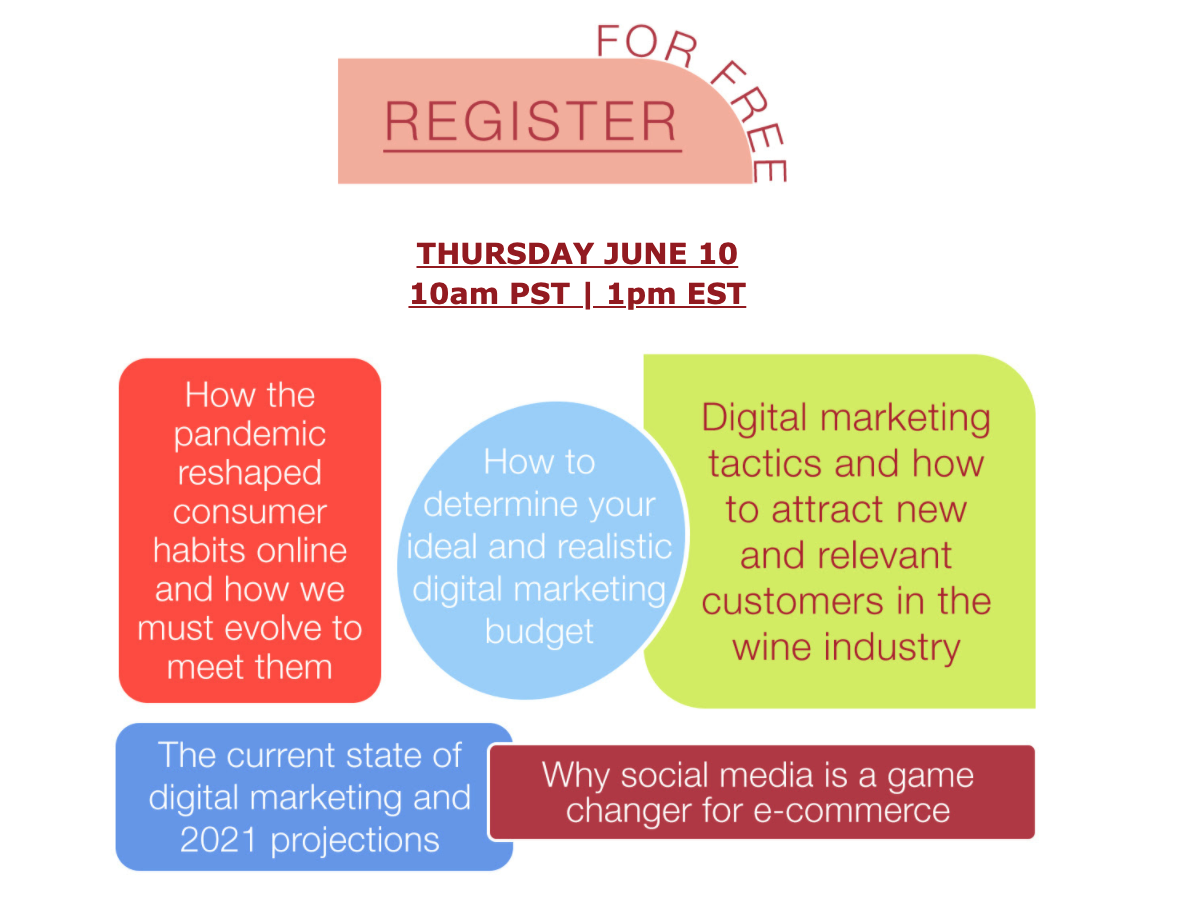
Happy June everybody! What a great month, right?
It begins with a fresh start after Memorial Day Weekend, greets us mid-month with the Summer Solstice, and has a whole slew of holidays to partake in, like Rosé Day, Best Friends Day, and World Oceans Day. Not to mention school's out for summer, so everyone's busy with beach trips, summer ball, and just doing kid stuff. While you're filling in your June calendars, be sure to add one more thing — our next webinar with Commerce7 is coming to you live on June 10th! We're so excited to be partnering with our friends at C7 and chatting about what wine marketing tactics we've absorbed, created, failed at, reflected on, put into practice, and ultimately seen success with after the last year and a half. We'll also get out the old crystal ball and share what we're expecting to see the rest of this year.
Register for the webinar below, and check out the colorful key takeaways and topics we have on the digital marketing docket.
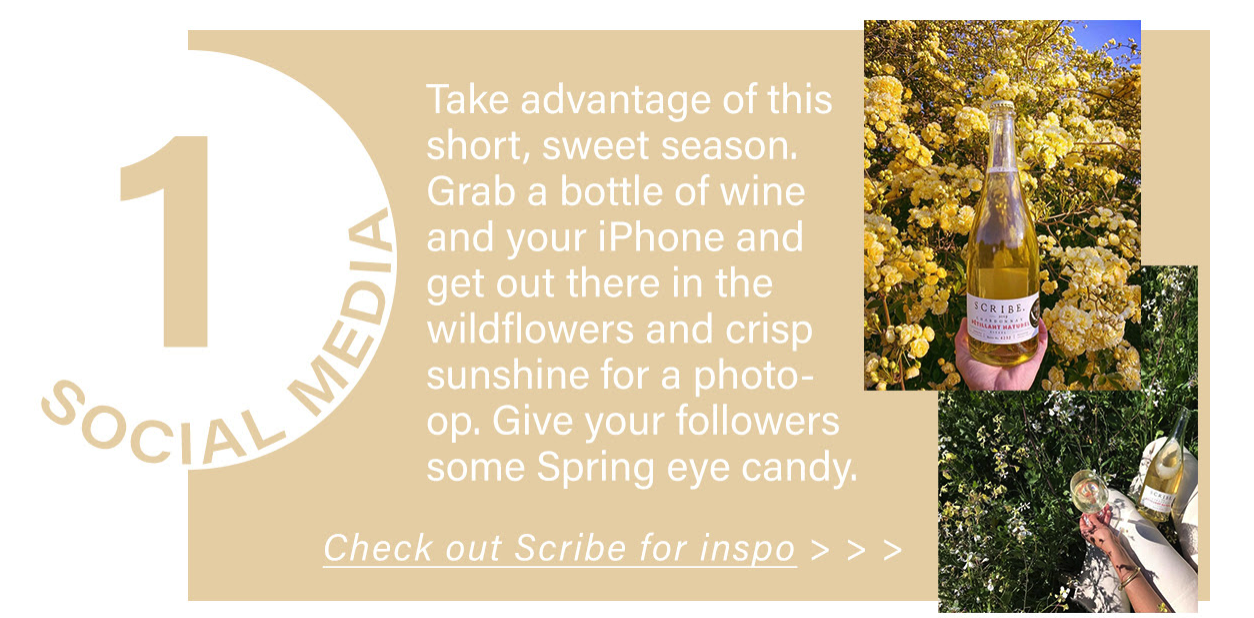
Doing digital marketing for an agricultural industry means we get to base a lot of our work on the same things farmers do — Mother Nature's seasons. And if you think of the seasons as longtime friends slowly arriving at a yearly dinner party, Spring is a fascinating guest.
You may think of her as a modest season that prefers a sort of reverse-Irish Goodbye — sneaking in the door without a hello, quietly placing a beautifully arranged and homegrown bouquet of sweetpeas, daffodils, and tulips on the table, and slipping freshly picked fruits and vegetables in the kitchen. Or, maybe you think of Spring as the sober and unbearably long small talk of Summer, making herself at home before unveiling that white-hot personality.
No matter what you think of Spring, it's awesome to see her again. Here are 3 ways to give your winery's digital marketing a spring awakening.
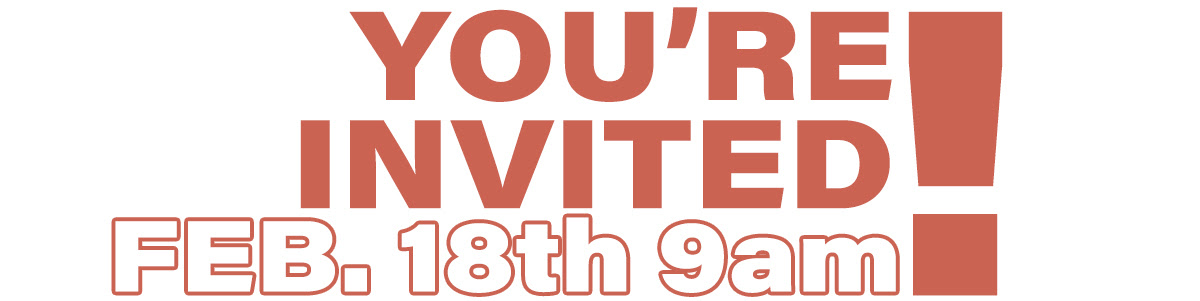
We hope to see you at this year’s webinar in partnership with the Anderson Valley Winegrowers Association!
We’ll be giving a presentation on Video Marketing, so if you missed DTC or our webinar last year, here’s your chance to finally hear what all our hoopla has been about. We'll also highlight our newest service, Postcard Retargeting, and choose one of you in a raffle to win a free campaign.
Registration is free and the event is virtual, so you can save money and stay on the couch.
Investing in Future Growth in Digital
2020 is now receding in our rearview mirror, and 2021 is about to hit us right between the eyes. Usually, businesses go through years of transition in making changes to the way they do business. Thanks to Covid, this year has been one of rapid transformation rather than transition. The Old World has become the New World before our eyes. Not surprising that when the survival of one’s business is at stake, we look at all reasonable options for staying afloat, even if it means navigating in uncharted waters. In this case, I am referring to digital marketing and eCommerce, which wineries and other businesses discovered in real-time in 2020. In one short Covid year, the wine industry likely achieved 5 years of progress in moving to a dedicated commitment to online sales.
WHAT DOES THAT MEAN?
It means that through pestilence and fires, fewer visitors than ever before came to wine country and this perpetual engine of growth stopped dead in its tracks. To survive, wineries scoured their data for customers new and old and started a full-scale ambush through email, social media, digital advertising, telesales, and other means, including a heightened appreciation for SEO to acquire new customers. It means that virtual tastings became menu du jour for most wineries looking to engage and connect in a more personal way with customers who could no longer visit their winery tasting rooms. It means that a proactive can-do attitude toward marketing produced dramatic results for many wineries, some of whom were able to achieve substantial year-over-year DTC growth even with tastings rooms closed or with limited traffic due to regulations. And it means that digital appetites were whet for more in 2021, only with better results from what we learned in 2020.
BUT WHAT IS BETTER?
For wineries, the mission in 2020 was to get the most out of sales from the customers you already had, while picking up a few more along the way that happened to discover them. That won’t be good enough in 2021, because the low hanging fruit has already been picked. As brutal as it sounds, we’ve exhausted the wine promotions that played off of the novelty or the shock-factor of Covid. The flood of orders that came from the silly “Sip-In-Place” emails or the more straightforward “support us by ordering our wine online” posts aren’t going to cut it as they did in the spring of last year. It’s time to climb that fruit tree and find new customers who won’t be walking in the tasting room door for quite some time. It’s what wineries should have been doing even before Covid hit but didn’t know they needed to. With more competition than ever and more time for consumers to discover, engage, and buy through digital resources, it takes a well-thought-out digital marketing strategy for new customer acquisition to sustain and grow your business.
IT’S ALL ABOUT THE MATH.
There is a rule of thumb in marketing that says a business should expect to spend on average between 5% and 15% of sales to invest in marketing to achieve their sales goals. This amount may differ depending on the industry, the lifecycle stage of the business, gross margins, and other factors. Winery owners have long understood this intuitively by investing in expansive and well-designed tasting rooms, beautiful winery structures, and landscaping which were attributed to “in-kind” marketing expenses. This is a “build it and they will come” strategy, ala Castello di Amorosa, who unfortunately suffered a heartbreaking loss this year during fire season.
For those without winery castles to market, here is the math behind a strong digital marketing budget:
Looking to Learn?
Our CEO Ron Scharman teaches an online course in Direct-to-Consumer Marketing & eCommerce for the Wine Industry at Sonoma State, which is part of their Certificate in Wine Business Management.
Whether you’re already a student, beefing up your resume, or want to be a greater asset to your winery’s digital marketing efforts, Ron’s course is a great way to further your wine business brains in the New Year!
Classes start January 12!
If you’re unfamiliar, every year our CEO Ron Scharman teaches an online course in Direct to Consumer Marketing & eCommerce for Wine Businesses at Sonoma State, which is part of their Certificate in Wine Business Management. This really is a great program to further your wine business knowledge, whether you’re already in school, looking for another qualification to add to your resume, or maybe you’re interested in something academic to do during the coming winter months in Zoom-world.
Event Type: Seminar
Location: Online
Date: 12/10/2020
Join us for a discussion about the newest service in our digital marketing portfolio — Postcard Retargeting. Traditional mail is tried and true marketing, but it needed digital flair to really make a difference for today’s businesses. With postcard retargeting, we're hitting new customers who visit your winery's website with print pieces, delivered right to their doors with special offers and discounts. It's data driven, trackable, and customizable. Our CEO Ron Scharman and our partner Chris Foster, VP at Modern Postcard will be reading the fine print on the success and strategy of postcard retargeting.