
What is Barrel Audits?
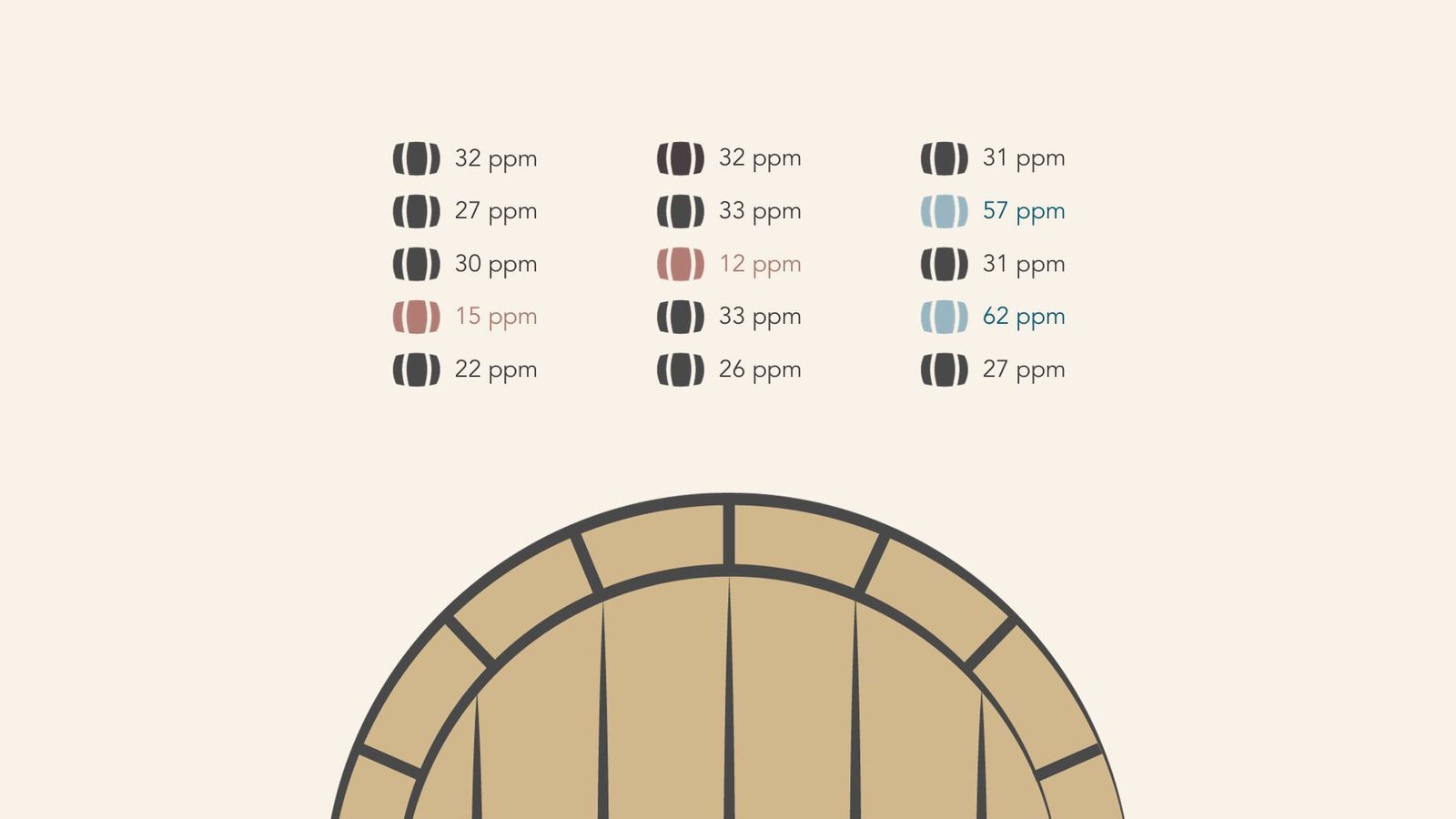
A Barrel Audit is where you apply a stricter-than-normal screening procedure as an extra quality control measure. You can achieve this by testing more barrels if you already track the barrels individually, increasing the number of composite samples, or combining both. The goal is to add more pixels to have a clearer picture of how your barrels are doing and increase the chance of detecting any ongoing issues.
Some good occasions to do this include after harvest or after malolactic fermentation. This article will focus on why you should consider a barrel audit after harvest and a simple rule to have a good one.
Reason 1: Check in with untouched, high-valued barrels
Over-vintage wines untouched during harvest have different levels of microbial activity. This results in varying levels of free SO2. Some barrels might no longer have the same protection as before harvest. Since these wines typically have more economic value, you will want to know and fix any quality issues before the wine gets spoiled, downgraded, or blended with others.
This issue can happen to any wine type, and the differences can be more significant during the period of minimal homogeneous events (like rack and return).
Reason 2: Not only wine quality but also the barrel’s health
Many times, the microbial issues are caused by the barrel itself.
When diagnosed early, problematic barrels can get treatment before being put back in commission instead of silently killing the wine quality. For luxury wines, where barrel cost is usually higher, it pays to put in more care and keep the barrels healthy for longer.
One way to catch this issue is to know which barrels have an abnormal free SO2 consumption.
It is easy for these barrels to go unnoticed when you track them through composite sampling. In this case, a barrel audit becomes especially beneficial in detecting the issues.
If you are using the BarrelWise FS1 to track barrels individually, you can quickly look into the barrel history of free SO2 readings and SO2 additions to speed up the screening process.
Reason 3: Re-establish the baseline
A sweeping check gives information for winemakers and the lab team to review and adjust the previous baseline, ensuring that the numbers used to define normal and outlier barrels are still a good representation of the wine conditions. Your team will have a fresh starting point to go forward more confidently and flag outlier barrels for further monitoring.
Rule of thumb for a good barrel audit
The rule of thumb is to follow the wine value — sample more in higher tiers with individual barrel tracking if possible. You can read more about some sampling structures based on wine’s value.
And soon, you will find that your current procedure and how you handle your data are critical success factors. Auditing barrels will be a harrowing task if your team takes too many manual steps (labeling, running tests, data entry, data reporting, running re-tests). If the idea of a barrel audit seems impractical for you, it is likely a good time to explore how current technology can help increase your lab capabilities.
https://www.barrelwise.ca/blog/barrel-audits-post-harvest-can-be-a-good-time
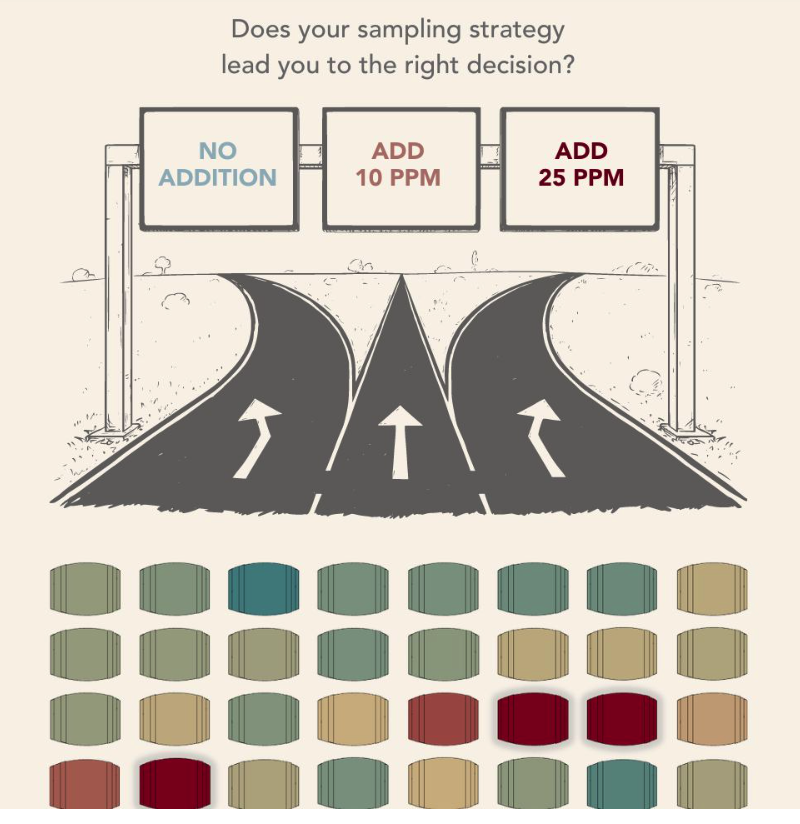
Composite sampling has been the industry standard for many years. It works well on the premise that all barrels in a lot contain about the same concentration of free SOâ‚‚. However, this assumption of homogeneity is far from reality, as revealed by data from our research and real-time measurements from the cellars.
It’s time to rethink whether composite sampling is good enough to control wine quality in our industry, where nature brings more unknowns and surprises to the process.

An hour saved in one task is an hour you can spend somewhere else, and it’s becoming more important considering the current labor shortage in our industry. Explore the ways you can produce timely wine analysis results in less time, because free SOâ‚‚ is a moving target.

We made a two-part series on this topic!
Gaining visibility into an individual barrel’s free SOâ‚‚ level is how we identify and solve issues in outlier barrels. The impact it brings to wineries increases as your wine value increases. In this article, we will look at three things you can do to make the most of your current resources.

We are excited to announce the launch of a new integration between InnoVint — a wine production software, and BarrelWise — a wine analysis technology. This collaboration brings together two innovative technologies to optimize and increase productivity in the winemaking process, enabling winemakers to make better decisions with real-time wine production visibility, specifically in free SOâ‚‚ analysis.
This integration allows for synchronizing up-to-date barrel and lot information from InnoVint and real-time free SOâ‚‚ data from the BarrelWise FS1 System. Free SOâ‚‚ analysis and SOâ‚‚ additions can now be executed directly in the cellar, with real-time data available to winemaking and the lab. The entire process is automated: acquiring samples from a barrel or tank, accurately measuring free SOâ‚‚ in 80 seconds, and recording results into InnoVint alongside all other critical winemaking data.
Commenting on the launch, InnoVint's CTO, Dan Strengier, said, "We are delighted to partner with BarrelWise to integrate their advanced wine analysis technology into our winery management platform. This collaboration will provide our mutual customers with a seamless experience when managing their wine analysis process, increasing productivity and visibility into the wine production process."
Jason Sparrow, CEO of BarrelWise Technologies, added, "Our integration with InnoVint represents an exciting step forward in the wine analysis space. This integration can minimize the data entry between two systems while winemakers make the best use of the BarrelWise FS1 System — reducing labor requirements while increasing control over wine quality in the barrel aging process."
The integration is now in effect at several wineries in the US and Canada, and will soon be implemented for more mutual customers of InnoVint and BarrelWise. For a limited time, BarrelWise Technologies is providing InnoVint customers with a special offer (as below) to make it easier to explore the most seamless sulfite management process to date. This offer is valid until August 15th, 2023, and its details can be found by reaching out to the BarrelWise team at hello@barrelwise.ca.
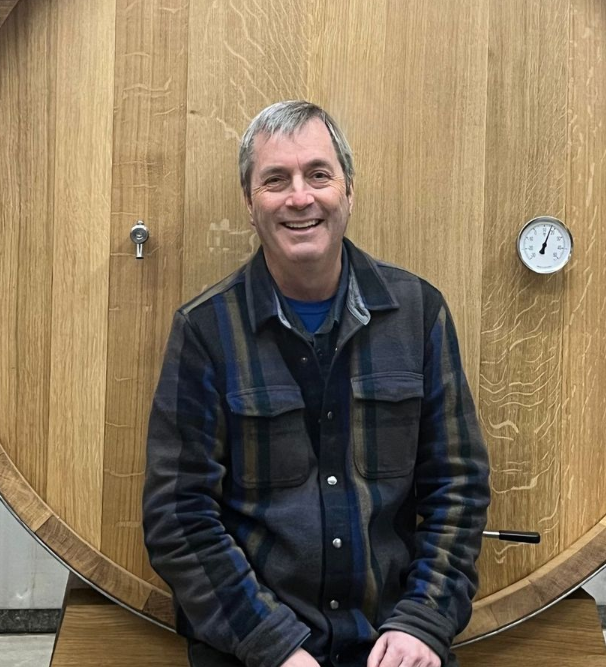
BarrelWise is thrilled to announce the appointment of Tom Klassen as its new Winemaking Technology Advisor. With a profound understanding of the intricacies of winemaking and extensive industry experience, Tom will play a pivotal role in showcasing the value that the BarrelWise FS1 System brings to wineries worldwide.
As Winemaking Technology Advisor, Tom will utilize his vast knowledge and expertise gained over two decades as a winemaker to identify opportunities where BarrelWise's technology can transform wineries' operations. Tom's deep understanding of winemaking processes perfectly positions him to recognize the specific pain points wineries face and effectively communicate how BarrelWise products can address those challenges.
Having used the BarrelWise FS1 System in his previous work, Tom has witnessed firsthand how the FS1 System can streamline processes, enhance wine quality, and maximize efficiency throughout the wine analysis journey.
"Joining BarrelWise is an exciting opportunity for me to combine my passion for winemaking with the chance to explore the potential for quality improvement with the winemaking community," said Tom Klassen. "Having personally experienced the value of BarrelWise's technology, I am eager to demonstrate its exceptional benefits to wineries of various sizes. I look forward to working closely with our clients and showcasing how our products can elevate their wine analysis process to new heights."
With Tom's invaluable expertise and the proactive approach of BarrelWise's support team, wineries can confidently navigate the challenges of wine analysis and stay ahead of labor shortages and potential wine quality issues.
"Tom Klassen's deep industry knowledge and passion for winemaking make him the ideal candidate to demonstrate the unique value our technology delivers," said Jason Sparrow, CEO of BarrelWise Technologies. "We are thrilled to have Tom on board, and we are confident that his expertise will help us continue to deliver exceptional results for our clients."
Vancouver, BC - BarrelWise Technologies, a company specializing in winemaking technology, has recently announced its latest project, BarrelWise Insights. The company will draw upon its growing dataset to provide winemakers with insights and resources for improving cellar management practices. With its FS1 system, BarrelWise has so far collected over 32,000 free SO2 measurements, with thousands more added monthly.
Through this project, BarrelWise will explore three key areas:
Examining free SO2 variability within barrel lots, and how to identify and intervene with problematic barrels.
Presenting improvements to cellar management and quality control programs, and aiding winemakers in selecting the right approach for their unique operations.
Leveraging data to identify factors that impact wine quality during ageing.
"We're thrilled to launch this project and to provide a new, data-driven resource for winemakers" said Jason Sparrow, CEO of BarrelWise. "We believe BarrelWise Insights will provide useful information for wineries looking to manage their cellars and barrel programs more effectively. We're excited to continue working with our partners and exploring new solutions to better manage these challenging processes."
To stay updated on the latest developments and resources, wineries can subscribe to the BarrelWise Insights Newsletter on our website. For more information and updates, please visit www.barrelwise.ca/barrelwise-insights.
About BarrelWise Technologies and the FS1 System
BarrelWise Technologies develops wine analysis and data technology to improve efficiency and quality, with products being used by North America's leading wine producers in California, Washington, and British Columbia. The company’s flagship product – the FS1 System – enables wineries to bring routine free SO2 checks to the cellar, transforming the process from days into minutes while maintaining lab-level accuracy. For more information, visit www.barrelwise.ca.
Using technology to gain more control over the winemaking process has increased in recent years, including in Free SOâ‚‚ management. When reviewing new options for your Free SOâ‚‚ testing practice, you probably have read through many pieces that deep dive into each method's technology, science, and specifications. While these are important, assessing them from the workflow perspective is essential when exploring new tech.
In this article, we'll take a break from the technicalities and focus on the workflow aspect, in which automation plays a significant role, and how it can aid your assessment.
Why workflow?
1. Day-to-day workflow significantly impacts the bottom line
Workflow defines processes and team interactions to get the job done. A well-designed workflow keeps your team efficient, makes the task and resource planning predictable, and upholds the work quality to desired standards — and vice versa. It can be either a major contributor or a silent killer of profitability and wine quality.
2. Free SOâ‚‚ tech improves workflow at varying degrees, but is frequently subject to flawed comparisons
Routine Free SOâ‚‚ testing of barrels, tanks and other vessels can be labor-intensive and frustrating for all teams involved. Cellar usually need to wait on lab and winemakers before they can complete their work, with multiple visits to the barrels and long walk to the lab. In many cases, especially wet chemistry lab, it also requires highly-trained technicians and undivided attention. This creates a massive opportunity for technology to step in, and to no surprise, most Free SOâ‚‚ testing technologies strive to streamline this workflow.
For this reason, it has become tricky to compare these technologies, and requires to look beyond equipment brochures and spec sheets to thoroughly assess the potential changes that each can bring to your workflow.
Where to start
1. Use automation as a compass to navigate
Automation is an excellent place to start looking since all instruments that aim to improve workflow do it by automating or eliminating certain steps. With most manufacturers describing their products as auto-, automated, or automatic analyzers with similar time-per-sample stats, you will need to understand exactly which part of the workflow is automated, to compare the specs and know the implications correctly.
2. Start with a simplified workflow and visually map the automated steps
The process differs among wineries but can be simplified to the below steps:
1. Sample Collection:
a. Access barrels
b. Collect & label samples
c. Send samples to the labs
2. Sample Analysis:
a. Maintain and set up equipment
b. Prepare samples
c. Run analysis
3. Data Sync: Enter data into the database that is accessible by all teams
4. Decisions: Review data and decide on the next actions
5. Follow-up Actions: These include SOâ‚‚ additions, post-addition checks, investigating questionable barrels, tanks and other vessels
Next, we visualize which steps are automated (indicated by grey blocks) and which team handles each step (color-coded). Most currently available tech can be mapped to the 4 groups below.
3. Focus on the differences
To compare more easily, the common unautomated steps are removed (see the below figure), and the focus is now on those that are done differently across the methods. Three categories start to reveal, including No Automation, Partial Automation, and Full Automation. From here, you can start interpreting the per-sample time and further implications.
THE PER-SAMPLE TIME
The per-sample time from each method’s spec sheet is represented by the grey blocks. Now, you can see more clearly how the "60 seconds per sample" in Options B, C, and D means very different things, especially when the colored blocks (unautomated steps) take days to complete or tend to slow down during peak times.
GENERAL IMPLICATIONS
With a quick observation of FIGURE 2, you can have a general idea of how each method will improve your current workflow:
- More continuous grey parts mean your team spends less time and experiences less room for errors, delays, and miscommunications.
- A less colorful map means fewer teams are involved, resulting in less chance for back-and-forths or being subject to a team’s backlog (for example, lab during harvest).
More detailed implications are discussed in the section below.
4. Start analyzing the implications of each method to your case
After making a visual map of your options, let it guide you in reviewing the questions below and answering them. Highlight the issues you set out to solve and see which options can deliver. This is an important step, especially if your winery has a large production scale or very high-valued wine.
Speed of Results
- How fast can you get the results? Now that the throughput and time-per-sample is correctly mapped and compared, you can better estimate the lead time each method can deliver. Faster speed allows more samples to be tested.
- How consistent is this lead time through peak times and tight deadlines? Look at the tasks that are left not automated - will those get a long wait time during harvest or be chaotic during bottling? An inconsistent lead time affects the time and resource planning, and pushes the Free SO2 managing tasks down on the priority list when the effort to prevent wine spoilage should always remain the same.
- Is it a smooth process? Are all teams properly utilized? The lab can sometimes be overflooded with requests while the cellar team is underutilized and has to wait and unstack barrels, leading to time waste. At-barrel testing workflow is now possible, empowering your cellar team to take charge of the testing execution so the lab and winemakers can focus on the potential problem areas and quality issues.
Data Quality
- How reliable are the measurements? Each colored block on the map indicates room for errors - sample handling, data handling, and labeling. It depends on how big your team is and how strong the procedure and practice are, but generally, it’s always best to close off the room for errors.
Scalability
- What resource is needed if you want to increase the number of samples? Winemakers might want to sample more barrels for a growing production scale or a more accurate picture of a barrel lot’s health. For example, between Aeration-Oxidation (No Automation) and BarrelWise FS1 (Full Automation), if 20 more samples are needed, Aeration-Oxidation will require at least 5 hours of lab tech (15 minutes/sample in perfect conditions) with cellar time to collect samples, and Full Automation will require about over 20 minutes of cellar team (about 65 seconds/sample when queuing and running samples consecutively).
- Is the data well-organized and well-displayed for analysis? As more samples are being tested, does the tool provide a user-friendly way to interact and analyze data? Some visualization can go a long way in identifying and monitoring potential issues, compared to a CSV file full of numbers.
What’s right for you?
- How much different can your quality control program become? If you currently use a method in the B category (lab-based analyzers), you will need more than switching within the same category to improve your overall workflow.
- How much control do you want over wine quality? Quality-conscious wineries appreciate new capabilities such as a 100% sampling rate in premium lots, thorough post-addition checks, and flagging and monitoring outlier barrels. Look to see whether your current method or new options can deliver that.
- How flexible are the pricing model and upgrade opportunity? Once technology starts to take off in an area, it happens and evolves fast. Therefore, a flexible pricing model like hardware-as-a-service (HaaS) with an annual commitment term will ensure your wineries have the best chance to thoroughly evaluate the tool while keeping up with tech advancement.
Closing Notes
Choosing the Free SOâ‚‚ testing method is a fairly complex decision that has a long-lasting impact on your winery operations, so you will want to get it right. Looking and analyzing from the workflow perspective is crucial and will enable a deeper understanding of each method's impact on your day-to-day workflow and future resource planning. This will lead to a more meaningful comparison later during the financial comparison.
To understand more how the FS1 System can benefit your winery operations, book a demo with us.
(Vancouver, BC Canada) BarrelWise Technologies, a winemaking technology company, is excited to announce the appointment of Todd Whiteford as Senior Sales Manager, California. In this role, Todd will be responsible for delivering BarrelWise’s cloud-connected solutions to wineries across California and the US.
“Todd is an experienced professional who is well known and trusted in the winemaking industry,” said Artem Bocharov, Director of Sales Operations at BarrelWise. “His ability to reach key wine producers and introduce new technologies that enable them to improve their production will accelerate BarrelWise’s traction in North America’s most important winemaking markets. We are excited to leverage Todd’s sales and relationship management expertise on our mission to modernize age-old processes and support wineries with quality data, operational insights, and resource optimization.”
Todd brings over 2 decades of technical sales experience to his new role. After starting his career in biotechnology sales, Todd transitioned to selling winemaking equipment and consumables, first at Cork Supply supplies, then at Scott Labs. Throughout this time, Todd has shown an impressive track record of delivering sound advice and enabling his customers to reach their business goals using his product offering.
“BarrelWise is creating products that will soon become vital for quality-conscious winemaking facilities.”, said Whiteford, “I look forward to helping the company grow its US market and sharing its amazing technology with some of the most important wine producers in the world.”
BarrelWise plans to continue building out its customer-facing functions on the West Coast of the US, with additional positions opening in the coming months.
About BarrelWise
BarrelWise Technologies develops technology to enhance wine production and analysis, with products being used by North America's leading wine producers in British Columbia, California, and Washington. The company’s flagship product – the FS1 System – enables wineries to bring routine free SO2 checks to the cellar, transforming the process from days into minutes while maintaining lab-level accuracy. For more information, visit www.barrelwise.ca.
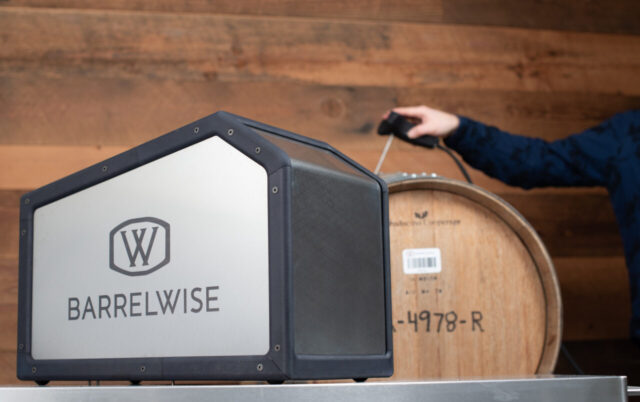
BarrelWise will be hosting a live demo of our FS1 System. The BarrelWise FS1 is a portable free SOâ‚‚ analyzer for winemaking facilities to do routine analysis at-barrel, right in the cellar. The samples are automatically collected and analyzed on the spot, and the free SOâ‚‚ measurement result is automatically linked to the vessel, and recorded in a cloud database.
BarrelWise FS1 reduces not only the time to analyze a sample but also reduces process and error-related time for everyone involved. The FS1 enables a single cellar worker to quickly execute the full analysis cycle in just 70 seconds, compared to traditional processes that can take hours or days from when a winemaker writes a work order to when they receive a free SO2 measurement result from their internal or external lab. This time-saving benefit is particularly helpful now that labor availability is an increasing industry challenge.
BarrelWise FS1 is a powerful tool for wineries to rewrite this entire process through:
A never-seen-before optical method that delivers unparalleled accuracy and repeatability, regardless of the color, turbidity, or varietal of the wine. Results are comparable to Aeration Oxidation, often considered the gold standard approach, and do not suffer from common interference issues.
The use of IoT technology to automate the whole process from sample collection and analysis to data collection and storage in a cloud-connected system. It enables a groundbreaking cellar workflow that eliminates delays and human errors.
A seamless user flow that is operated via a smartphone and requires no specialized skill or prior experience to use. Analysis data collected by the FS1 is assigned to individual vessels and stored in the cloud. This enables winemakers to see the results live as they are collected in the cellar.
As a result, BarrelWise FS1 reduces not only the time to analyze a sample but also reduces process and error-related time for everyone involved. The FS1 enables a single cellar worker to quickly execute the full analysis cycle in just 70 seconds, compared to traditional processes that can take hours or days from when a winemaker writes a work order to when they receive a free SO2 measurement result from their internal or external lab. This time-saving benefit is particularly helpful now that labor availability is an increasing industry challenge.
The data provided by the FS1 improves winemakers’ control over risks that affect wine quality before they turn into problems such as wine spoilage and barrel downgrades.
Founded in 2018, BarrelWise develops technology to enhance wine production and analysis. The company’s products are used by North America’s leading wine producers in British Columbia, California, and Washington.
Visit BarrelWise at WIN Box on December 1st at booth 423.