
Like the vinegrower, the cooper works with climatological elements for the important stage of drying staves outside. The vagaries of the weather put the drying reference sliders to the test and push the coopers to adapt to guarantee high quality drying staves.
TONNELLERIE CADUS AT THE FOOT OF THE CORTON HILL
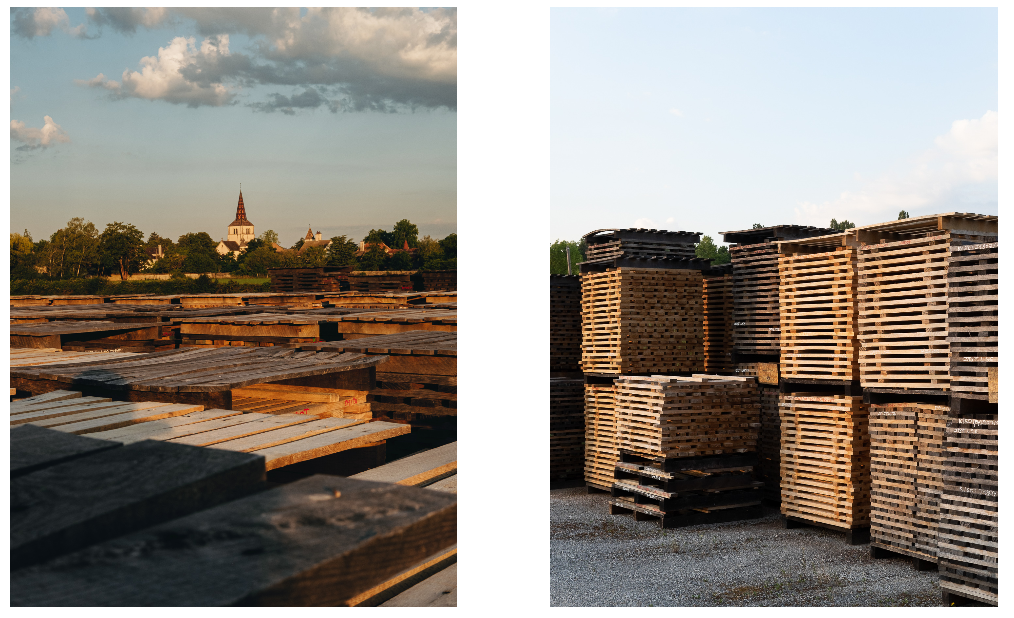
The Tonnellerie Cadus drying yard is located in Ladoix Serrigny at the foot of the Corton Hill. The region enjoys a favorable continental climate. In addition, the drying yard, which is located in the plain, benefits from high humidity (resulting in frequent fog) which allows gentle washing off of the staves to better purify them of coarse tannins. The climatic variations specific to Burgundy allow the wood to dry, hydrate, work and tighten for the standard period of 30 months at Cadus. However, with the last hot and dry summers we have had in Burgundy, it has been necessary to adapt and think about new practices to ensure that optimal drying conditions are maintained.
The drying step is very important because it conditions the quality of the staves just as a winegrower takes care of his soils, stripping the leaves or even a specific pruning to accompany the maturity of these grapes depending on the vintage. At Tonnellerie Cadus, we have taken the following measures :
LIMIT THE WIND EFFECTS
To protect our park from the wind, we have planted bower hedges. This natural barrier, while creating new biodiversity refuges, protects the staves from episodes of excessive winds that generate mechanical defects on the staves through accelerated drying.
PROTECT FROM THE SUN
To limit the impact of heatwave episodes in summer, we put protective skylights on top of each block of staves to protect those exposed to the scorching rays of the sun. This technique allows us to preserve a homogeneous drying of the batch of staves.
MEASURE THE CLIMATIC CHANGES
To analyze climate impacts, this fall we set up a meteorological station to study a possible correlation between changes in the chemical composition of staves and historical climate data such as temperature, humidity and wind. This project is carried out in partnership with the University of Burgundy. We want to have reliable scientific databases on our drying fleet in order to ensure the improvement and optimization of our wood drying.
Composing with Mother Nature, the winemaker takes care of his vineyard in order to have the best material to produce the best wine. Likewise, Tonnellerie Cadus takes great care of its staves in order to produce the best barrels.
Antoine de Thoury
CEO of Tonnellerie Cadus
https://tonnellerie-cadus.com/en-us/drying-face-to-the-climate-issues-2
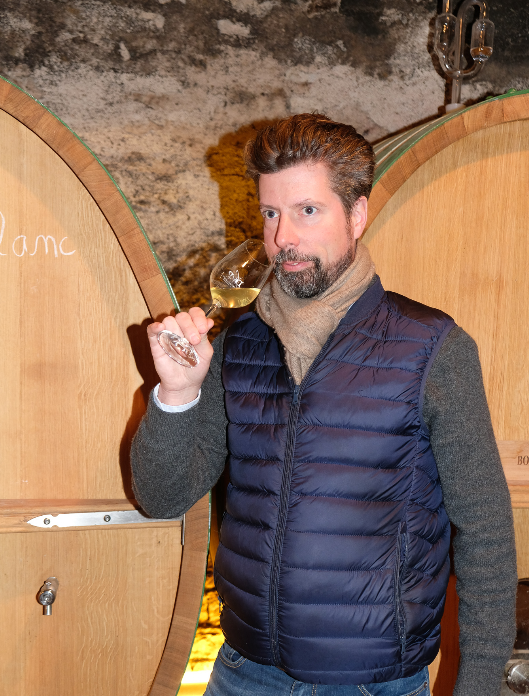
When I advise a winemaker, there is no ideal barrel to start with. It is above all essential to understand the style of the winemaker and where he wishes to take his wines. After that, it is true that I have an approach where I seek to highlight the notions of elegance and finesse rather than power or concentration. As I work in different vineyards such as Bordeaux, the south of France and even abroad where we spontaneously have wines with more power, my objective in the vineyard and in the ageing is to balance this power. This is why the barrel must be at the service of the wine to preserve the fruitiness, aromatic tension and freshness on the palate.
HOW HAVE THESE EFFECTS EVOLVED WITH CLIMATE CHANGE?
The first effect is the decline of a trend where the use of wood and strong toasting had been widely used, especially in Bordeaux. The second effect is the adaptation of ageing to the consequences of global warming on the composition of the grapes and the balance of the wines.
Global warming is key for the future. Compared to 20 years ago, we are harvesting grapes with more advanced stem ripeness and therefore the matrix of the wine is different. The wine has less acidity and more ripe tannins. For the reds, we have grapes that exhibit very mature phenolic maturity, particularly in terms of tannins, but the risk is to lose aromatic freshness. I use certain biodynamic practices to achieve this result, that is, to improve the synchronization of technological and phenolic ripeness. Conversely, by pushing grape varieties such as Merlot to strong maturities, we end up with excessive degrees above 14.5% and this harms the balance and the notion of harmony. This is not desirable in the long run.
As for ageing in oak barrels, these more advanced maturities require adapting the work with the barrels. We have less need to polish the tannin with significant oxygen inputs and structuring tannins than in the past. This is especially true for whites.
For example, Chardonnay in Burgundy has different balances from 30 years ago. We observe rising pH and strong skin maturities. It is clear that today it is no longer difficult to ripen Chardonnay in Burgundy. I think we need to rethink barrel ageing with the succession of the last hot vintages that we have had in Burgundy on the whites and the ageing in the traditional 228-liter Burgundy pièce is to be questioned.
WHAT TYPE OF TOASTING SHOULD YOU CHOOSE FOR YOUR WINE?
I come from the world of white wines, and no doubt by deformation, I enjoy making reds that “taste like white”. That is to say, red wines in which the qualities of transparency, crystalline flavor and minerality are present from youth, and not masked by an overabundant tannic structure. To achieve this, I like to work with barrels that have toasts quite close to those used for the whites: light in terms of intensity and temperature, but still long enough toasting to start deep in the wood. This involves excellent quality drying of the wood by the cooperage, especially for Burgundian pièces which are more rounded than Bordeaux barrels, so that it does not blister when heated and bent. I tend to favor these relatively light toasts for Pinot Noir, which at the same time preserve the fruit and support this dimension of freshness.
TO MAKE A GREAT WINE, IS IT NECESSARY TO AGE IN BARRELS?
This is a question that all winegrowers must ask themselves. The ripening conditions of the grapes, the balance linked to the hot vintages we have with global warming, require a review of wineries’ barrel ageing programs. All the wine and oak parameters must be reviewed by the winemaker to adapt to global warming and preserve freshness. This involves the type of wood, the container, toasting style, length of wine maturation in the vessel and size of vessel, and being open to questioning usual practices. I’m a big believer in mixing barrels with other types of containers, bigger to achieve that balance.
For the reds, most of the grape varieties clearly benefit from ageing on wood in the first part, and for low-tannic grape varieties such as Pinot Noir. The question arises on the second part of long maturing. Today, with global warming, I like to carry out the first part of the ageing in barrels, then to rack the wines and place them in larger containers under wood such as, for example, the foudre. It is a container that has been kept in other parts of the world such as Austria or Italy. This allows it to skate more slowly, with more delicacy and precision, to take it further into finesse. This practice corresponds very well to the last hot vintages.
Regarding whites, the question arises in the same way, knowing that today there are examples of very great whites aged only in stainless steel vats, such as Riesling from Germany, Luxembourg or Mosel for example. I have a philosophy quite close to that of maturing for the reds. I tend to shorten the maturing times in 225/228 liters while keeping a long period on the lees between 18 and 24 months. But to do this, we must limit the oxygen intake and for that, the mass effect of a large container such as a 500 liters is interesting.
At the same time, certain winemakers are also exploring ageing in amphorae, which allow us to work on oxygen intake without wood intake. This technique is interesting, but we deprive ourselves of the polyphenol intake of the oak barrel, which is interesting if we manage to manage it without it becoming caricature.
WHAT WOULD BE THE IDEAL CONTAINERS?
On the ageing of whites, we try to limit the oxygen uptake. For this we have 3 levers. First, lower the proportion of new barrels. However, to have a qualitative rotation of the barrels it is sometimes difficult to vary this data. The second lever is the size of the barrel. Today I do a lot of testing with containers larger than the traditional 228 liter pièce. It can be foudres, demi-muids, 500 liters, which work very well with the whites, although they can pose practical problems of handling and size in the cellar. On the other hand, the 350 liters that can be used for intermediate rearing have the advantage of handling like 228-liter pièces. Their lower surface-to-volume ratio allows slower ageing compared to wood uptake and oxygen transfer. The third lever is the material of the containers. We have the traditional oak barrel and today the different types of amphorae, concrete eggs for example, are alternatives to consider, in white as in red.
Interview conducted by Marie-Pierre Dardouillet @Cépagescommunication for Cadus – 2020
REDUCTION AND IMPROVEMENT OF OUR PACKAGING
Tonnellerie Cadus adopts new packaging solutions to reduce its environmental impact.
A SOLUTION FOR OUR PACKAGING 100% BIODEGRADABLE OR RECYCLABLE WHICH GUARANTEES THE PROTECTION AND INTEGRITY OF THE BARRELS DURING STORAGE AND TRANSPORT
WHY RETHINK OUR PACKAGING ?
- Reduce our environmental impact to be part of a responsible approach
- Providing solutions in waste management to winemakers
- Create synergies with partners in Burgundy
Concrete actions have been implemented for several years to limit the impact of our activity on the environment :
- In 2011, installation of a boiler recycling our wood dust to light or heat parts of the cooperage
- From 2015, launch of the “ 1 barrel purchased, 1 tree planted ” program in partnership with the Naudet nursery
Cardboard : recyclable, it protects the barrel heads and bottoms.
Stretch film : recyclable, it guarantees the protection and integrity of the drum during transport.
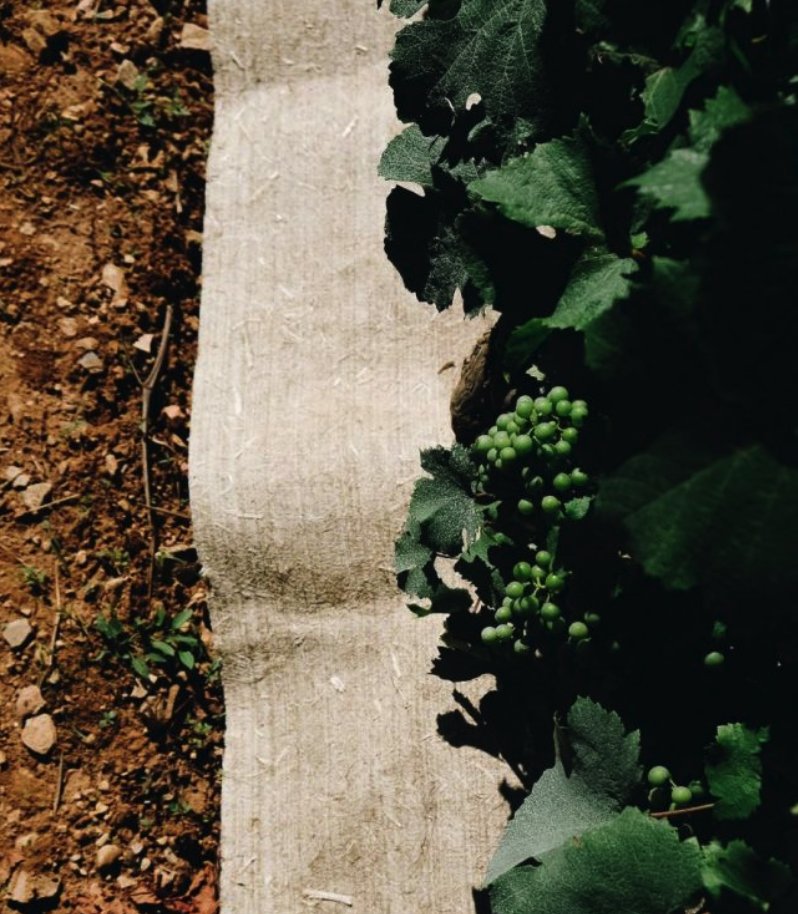
Hemp fiber canvas : biodegradable and compostable, it protects the barrel during transport.
Bubble wrap : replaced by hemp fiber canvas.
FOR YOU, WINEMAKER, THAT MEANS :
The primary guarantee of protection of the barrels during transport
Less waste to manage
A new biodegradable and compostable solution with the introduction of hemp canvas
THE ADVANTAGES OF HEMP
At the end of its life, the fabric does not constitute waste. On the contrary, it enriches the soil by degrading, which is particularly relevant to industries like agriculture and viticulture.
- 100% French natural fibers
- 100% biodegradable / biocompostable
- Blocks the growth of weeds, avoids weeding
- Thermal protection
- Reduces watering needs & permeable to water
- Promotes the growth of plantations
- Beneficial to soil life
- Usable in organic agriculture
GÉOCHANVRE
Géochanvre, located in Burgundy, mainly uses hemp from Burgundy and is also working to integrate linen from Burgundy.
The company relies on an innovative technology protected by an international patent, making it possible to produce a non-woven textile by simply spraying water under high pressure on vegetable fiber, without requiring the addition of glue or additives (process hydroentanglement).
Thanks to this process, Géochanvre manufactures in Burgundy a range of mulches made from 100% locally-grown fibers, most notably, hemp, a crop that grows without pesticides.
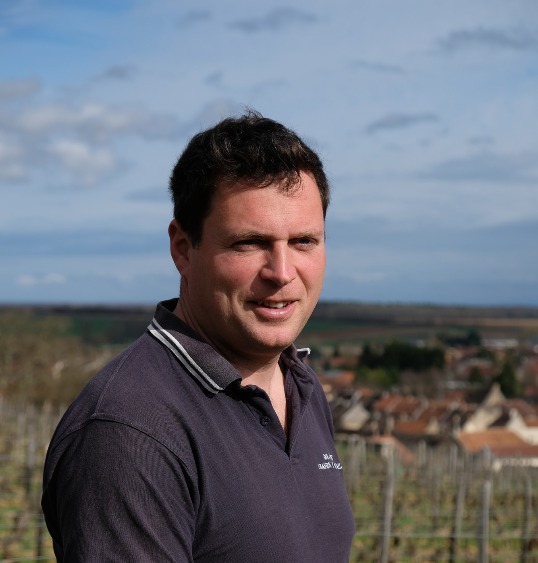
INTERVIEW WITH FRANÇOIS GRANGÉ
Vineyard manager since 2012 at Domaine Chandon de Briailles in Savigny-lès-Beaune, owned by the Nicolay family since 1834. The 14 hectares of vines are spread over Aloxe-Corton, Savigny-lès-Beaune and Pernand-Vergelesses and are managed according to the principles of biodynamics.
IN BURGUNDY, THERE ARE TWO GRAPE VARIETIES: CHARDONNAY AND PINOT NOIR, AND A MULTITUDE OF APPELLATIONS. HOW DO YOU MANAGE TO REFLECT THE TERROIR OF EACH PLOT IN THE BOTTLE ?
The goal is to have healthy grapes that reflect each terroir. At the estate, we work with 11 appellations and more than 18 different plots. We try to have as few filters as possible between the terroir and the bottle. When we plant the grafts, we use long roots between 15 and 20 cm so that the graft can be well established in the soil. On 11 hectares, we work the soil almost exclusively by horse to avoid compacting the soil. In the period of vegetative growth, we try to use as few products and inputs as possible. We work in organic agriculture and we are well aware that copper in high doses is harmful to the soil. We use only 3 kg / ha / year of copper and we have managed to work completely without sulfur since 2012 in our treatments against powdery mildew. These measures allow us to have very interesting flora and fauna in our vineyards. A vigorous vine that enjoys the terroir will have beautiful foliage and nice wood. We will therefore have several options when disbudding, pruning, stripping or trimming which allows us to adapt to the weather depending on whether the conditions are rainy or dry. In the end, this allows us to obtain good maturities, which is what we want, and therefore a good balance at the time of the harvest.
WHAT DID YOU REPLACE THE SULFUR IN THE VINEYARDS WITH ?
We replaced sulfur in the vineyard with skim milk found on a farm less than 10 km from Beaune. It is not an invention on our part because it is a common practice in agriculture and gardening. We have tried this technique first and foremost for us, the teams who handle sulfur and work all year in the vineyards.
AS A VINEYARD MANAGER, WHAT ARE THE CURRENT CHALLENGES TO MAINTAIN THIS QUALITY OF GRAPES ?
I would like to gain flexibility to adapt to climate-related problems. Working with horses makes it easier to enter a vineyard, but it is not yet ideal. You have to be prepared to have soils completely dried up by the sun, to have lower yields because the grass will compete or have slower maturities because of the grass. Having a vigorous vine is important if it is to fight the competition from the grass. These are precise ideas but the implementation is not simple. Biodynamics is good, but it’s also a lot more work, so we must not lose sight of the fact that teams are made up of men and horses, and that we cannot afford the luxury of doing everything on 14 hectares as if this labor and this work cost nothing.
WHAT IS THE OPPORTUNITY IN EXPLORING ALL OF THESE IDEAS IN A REGION SUCH AS BURGUNDY ?
The main advantage of Burgundy is that we have more resources because Pinot Noir is popular and we can experiment with more ideas. Afterwards, we are fortunate to have very different terroirs in a small area. We were able to observe the impacts of our actions and the differences of a plot of Savigny les Beaune 1er Cru and Corton Clos du Roi Grand Cru. The results are almost immediate year after year.
CAN YOU TELL US MORE ABOUT THE IMPACT OF PLOWING WITH HORSES ?
Since we’ve had our four horses, we can choose the way and the time, which is a real advantage when there are weather constraints. Being able to choose allows us to decide how much grass we leave. The notable change has mainly been seen with obtaining a more vigorous vine and softer soils. In the end, the most difficult thing to manage since we have been working horses is the speed of grass growth. You have to keep in mind that you shouldn’t just put horses on the estate and then go with a treatment tractor. Don’t just stop sulfur if you’re just going to use 15 different products instead. We must try hard and use common sense. It is by observing that we come to understand things. The vine is a perennial plant, we start the actions every year but we do not replant it every year so we can easily make observations.
Interview conducted by Marie-Pierre Dardouillet @Cépagescommunication for Cadus – 2020