
Event Type: Reception, Tasting
Date: 5/21/2023
The 13th Annual New York International Wine Competition is on May 21st. Top trade buyers will be blind tasting and judging the wines as if buying them for their business by category and actual price. They are distributors, retailers, sommeliers, f&b managers.
Open to all commercially produced wines from around the world. Your wines do not have to be sold in New York to be in the competition.
The 13th NYIWC is the only international wine competition where all the judges are real trade buyers judging the wines as if buying it for their business. The judges are distributors, retailers, f&b managers, sommeliers and restaurant owners. Your wine does not need to be sold in New York or the US.
Event Type: Reception, Tasting
Date: 5/21/2023
The 13th Annual New York International Wine Competition is on May 21st. Top trade buyers will be blind tasting and judging the wines as if buying them for their business by category and actual price. They are distributors, retailers, sommeliers, f&b managers.
Open to all commercially produced wines from around the world. Your wines do not have to be sold in New York to be in the competition.
https://nyiwinecompetition.com/
How communal gathering spaces are defined has evolved rapidly in recent years. Partially, that’s due to COVID. Enter social distancing, masking, massive dispensers of germ-busting sanitizer at every turn, elbow bumps, et al. But our relationship with virtual life has changed too, and while lockdowns arguably expedited the process, we were already well on our way to a new understanding of relationship-building. Could Web3 technology offer up new solutions?
To better understand the trends, it’s always good to hear from industry leaders. We recently checked in with Gabe Barkley, CEO of MHW Ltd and Steve Melchiskey, President of MHW subsidiary, USA Wine West, LLC. MHW is a leading US importing partner for wine, spirits, beer, and cider and USA Wine West is a nationally licensed importer offering national import strategies for foreign wineries and export groups.
Barkley has worked in finance, technology, and consulting at Microsoft, Deloitte Consulting and Accenture, and held leadership positions at two beverage alcohol companies – VinConnect, a start-up direct-to-consumer wine sales platform for top international wineries, where he helped connect more than thirty ultra-premium European wineries with over two thousand US consumers and La Cave Warehouse, a wine retail and private storage firm based in Dallas, TX, where he led initiatives that resulted in substantial growth and operational optimizations.
Melchiskey founded USA Wine West in 1996 but began working in wine at the grape harvest in the Rhinegau in 1976. Since then, he has worked in vineyards and wineries in California, Hungary, France and New York. His work experience extends to virtually every level of the wine industry, as a retail wine buyer and bottle duster, a wholesale/import operations manager, a wholesale sales representative in San Francisco Bay Area and in winery sales and marketing. Steve is also a licensed attorney and specializes in wine law, assisting wineries, retailers and importers in their contractual, regulatory and licensing issues. He is also owner/winemaker at Maine Coast Vineyards, LLC, a bonded winery with a two-acre estate vineyard in Falmouth, Maine.
What’s trends are you seeing in wine sales right now?
Gabe Barkley (GB): Creativity and “occasion innovation.” Wineries and wine brand owners are finding their feet in the high-growth ready-to-drink segment of the market. Ready-to-drink can mean wine-based cocktails, but it can also mean single-serve options of wine. Consumers have never been more alcohol-category-promiscuous, and young consumers are looking for experiences, not specific products or product types. Terroir-driven wines and distinct wines of place will never go out of style. At the same time, there will often be opportunities to expand the scope of what selling wine means to capture a broader swath of consumer attention and imagination. 2022 is one of those times.
Steve Melchiskey (SM): I predict a movement back to on-premise business with interesting, authentic, wines of terroir. Case in point: a 25-year-old friend of my son came to dinner the other night and was all excited about a wine he had at a restaurant the other day. He had asked for white wine, and the bartender poured him “his new fave," a Vermentino di Sardinia. The young man had taken a picture of the bottle, and the label and wanted to know more about it. He was so happy to have made a cool wine connection from a place he never heard of and with flavors he liked. That summarizes perfectly what I’m seeing: a new energy into wines of place.
What kind of sales opportunities are there for independent wineries in the US?
SM: Endless opportunity. From attracting wine tourists to their winery, no matter where (California, Michigan, New York, and Virginia as examples) and using that to build a direct-to-consumer channel, to working directly with the local food movement to get the farm-to-table chefs to adopt and encourage a “local vineyard to table” program, to signing up for an e-commerce platform to reach a wider audience, it's an exciting time to be an independent winery. So many opportunities for expanding sales.
GB: Multi-channel is the new normal - and can be highly valuable for wineries. Restaurant wine lists are being re-built in hundreds of thousands of new accounts across the country, while e-commerce provides an opportunity to supplement existing off-premise sales and marketing opportunities. Independent wineries who seize the chance to cement their place at key accounts and become available to consumers online and offline - for both marketing awareness and product availability - have a head start to win in 2022 and beyond.
Which regions do you see having the greatest potential for growth?
GB: All of them...
SM: It always surprises me that even within countries or regions that are well-established with the American consumer that there is room for growth. Just when I think that Americans aren’t ready for another Chianti, there is a movement within the region that reshapes and repositions the category leading to its expansion. And as far as those wine-growing regions that have barely cracked the US wine consciousness? Unlimited. Greece, Armenia, Moldova, Bulgaria, China, Israel…..these are long-time wine producing countries with quality wines, new varietals to introduce to the market, and only are held back by a coordinated investment in creating awareness with the US consumer.
How do you expect the pandemic to affect the industry, long term?
GB: Right now - post-pandemic - is the widest breadth of opportunities that wineries have ever had to reach consumers. A recovering on-premise channel, with the addition of alcohol to go in many markets, will supplement the accelerating e-commerce opportunities for wineries. The same goes for traditional off-premise channels. The impact of e-commerce - at the supplier, wholesale, retail, and consumer levels - will continue to fundamentally shift the way consumers find products and the way they purchase.
SM: The pandemic created some fundamental shifts in regulatory oversight that will have a long-term impact on the way the industry sells alcohol. For example, restaurants and bars in many states were allowed to sell alcohol and cocktails-to-go, something that pre-pandemic was unthinkable and illegal. Now that these kinds of regulatory burdens were lifted, and the world (or the alcoholic beverage regulatory system) didn’t fall apart, not only are many of these changes here to stay, but there is the ability to question other regulatory burdens that may not have a purpose anymore.
What production and packaging innovations are you most excited about?
GB: The innovations around packaging with lighter materials and in smaller formats is very exciting for wine as a category. I will always have a soft-spot for fine wine in a bottle with a beautiful, one-piece cork, but I also appreciate the ability to have a wine spritz in a can at an outdoor concert or on a boat. Consumers will continue to make practical, occasion-driven choices, and it is exciting to see the industry adapting.
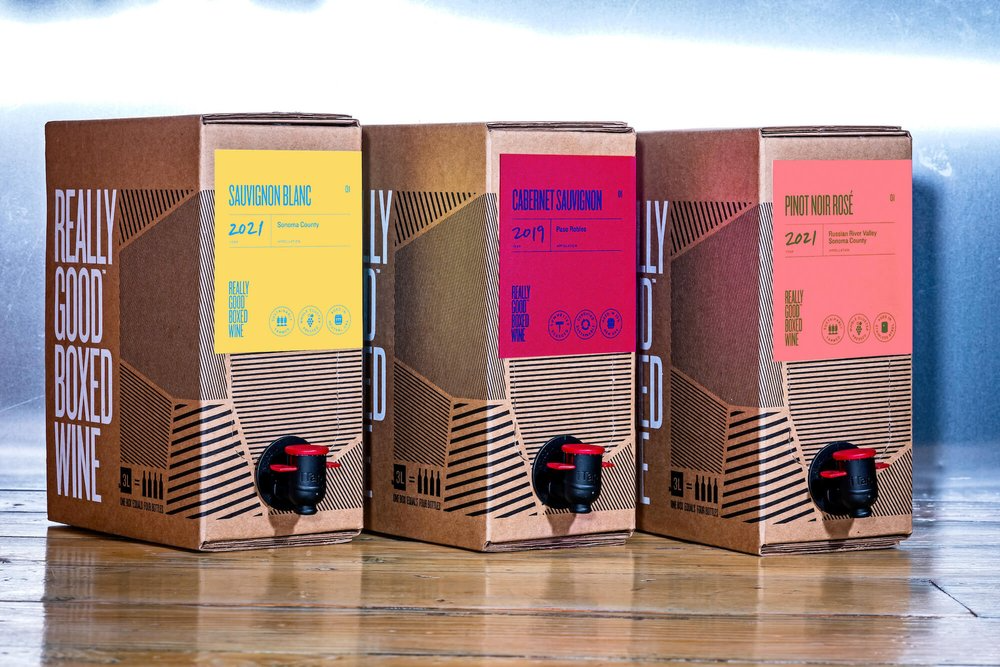
SM: Wine in the “box” (BIB/Bag in Box). I used to go into our local independent wine/liquor store, and my choices for a boxed wine were about three, all either California Central Valley floor fruit or something from the oceans of Australian wine. Now? Cool pouches, boxes shaped like chateaus or wooden wine boxes. Wines of regional typicity you could barely find in bottle, let alone box. Easy to store, easy to serve, vibrant beautiful packaging that you aren’t trying to hide. I’m all about Wine in the Box.
Every day we see some new legislation updates, where is e-commerce headed in the US?
GB: The lasting legacy of COVID-19 for alcohol is likely to be its acceleration of e-commerce. Moreso than the demand that was pushed online (almost a necessity, but could be shortlived without long-term appetite), the awareness and willingness of consumers to buy online leapt forward a full decade. As consumers look online for products, they will drive further diversification in both the ways they buy and the ways the learn about products and options. This will be true for both direct-to-consumer and three-tier e-commerce - every platform from Delectable and Vivino to Speakeasy and Drizly will fine-tune how they reach and appeal to consumers to best enable consistent experiences across channels - in-store, pick-up, e-commerce, and DTC.
SM: Gabe says it best. I see e-commerce as a spring tide; the tide just keeps coming in and doesn’t seem to stop. Like every industry in the world, e-commerce is going to eventually keep rising in the alcoholic beverage channel until it's full. It isn’t a wave, but it's certainly a tide.
Want to learn even more about where the industry is going? Check out the highlights from an industry panel discussion. And for a story on a potential industry disrupter making high quality wine in a box, read our story about Really Good Boxed Wine.
https://www.alcoholprofessor.com/blog-posts/where-is-the-wine-industry-heading
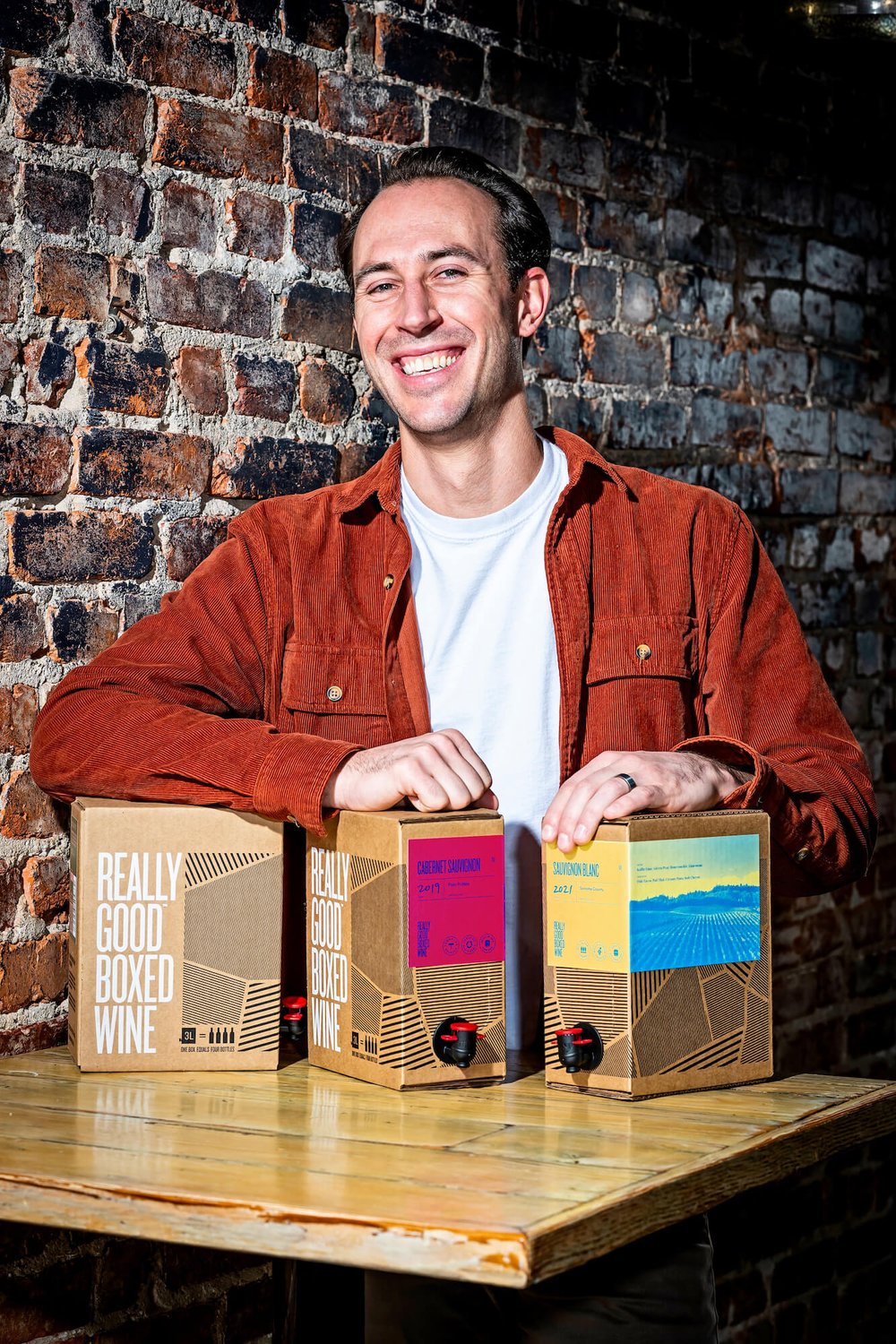
We have to admit, we were intrigued. Is there such a thing as really good boxed wine? The brand Really Good Boxed Wine not only thinks so, but got master sommelier Andy Myers on board with it. If it sounds like something a CPG marketing type came up with, you’d be right. CEO and founder Jake Whitman came from Procter & Gamble but he also built connections in the wine business to get this concept off the ground. We spoke to Whitman to learn more.
Jake Whitman photo courtesy of Really Good Boxed Wine
What inspired you to create this brand?
The idea for Really Good Boxed Wine came as a consumer. I’d always loved the idea of boxed wine, because it solves lots of the problems I ran into with bottles. Boxed wine stays fresh for a long time after opening, so if I just wanted a glass or two, I didn’t have to risk tossing out half a bottle if I didn’t get back to it in time. It’s also so much more cost effective to buy, so if I wanted a lot of wine for any reason, I could save some money. And of course, the environmental part was always on my mind; I hated looking at my recycling bin after a dinner party and seeing piles of heavy glass bottles.
But whenever I bought a box, there was this big glaring problem: the wine wasn’t very good. And that was a dealbreaker for me, so we stopped buying boxed wine.
About a year ago, I was hanging out with my wife, brother, and some friends in a park, and we got on the topic of boxed wine. We started asking that fundamental question: “well...why isn’t there really good boxed wine?” It was something I’d been tossing around in my mind for a while, but I always assumed there was a technical reason why you couldn’t do it.
This time, my interest was piqued enough to dive into researching it, and I went down the rabbit hole. The more I read, the more I realized that it was a cultural problem and a perception issue more than a technical one.
The more I read, the more I started to believe consumers were finally ready. Screw tops and synthetic corks have become more accepted for higher-end wines over the past decade, and canned wines have exploded over the past five years or so. Plus, consumers were becoming more and more aware of the huge environmental impact of bottles. Boxed wine felt like the next frontier that solved some very real consumer problems with wine.
And while I have no professional background in wine, I have worked in 5 restaurants in my life, so I’ve been around guests’ interaction with wine for a long time. And since I started Really Good Boxed Wine, I’ve worked hard to surround myself with amazing people who are super knowledgeable about the wine industry to help grow the brand.
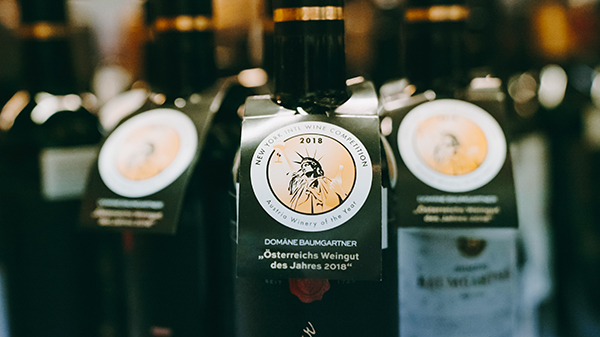
After a brief pandemic-induced hiatus, (which prompted a virtual tasting last time around), the New York International Wine Competition (NYIWC) is back in full force this year, anticipating between 1500 to 1800 different wine submissions from around the globe.
Known as one of the largest, most prestigious events of its kind, the NYIWC is being held in the heart of New York City at 3 West Club across from the Rockefeller Center on June 5, 2022.
The competition is distinguished by judging panels made up entirely of trade professionals, including retail buyers, sommeliers, restaurant beverage directors, hoteliers, distributors, and importers, who, in combination, procure more than $20 million in wine per year.
“If you’re a retail buyer, you’re going to know what will sell and at which price point,” explains NY Wine Competition founder Adam Levy. “The results of this phenomenal blind tasting provide good, honest feedback from the trade industry to commercial wineries and producers all over the world.”
NYIWC medals are awarded on a merit basis by majority vote from panels made up of a minimum of four qualified trade buyers. The judges are instructed to grant no medals or awards if the wines are not ones they would import, distribute, buy or sell in their businesses based on product and price category. Panelists are encouraged to reach a consensus and award at the following levels:
- Double Gold: “Phenomenal Product”(must be unanimous).
- Gold: “Buyers Love It.”
- Silver: “Buyers Like It.”
- Bronze: “Buyers Would Purchase It.”
All Double Gold winners are re-tasted by panelists to determine which brands are eligible for a “Best of Category” pricing distinction.
“We’ll be judging wines at all different price levels, from $8.99 a bottle to $250 a bottle,” notes Levy. “It’s a rare opportunity for wineries to get their product out in front of trade professionals where established brands can reconnect and new brands can be discovered.”
Levy also points out that the marketing advantages for winning wines include recognition by the worldwide trade industry, use of the medals and awards in the wineries' own promotional materials at no charge, distribution of competition results to international media partners and importers, and featured articles in a lifestyle blog called “The Alcohol Professor.” The top winners will also be showcased at prominent tasting events throughout the year.
“If you’re a producer, it’s a lot easier to send bottles to us than go from store to store trying to get someone to see you,” Levy reasons. “All in all, this is a really affordable marketing opportunity for commercial wine producers worldwide.”
Any table, sparkling, fortified, fruit, and specialty wines commercially produced within any wine region around the world are eligible for entry. The deadline for registration and product deliveries is June 4th, 2022.
For more information on the NYIWC and additional submission guidelines go to https://nyiwinecompetition.com.