We’re excited to bring our latest update to you - the ability to easily schedule pulse irrigation events, enhancing the efficiency and effectiveness of your irrigation management.
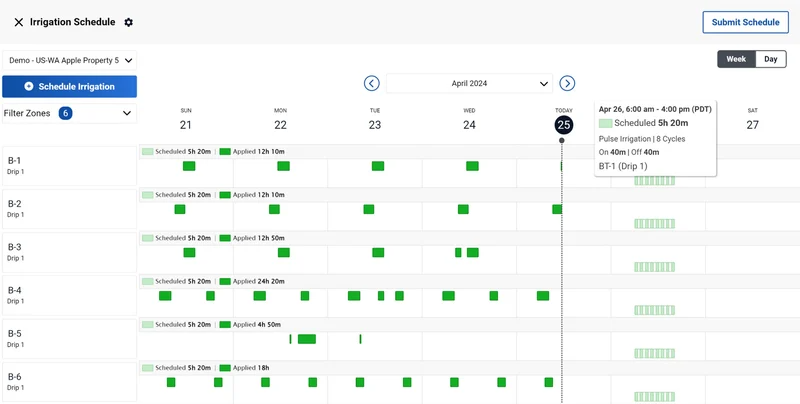
Example of scheduled pulse irrigation events on the Semios platform
What's New
The Semios Irrigation Scheduler is an efficient scheduling tool designed to make quick work of scheduling for large and small operations alike.
Watch our demo video below for a quick overview of how easy it is to schedule pulse irrigation events:
Key Benefits
- Efficient Setup: Quickly schedule pulse irrigation with just a few clicks.
- Customizable Controls:
- Choose on/off durations and the number of cycles.
- Set repeating schedules daily or weekly as needed.
- Preview a summary of your irrigation cycles and timings before confirmation.
- Minimize Duplication of Work with Zone Filtering: Irrigation events can be scheduled zone by zone, or for many zones at once.
- Integration with Nelson TWIG® and WiseConn DropControl: Send your planned irrigation schedule for automatic execution in the field with the push of a button.
Easily set up and customize your pulse irrigation event.
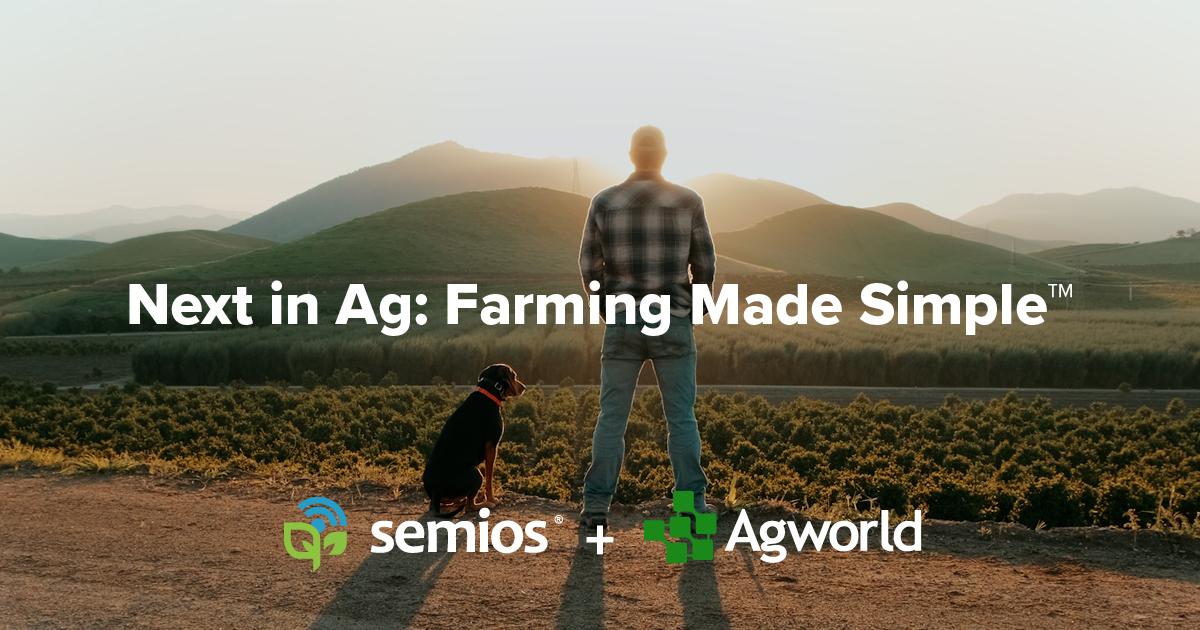
Vancouver, BC - April 5, 2024 – Semios + Agworld are thrilled to kick off a groundbreaking teaser campaign today, led by CEO Sumer Johal. This initiative marks a pivotal point in agriculture, ushering in an era where farming becomes easier, thanks to innovative AI technology.
The first video launching today is crafted to ignite curiosity and showcase the journey of agricultural advancements from the earliest innovations to today's cutting-edge technologies. Focusing on the opportunities that farmers face and the critical role of data in overcoming challenges, this sneak peek into an upcoming AI solution sets the stage for the next revolution in agriculture. This campaign will continue to engage the agricultural community and beyond with its vision for the future through a dynamic series of videos.
CEO Sumer Johal states, "throughout history we have witnessed several major revolutions that have changed the way we feed the world. From mechanization to crop nutrition and protection to genetics, humankind has persisted in making more food to feed more people with fewer resources. Now, we’re on the brink of another groundbreaking revolution in ag. Our upcoming product embodies our commitment to leap beyond the current boundaries with AI, striving to make farming simpler for all”.
Keep an eye out for what’s next in this thrilling series as Semios + Agworld gear up to introduce a technology that will redefine the boundaries of agricultural possibilities.
For further details, or to sign up for updates visit our websites at www.semios.com and www.agworld.com.
About Semios
Founded in 2010, Vancouver-based Semios offers Precision Agriculture as a Service™ that includes real-time crop data and pest management tools for ag professionals. Leveraging a network of sensors that provide more than 500M data points measuring climate, water, insect and disease activity daily, we apply big data analytics and machine learning to reduce and mitigate crop risks and automate daily activities. Semios has been named to the Global Cleantech 100, an annual list of the 100 most innovative cleantech companies globally, and the Thrive Top 50, list of the 50 leading global AgTech companies. Semios continues to grow its crop management platform by partnering with other leading decision-aid farming solutions and recently acquired Agworld, Altrac and Centricity to deliver more value to ag professionals under one login. Learn more about Semios at www.semios.com.
About Agworld
Agworld is an international Information Management Platform, founded in 2009, with an Australian headquarters in Perth and a global leader in collaborative farm management, enabling farmers, advisors and third parties to work together as one on a single platform. Agworld’s industry-leading standardized database makes it quick and easy to create accurate, reportable farm data. With over 100 million acres paid for and managed in Agworld across five countries, Agworld has the experience, capacity and market presence to support the delivery of innovation to farmers, agronomists and those who serve them. Learn more about Agworld.
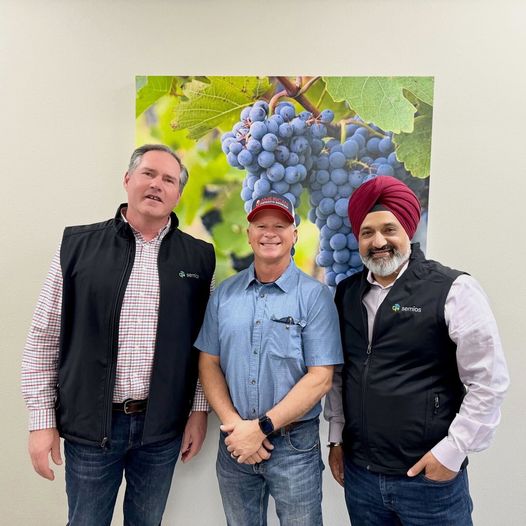
Recently, we’ve had the pleasure of meeting with several growers to discuss some exciting updates we're preparing to launch. Collaboration with innovative growers like Richard is key to delivering the best solutions to our customers.
Stay tuned — we're eager to share what's ahead!
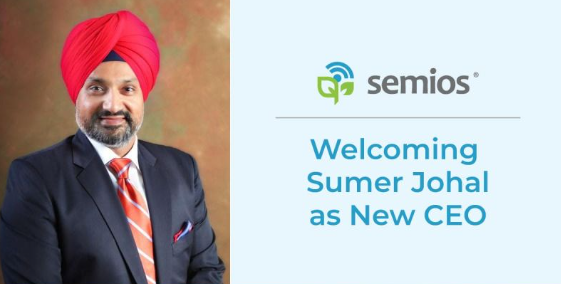
Vancouver, Oct. 16, 2023 – Semios, a leader in precision agriculture and technology solutions, is excited to announce the appointment of Mr. Sumer Johal as its new Chief Executive Officer.
Mr. Johal brings over two decades of leadership experience in technology, with a deep commitment to sustainability and agriculture, and is a leading voice in driving digital transformation in agricultural ecosystems at a global scale. Mr. Johal’s technical expertise and deep understanding of agricultural and environmental challenges uniquely positions him to lead Semios in delivering the next generation of holistic crop management tools for ag professionals.
"I'm incredibly excited about leading Semios in its next stage of growth," said Mr. Johal. "By leveraging digital technologies like AI and open-source, Semios has the potential to create an incredibly positive impact for our food ecosystems globally. I'm looking forward to working with the Semios team to realize this potential and to continue to earn the trust of our customers, partners, and shareholders as the global market leader in agtech."
Mick Sawka, Chairman of the Semios Board, commented, "We are thrilled that Sumer is bringing his vision and experience to the table at Semios. These two attributes are critical components in the equation of a CEO; however, it is Sumer’s passion for sustainable agriculture for all that truly positions him as the ideal leader for Semios’ next ambitious chapter”.
Mr. Johal holds a BS and MS in Computer Science and Electrical Engineering from the Massachusetts Institute of Technology (MIT). Previously, Mr. Johal served as the Founder and CEO of Agralogics, leveraging Big Data to tackle complex challenges in the food ecosystem. Currently, Mr. Johal serves as the Executive Director of AgStack at The Linux Foundation, leading the development of the world's first open-source digital infrastructure for food and agriculture. Growing up in a farming family in Punjab, India, his roots in agriculture have always empowered his commitment to the industry.
With the appointment of Mr. Johal as CEO, Semios expects to welcome a period of meaningful innovation and growth in all areas. By achieving its long-term strategic objectives, the company will be able to deliver even more valuable, integrated, and data-driven insights to its customers around the world and fulfill its purpose to help nature feed a growing population.
About Semios
Founded in 2010, Vancouver-based Semios offers Precision Agriculture as a Service™ that includes real-time crop data and pest management tools for ag professionals. Leveraging a network of sensors that provide more than 500M data points measuring climate, water, insect and disease activity daily, we apply big data analytics and machine learning to reduce and mitigate crop risks and automate daily activities. Semios has been named to the Global Cleantech 100, an annual list of the 100 most innovative cleantech companies globally, and the Thrive Top 50, list of the 50 leading global AgTech companies. Semios continues to grow its crop management platform by partnering with other leading decision-aid farming solutions and recently acquired Agworld, Altrac and Centricity to deliver more value to ag professionals under one login. Learn more about Semios at www.semios.com.
Annual Awards Program Recognizes Innovation in Agricultural & Food Technologies Around the Globe
VANCOUVER, British Columbia, Sept. 26, 2023 – Semios Technologies Inc. today announced it has been selected as the winner of the “Overall Smart Irrigation Company Of The Year” award in the 4th annual AgTech Breakthrough Awards program conducted by AgTech Breakthrough, a leading market intelligence organization that recognizes the top companies, technologies and products in the global agricultural and food technology markets today.
Semios' all-in-one crop management platform provides tools for growers to optimize irrigation management and produce the best crop possible. The full service solution can include everything from installation to maintenance and automatic probe calibration throughout the entire season. The solutions’ tools are used to plan, execute, and monitor weekly irrigation schedules in one dashboard with all the key measures needed for optimal water management, even when resources are scarce.
Growers can automatically calculate daily water balance with the irrigation management dashboard which tracks weather, crop water requirements, precipitation, on-site evapotranspiration, and applied water. Users can also schedule ahead and share irrigation plans with their teams. The platform makes it simple to track water usage and automate irrigation control with flow meters, flow meter monitoring, and remote pump and valve control integrations.
Semios uses data taken from in-canopy sensors to provide an accurate measure of what’s happening in field settings. This includes granular insights for temperature, humidity, and evapotranspiration at a per-acre level. In addition, the company’s new Infiltration Map shows how water moves through soil after each irrigation event.
Growers also rely on Semios to optimize fertigation plans. With tools for soil moisture content monitoring, relative soil salinity tracking, evapotranspiration monitoring, forecasting, as well as fruit size tracking and forecasting, growers can draw on multiple sources of data to put the best plan in place.
“Being able to draw from a diverse data set of climatic, plant health, water status, and irrigation data means you get a fulsome view of how they all factor into the variability in water demand and its impact on crop yield and quality. We’re thankful to AgTech Breakthrough for understanding the breakthrough that this is,” said Chris Loge, Semios Chief Product Officer. “Our products come from working with our growers to understand their use cases and put them into action. With several exciting products in development and research underway, we're excited to see where these tools go over the next few months.”
The mission of the annual AgTech Breakthrough Awards program is to conduct the industry’s most comprehensive analysis and evaluation of agricultural and food technology categories, including Internet-of-Things (IoT) and Artificial Intelligence (AI) based agricultural technologies, farm management, indoor farming, food quality, data analytics and many more. This year's program attracted more than 1,750 nominations from over 15 different countries throughout the world.
“With Semios, our ‘Overall Smart Irrigation Company of the Year,’ growers benefit from the most accurate remote monitoring in the industry. Rather than relying on weather stations or scattered sources, growers have the data they need to make important irrigation decisions with confidence and see their plan being executed properly,” said Bryan Vaughn, Managing Director, AgTech Breakthrough. “At the end of the day, it's all about combining disparate sources of data into one view so growers can access better data for better decisions. The Semios platform is an essential foundation for farm management and crop production activities.”
About Semios
Founded in 2010, Vancouver-based Semios offers Precision Agriculture as a Service™ that includes real-time crop data and pest management tools for ag professionals. Leveraging a network of sensors that provide more than 500M data points measuring climate, water, insect and disease activity daily, we apply big data analytics and machine learning to reduce and mitigate crop risks and automate daily activities. Semios has been named to the Global Cleantech 100, an annual list of the 100 most innovative cleantech companies globally, and the Thrive Top 50, list of the 50 leading global AgTech companies. Semios continues to grow its crop management platform by partnering with other leading decision-aid farming solutions and recently acquired Agworld, Altrac and Centricity to deliver more value to ag professionals under one login. Learn more about Semios at www.semios.com.
About AgTech Breakthrough
Part of Tech Breakthrough, a leading market intelligence and recognition platform for global technology innovation and leadership, the AgTech Breakthrough Awards program is devoted to honoring excellence in agricultural & food technologies, services, companies and products around the world. The AgTech Breakthrough Awards program provides a forum for public recognition around the achievements of AgTech companies and solutions in categories including farm management, indoor farming, IoT and robotics, FoodTech, analytics and more. For more information visit AgTechBreakthrough.com.
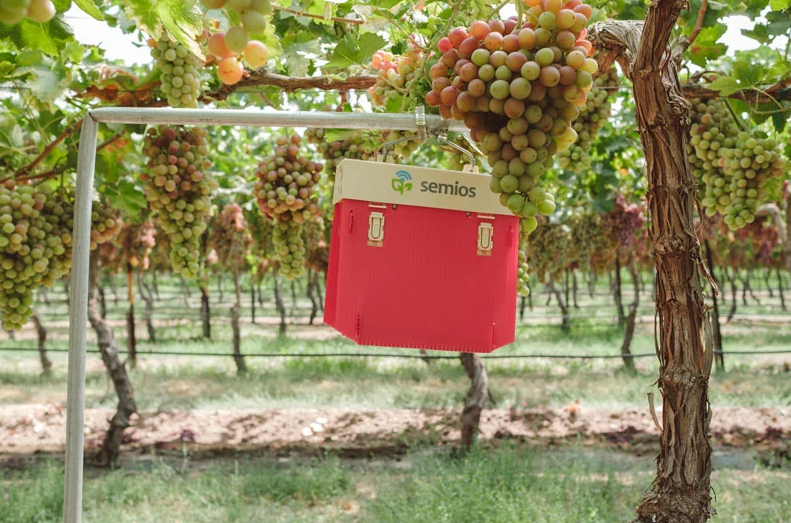
Achieving the perfect balance of flavor and ripeness in table grapes requires skilled management of veraison timing, a crucial but challenging process for grape growers.
In this blog, we’ll explore factors that affect the onset of veraison and regulated deficit irrigation strategies you can use to efficiently manage this process.
Grapes in a vineyard beginning the process of veraison and changing their color from green to purple hues
Understanding Veraison: A Precise Timing
Veraison is a stage of development in grapes where the color begins to turn and the fruit begins to change from sour and astringent to sweet and flavorful.
The value of table grapes is largely dependent upon a variety going through veraison at the right time so that the grapes are ready for picking and sale at the ideal time of the season.
One might wonder, what triggers veraison in table grapes? The answer lies in stress.
For our wine friends, there is usually plenty of water stress to trigger veraison. But, when you’re trying to grow large, juicy grapes for fresh consumption, it is possible to be too generous with water and subsequently delay veraison.
How to Trigger and Manage Onset of Veraison in Table Grapes
The soil in which table grapes grow significantly impacts the onset of veraison.
Even when the same grape varieties are planted, they can react differently in different soils. To manage these differences effectively, keeping a close eye on soil moisture levels becomes essential.
This is where soil moisture monitoring tools, such as the Semios soil moisture graphs, can help. These graphs visually represent soil moisture levels, helping growers identify the stress levels their grapevines are experiencing. In Semios’ case, the soil moisture graphs also split different stages of water stress into color-coded regions to simplify decision-making.
Example of the soil moisture graph on the Semios platform. The black line shows the average available water content. You can see the soil moisture levels drop almost to the bottom of the yellow “Moderate Deficit” region on the graph.
Our recommended strategy to trigger veraison in table grapes:
- Gradually reduce water applications by about 70% starting around two weeks before you want veraison to begin.
- Allow the soil moisture levels to drop almost all the way to the bottom of the yellow “Moderate Deficit” region.
- After you reach that level of water stress, apply enough water to refill the soil. Then, allow the soil to dry out again until the soil moisture levels reach near the bottom of the yellow “Moderate Deficit” region.
- Continue this cycle of stressing your grapevines and refilling the soil until you see the onset of veraison. At this point, you can resume normal irrigation.
It's important to recognize that different fields and soils will respond at varying rates to deficit irrigation. Some may dry out quickly, requiring less than a week to reach the desired stress level, while others may need up to three weeks.
As you become more familiar with the way your fields react to deficit irrigation, you’ll be able to plan with greater precision in subsequent years.
Conclusion
Mother Nature is full of surprises, and each year's weather can be different from the last. This can make triggering veraison in table grapes at the right time in the season more challenging.
However, since water stress can help trigger the onset of veraison in grapes, soil moisture sensors are a powerful tool in gaining valuable insights into your soil's condition so you can adjust your irrigation practices accordingly.
By keeping detailed notes and learning from each growing season, grape growers can get better at managing veraison, enhancing the yield and quality of their table grapes year after year.
Water is water, right? Actually, depending on how the water is applied, water counts differently towards irrigation.
In this blog post, we will explore cooling strategies and irrigation methods - overhead cooling vs. micro spray or drip irrigation - and discuss how they differ and impact soil moisture.
Understanding these distinctions will help you make informed decisions about your irrigation practices and help you optimize water usage in your orchard or field.
Overhead Cooling Strategies
Overhead cooling serves two purposes:
- To cool the temperature of the plants the water touches
- To remove heat from surfaces and the air to provide more ideal temperatures for maturing fruits
However, the majority of this water evaporates shortly after contact, resulting in minimal penetration into the soil.
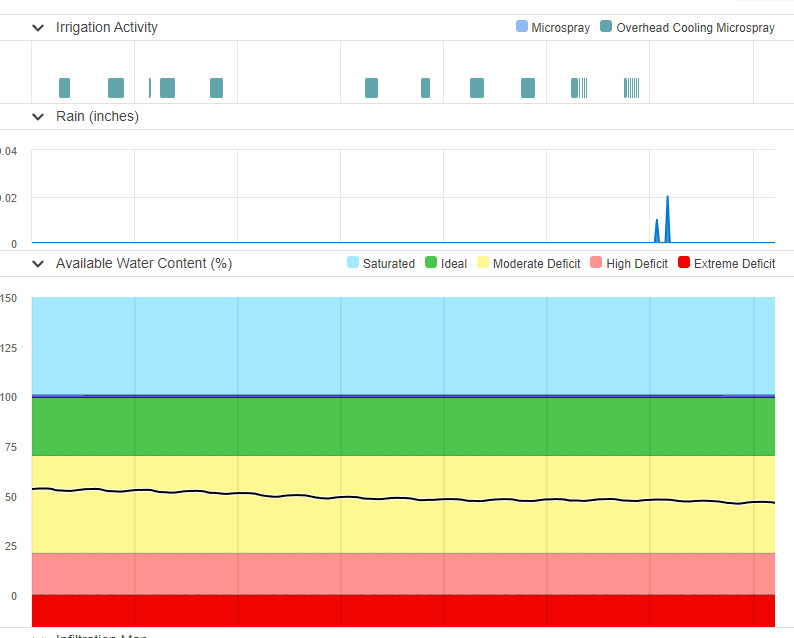
Because of this, you can’t count on overhead cooling strategies to provide irrigation as well as cooling. Most of the water never makes it more than an inch or two into the ground. It may feel like you are applying a lot of water, but remember the purpose of that water is for cooling, not irrigation.
Be sure to watch your soil moisture and apply irrigation water as needed.
Example of how the soil moisture in an orchard remained unaffected by the use of overhead cooling strategies. The top graph "Irrigation Activity" shows when overhead cooling microsprays were applied. The bottom graph "Available Water Content" shows how the soil moisture remains unaffected over the same time period.
Irrigation Methods
Many orchards use both micro spray systems and drip systems to irrigate their fields. How do they differ and when should you use one over the other?
1. Micro Spray Irrigation
Micro spray irrigation systems emit more water per hour and cover a greater proportion of the orchard floor compared to drip emitters. Even though they put out more water, micro spray systems often irrigate up to 75% more surface area than drip emitters, so it takes longer to move water deep into the soil.
Growers often wonder why a six-hour micro spray irrigation doesn’t register the same as a six-hour drip irrigation. It's simply because it's spread out across so much land. To achieve similar water penetration, longer irrigation times may be necessary when using micro sprays.
Micro sprays are beneficial for watering cover crops situated between rows, as the roots of dwarfed tree varieties are concentrated near the tree's canopy.
However, for the dwarfed tree varieties themselves, which have small canopies and root systems, micro spray irrigation is generally unnecessary.
2. Drip Irrigation
Drip irrigation is especially effective and efficient for the small, dwarfed trees commonly found in orchards today.
Drip systems apply water right where the roots are without losing much to evaporation. Double-line drip is just as effective on full-sized trees. Not only does it apply water where it is needed, but trees are also able to adapt their root zone to fit in the wetted areas drippers create.
Keep in mind though, that small root zones mean that trees are pulling from a small area of soil. It is almost as if they are in a pot, even though they are planted in a field. You have to treat that pot with care by applying appropriate nutrients and water right where it is needed.
Conclusion
Understanding the advantages and limitations of each of these irrigation methods and cooling strategies is crucial for efficient water usage and successful crop growth. Here's a quick summary:
- Overhead cooling: Primarily serves temperature regulation and requires additional irrigation for proper soil moisture management.
- Micro spray irrigation: Ideal for cover crops but may require longer irrigation durations to achieve deep water penetration.
- Drip irrigation: Provides precise and efficient water delivery right to the root zones of small trees.
By understanding these different approaches you can plan when to use which, when to make a switch and take full advantage of your investment in them.
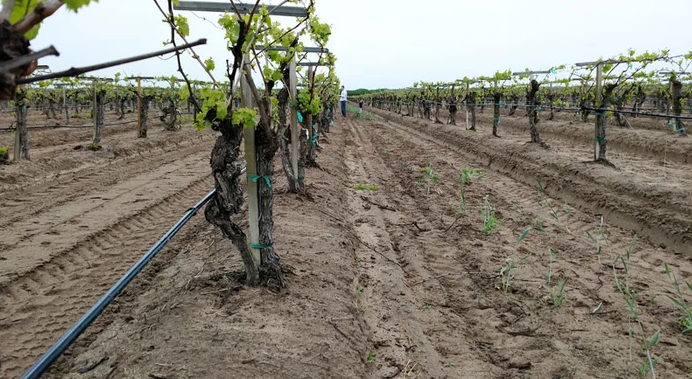
You may be familiar with the 4R’s of nutrient management - but have you heard of the 4R’s of irrigation management? For #SmartIrrigationMonth, we’re taking it back to the basics and sharing how these core principles can enhance your approach to water management:
https://blog.semios.com/what-are-the-4rs-of-irrigation-management
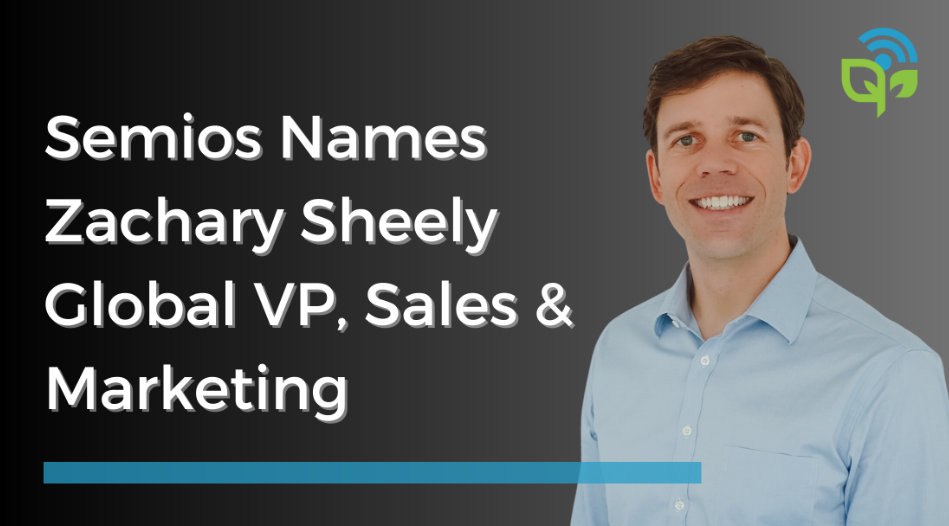
Under Sheely’s leadership, Semios will unify and align its market-facing activities to maximize customer value and drive awareness for Semios’ best-in-class crop management platform.
VANCOUVER, British Columbia, June 27, 2023 — Semios Technologies Inc. announces the appointment of Zachary Sheely as Global Vice President of Sales and Marketing. This change signifies the company's commitment to aligning its business and market offerings to maximize the potential of its exceptional teams, market position, and unparalleled product offerings. With customers increasingly relying on the Semios platform as an essential foundation for farm management and crop production activities, this change paves the way for further growth, engagement, and value for customers.
Based in Sacramento with over 20 years of leadership experience in agriculture, Zach is deeply committed to serving ag professionals and driving industry success. With a holistic understanding of the industry gained through serving growers, agronomists, PCAs, and ag retailers he is well-positioned to elevate the customer experience and bridge the needs of end users, integration and industry partners with Semios’ innovative product offerings.
“My family’s farm business realizes direct benefits from the Semios platform with solutions like mating disruption, advanced farm management software solutions, and irrigation scheduling and monitoring. This hands-on experience has deepened my personal connection to the company's mission and I am excited to continue my work with this amazing team and for the opportunities ahead” says Sheely.
Zach previously held the position of President at Agworld North America and played a critical role in leading the company from its launch in North America in 2012 to its market-leading position within the Semios business today.
About Semios
Founded in 2010, Vancouver-based Semios offers Precision Agriculture as a Service™ that includes real-time crop data and pest management tools for ag professionals. Leveraging a network of sensors that provide more than 500M data points measuring climate, water, insect and disease activity daily, we apply big data analytics and machine learning to reduce and mitigate crop risks and automate daily activities. Semios has been named to the Global Cleantech 100, an annual list of the 100 most innovative cleantech companies globally, and the Thrive Top 50, list of the 50 leading global AgTech companies. Semios continues to grow its crop management platform by partnering with other leading decision-aid farming solutions and recently acquired Agworld, Altrac and Centricity to deliver more value to ag professionals under one login. Learn more about Semios at www.semios.com.
https://blog.semios.com/semios-names-zachary-sheely-global-vice-president-of-sales-marketing
In farming, there never is a typical year. But some years stand out more than others.
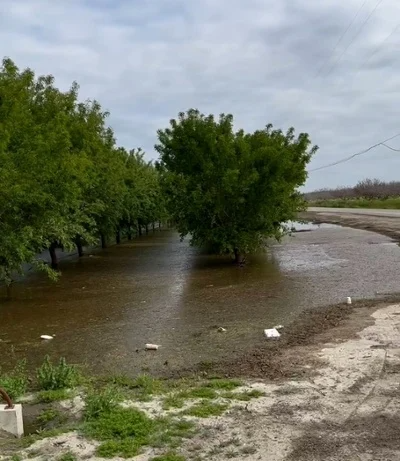
The spring that growers experienced in California in 2023 is one that will stand out in our memory for a long time. Spring melt and continued flooding is a challenging way to start a new season that follows a record-breaking drought.
The conditions brought on by the wet spring present us with new obstacles and opportunities for crop irrigation that we should keep in mind while planning and executing this season’s crop.
A flooded orchard in California
Flooded Soils
Risks from flooded soil arise from two interacting risks and can impact your crop irrigation:
- Lack of oxygen and;
- Increase in pathogens
Plants produce energy and store it in the form of sugars. Those sugars are transported throughout the plant where they can be used by the portions of the plant that do not produce energy, such as the trunk and roots.
However, sugar cannot be used directly by the cells of the plant. It has to be broken down into a more simple form of energy-bearing molecule called adenosine triphosphate, (ATP).
1. Lack of Oxygen
The process that converts sugar to ATP requires an input of oxygen to convert it. This is why plant roots need oxygen, it is also why it is possible to drown a plant by overwatering it.
Flooded, or overwatered soils limit the amount of oxygen available for this process, which in turn limits the vigor of the plant in those areas. Limited vigor means that the plant cannot grow properly, and cannot fight off plant pathogens that normally would not pose a problem.
2. Increase in Pathogens
Pathogens are the second issue. Not only are plants with limited oxygen more susceptible to disease, but many plant pathogens thrive in anaerobic (low oxygen) environments. Many root diseases first take a foothold when the soil is flooded or even just overly wet.
A tree with diseased roots that was blown over during a windstorm
Dormant trees have a very low metabolism rate, so flooded soil during dormancy isn’t a high risk. That’s why many can participate in groundwater regeneration practices during the dormant season, however, after leaves and blooms emerge, trees require plenty of oxygen in the soil in order to be healthy.
Mitigating Disease
Even as soils drain and the weather returns closer to typical, it is possible that disease has begun to take hold in your roots.
The best practice is to allow for good wet/dry cycles that allow your soil to drop to 80% or less soil moisture before irrigating again. This drains much of the soil pores and allows fresh water from irrigation to draw in oxygen with it. This also gives the tree or vine a chance to fight off encroaching diseases.
Very frequent irrigations, such as pulse irrigation can run the risk of keeping the soil too wet and encouraging plant pathogens.
It may require months or years to take its toll, but a sure sign of diseased roots are windfall trees, especially when the fallen trees have no roots attached.
How to Manage Your Crop When You Have More Water Than Usual
1. Crop Irrigation Is More Important Than Ever
It’s tempting to give less thought to proper crop irrigation when there is plenty of water available.
But drought is bound to return, making it all the more important to make the good years count. On top of that, it costs money to pressurize water, not to mention the cost of the water itself.
When water is applied, it is important to make sure it is needed in order to keep costs low and margins high. Tools that report soil moisture data and aid in scheduling are key to getting the timing right.
An available water content graph like this one on the Semios crop management platform helps irrigation managers and growers know how much to irrigate to keep their trees in an optimal state.
2. Leaching, the Good and Bad
Most winters, we are lucky to get enough rain to fill up the soil profile. This year, there was so much rain that the profiles were filled and there was extra water to leach salts through the soil and down beyond the reach of the roots.
This is quite an advantage in areas that have soils high in salts. However, it also means that the good salts you put in the soil on purpose likely also leached out.
Potassium and phosphorus don’t move very much in the soil, but nitrogen is very mobile, especially in very wet conditions. Don’t count on the nitrogen you applied in the fall to be there this spring.
Semios’ Salt Map is a helpful tool for tracking salt (such as nitrogen) and seeing where in the profile the salts move so that decisions can be made regarding whether to add more or not.
Soil with a lot of salt buildup that's visible on the surface
3. Surface Water Can Lead To Infiltration Issues
Soil conditioners such as gypsum and polymers work by chemically or physically altering the structure of the soil, causing it to be more open and able to accept water. These products only work when they are in the soil. Unfortunately, these conditioners have a limited life and are likely to break down under the influence of so much water or leach out causing water infiltration issues to return.
On top of that, extra water in reservoirs means more surface water will be available for use on your crops. Surface water is low in solutes such as calcium and magnesium that allow for effective infiltration of water into soils. That combined with leaching likely means infiltration problems will be worse than they have been in several years.
Soil moisture sensors can help identify infiltration issues and aid in assessing products that effectively treat the issue.
A soil moisture probe before installation by the Semios Field Services Team
After years of drought, most are likely out of practice in terms of irrigating when there is enough water available.
It may be worthwhile to look back on our notes from 7 to 10 years ago to see what we did differently. Some old guidance coupled with lessons learned in the years of drought can help us to be even more successful this year when we once again have water to use.
Related Content:
Semios Water Management Solutions
4 Reasons Your Soil Moisture Probes May Be Giving You Weird Readings
Using Dendrometers and Soil Moisture Probes
Introducing the Semios Wiseconn Integration for Easier, Data-Driven Irrigation Control