

Event Type: Webinar
Date: 8/1/2025
Regenerative Organic Certification isn’t just checking a box—it’s transparently proving an authentic commitment to ecosystem, soil, and human health, as well as gathering the necessary data to do so. Part of the goal of every grower pursuing this work is differentiation: higher integrity and higher quality products to market at higher value. The difficulty is that food and beverage are still largely commoditized (even more so in fresh produce), consumers and retailers do not fully understand “regenerative” and pricing premiums for regenerative products are not yet ubiquitous.
Many growers can’t stomach the risk without the reward, nor can they build a consumer-facing brand on their own. How do we build a market for regenerative agriculture and products, make it accessible (and affordable) for all growers, while maintaining the integrity, value and premium for regenerative growers?
Join Christopher Gergen, CEO of the Regenerative Organic Alliance (ROA), and Charlie Dubbe of Agrology for a conversation focused on how regenerative organic certification can work for growers and how we collectively can build a marketplace for regenerative goods. We’ll explore the standards and practices behind the label, and more importantly, the results they drive—like increased crop quality, improved ecosystem function, market-place differentiation and improved long-term profitability. Learn how growers are restoring their land by leaning into regenerative principles rooted in both science and tradition, how they are measuring the impacts to improve their bottom lines, and how the ROA is amplifying their stories and working to build markets for their regeneratively grown crops. If you're looking to future-proof your farm, grow healthier crops, and stand out in a competitive marketplace, this webinar is for you.
Aug 1, 2025 11:00 AM in Pacific Time (US and Canada)
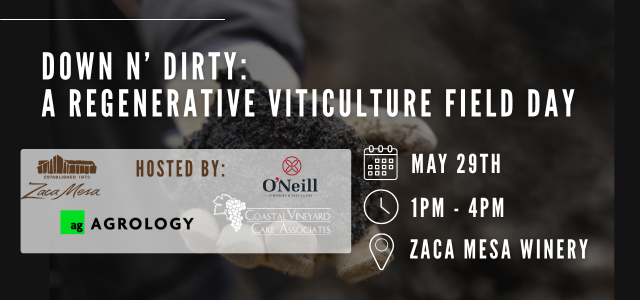
A Regenerative Viticulture Field Day for Central Coast Growers
Regenerative viticulture is more than a buzzword or ‘organic 2.0’. It is an entirely new approach to viticulture that builds ecological function, vineyard longevity, climate resilience, and higher quality wine.
Join us in the field at Zaca Mesa, where key experts in the regenerative viticulture space will share their real-world experience in building effective regenerative programs. Learn how to design and run your own regenerative trials, and implement site-specific practices tailored to your vineyard’s unique needs.
Get your hands dirty and leave equipped with a clear framework to improve long-term vine health, enhance grape quality, and boost vineyard longevity, all while ultimately reducing your farming costs per acre. Regenerative practices pay for themselves by enhancing soil health, reducing the need for costly inputs, and extending the productive lifespan of your vineyard.
Jordan Longberg of Coastal Vineyard Care, Charlie Dubbe of Agrology, and Caine Thompson of O’Neill Vintners/Robert Hall Winery will guide you through the core principles and applications of regenerative viticulture:
How to set up and run regenerative trials, starting with a clear understanding of your specific context and constraints
Steps for adopting a whole-systems, bioregional approach to viticulture
Methods for quantifying the impacts of regenerative practices across essential metrics including carbon sequestration, soil microbial health, soil structure, water-holding capacity, canopy temperature, yield, fruit quality, vineyard longevity, and overall cost reductions per acre
Techniques to enhance soil biodiversity and microbial activity, increasing the production of beneficial secondary plant metabolites that directly improve grape and wine quality
FREE for Growers to attend! Registration is required and space is limited.
Event Type: Webinar
Date: 5/22/2025
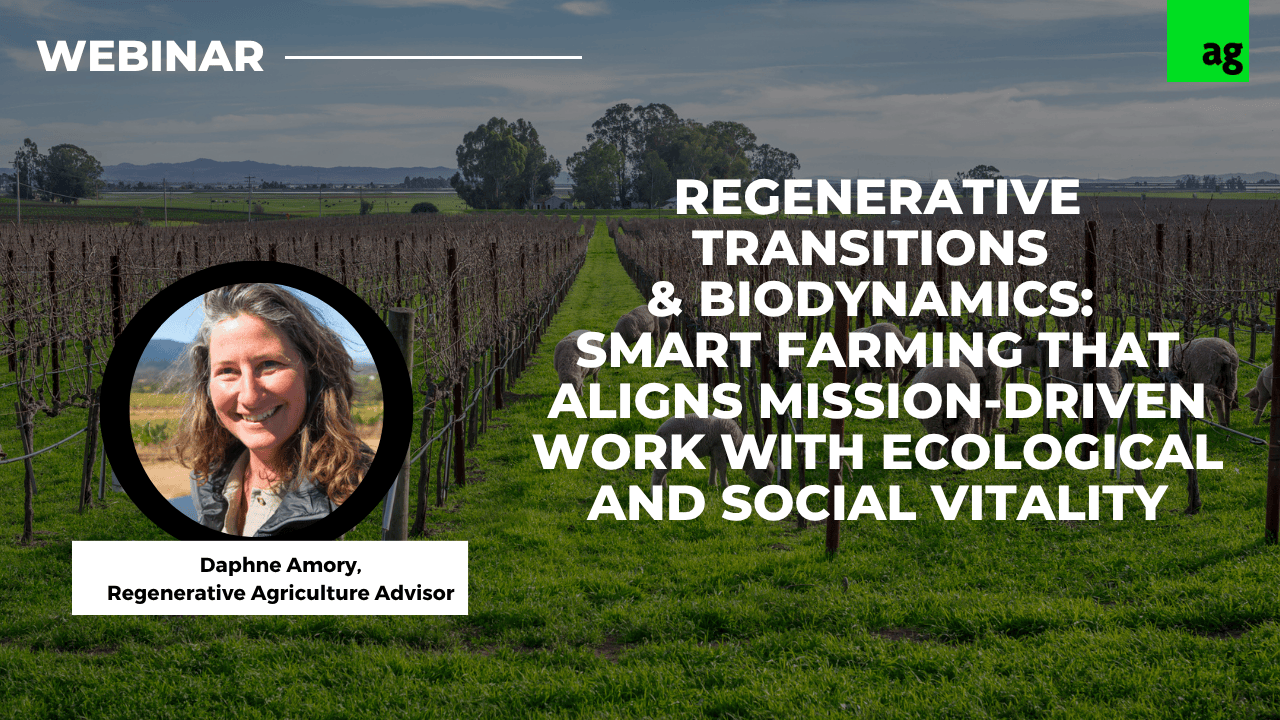
Join us for a compelling conversation with Daphne Amory, a strategic advisor and systems thinker who guides leaders through transformative shifts rooted in regenerative principles. As an internationally recognized Demeter Biodynamic Advisor, with decades of experience across both natural and built environments and a unique foundation in experimental theatre, Daphne brings an integrative approach to aligning mission-driven work with ecological and social vitality.
This session will explore the intersection of regenerative vineyard transitions and Biodynamic practices. While Biodynamics has sometimes been dismissed as overly mystical, Daphne will help demystify the approach and highlight the core principles that offer real value—such as whole-system awareness, attunement to natural rhythms, and farm individuality. We’ll discuss how these elements can be translated into actionable strategies within the broader regenerative agriculture movement. Why building soil-health makes good business sense, regardless of which approach you take.
Whether you're just beginning your transition or are already cultivating regenerative practices, this webinar will provide inspiration, grounding, and practical takeaways.
Thursday, May 22nd @10am PST/1pm EST
Event Type: Webinar
Date: 4/17/2025
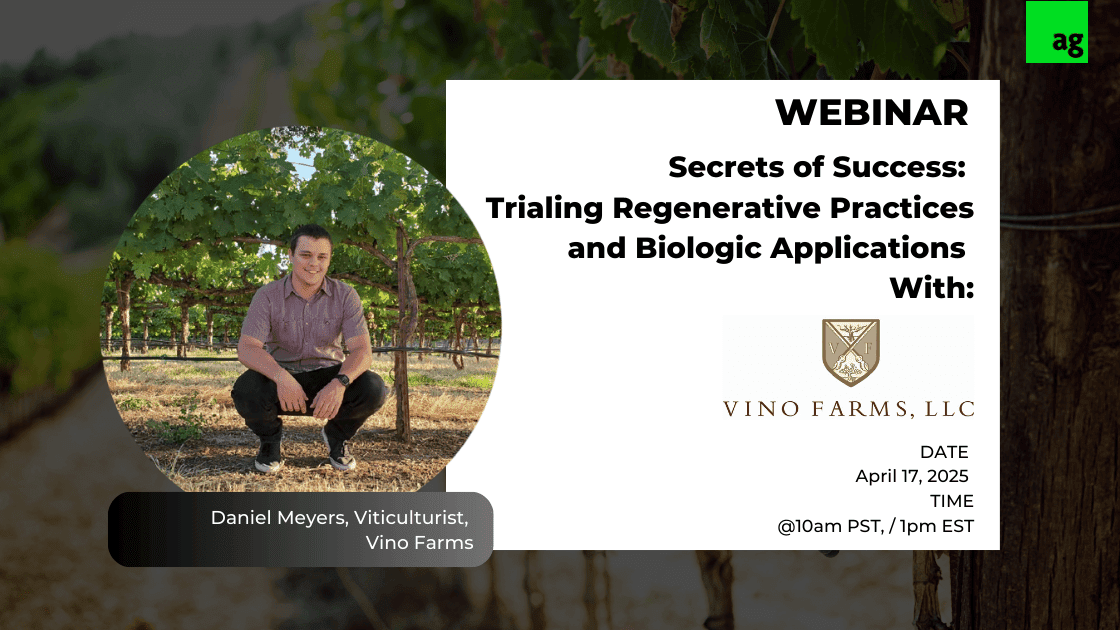
Join us for a behind-the-scenes look at how Vino Farms is trialing regenerative practices and biological products across their California vineyards. With over five decades of experience and thousands of acres of premium wine grapes under management, Vino Farms is a leader in sustainable and climate-smart viticulture.
In this webinar, Viticulturist Daniel Meyers will discuss results from recent biological strip trials, sharing early findings on how various biologic products impacted vine health, soil microbial activity, and water retention. You'll learn how Vino Farms is identifying products that not only control pests and diseases but also have the gentlest impact on soil biology, which is critical for scaling up regenerative practices while balancing production needs.
We will also explore Vino Farms' recent certification by the Regenerative Organic Alliance (ROA) and A Greener World, along with how they are leveraging continuous soil health data to enhance their regenerative program. Discover how data-informed decision-making is unlocking new levels of insight for growers navigating regenerative transitions.
Whether you are actively trialing on your own farm, considering new sustainable practices or certifications, or experimenting with biological products, this webinar will provide practical insights into building resilience into your agricultural ecosystem.
Apr 17, 2025 10:00 AM PT
Event Type: Webinar
Date: 3/20/2025
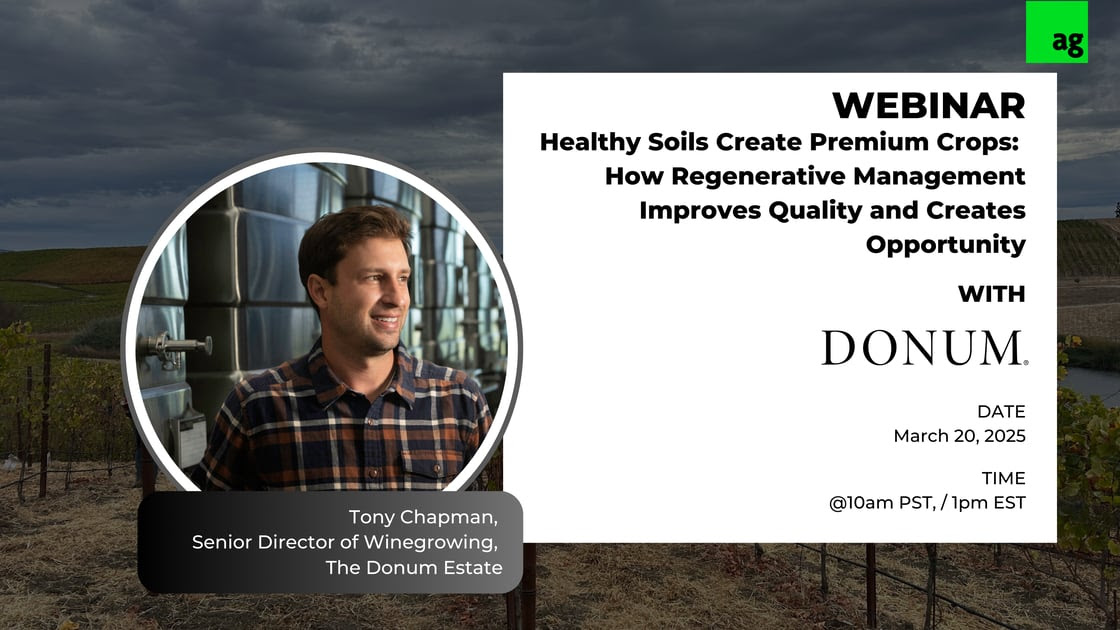
Our next webinar digs into the business case for regenerative farming including trialing practices, measuring impact, tracking soil health, and weaving regenerative farming into brand messaging.
Join us Thursday, March 20th for a webinar with Tony Chapman, Senior Director of Winegrowing, at The Donum Estate. Tony and his team are dedicated to regenerative organic practices. It’s core to their commitment of land stewardship and winemaking philosophy of allowing the land to speak through the wine. They have been able to intersect fine wine, sustainable farming, and art, in a way that extends the brand value from the vineyards to the bottle.
This webinar will take you through the various aspects of Donum’s ongoing regenerative transition including:
- The Business Case for Regenerative Farming – Why luxury brands like The Donum Estate have embraced regenerative organic practices and what it means for the future of wine quality.
- Measuring Impact – How Tony and his team track soil health, daily soil respiration, COâ‚‚ concentrations, and long-term environmental benefits, and the impact that has on the overall business.
- Tony's Nondogmatic Approach to Soil Health – The core regenerative principles that allow flexibility and adaptation each season and how this applies to wine quality.
- Brand Storytelling – How Donum is able to weave regenerative farming into brand messaging and connect with the conscious consumer in a real and empowering way.
- Sustainability as a Company-Wide Commitment – How Donum has established and progressed toward key environmental goals.
Join us for a deep dive into the art and science of regenerative viticulture, where land stewardship and luxury coexist in perfect harmony. We hope to see you there.
Thursday, March 20th at 10am PST/1pm EST
Event Type: Webinar
Date: 3/6/2025
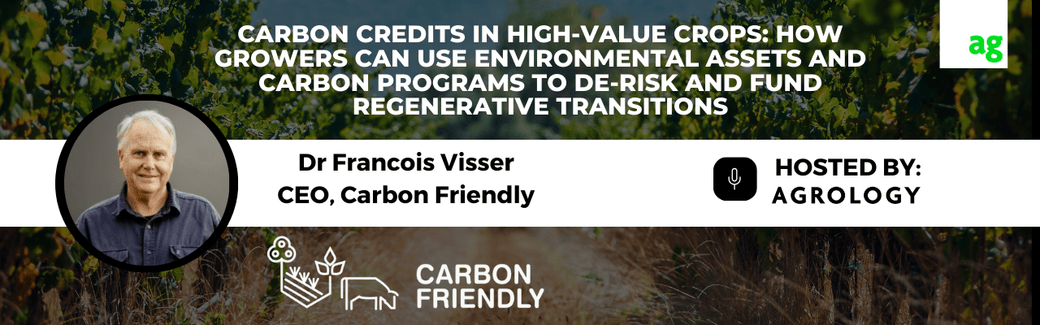
How growers can use environmental assets and carbon programs to de-risk and fund regenerative transitions
In our work with regenerative growers, primarily in high-value crops, we’ve found that very few are participating in carbon programs. Our customers typically pursue regenerative agriculture for a more-profitable and sustainable means of production. Carbon sequestration and revenue is not the primary reason to pursue regenerative agriculture, but there is no doubt that regenerative farmers take significant amounts of carbon out of the atmosphere and put it into their soils and ecosystems. While the carbon spotlight in the US has primarily focused on grains and broad-acre agriculture, there are great opportunities for specialty growers to participate and excel in carbon farming.
Working with our partners Carbon Friendly, we’ve confirmed that carbon programs can offer specialty growers a viable means to fund and de-risk their regenerative transitions and to differentiate themselves in their supply chains. That said, a lack of focus and industry attention has left specialty growers with more questions than answers: not all carbon programs are created equal, and not all “carbon farming” practices fit into intensive, specialty production systems.
Join us for an in-depth discussion on carbon markets, how and why specialty growers should be building healthy soils on their farms, and how they can participate in carbon programs to maximize their ROI and fund their regenerative transitions.
Mar 6, 2025 10:00 AM
Date: 2/13/2025
In agricultural systems, carbon is like currency. It's used in all biologic processes, transformed into different compounds, then stored and spent, but rarely static. When growers and land managers are able to measure carbon flows and soil carbon stocks in real time, they get a more complete picture of ecosystem health and agricultural performance.
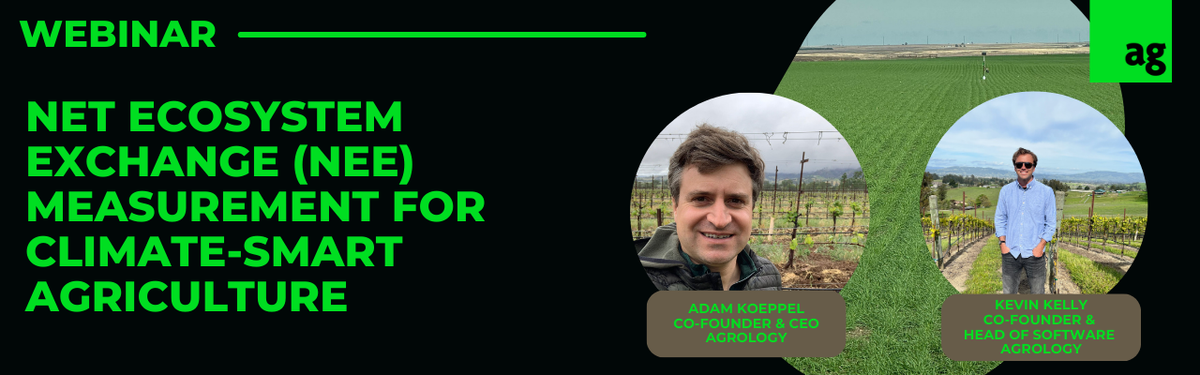
Net Ecosystem Exchange (NEE) data is key. It can help growers understand the productivity and growth of soil-building systems, observe carbon-cycle dynamics, and tie practices to real world impact.
On our next webinar, Agrology Co-Founders, Adam Koeppel and Kevin Kelly, will walk you through our new NEE Measurement System, discussing how Agrology now delivers real-time insights into carbon flows and carbon-cycle dynamics.
Join us and learn:
- How to better-understand carbon accrual and soil microbial activity (a key factor in the humification of carbon ie: long term storage).
- How to fill the gaps of traditional MMRV approaches by increasing accuracy and transparency in regenerative agriculture and carbon programs.
- How to create bespoke environmental assets to differentiate products, regions and practices via ground-truth data.
Thursday, February 13 at 10am (PST)
Event Type: Webinar
Date: 12/18/2024
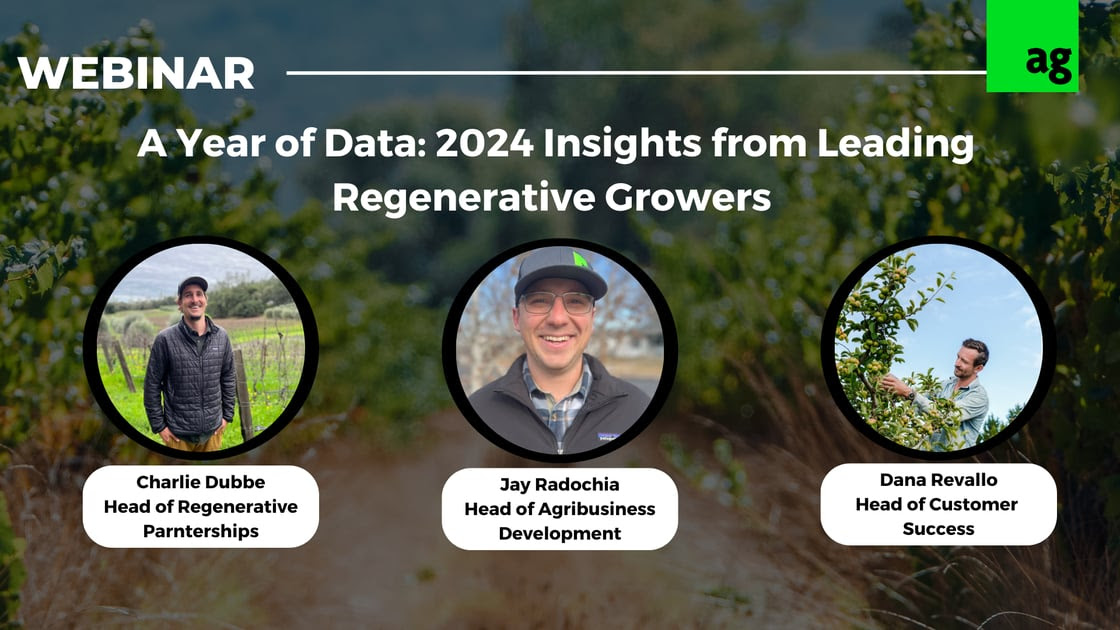
Don’t Miss Out: Highlights from Agrology’s 2024 Data!
From regenerative trials in wine grapes to produce and other cropping systems, we’ve gathered a wealth of data and with our growers we've learned a lot along the way. This webinar is your chance to get a behind-the-scenes look at what stood out in 2024, including successes, challenges, and lessons learned from our growers’ regenerative journeys.
Here’s a sneak peek at what we’ll cover:
- The effects of tillage on soil structure and microbial health
- Integrating livestock into perennial cropping systems
- How cover crops influence microbial activity and function
- Results from biological product trials
- Ways to improve the on-farm water cycle and create micro-climate cooling
- Using the small carbon cycle to grow healthier plants
- Insights into regenerative transitions and their impact on soil carbon pools
Whether you’re a seasoned regenerative grower, a sustainability enthusiast, or just curious about how data drives better outcomes, this webinar is packed with insights to help you gear up for 2025.
Wednesday, December 18th @9:30am PST/12:30pm EST
The Agrology Nitrous Flux Sensor delivers a groundbreaking solution, enabling farmers to measure and report climate-smart practices for verified greenhouse gas (GHG) reductions at scale
 Salinas, CA, November 12, 2024–Agrology today launched the first real-time, in-field nitrous oxide (N2O) flux sensor, breaking new ground for climate-smart agriculture. This technology advances efforts by farmers, academics and supply chain partners who are seeking scalable solutions to accurately measure nitrous oxide and other GHG emissions at scale in commercial agriculture. Currently undergoing rigorous in-field validation with experts and partners, the Agrology Nitrous Flux Sensor is available in limited quantities, with a commercial release slated for early 2025.
The agricultural sector recognizes its role in Nâ‚‚O emissions and has sought ways to mitigate them. However, reducing Nâ‚‚O emissions and achieving accurate impact quantification have been challenging due to the lack of affordable measurement tools. This gap has forced farmers and supply chains to rely on estimated emissions factors. Agrology’s new sensor solves this problem at a fraction of the cost of research-grade equipment.
Adam Koeppel, Co-Founder and CEO of Agrology, highlighted the challenge and opportunity: “Accurately measuring Nâ‚‚O emissions at scale has been a significant barrier, limiting the adoption of practices that reduce greenhouse gas emissions. Our Nitrous Flux Sensor changes that by enabling precise nitrogen application without compromising yield, empowering growers to implement agricultural practices that lower emissions effectively.”
 The launch of Agrology's Nitrous Flux Sensor addresses the critical challenge of nitrogen fertilizer management. Fertilizer applied at the wrong time, location, concentration, or in the wrong form not only releases Nâ‚‚O but also causes water pollution and biodiversity loss. With Agrology’s sensors, growers can measure and verify the impact of climate-smart nitrogen management strategies. These tools, combined with nitrogen reduction programs, support insetting initiatives by providing in-situ data that transparently quantify emission reductions. Growers can benefit from incentives beyond fertilizer savings, further encouraging sustainable practices.
Agrology’s innovation demonstrates the practicality and necessity of climate-smart practices and Nâ‚‚O reduction, paving the way for large-scale agricultural climate mitigation.
Key features of the Agrology Nitrous Flux Sensor include:
High Accuracy: Comparable to expensive laboratory-grade equipment, the sensor provides precise real-time Nâ‚‚O measurements across multiple locations.
Transformative Potential: The sensor revolutionizes measurement, monitoring, reporting, and verification (MMRV), reducing dependency on models and estimated emissions factors.
Enhanced Assessment: Farmers and partners can accurately evaluate the emissions impacts of various farming practices and products alongside cost and yield, enabling better decisions at scale.
Empowerment Through Data: Growers can adjust farming practices based on real-time data and report progress on emissions reductions, fostering continuous improvement.
Affordability and Accessibility: Priced for average farmers, the sensors can be deployed across diverse crop types, production systems, and regions, supporting in-field GHG monitoring at scale.
Broad Implications: Access to real-time, high-resolution Nâ‚‚O data across various systems and practices will expand research and enhance understanding of climate-smart agriculture.
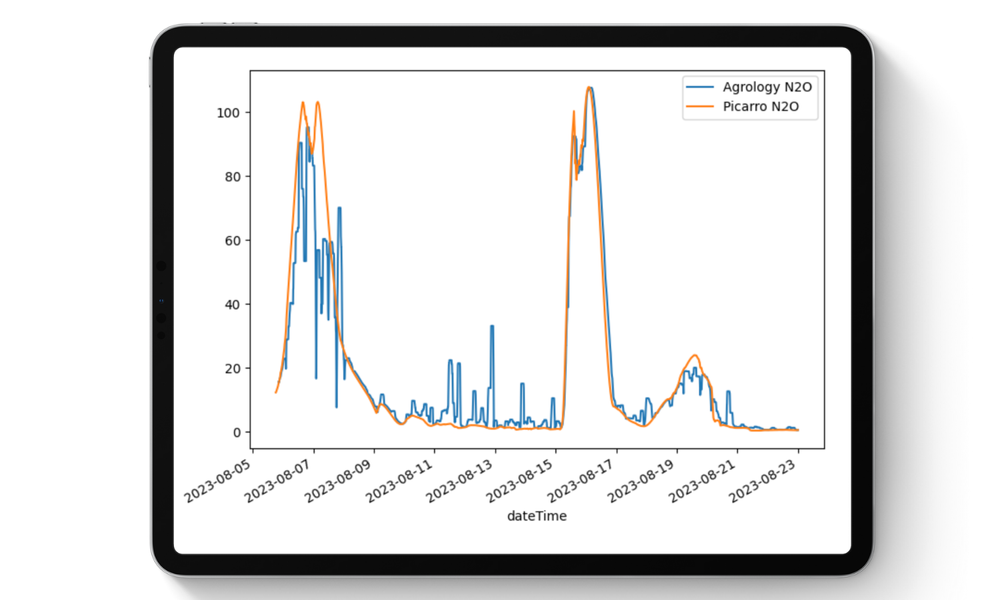
Dr. Michael Schuppenhauer, Principal Investigator and Affiliate at Lawrence Berkeley National Lab, has tested the Agrology Nitrous Flux Sensor for 18 months in commercial row crops. His research compared the sensor against cavity ringdown spectrometers and ground-truth nitrous oxide eddy flux sensors. The Agrology system achieved an R² value >0.8 for Nâ‚‚O when compared to measurements from research-grade sensors, demonstrating comparable performance at a fraction of the cost. Full results are detailed in the Agrology Gas Measurement Cross-Validation White Paper.
"Nitrous oxide is the white elephant in agricultural GHG emissions. Affordable, real-time emissions data is essential for growers to see the impact of their sustainable practices,” said Dr. Michael Schuppenhauer. "Agrology's Nitrous Flux Sensor is a paradigm shift in sustainable agriculture as it provides any grower with an affordable, accurate, and continuous tool to measure, reduce, and monitor nitrous oxide emissions, and thus enables GHG reductions and innovations at the source while replacing static factors and rigid, non-conforming models.”
The release of the Agrology Nitrous Oxide Sensor comes one year after the company introduced the Arbiter, the first system that continuously monitors and quantifies carbon flux and soil respiration for commercial farmers. The Arbiter provides data on soil health, the carbon cycle, water cycles, and microclimates, accessible through mobile and desktop apps. Agrology’s Nitrous Flux Sensor will integrate into the Arbiter, with the combined release scheduled for early 2025. More information can be found at agrology.ag/nitrous-oxide.
About Agrology
Agrology is a leading agricultural technology company, a National Science Foundation award recipient, and a Public Benefit Corporation dedicated to providing real-time data that helps growers directly measure the ecological and agronomic impacts of their regenerative farming practices and microclimate. Agrology monitors soil health, microbial activity, the carbon cycle, nitrous oxide emissions and a comprehensive agronomic dataset, empowering growers to monitor and predict growing conditions, as well as measure and link regenerative or sustainable practices to ground-truth GHG reductions and ecological impacts. Trusted by top growers, researchers, and global CPG brands, Agrology has offices in Alexandria, Virginia, and Salinas, California. Discover more at Agrology.ag